
How to Start a Second Career in Paralegal Work
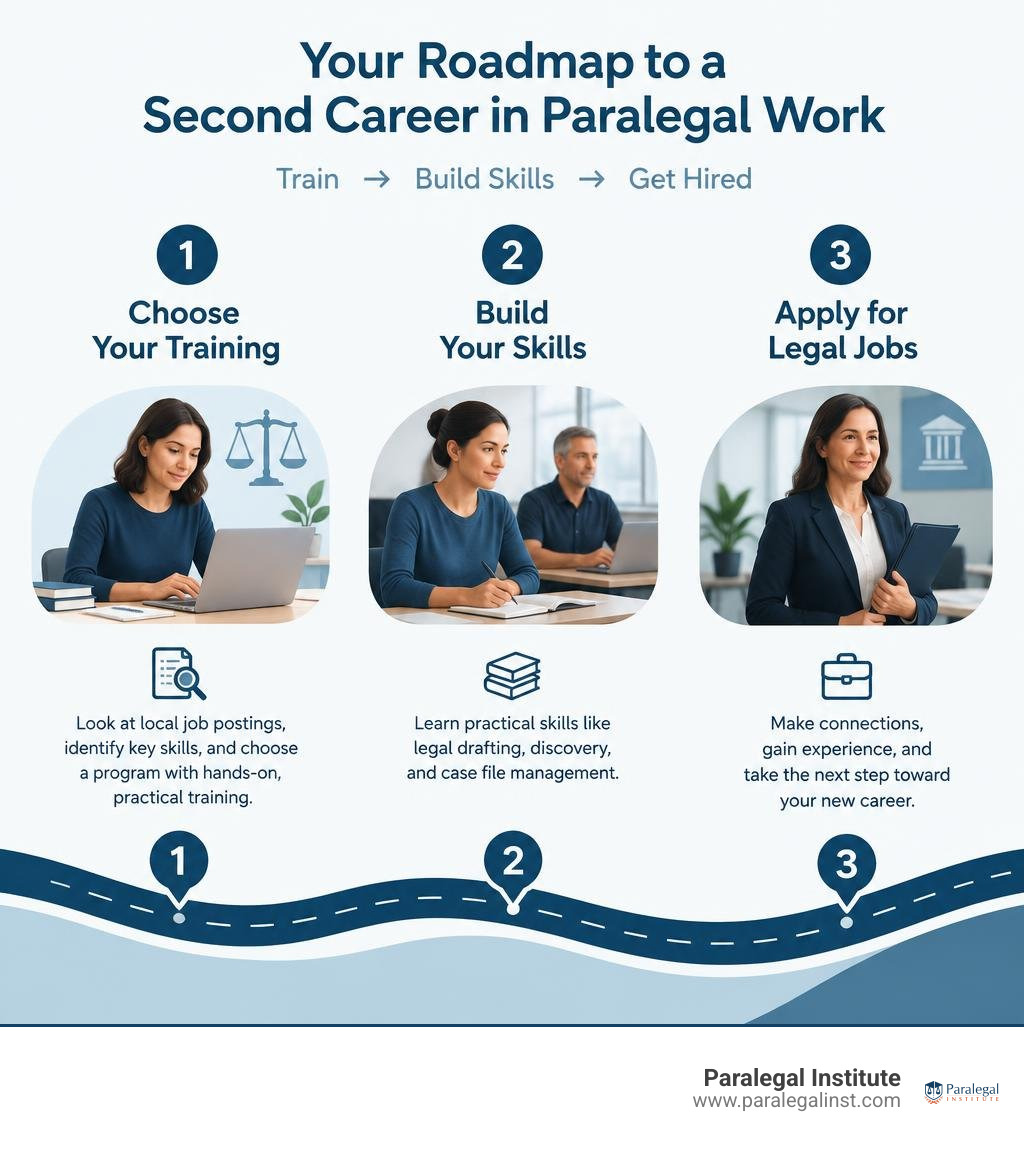
For second career paralegal training, start by reading local job postings. Note the skills employers ask for, then choose a program that teaches practical work such as legal drafting, discovery, and case file management. Look for chances to meet legal professionals and gain experience while you train. You do not need a law degree to become a paralegal.
If you want a faster path, Paralegal Institute offers a 15-week certificate program with hands-on training taught by practicing legal professionals. Its in-person classes are designed to help you build skills for entry-level legal work.
I’m Matthew Pfau, a practicing attorney who hires and trains paralegals and teaches courses at Paralegal Institute. That experience shapes how I approach second career paralegal training: start with the work employers need you to do.
Why Second Career Paralegal Training Is Surging for Professionals Over 50

When attorneys walk into a courtroom or sit down to prepare a complex case file, they rely heavily on their paralegals. We do not just need people who know abstract legal theory; we need professionals with maturity, steady judgment, and real-world common sense. That is precisely why older adults thrive in this field.
If you are considering a career pivot later in life, you are far from alone. More than two-thirds of practicing paralegals are over age 45. The legal industry has long appreciated the stability and professionalism that experienced adults bring to the table. Whether you are transitioning from admin work to paralegal career pathways or looking for an entirely fresh chapter, law offices value candidates who already know how to navigate professional environments, manage high-stakes deadlines, and handle sensitive documents with care.
Furthermore, modern legal workplaces offer impressive career longevity and schedule control. Many legal teams offer flexible schedules or remote arrangements once you demonstrate your core competencies in legal research, drafting, and case management. Our comprehensive Paralegal Career Transition Guide emphasizes how older professionals can quickly capitalize on these opportunities without spending years out of the workforce.
How Transferable Skills Accelerate Your Legal Trajectory
Attorneys love hiring career changers because you arrive with specialized competencies that a recent college graduate simply cannot offer. Your past career provides a direct framework for legal casework:
- Healthcare & Nursing: If you spent years reading medical charts, understanding terminology, and organizing patient histories, you are an immediate asset for personal injury, medical malpractice, or workers' compensation law firms. You can review discovery documents and spot missing medical records far faster than someone seeing them for the first time.
- Finance, Banking & Real Estate: Experience in loan processing, auditing, tax preparation, or property transactions translates cleanly into corporate law, estate planning, and real estate litigation. You understand how money flows and how contracts bind parties.
- Administration & Office Management: If you have coordinated schedules, managed vendor relationships, and kept executive offices running smoothly, managing court dockets, trial exhibits, and filing deadlines will feel like a natural progression.
- Education & Teaching: Educators excel at organizing complex information, communicating clearly with clients, conducting thorough research, and managing meticulous documentation.
Everyday professionals successfully make this pivot. For instance, Amanda Tschida demonstrated how interpersonal and customer-facing skills can be channeled into long-term legal support roles. Your previous work history is never lost—it is simply repurposed.
Navigating Legal Practice Specializations
Because legal work covers diverse industries, you can steer your training toward the specific sector that excites you most:
- Litigation Practice: Assisting trial attorneys through all phases of a dispute, including drafting pleadings, preparing interrogatories, organizing document discovery, and assembling trial binders.
- Corporate Law: Managing business entity formations, drafting shareholder agreements, reviewing vendor contracts, and tracking regulatory filings.
- Municipal & Government Law: Supporting public sector entities, municipal attorneys, and regulatory agencies with public records requests, local ordinances, and compliance matters.
- Real Estate & Property: Preparing closing documents, conducting title searches, drafting deeds, and handling lease agreements.
- Personal Injury & Torts: Interviewing claimants, gathering medical and billing records, preparing demand packages, and coordinating with insurance adjusters.
Exploring our Paralegal Careers Guide 2026 can help you decide which sector best matches your interests and prior professional background.
Educational Pathways: Certificates, Degrees, and Training Formats
When entering the legal field, you have several educational avenues. However, you do not need to spend multiple years in a traditional university program to secure a respected role in a law office. As outlined in our guide on whether you need a degree to be a paralegal, law firms prioritize practical drafting and discovery skills over lengthy academic credentials.
| Pathway | Typical Duration | Practical Skill Focus | Best Suited For |
|---|---|---|---|
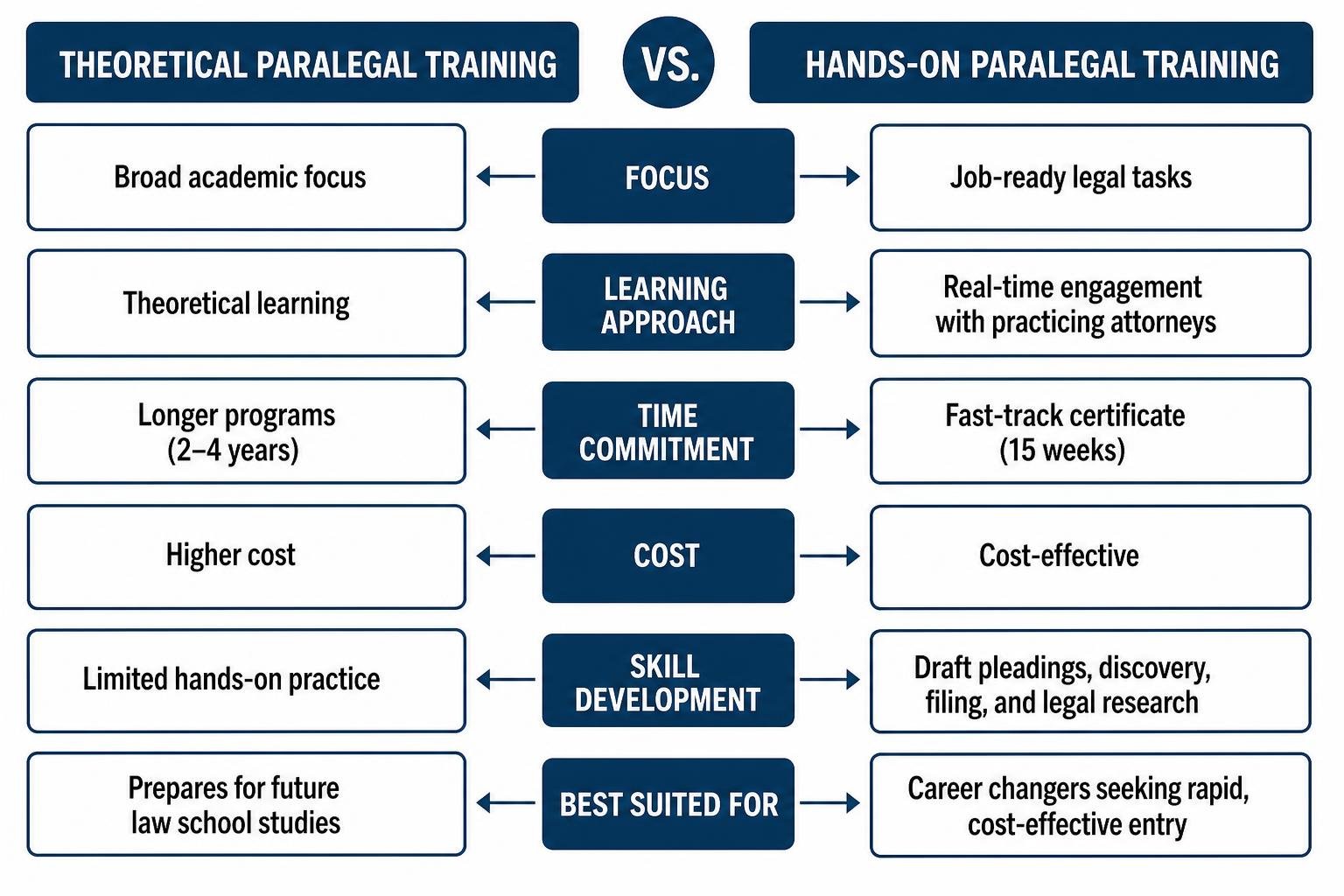
| Accelerated Paralegal Certificate | 15 Weeks | High (Hands-on pleadings, discovery, filing) | Career changers seeking rapid, cost-effective entry |
| Traditional University Program | Multi-Year | Moderate to Theoretical (Broad academic focus) | Students seeking extended theoretical study |
For adults who already hold work experience or prior college credits, an accelerated certificate is widely recognized as the most practical, cost-effective, and direct route into the profession.
Choosing the Right Second Career Paralegal Training Program
Not all training programs are structured the same way. When evaluating your choices, ensure the program focuses on job-ready legal tasks rather than purely theoretical lectures. A practical curriculum should teach you how a paralegal certificate program prepares you for legal work by having you draft actual pleadings, format motions, organize discovery responses, and perform real legal research.
At Paralegal Institute, we believe adults learn best through real-time engagement. We deliver our instruction strictly through in-person classes at our Las Vegas campus or online with live instruction. This ensures you can interact directly with practicing attorneys, ask questions as they arise, and receive immediate feedback on your legal writing. When identifying paralegal programs for your career goals, always look for instructors who currently practice in local courts.
Financing and Time Commitment for Second Career Paralegal Training
Time and budget are top priorities for career-focused adults. Traditional multi-year degree programs often require substantial tuition investments and extended time away from earning potential. In contrast, our 15-week certificate program at Paralegal Institute offers a streamlined, fast-track approach designed to minimize costs while maximizing workforce readiness.
You can learn more about managing program expenses by reviewing our cost of paralegal program complete guide. For those balancing busy schedules, opting for a structured, fast-track paralegal certificate ensures you finish your training quickly and transition into the workforce without needless delays.
Salary Expectations, Job Outlook, and Career Growth
The legal field provides solid earning potential and steady professional demand. Because legal operations rely heavily on skilled paralegals to draft documents, coordinate discovery, and keep casework organized, law offices and corporate legal departments continue to recruit trained staff regularly.

Compensation varies across practice settings, geographic locations, and industry sectors. Experienced paralegals, particularly those supporting corporate counsel or government agencies, often achieve higher compensation brackets as their responsibilities expand.
| Employer Type | Industry Median Compensation Trend | Primary Work Focus |
|---|---|---|
| Federal & Public Agencies | Highest Industry Compensation | Regulatory compliance, administrative hearings |
| Finance & Corporate Legal Teams | Above-Average Compensation | Contracts, corporate governance, mergers |
| Private Law Firms & Litigation Boutiques | Competitive Standard Compensation | Case preparation, motions, trial discovery |
| Local & State Government Offices | Stable Compensation & Benefits | Municipal records, criminal casework, civil defense |
Reviewing our certificate in paralegal studies salary guide provides deeper insight into compensation ranges and how your background influences initial job placement.
Breaking into the Legal Workforce Without Prior Experience
The biggest question most second-career seekers ask is: How do I get hired without legal experience on my resume?
- Highlight Practical Classwork on Your Resume: List the specific legal documents you have drafted during your training, such as complaints, answers, initial disclosures, subpoenas, and motions. This shows hiring managers you can produce clean casework from day one.
- Pursue Practical Volunteering: Offer support at local legal aid clinics or pro bono days. Even a few days assisting staff attorneys demonstrates initiative and adds immediate legal references to your resume.
- Engage with Local Legal Networks: Attend local legal seminars and networking events. Attorneys regularly look for reliable administrative and legal talent through professional networking.
- Target Entry-Level Support Roles: Consider starting as a legal assistant, calendar clerk, or file coordinator in a municipal or private firm. These roles provide fast exposure and frequently lead to internal paralegal promotions.
Our guides on breaking into paralegal work without experience and how to get a paralegal job detail actionable steps for tailoring your application materials.
Honest Assessment: Daily Challenges, Burnout, and Long-Term Trajectories
Every career has challenges, and legal practice is no exception. Paralegal work requires immense precision. You will manage strict court deadlines, track meticulous document exhibits, and handle detailed discovery responses under tight timeframes. If you dislike reading fine print or organizing voluminous records, the day-to-day work can feel demanding.
However, for organized professionals who enjoy solving structured problems, the role provides a rewarding work environment. If you are seeking a career pivot after burnout in high-stress retail, sales, or chaotic corporate settings, the structured rhythm of legal casework offers stability and intellectual engagement.
Long term, paralegals can advance into specialized roles such as senior litigation managers, compliance analysts, contract specialists, or legal operations directors. Developing long-term career goals with a paralegal degree or certificate opens doors to executive-level administrative and operations positions across the corporate landscape.
Frequently Asked Questions About Second Career Paralegals
Do you need a law degree to become a paralegal?
No. You do not need a Juris Doctor (J.D.) or law degree to work as a paralegal. In fact, law school is designed solely for attorneys. Paralegals enter the field by completing focused training programs that teach practical legal drafting, document analysis, and court filing procedures. Review our guide on the education needed to be a paralegal for a full breakdown of credential pathways.
How long does it take to train for a paralegal second career?
While traditional university degrees require two to four years, accelerated certificate programs can prepare you for the workforce in just 15 weeks. Choosing an intensive program allows you to become a paralegal fast without putting your life or earning potential on hold.
What is the job outlook for older adults entering the legal field in 2026?
The outlook remains strong. Because law offices experience steady staff transitions and retirements, demand for competent, reliable legal support staff remains consistent. Older workers who bring dependable life experience, strong professional ethics, and targeted legal training are highly sought after by hiring attorneys. Check out our latest analysis on paralegal job prospects to learn more.
Conclusion
Transitioning into the legal field is one of the most practical and intellectually engaging career moves you can make as an adult. By combining your established professional wisdom with targeted legal training in discovery, drafting, and case management, you position yourself as an indispensable asset to any legal team.
At Paralegal Institute, we help career changers build job-ready skills through our focused 15-week certificate program. With live instruction led by practicing attorneys, our curriculum ensures you gain the hands-on confidence required to enter local law firms and corporate legal departments immediately.
If you are ready to take control of your career trajectory, learn more about what training is required to be a paralegal and start your application today.