
Recognizing the Need for a Career Shift into Law
Transitioning into the legal field is easier than many professionals assume because a focused legal career change program can prepare you for billable support work in as little as 15 weeks. Instead of spending years in lengthy schooling, you can learn the exact litigation, discovery, and casework skills that law firms and corporate legal departments need from day one. That means you can move from feeling stuck in your current role to holding a practical, market-ready legal credential in a matter of months.
Every year, I speak with talented professionals from corporate, administrative, educational, and service backgrounds who feel profoundly stuck. They are exhausted by dead-end roles, administrative red tape that produces no real impact, or simply a lack of intellectual challenge. According to workplace analytics, up to 85% of people experience unhappiness in their careers due to strengths mismatches—an issue that also accounts for 90% of all failed hires across industries. When your daily duties do not align with your core problem-solving capabilities, professional burnout is inevitable.
Recognizing these symptoms early is the key to engineering a successful turnaround. If you find yourself dreading Monday mornings, feeling unappreciated, or realizing that your current trajectory offers zero upward mobility, executing a career pivot after burnout can revitalize your professional life.
Making a meaningful shift does not mean throwing away your prior work history; rather, it is about repurposing your strengths. Legal organizations thrive on structure, clear communication, rigorous documentation, and ethical standards. Taking proactive steps allows you to take control of your future and direct your talents toward a resilient, intellectually stimulating profession. The right training program gives you a clear, structured path forward, so you can replace uncertainty with a concrete plan for entering a field that values precision, accountability, and professional growth.
Core Components of an Effective Legal Career Change Program
When you decide to transition into the legal field, you need practical training that translates directly into billable support work. Theoretical discussions are fine for academic seminars, but law firms need professionals who know how to manage court deadlines, organize litigation discovery, draft standard pleadings, and communicate professionally with clients from day one.
A high-impact paralegal training for career changers program bridges the gap between raw potential and law firm readiness. As a practicing attorney, I design coursework around the exact tasks I assign to my team daily.

An effective training curriculum must deliver:
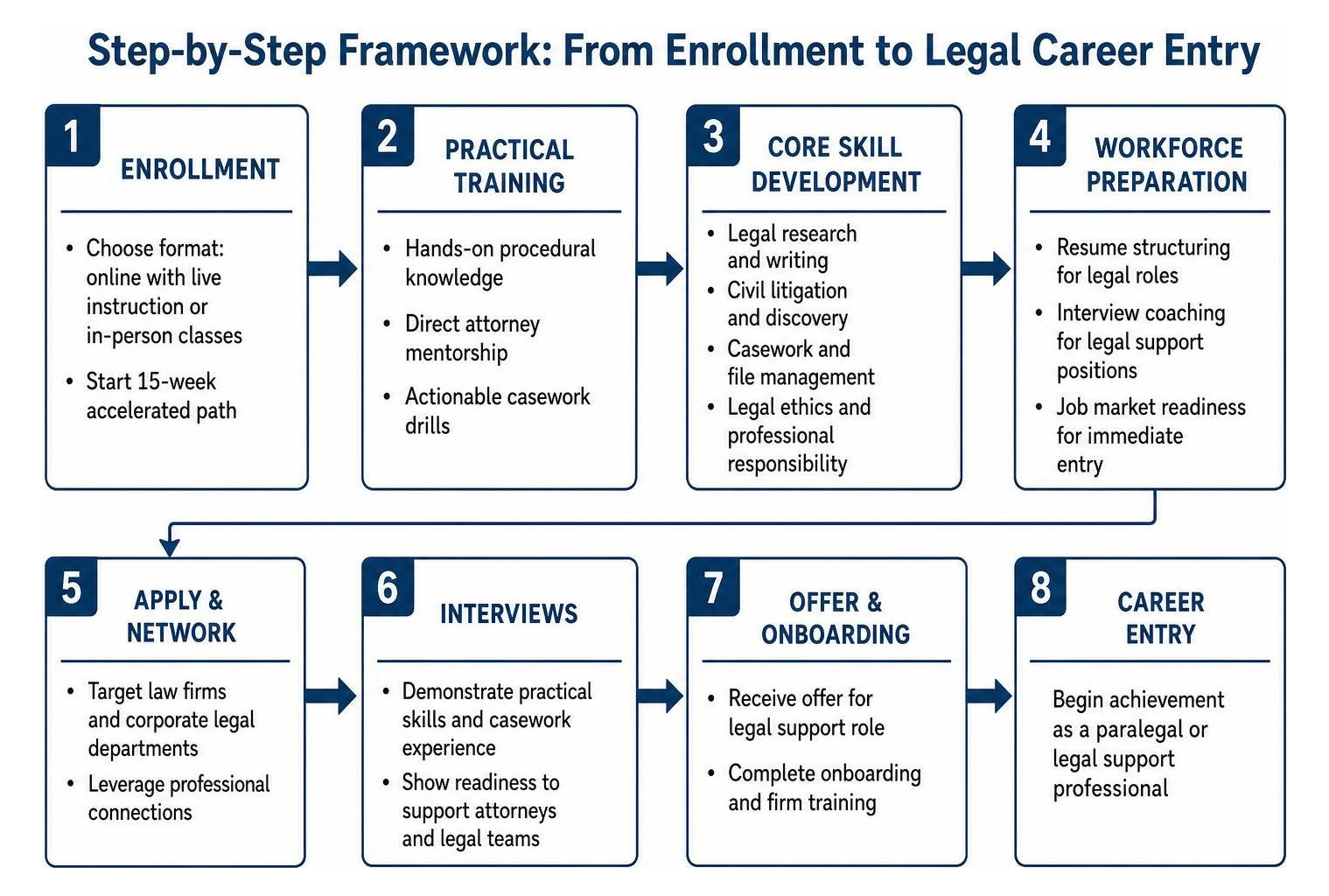
- Hands-on procedural knowledge: Real exposure to calendaring rules, court filing protocols, and standard litigation phases.
- Direct attorney mentorship: Instruction led by active legal practitioners who understand modern courtroom realities and firm workflows.
- Actionable casework drills: Practical assignments that mirror live legal matters rather than abstract textbook theory.
- Workforce preparation: Resume structuring and interview coaching tailored specifically to what hiring attorneys look for in legal support staff.
Program Formats in a Modern Legal Career Change Program
Balancing education with existing job duties or family obligations requires an educational model that respects your time without cutting corners on interaction. At the Paralegal Institute, we offer two distinct pathways designed for working adults: online with live instruction and in-person classes.
Our online with live instruction format delivers real-time engagement with instructors, allowing you to ask questions, review complex documents, and participate in practical exercises from home while maintaining direct, scheduled accountability. For those who thrive in a physical classroom setting, our in-person classes in Las Vegas provide an immersive environment for collaborative learning.
| Feature / Metric | Online with Live Instruction | In-Person Classes |
|---|---|---|
| Delivery Mode | Real-time virtual classroom | Campus classroom in Las Vegas |
| Completion Timeline | 15 Weeks | 15 Weeks |
| Curriculum Focus | 100% Practical legal skills & casework | 100% Practical legal skills & casework |
| Instructor Interaction | Live attorney-led instruction & real-time Q&A | Face-to-face instruction & hands-on casework |
| Schedule Structure | Scheduled live interactive sessions | Scheduled on-site interactive classes |
| Job Market Readiness | Immediate workforce entry | Immediate workforce entry |
Curriculum Focus of a Top Legal Career Change Program
To succeed quickly in a law firm or corporate legal department, your training must focus on the core engines of daily practice. When you decide to switch careers into law with an online paralegal certificate, you should master:
- Legal Research and Writing: Locating relevant statutes, analyzing case precedents, and drafting objective legal memoranda.
- Civil Litigation and Discovery: Preparing summonses, complaints, answers, interrogatories, and requests for production.
- Casework and File Management: Tracking evidence, organizing trial binders, managing client communication logs, and maintaining strict calendaring.
- Legal Ethics and Professional Responsibility: Navigating attorney-client privilege, identifying conflicts of interest, and upholding strict confidentiality rules.
Each of these areas is taught through realistic exercises that reflect the actual workflow of a busy law office. You will not simply read about litigation; you will prepare the same types of documents and manage the same types of deadlines that legal support professionals handle every day. This practical focus is what allows graduates to enter the workforce with confidence and contribute from the first week on the job.
Leveraging Transferable Skills for Legal Roles
Many prospective career switchers worry that their lack of direct legal experience will hold them back. In reality, modern legal employers place immense value on transferable workplace skills developed in other industries.

If you are transitioning from admin work to a paralegal career, your existing capabilities directly map to daily casework:
- Detail Orientation & Scheduling: Executive assistants and project managers already understand deadline management, which translates perfectly into calculating court filing deadlines and managing discovery cutoff dates.
- Client Communication: Professionals with customer service or administrative backgrounds excel at interviewing clients, gathering intake data, and providing empathetic, professional status updates.
- Written Communication & Organization: Drafting clear business correspondence and managing organized digital file structures are foundational skills for preparing court pleadings and document productions.
- Problem-Solving under Pressure: Navigating fast-paced office environments prepares you for the dynamic workflow of litigation prep and trial management.
These skills are in high demand across private law practices, corporate legal departments, and public service agencies where organized, compassionate support professionals assist with intake, documentation, and case management.
Overcoming Financial and Time Barriers During Your Pivot
The biggest obstacles preventing career switchers from entering the legal field are the fear of lost income, steep education costs, and lengthy time commitments. Extended multi-year schooling often delays workforce entry and requires substantial time away from practical career building.
An accelerated 15-week model completely changes this dynamic. By streamlining the educational process down to essential, practical skills, you reduce the opportunity cost of retraining and position yourself for rapid employment. Because the curriculum focuses exclusively on legal procedures, document drafting, and casework management, every lesson directly builds the skills needed to perform in a law office.
This focused approach also means you can continue working while you train. The program is structured to fit the schedules of busy adults, so you do not have to choose between earning an income and building a new career. Instead of spending years in a classroom, you can complete your training in a matter of months and begin applying for legal support roles with a credential that demonstrates immediate, practical capability.
Our paralegal career transition guide outlines how targeted, career-focused training allows you to protect your finances, acquire high-demand legal skills, and make a swift, confident pivot into a stable profession. The sooner you start, the sooner you can leave behind the frustration of a dead-end role and step into work that is both intellectually engaging and professionally respected.
Frequently Asked Questions About Legal Career Transitions
What prior background is needed to succeed in legal studies?
You do not need prior law office experience or a specialized legal background to succeed in legal studies. What matters most is a strong work ethic, solid reading comprehension, clear written communication, and an appetite for critical thinking. Whether your background is in retail, administration, healthcare, or education, a structured paralegal education provides the procedural framework needed to turn your general professional skills into specialized legal capability.
How long does it take to complete a career shift into the legal sector?
While extended academic routes can take multiple years of study, our accelerated certificate program requires just 15 weeks. This intensive, focused timeline delivers direct instruction in practical litigation and transactional tasks, ensuring you develop immediate job readiness without spending years out of the workforce. Review our paralegal career guide 2026 for a detailed timeline on structuring your study and transition milestones.
What starting roles are available after completing training?
Graduates of our certificate program qualify for entry-level legal support roles across private law firms, corporate legal departments, insurance companies, and government agencies. Common starting positions include litigation paralegal, legal assistant, discovery specialist, and intake coordinator. For actionable strategies on interviewing and positioning your resume for maximum impact, explore our paralegal career advice resources.
Conclusion: Launching Your New Path in Law
Transitioning into the legal field is one of the most practical and empowering career moves you can make. You do not need to pause your life for years or take on massive debt to become an indispensable part of a legal team. With the right training, you can master discovery procedures, document drafting, and casework management in a matter of months.
At the Paralegal Institute, we are dedicated to helping career-focused adults build practical skills that lead directly to workforce entry. Our 15-week accelerated curriculum—offered through online with live instruction and in-person classes —is designed and taught by practicing legal professionals who know exactly what it takes to succeed in today's legal environment.
Take the first step toward a fulfilling, resilient future by exploring the training required to enter the legal field and start your transition today. A focused legal career change program gives you the structure, support, and practical preparation you need to move forward with confidence and begin contributing to a legal team from your very first day.