Understanding the Path to Becoming a Paralegal
Do you need a degree to be a paralegal? The short answer is no. A traditional multi-year college education is not always required. However, most employers prefer or require candidates to have formal paralegal education, which can come from several pathways:
Quick Answer:
- Paralegal Certificate- Fastest path (typically months, not years)
- Traditional College Education- Longer programs with a broad academic focus
- On-the-Job Training- Must usually start in mail or reception and work you way up over time.
Note: Only California has formal state requirements for paralegals. Most states have no licensing requirements, but formal education is still strongly preferred by employers.
The legal field has evolved significantly, and while some law firms once offered on-the-job training, today's competitive market demands candidates who can demonstrate substantive legal knowledge from day one. Because of the complexity of the law, it is nearly impossible to enter this field without appropriate education.
The good news? You have options beyond spending several years in a traditional college program.
I'm Matthew Pfau, a practicing attorney who has hired and trained numerous paralegals throughout my legal career. My experience managing a medium-sized law firm taught me exactly what employers look for when they ask "do you need a degree to be a paralegal" and I've designed the Paralegal Institute curriculum to address those real-world needs.

The Big Question: Do You Need a Degree to Be a Paralegal?
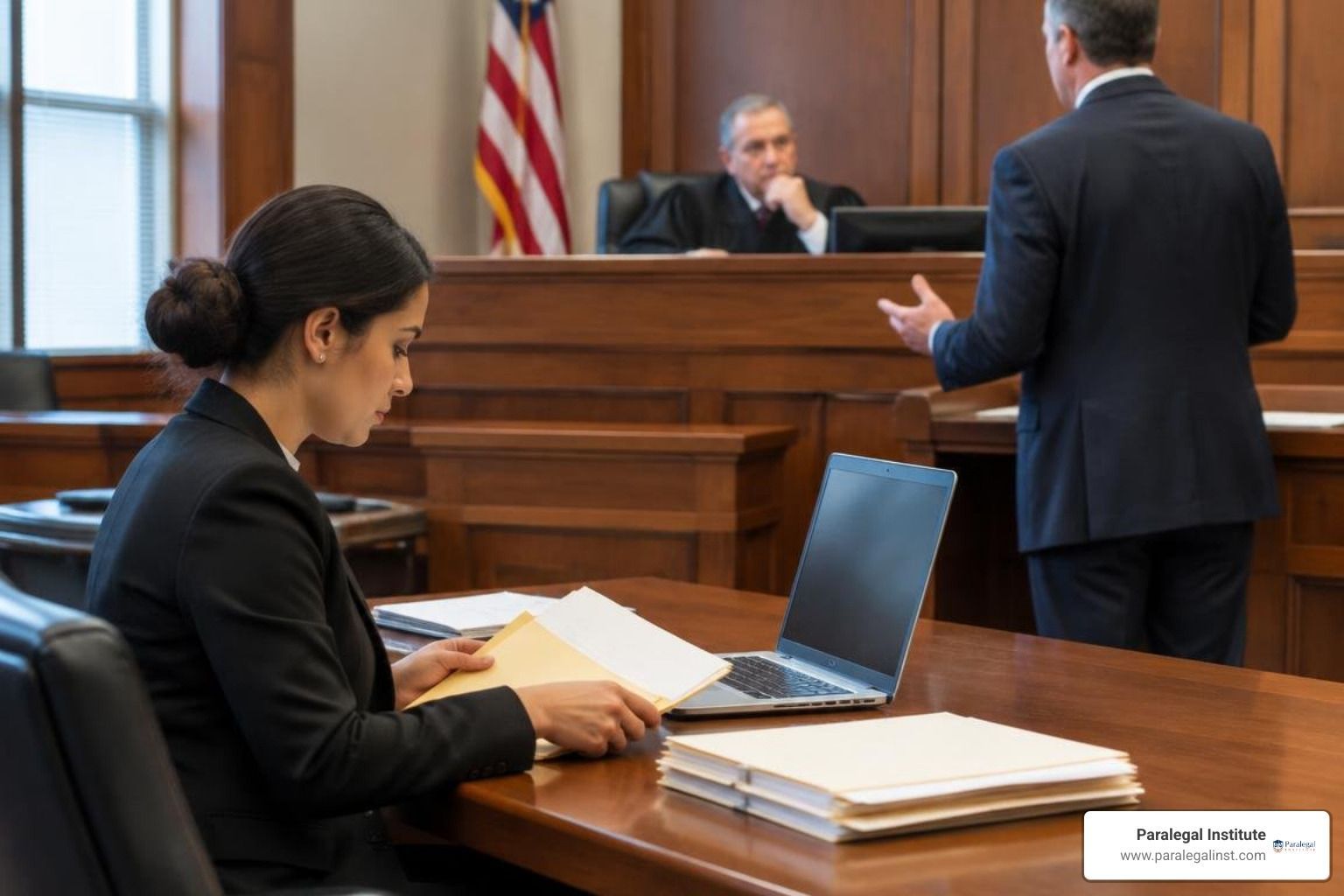
The question "do you need a degree to be a paralegal?" is one we hear often, and it gets to the heart of how to enter this dynamic profession. The straightforward answer for most of the United States, including states like Nevada where our institute is located, is that there isn't a universal degree requirement for paralegals. Unlike attorneys who must earn a Juris Doctor (J.D.) and pass a rigorous bar exam, paralegals generally do not need a law degree, nor do they need to adhere to state licensing requirements.
However, this lack of a strict legal mandate should not be confused with a lack of practical necessity. While on-the-job training might have been a viable path in decades past, it is now exceedingly rare. Most employers in today's legal landscape seek candidates who arrive with a solid foundation of legal knowledge and practical skills. We've seen that formal training is not just a preference; it's often a prerequisite for entry into the field. The legal world is too complex and to rely solely on informal learning once hired.
For a deeper dive into the specific training that makes a difference, explore our guide on What Training Is Required to Be a Paralegal.
The Reality of the Job Market
The legal job market is competitive, and simply having a high school diploma is rarely sufficient to secure a paralegal position. While some law firms may theoretically be willing to provide on-the-job training, the overwhelming majority of employers prefer and often require candidates with formal paralegal education. This preference isn't arbitrary; it stems from the need for paralegals who can immediately contribute to substantive legal work.
Employers want to see that you possess the necessary legal knowledge and practical skills to hit the ground running. A formal paralegal education demonstrates a quantifiable understanding of the profession and a commitment to acquiring the practical knowledge and skills through coursework. Without this foundation, securing an entry-level position can be incredibly challenging.
To understand the landscape better, consider reading How Hard Is It to Get Entry Level Paralegal Job. It highlights the importance of distinguishing yourself through proper education.
State-Specific Regulations: The California Exception
When considering the question, "do you need a degree to be a paralegal?", it's important to understand the regulatory environment. In the United States, there are no federal regulations governing paralegals. This means that for most states, including Nevada, there are no formal state-level requirements or licenses needed to call yourself a paralegal or to perform paralegal duties.
However, there's one significant exception: California. California is the only state that has formal requirements to become a paralegal. In this state, paralegals must meet specific educational criteria, such as completing a certificate program or another qualifying academic program, and they must also complete continuing education hours. This unique situation means that while a paralegal in Las Vegas, Nevada, doesn't face state-mandated educational requirements, their counterpart in Los Angeles, California, does.
For detailed information on California's specific rules, you can refer to California's paralegal regulations. For those outside of California, the importance of checking local standards still applies, though typically, it's employer preference rather than state law that drives educational requirements.
Paralegal Education Pathways: Choosing Your Route

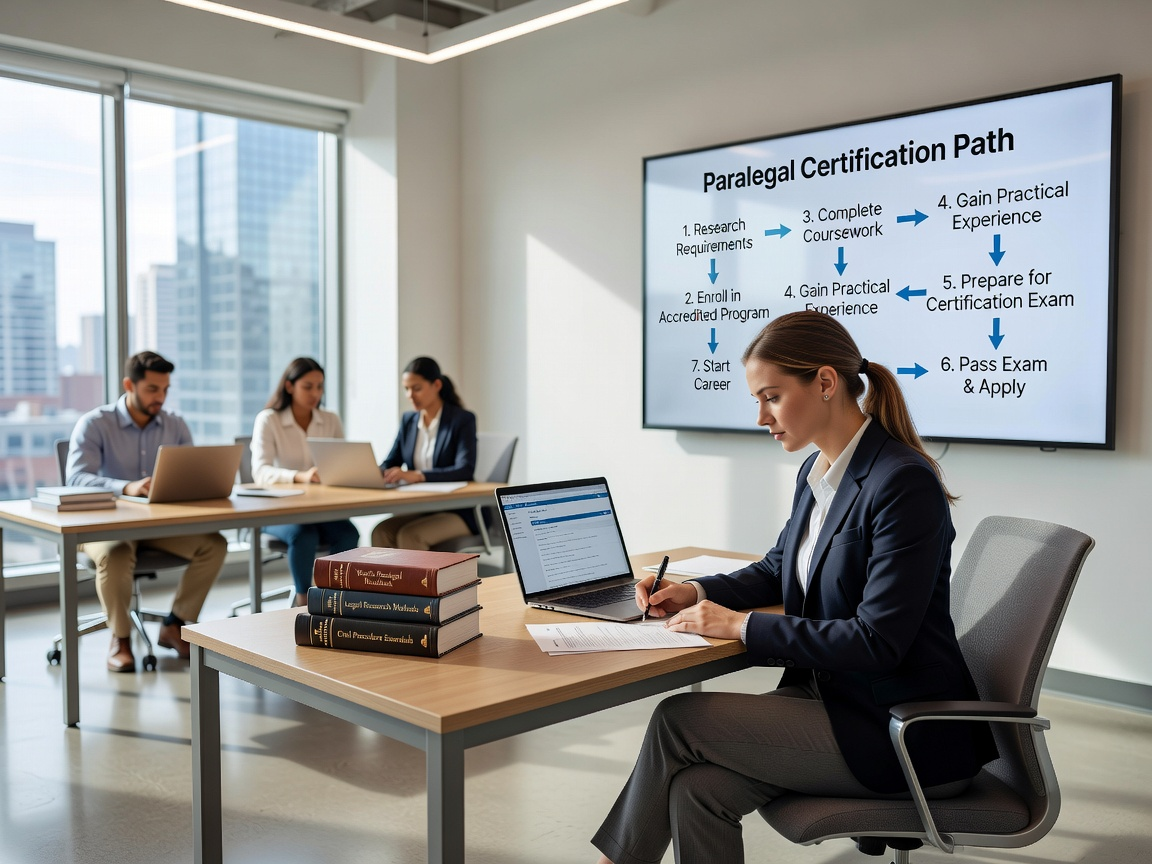
Navigating the various paralegal education pathways can feel a bit like choosing a route on a map. Each path leads to the same destination—a rewarding career as a paralegal—but they differ in duration, depth, and the kind of preparation they offer. Your choice will largely depend on your existing educational background, career goals, and how quickly you want to enter the workforce. It’s about aligning your education with your personal and professional aspirations, considering both the time and financial investment involved.
We believe in providing clear options that lead to direct career readiness. You can explore a comprehensive overview of these pathways in our guide: Paralegal Certificate and Degree Programs.
The Traditional Academic Routes
Many aspiring paralegals consider traditional academic routes. These longer university programs offer a comprehensive academic foundation, often including extensive general education courses alongside legal specialty instruction. While these programs provide a broad education, they also represent a significant time and financial commitment, and can mean a slower entry into the paralegal workforce. They often involve general studies that may not directly translate to the immediate, practical skills needed in a law office.
While these programs offer a valuable academic experience, we've found that for many adults seeking a career transition or a faster entry into the legal field, they may not be the most efficient or cost-effective choice. Our focus is on getting you job-ready, quickly and affordably.
The Accelerated Path: The Paralegal Certificate
For many, especially those with existing college credits or a degree in another field, the paralegal certificate program is the most strategic and efficient route. This accelerated path is specifically designed for career changers and individuals eager to enter the legal field without the extensive time and financial commitment of a traditional academic program.
Here's a quick comparison of the main options:
| Feature | Paralegal Certificate (e.g., Paralegal Institute) | Traditional Academic Program |
|---|---|---|
| Duration | Months (typically 15 weeks) | Multiple years |
| Focus | Practical, job-focused legal skills | General education + legal |
| Career-Readiness | Immediate workforce entry, hands-on training | Broader academic foundation, slower entry |
| Cost | Highly cost-effective | Higher |
| Instruction | Live online or in-person | Classroom-based |
The key advantage of a paralegal certificate is its intense focus on practical, job-focused skills. Our programs are designed and taught by practicing legal professionals, ensuring that the curriculum reflects the real-world demands of a law office. This means you learn what you need to know to perform substantive legal work from day one, without spending time on general education courses that don't directly advance your paralegal career. We offer our programs through live online instruction and in-person classes, providing flexibility without sacrificing the interactive learning experience.
For a detailed look at the advantages and considerations, check out the Pros and Cons of Paralegal Certificate Programs.
So, do you need a degree to be a paralegal if you get a certificate?
This is a critical distinction that often causes confusion. The answer is a resounding no: a paralegal certificate is a standalone credential. It is an academic credential earned by completing a specialized program of study, demonstrating that you have acquired the practical legal knowledge and skills needed for the profession.
For individuals who already hold a degree in another field, a paralegal certificate provides the specialized legal training needed to transition into a new career without pursuing another multi-year degree. For those just starting their higher education journey, a certificate offers the fastest and most direct path to an entry-level paralegal job. It equips you with the core competencies employers are looking for, making you a valuable asset to any legal team.
A paralegal certificate is often the fastest path to an Entry Level Paralegal Job Description because it prioritizes skill acquisition over extensive academic breadth.
Core Skills and Career Outlook for Paralegals

Regardless of the educational path you choose, the essence of a paralegal's role lies in performing substantive legal work under the supervision of an attorney. This means handling tasks that require a deep understanding of legal procedures, documents, and research. The value of practical experience cannot be overstated; employers are looking for individuals who can seamlessly integrate into their legal operations and contribute meaningfully from the start.
We constantly emphasize the importance of acquiring these hands-on skills, as they are what truly prepare you for the demands of the profession. For a comprehensive overview of what a paralegal career entails, we recommend exploring Paralegal Career Information.
Essential Competencies for Success
To excel as a paralegal, you need more than just theoretical knowledge; you need a robust set of core competencies. These are the skills that make you indispensable to a legal team:
- Legal Research and Writing: This is arguably one of the most fundamental skills. Paralegals spend a significant amount of time researching statutes, case law, and regulations, and then summarizing their findings clearly and concisely. Our programs focus heavily on this, ensuring you can perform sophisticated legal research and draft effective legal documents. You can learn more in our Legal Research Guide for Paralegals.
- Case Management: From organizing vast amounts of evidence to maintaining detailed client files, effective case management is crucial for keeping legal proceedings on track.
- Client Communication: Paralegals often serve as a primary point of contact for clients, requiring empathy, clarity, and professionalism.
- Critical Thinking: Analyzing complex legal problems and identifying relevant information is a daily task.
- Organizational Skills: The legal field demands meticulous organization to manage deadlines, documents, and information flow.
- Attention to Detail: A single misplaced comma or an overlooked fact can have significant legal consequences, making precision paramount.
We also find that strong interpersonal skills are key. Working as a paralegal requires collaboration and interaction with lawyers, clients, judges, witnesses, and law enforcement. To succeed, aspiring paralegals must also develop analytical reasoning capabilities, a sense of motivation, maturity, and responsibility, and strong written and verbal communication skills. These core competencies are what our programs are designed to instill, preparing you for the realities of legal practice.
Job Outlook and Specializations
The job outlook for paralegals is robust, reflecting the ongoing demand for skilled legal support professionals. According to the U.S. Department of Labor, the job outlook for paralegals and legal assistants is projected to grow at a faster-than-average rate of 4 percent from 2022 to 2032. This translates to an estimated 38,000 annual openings for paralegals and legal assistants during that decade.
You can find more detailed information on these projections in the Projected job outlook for paralegals. This growth is driven by the increasing complexity of the law and the legal profession's continuous need for efficient and cost-effective services.
Paralegals are in demand in various settings, including traditional law firms, corporate legal departments, government agencies, and non-profits. The field also offers numerous opportunities for specialization, allowing you to focus on areas that genuinely interest you. Common specializations include:
- Litigation: Assisting attorneys with all phases of a lawsuit, from research and discovery to trial preparation.
- Corporate Law: Working with businesses on contracts, mergers, regulatory compliance, and corporate governance.
- Real Estate Law: Handling property transactions, title searches, and drafting related documents.
- Family Law: Assisting with divorce, child custody, and adoption cases.
- Estate Planning: Preparing wills, trusts, and other estate documents.
Specializing can improve your career prospects and allow for deeper engagement with specific legal areas. For those looking to map out their professional journey, our guide on Long Term Career Goals for Paralegals offers valuable insights.
Frequently Asked Questions about Paralegal Education
We often encounter common questions from individuals considering a paralegal career. Let's address some of these directly.
What is the difference between a paralegal certificate and a legal secretary?
This is an important distinction. A legal secretary primarily performs administrative tasks within a law office, such as scheduling, managing correspondence, and maintaining office records. While valuable, their role is largely clerical.
A paralegal, on the other hand, performs substantive legal work under the direct supervision of an attorney. This includes legal research, drafting legal documents (like pleadings, contracts, or discovery requests), interviewing clients and witnesses, and assisting with trial preparation. The paralegal role requires specialized legal training and knowledge that goes far beyond administrative duties. A paralegal certificate program is specifically designed to provide this necessary training, equipping you with the skills to perform these substantive legal tasks.
For a more comprehensive comparison, read our article on Legal Secretary vs Paralegal.
Can I become a paralegal without any formal education?
While technically, some states may not have specific educational mandates for paralegals, the reality of the job market is that it is nearly impossible to enter this field without formal education. Employers overwhelmingly require candidates to have formal training, such as a paralegal certificate or a degree.
This isn't about arbitrary rules; it's about ensuring you possess the foundational legal knowledge, practical skills, and ethical understanding required to perform the job effectively and ethically. The legal profession is complex, and employers need assurance that their paralegals can contribute meaningfully from day one. Without formal training, you would be at a significant disadvantage in a competitive hiring environment.
How long does it take to complete a paralegal program?
The duration of paralegal education varies significantly depending on the pathway you choose:
- A traditional academic program can take multiple years to complete.
- An accelerated paralegal certificate program, like ours, can be completed in a matter of months. For example, our program is designed to be completed in just 15 weeks, offering the fastest path to employment in the legal field.
If speed and direct career readiness are your priorities, an accelerated paralegal certificate program is often the most efficient choice. You can learn more about these fast-track options in our guide to Accelerated Paralegal Certificate Programs.
Conclusion: Your Fastest Path into the Legal Field
So, do you need a degree to be a paralegal? As we've explored, a traditional multi-year college education is certainly one path, but it is not the only path, nor is it always required. In fact, for many aspiring legal professionals, it's not even the most efficient or cost-effective route. The key takeaway is that formal, specialized education is crucial for success in today's competitive legal landscape, but that education doesn't necessarily have to be a multi-year degree.
A practical, accelerated education, such as a paralegal certificate, is often the smartest way to achieve your career goals. Our programs at Paralegal Institute are specifically designed to provide you with the real-world skills and knowledge that employers demand, taught by practicing legal professionals. With live online instruction and in-person classes, we focus on getting you job-ready quickly and affordably, ensuring you make a smart investment in your future.
Ready to take the next step in your legal career? We invite you to Explore our Paralegal Certificate and Degree Programs to find the path that's right for you.