Essential Paralegal Training Course Details: Curriculum and Core Subjects
A paralegal training course teaches the substantive legal knowledge and practical casework skills needed to support attorneys from day one. Core subjects include civil litigation, legal ethics and professional responsibility, legal research and analysis, contract law, and torts and personal injury, along with hands-on drafting of pleadings, discovery, and case-management documents. As Matt Pfau, a practicing U.S. attorney who teaches paralegal courses at the Paralegal Institute, I look for candidates who understand substantive legal doctrine and know how to apply it immediately. A robust paralegal course curriculum focuses on foundational legal disciplines that form the backbone of everyday practice. Paralegals perform substantive legal casework under attorney supervision, which is why employers consistently screen for practical drafting and research ability rather than general academic exposure.
The core subjects covered in comprehensive paralegal training include:
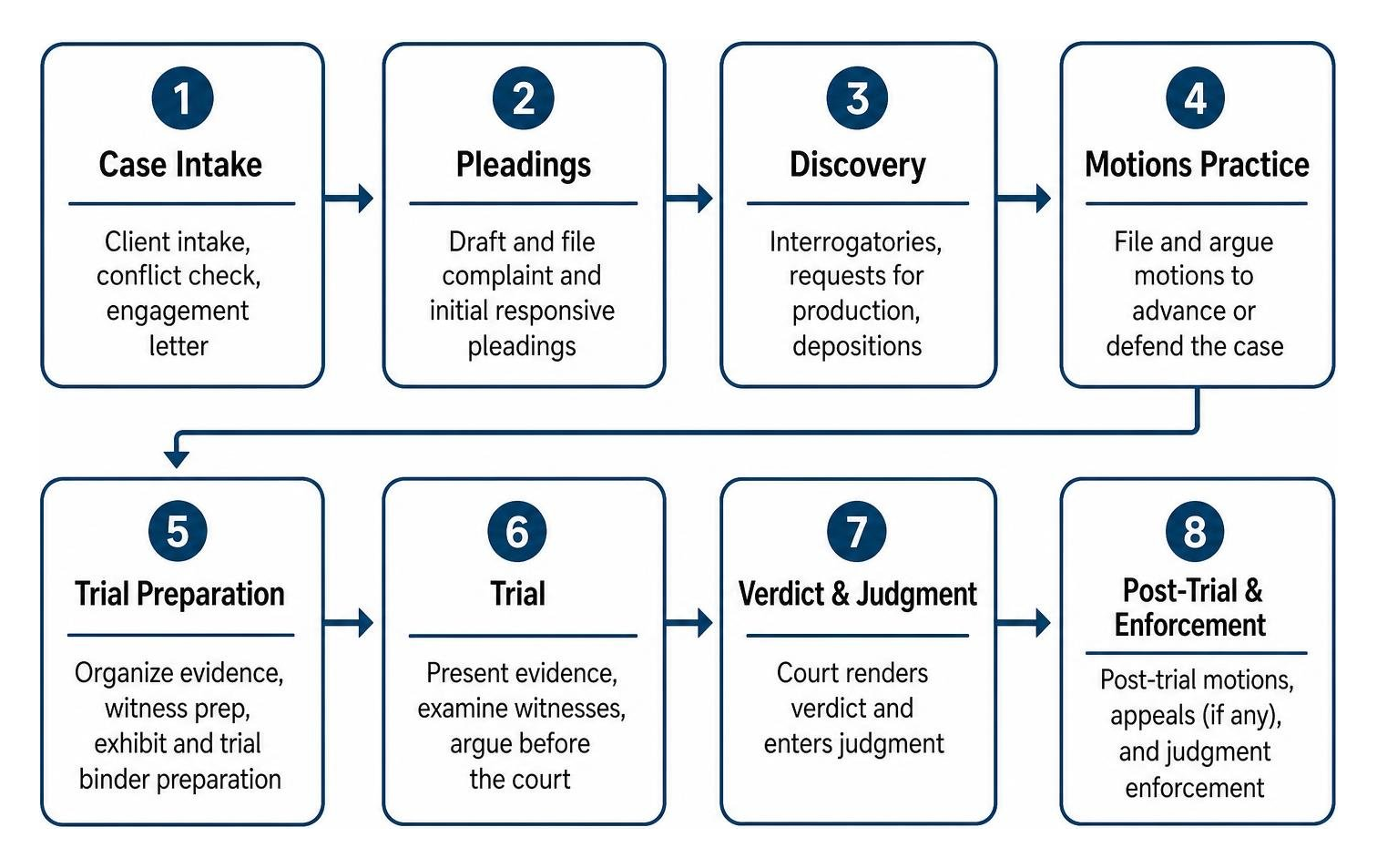
- Civil Litigation: Understanding the litigation life cycle from initial client intake and pleadings to discovery, motions, trial preparation, and post-trial enforcement.
- Legal Ethics and Professional Responsibility: Mastering the rules governing attorney-client privilege, confidentiality, conflicts of interest, and the strict boundaries surrounding the unauthorized practice of law.
- Legal Research and Analysis: Navigating primary and secondary legal authorities, verifying mandatory versus persuasive precedent, and utilizing citators to ensure legal authorities remain good law.
- Contract Law: Examining contract formation, mutual assent, consideration, defenses to enforcement, breach of contract, and available remedies.
- Torts and Personal Injury: Exploring intentional torts, negligence elements, strict liability, proximate cause, and damage calculations.
Mastering these subjects ensures that when an attorney hands you a file, you understand the legal theories driving the case strategy.
Paralegal Training Course Details on Practical Legal Skills
Theoretical knowledge alone does not win motions or keep client matters organized. Effective training bridges the gap between legal theory and active casework. That is why hands-on legal training is essential.
A practice-oriented syllabus dedicates substantial time to technical skills, such as:
- Pleadings and Brief Drafting: Drafting complaints, answers, affirmative defenses, discovery requests, and concise trial briefs that follow court formatting rules.
- Discovery and E-Discovery: Handling document preservation, drafting interrogatories, formulating requests for production, summarizing deposition transcripts, and organizing electronic discovery productions.
- Case Management: Maintaining litigation calendars, coordinating court filing deadlines, organizing evidence notebooks, and structuring trial binders.
- Mock Practice Exercises: Engaging in practical simulations, such as simulated court hearings or mock trial prep, to see how documents translate into live courtroom presentations.
Core Legal Specialty Areas and Electives
Beyond general litigation, paralegals often support specialized practice areas. Understanding paralegal coursework across distinct practice areas enables you to tailor your career toward sectors with strong hiring demand.
Key substantive areas include:
- Corporate Law: Drafting articles of organization, maintaining corporate minute books, preparing annual filings, and supporting mergers and acquisitions.
- Real Estate Law: Reviewing purchase agreements, examining title commitments, drafting deeds, and coordinating closing binders.
- Criminal Law: Managing constitutional procedure, review of investigative reports, suppression motions, and plea negotiations.
- Family Law: Preparing domestic relations petitions, financial disclosures, child custody parenting plans, and property division agreements.
- Estate Planning and Probate: Drafting wills, revocable trusts, powers of attorney, healthcare directives, and navigating probate administration.
Program Formats, Duration, and Admission Requirements
Paralegal education paths vary significantly in length, prerequisites, and academic depth. Selecting the right program depends on your educational background, current schedule, and career goals.
Admission standards generally depend on the program structure:
- Certificate Programs: Typically require a high school diploma or equivalent, though some candidates enter with prior college coursework or professional experience looking to retrain for the legal field.
- College-Based Legal Studies: Often require standard college admission benchmarks and involve general education coursework alongside legal courses.
Comparing Paralegal Training Course Details Across Program Types
For career-focused adults, accelerated certificate pathways offer a direct, efficient route into legal departments. Exploring paralegal certificate programs online allows students to gain career-ready legal skills without spending years completing unrelated general education requirements.
| Program Type | Typical Time Commitment | Primary Focus | Practical Casework Emphasis | Best Suited For |
|---|---|---|---|---|
| Accelerated Certificate | 15 Weeks | Focused, practical legal skills and core procedure | Intensive and immediate | Fast workforce entry and career changers |
| Traditional College-Based Legal Studies | Longer academic timetable | General education combined with introductory legal topics | Varies by program | Students seeking a broader academic experience |
Our accelerated 15-week paralegal certificate program at Paralegal Institute is designed for immediate workforce readiness, cutting out academic filler to focus entirely on actionable legal knowledge taught directly by practicing attorneys.
Course Delivery: Online with Live Instruction vs. In-Person Classes
Format selection affects how effectively you absorb complex procedural rules. Quality training requires real-time interaction with legal practitioners. Paralegal Institute offers course delivery through online with live instruction or in-person classes.

- Online with Live Instruction: An online paralegal program featuring live instruction delivers real-time lectures, dynamic Q&A sessions, and interactive document reviews directly from your home or office, combining structured guidance with scheduling convenience.
- In-Person Classes: Traditional in-person classes offer face-to-face instruction in a physical classroom setting, well-suited for students who prefer a fixed on-campus environment.
Both delivery models ensure you can ask immediate questions when working through intricate legal analysis.
Curriculum Standards and Professional Credentials
Understanding the educational landscape helps ensure your investment meets law firm expectations. Academic programs must adhere to rigorous curriculum benchmarks and structured standards to guarantee instructional quality. The U.S. Bureau of Labor Statistics projects continued demand for paralegals and legal assistants, and employers increasingly evaluate candidates on demonstrated drafting, research, and case-management ability rather than institutional prestige alone.
A complete paralegal studies curriculum guide outlines the rigorous framework necessary to master legal principles, civil procedure, and ethical boundaries.
Post-Graduate Credentials and Skill Development
After graduating with a paralegal certificate, professionals often pursue continuous skill enhancement. Keeping current with procedural updates, local court rules, and evolving e-discovery standards ensures long-term professional success and enhances advancement opportunities within legal departments. Many graduates also deepen their knowledge in specific practice areas, such as corporate transactions or estate administration, to expand the range of casework they can support under attorney supervision.
Career Outcomes, Industry Roles, and Financial Considerations
The demand for qualified legal professionals remains strong across private law firms, corporate legal departments, and public sector agencies. Choosing paralegal training taught by professionals gives candidates a distinct edge during interviews because our curriculum reflects current law office workflows.

Graduates apply their skills in diverse professional environments:
- Private Law Firms: Assisting trial attorneys with drafting pleadings, coordinating discovery requests, and preparing trial binders.
- Corporate Legal Departments: Managing contracts, handling regulatory compliance, and overseeing entity formation.
- Government Agencies and Public Sector: Supporting administrative hearings, civil litigation defense, and municipal compliance.
Paralegal vs. Legal Assistant Distinctions
While some offices use these titles interchangeably, their responsibilities and training focus on different aspects of legal practice:
- Paralegals: Focus on substantive legal tasks under attorney supervision, such as legal analysis, brief drafting, deposition preparation, discovery coordination, and witness interviews.
- Legal Assistants: Primarily handle administrative operations, including client scheduling, billing, transcription, file organization, and general correspondence.
Comprehensive training programs focus heavily on substantive legal tasks, qualifying graduates to perform billable legal casework under attorney supervision.
Program Costs and Financial Aid Options
When comparing programs, evaluating educational return on investment is key. Extended multi-year academic programs often carry significant overall costs and delay workforce entry. In contrast, focused certificate programs provide an affordable, direct path to career entry. Flexible payment options and workforce education plans make practical legal training accessible without taking on multi-year debt.
Frequently Asked Questions About Paralegal Training Courses
How long does a standard paralegal training course take to complete?
Traditional collegiate paths often take substantially longer, whereas an accelerated certificate program can be completed in as little as 15 weeks through intensive, focused live instruction.
What is the main difference between a paralegal and a legal assistant?
Paralegals conduct substantive legal work—such as legal research, document drafting, and discovery analysis—under attorney supervision. Legal assistants focus primarily on administrative, secretarial, and clerical support within the office.
What credentials do employers prioritize when hiring paralegals?
Employers prioritize demonstrable, practical skills, including the ability to draft pleadings, organize discovery, and conduct accurate legal research under attorney direction. Because paralegals perform substantive legal casework under direct attorney supervision, completing a practice-based paralegal certificate program remains the most direct and effective pathway to employment.
Conclusion
Choosing the right educational program sets the foundation for a rewarding legal career. The Paralegal Institute delivers an accelerated 15-week certificate program engineered for practical casework and rapid workforce entry. With live instruction led by experienced legal professionals, you gain direct access to actionable legal knowledge, hands-on document drafting, and dedicated career guidance. Explore our Paralegal Training Online to take the first step toward your legal career.