The Paralegal Skills Employers Need Now
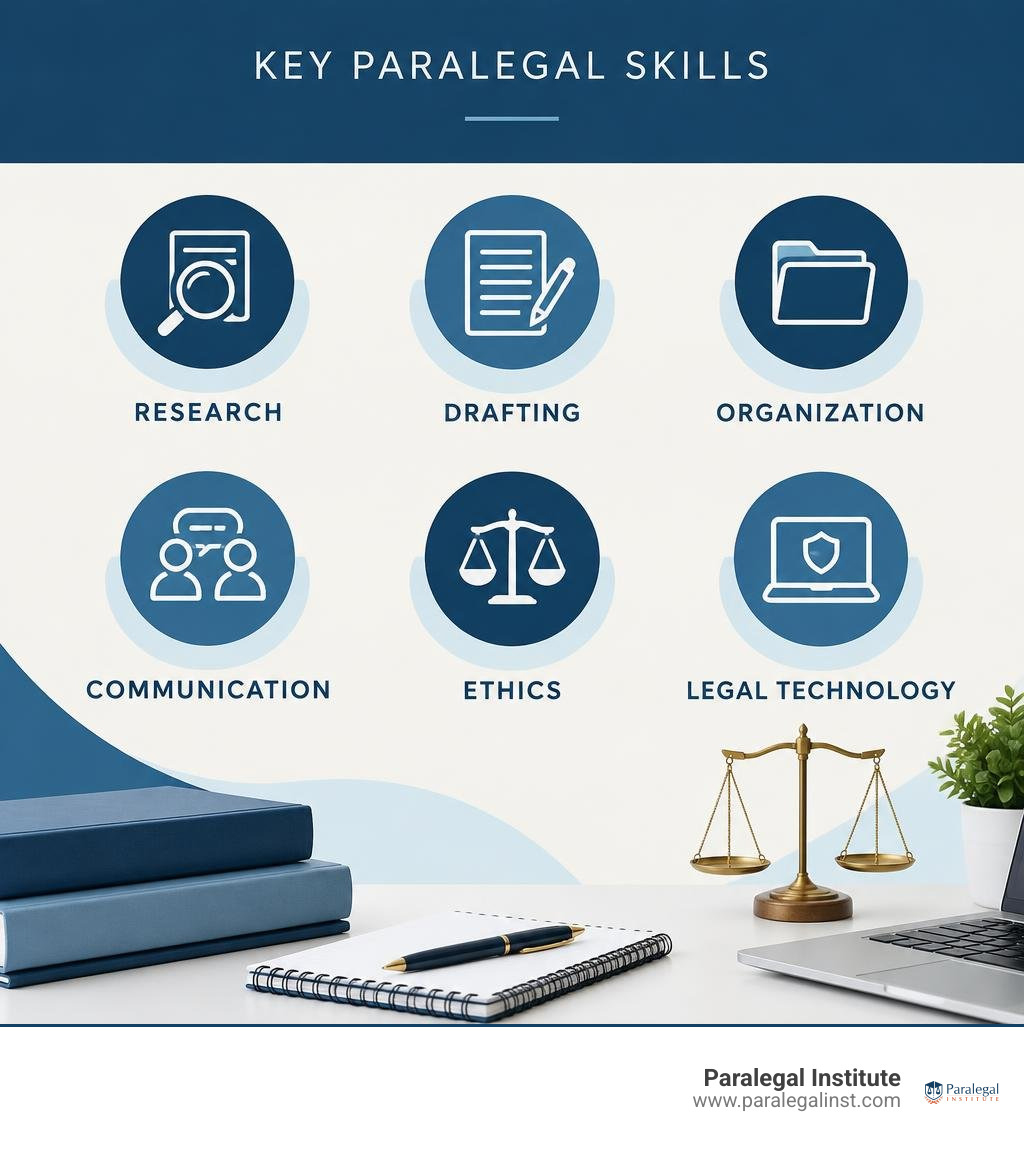
The most marketable paralegal skills are legal research, clear drafting, careful file management, client communication, and comfort with legal technology. Employers also need people who can track deadlines, support discovery, protect confidential information, and check AI-generated work for errors.
Those skills matter whether you want to support a trial team or manage day-to-day casework. In this guide, I'll show you which competencies to build first and how to demonstrate them when applying for competitive legal positions.
I'm Matt Pfau, a practicing attorney who hires and trains paralegals and teaches courses at Paralegal Institute. My trial work shapes how I teach paralegal skills for job market success, with a constant focus on the substantive work attorneys need completed accurately and efficiently from day one.
According to the U.S. Bureau of Labor Statistics, employment of paralegals and legal assistants is projected to grow 4 percent from 2023 to 2033, about as fast as the average for all occupations. This steady demand means that candidates who combine traditional legal foundations with modern technical abilities will consistently stand out in the hiring process.
Essential Paralegal Skills for Job Market Success

When attorneys review candidate profiles, we look for tangible proof that someone can handle real casework from day one. You do not need to know every nuance of trial strategy on your first day, but you do need reliable core competencies. These expectations center on time management, attention to detail, proactive problem-solving, and professional accountability.
A strong foundation in comprehensive paralegal skills ensures that you manage high-volume case dockets without letting filing deadlines slip. Let's examine the specific day-to-day abilities modern firms prioritize.
Advanced Legal Research and Document Drafting
Substantive legal research goes far beyond searching basic keywords online. Practicing attorneys depend on paralegals to locate binding primary authorities, cross-reference relevant statutes, check citation validity, and synthesize case law into organized legal memoranda. Master accurate citation format and maintain sharp attention to detail when cite-checking motions.
Mastering legal research skills allows you to deliver clear, actionable findings directly to supervising attorneys. Furthermore, practical paralegal training helps you draft foundational legal documents—including discovery requests, interrogatories, requests for production, pleadings, subpoenas, and client correspondence—with precision and clean formatting. Knowing how to structure a caption, format formal legal verifications, and draft clear factual summaries will make you an indispensable asset to any litigation team.
Technical and AI-Driven Paralegal Skills for Job Market Competitiveness
The modern legal environment requires comfort with technical tools. Law firms utilize electronic discovery workflows, digital docketing calendars, and practice management platforms to track complex matters. Modern artificial intelligence platforms can handle initial document review or summarize voluminous discovery files, but they lack human context and judgment.
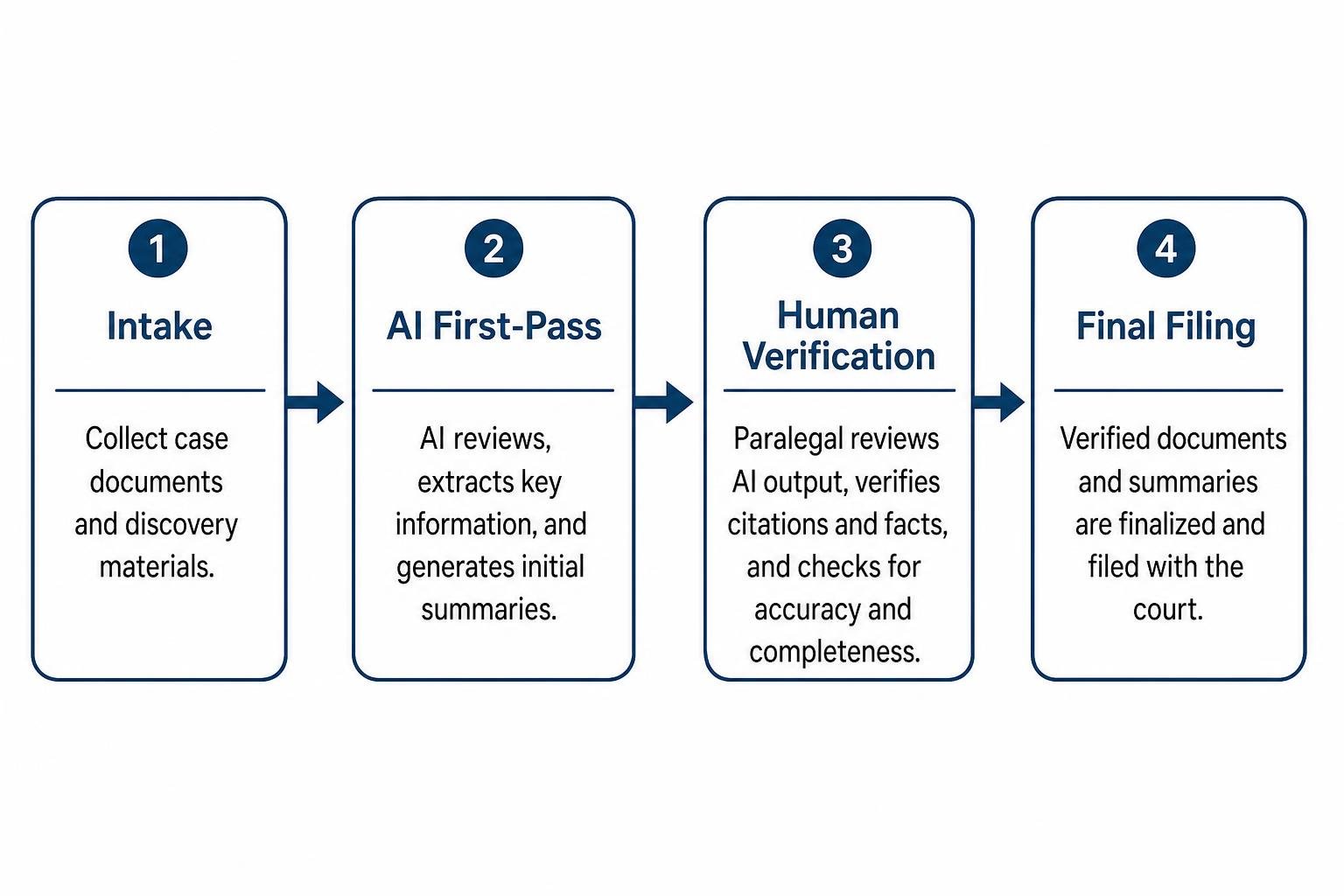
Attorneys rely on paralegals to act as the primary human verification check. You must be able to audit AI-generated summaries, verify citations against primary authorities to prevent fabricated case citations, confirm that factual assertions align with record evidence, and maintain strict data privacy and cybersecurity protocols. Handling metadata, applying Bates numbering, and executing digital redactions properly protect clients and ensure smooth court filings.
Beyond spotting errors, strong paralegals learn to work alongside these tools efficiently, using them to speed up repetitive tasks while reserving independent judgment for anything that touches client strategy, privilege, or courtroom deadlines. That balance between speed and oversight is exactly what separates a reliable hire from someone who simply knows how to click through software.
Client Communication, Ethics, and Trial Support
Paralegals frequently serve as the primary bridge between attorneys, courts, witnesses, and clients. Clear, plain-language communication helps keep clients informed during stressful litigation while maintaining strict professional boundaries. Understanding core paralegal roles and responsibilities means adhering to rigorous ethics, navigating conflict checks, and upholding client confidentiality at all times, while strictly avoiding the unauthorized practice of law.
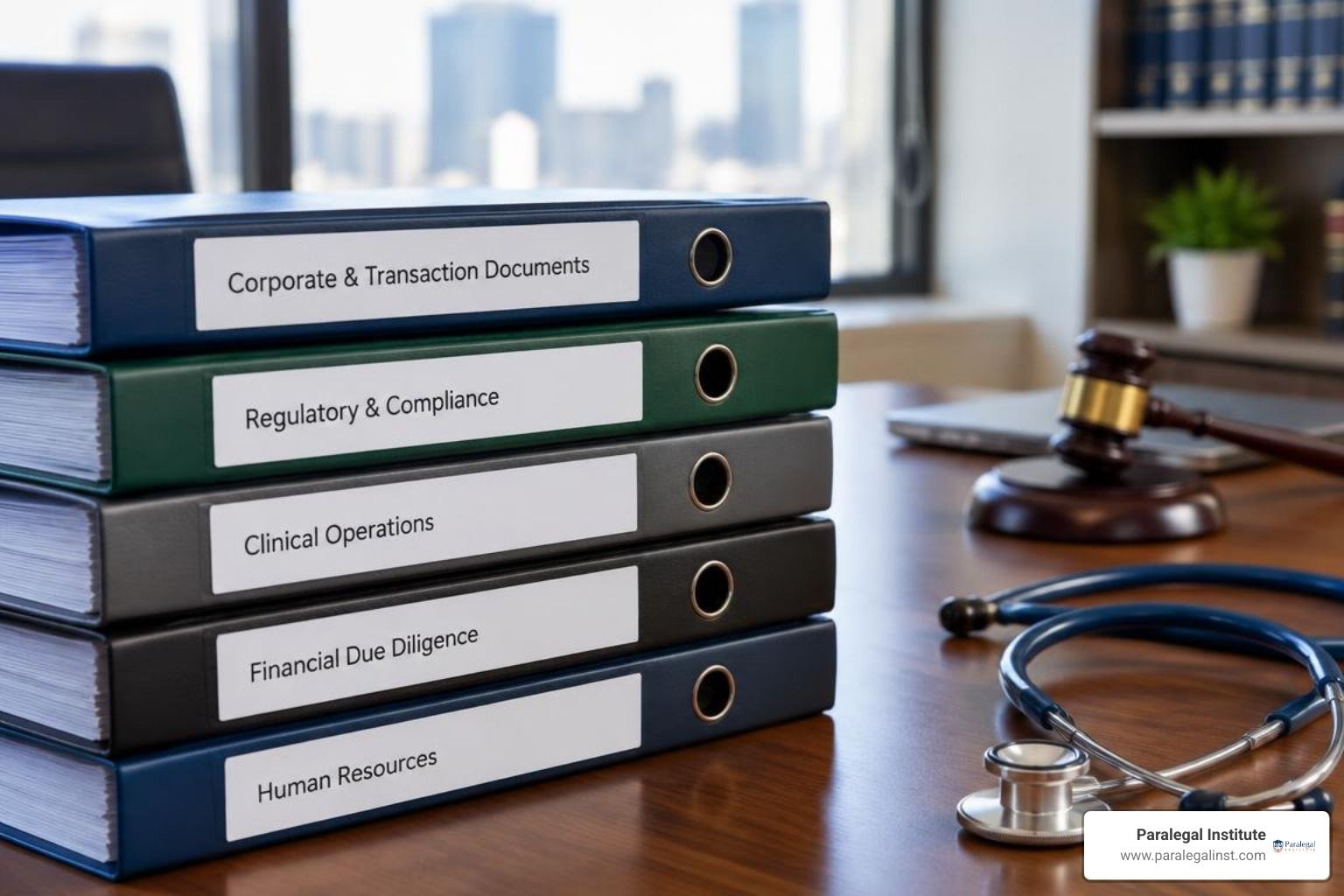
During trial preparation, paralegals assemble trial binders, organize exhibit logs, coordinate witness appearances, format demonstrative exhibits, and support counsel directly during courtroom proceedings.
Navigating Legal Career Paths: Program Paralegals vs. Career Paralegals

Legal careers offer diverse structures depending on your professional goals and target practice settings. Reviewing a paralegal skills guide can clarify the practical capabilities needed across different practice environments.
High-Growth Industries and Work Environments
Paralegals work across a wide range of legal and corporate sectors. While traditional private law firms employ the majority of legal support professionals, substantial opportunities exist across diverse organizational settings:
- In-House Corporate Legal Departments: Focusing on contract lifecycle management, regulatory compliance, risk assessments, and governance records.
- Government Agencies: Assisting with administrative hearings, public records requests, and regulatory enforcement matters.
- Financial and Insurance Institutions: Handling claims defense, compliance audits, underwriting support, and commercial transaction filings.
- Healthcare Organizations: Navigating risk management, patient privacy regulations, policy documentation, and healthcare contract reviews.
Wherever you land, the underlying skill set stays remarkably consistent: careful organization, clear writing, and the judgment to know when an issue needs an attorney's attention.
Education, Credentials, and Competency Standards
Building relevant legal skills requires practical, focused training. Enrolling in a dedicated paralegal skills training program gives you structured practice in the tasks attorneys assign most.
Certificate Training and Professional Credentials
When preparing for your first job as a paralegal, choosing the right educational pathway is crucial. Rather than spending years in lengthy theoretical academic degree programs, an accelerated paralegal certificate program delivers the direct, hands-on casework training that hiring managers prioritize.
Focusing on motion drafting, discovery assembly, practical legal research, and docketing gives you actionable skills for immediate workforce entry without unnecessary course filler or extended time commitments. A program built and taught by practicing attorneys also means the curriculum stays current with how firms actually operate today, rather than teaching outdated theory disconnected from real casework.
Aligning Paralegal Skills with Workplace Competencies
Modern law firms evaluate candidates based on actionable workplace competencies. Developing true job readiness involves structured practice across core milestones:
- Managing professional communications with clients, court clerks, and opposing counsel.
- Mastering legal terminology across civil, criminal, and transactional practice areas.
- Conducting primary legal research using industry-standard databases to find controlling authority.
- Preparing comprehensive pre-litigation document sets, privilege logs, and discovery indexes.
- Demonstrating complete integrity regarding ethical guidelines, privilege preservation, and client confidentiality.
- Utilizing digital litigation tools to organize evidence and support attorneys efficiently during hearings and trials.
Whether you train online with live instruction or attend in-person classes, the goal is the same: walking into your first role able to produce work a supervising attorney can trust without extensive rework.
Frequently Asked Questions About Paralegal Careers
What are the most in-demand technical tools for legal assistants?
Employers look for proficiency with online legal research platforms, electronic filing portals, digital document management tools, and docketing software. Experience auditing automated discovery and contract review tools is also increasingly valuable.
How is artificial intelligence transforming paralegal responsibilities?
AI accelerates initial drafting and high-volume document analysis. However, it requires human paralegals to verify citations, check facts against case files, ensure cybersecurity compliance, eliminate bias, and provide empathetic, professional client support.
What is the fastest route to enter the paralegal profession?
An intensive certificate program focusing on practical, hands-on legal training provides the quickest route to employment. Building a portfolio of actual legal drafts, research memos, and discovery requests demonstrates immediate job readiness to hiring attorneys far more effectively than theoretical study alone.
Conclusion
Succeeding in the modern legal job market requires a balance of core legal foundations, meticulous organizational habits, and modern technical competence. You do not need to spend multiple years in school to begin an impactful career in law.
At Paralegal Institute, we offer an accelerated 15-week paralegal certificate program designed and taught directly by practicing attorneys like myself. We focus on real-world practical skills, live instruction for real-time learning, affordable tuition, and dedicated career preparation that leads to high job placement.
Explore our paralegal training programs, available online with live instruction or in-person classes, to start building the skills attorneys are hiring for today.