What You Need to Know About Paralegal Careers
Paralegal careers offer one of the fastest, most practical paths into the legal field — without spending years in law school.
Here's a quick snapshot of what to expect:
| Area | Key Facts |
|---|---|
| Entry-level education | Focused paralegal certificate |
| Earning potential | Strong entry-level legal industry wages (BLS) |
| Top industries hiring | Law firms, corporate legal depts, government |
| Common specializations | Litigation, corporate, estate planning, IP |
| Work arrangements | On-site and live online remote options |
| Job openings per year | \~39,300 |
| Career growth path | Paralegal to Senior Paralegal to Legal Operations |
Paralegals do substantive legal work — real legal research, document drafting, discovery management, and trial prep — all under attorney supervision. This is not just filing and answering phones.
The role sits at the center of how legal teams function. Law firms, corporations, and government agencies all depend on skilled paralegals to keep cases moving and legal operations running efficiently.
Getting into this field doesn't require years of traditional higher education. A focused paralegal certificate program can get you job-ready far faster — and at a fraction of the cost of a traditional college path.
I'm Matt Pfau, a practicing attorney who has hired and trained paralegals at my own law firm and taught paralegal courses at the university level — experience that gave me a front-row seat to exactly what employers look for in paralegal careers and what separates job-ready candidates from the rest. In the sections below, I'll walk you through every entry requirement, skill, and career decision you need to make this career move with confidence.

Core Education and Credential Requirements for Paralegal Careers
When entering the legal profession, understanding the standard educational requirements is your first major step. While attorneys must navigate several years of undergraduate study followed by three intensive years of law school, candidates seeking paralegal careers face a far more direct and adaptable path.
Employers primarily evaluate applicants based on practical skills and direct legal knowledge. Attorneys need team members who can immediately jump into managing legal files, drafting pleadings, and conducting legal research without needing months of foundational training on the job.
To meet these standard workplace expectations, most aspiring professionals earn a focused paralegal certificate. This credential demonstrates to hiring managers that you possess a grounded understanding of legal concepts, ethics, and procedural mechanics.
At the Paralegal Institute, we believe the most effective way to master these practical skills is through live, structured education. We offer two clear learning formats tailored to busy adults:
- Online with Live Instruction: You attend scheduled, interactive classes in real time from home, interacting directly with practicing attorneys who teach the curriculum and answer your questions instantly.
- In-Person Classes: You learn in a traditional classroom environment, collaborating directly with peers and instructors for hands-on exercises and immediate feedback.
Regardless of which format fits your schedule, participating in live instruction ensures you aren't left struggling through passive pre-recorded videos. You gain real-time guidance from experienced legal professionals who understand what local firms demand. To explore more about how structured learning prepares you for the field, review our Paralegal Job Guide 2026.
Comparing Certificate Programs vs. Traditional College Degrees
Many career seekers naturally ask whether they should pursue a multi-year traditional degree or opt for an accelerated certificate program. While a traditional college degree provides broad academic exposure across general subjects, it often involves significant time and money spent on general education courses that don't directly apply to daily legal casework.
For adults focused on immediate workforce entry, an accelerated paralegal certificate offers a highly focused, cost-effective alternative.
| Feature | Accelerated Paralegal Certificate | Traditional College Degree |
|---|---|---|
| Primary Focus | Direct practical skills, legal research, procedural drafting | Broad general education, theory, electives |
| Time to Completion | Accelerated (15 weeks) | Multi-year study |
| Class Environment | Live attorney instruction (Online or In-Person) | Large lecture halls, graduate teaching assistants |
| Career Readiness | Immediate workforce entry with practical casework tools | Delayed workforce entry; often requires post-grad specialized training |
| Overall Efficiency | High efficiency; focused strictly on legal applications | Low-to-moderate efficiency for direct legal job skills |
By concentrating strictly on substantive legal concepts—such as civil litigation, contract law, real estate, and legal research—an accelerated program delivers career-ready training in a fraction of the time. You skip unnecessary general requirements and focus entirely on building skills that attorneys value during interviews.
State-Specific Prerequisites and Legal Compliance Rules
Before embarking on your new path, it is critical to understand the legal boundaries governing non-lawyer professionals. Across all jurisdictions, paralegals perform substantive legal work under the direct supervision of a licensed attorney.
Under standard legal ethics rules, paralegals are strictly prohibited from engaging in the unauthorized practice of law. Specifically, a paralegal cannot:
- Give formal legal advice to clients.
- Set legal fees or sign retainers on behalf of the firm.
- Represent clients in court proceedings or legal arguments.
Understanding these operational boundaries is a core component of professional training. Modern legal employers look for candidates who hold a strong command of legal ethics, confidentiality rules, and conflicts of interest. When you demonstrate that you respect the scope of supervised practice and understand attorney-client privilege, law firms view you as a reliable asset to their daily operations.
Essential Skills and Workplace Responsibilities in Legal Practice
What does a daily schedule look like in modern paralegal careers? While exact duties shift based on practice areas, core substantive responsibilities remain consistent across the legal sector.
Rather than basic clerical tasks, paralegals manage core technical elements of active cases. Attorneys count on qualified support staff to compile facts, organize legal documents, manage procedural deadlines, and maintain open lines of communication with court staff and clients.

Key daily responsibilities include:
- Legal Research: Locating primary legal authority, state and federal statutes, and relevant court precedents to support legal arguments.
- Document Drafting: Preparing initial drafts of pleadings, motions, settlement agreements, discovery demands, and corporate resolutions.
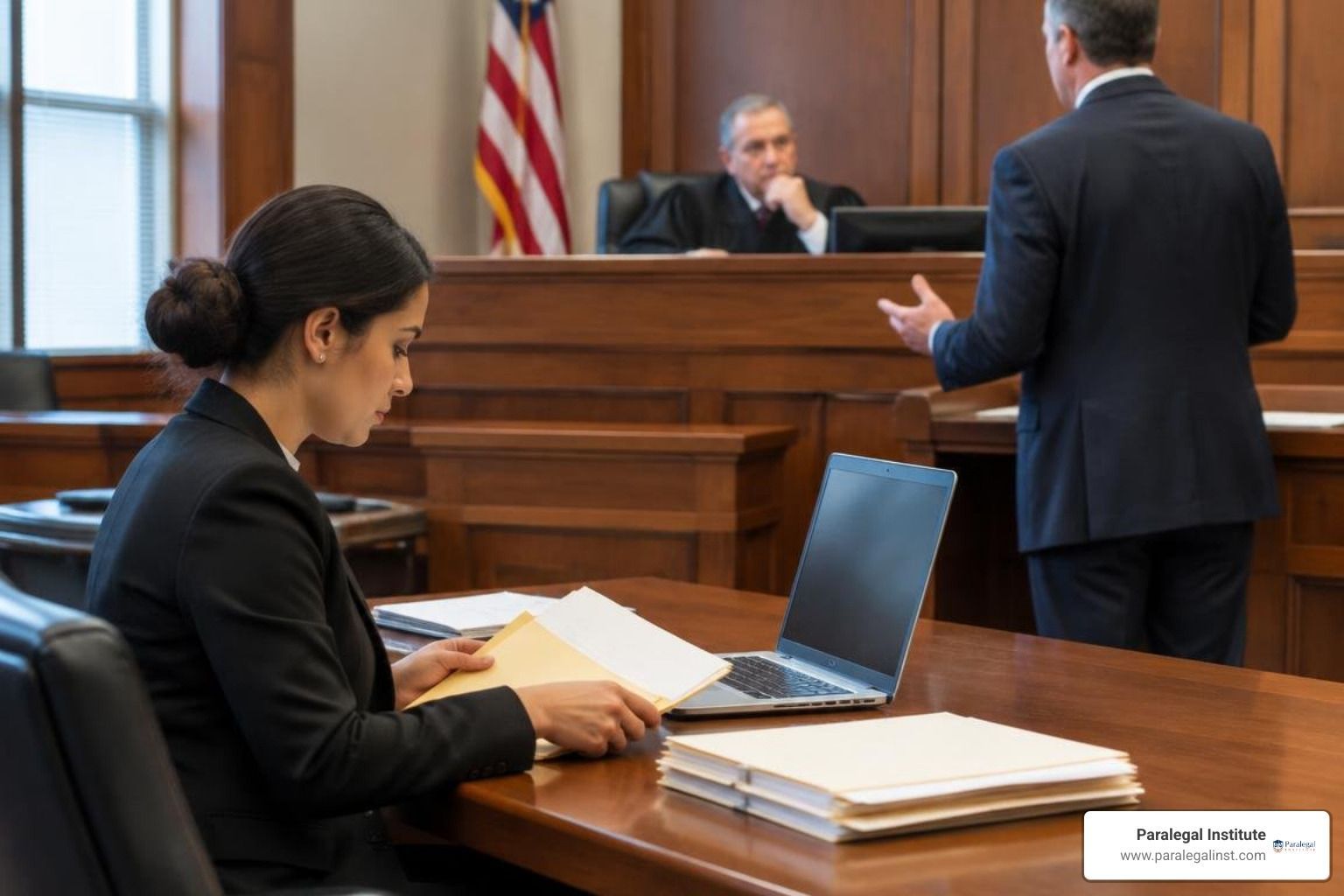
- Litigation Support: Building comprehensive trial notebooks, organizing physical and digital trial exhibits, and managing deposition transcripts.
- Discovery Management: Coordinating the gathering, organizing, and indexing of evidentiary documents during pre-trial discovery phases.
Mastering these core functions makes you an essential bridge between attorneys, courts, and clients. For a deeper look into the daily workflow of modern legal support teams, read our comprehensive overview of Paralegal Roles and Responsibilities.
Key Responsibilities Across Law Firms, Corporate, and Government Sectors
The versatile nature of legal training opens doors across multiple professional sectors. While law firms remain the primary employer of legal support professionals, corporate legal departments and government agencies represent major hiring avenues.
In private law firms, paralegals handle dynamic caseloads involving civil litigation, personal injury, estate planning, real estate, or family law. Your work centers around preparing documents for filing, coordinating with clients during intake, and preparing case files for trial.
In corporate legal departments, legal staff support in-house counsel by assisting with corporate governance, regulatory compliance, employment law oversight, and contract review. In these settings, you act as a key operational liaison between business executives and outside legal counsel.
In government agencies, paralegals support public prosecutors, legal aid departments, or civil administrative boards. These roles often involve analyzing factual claims, organizing evidence for regulatory hearings, and managing public compliance records.
To learn how responsibilities vary across these distinct environments, consult our updated Paralegal Job Guide 2026.
Essential Legal Tech and Research Skills for Paralegal Careers
The legal industry relies heavily on digital technology, making technical proficiency essential for modern job seekers. Today's law firms rely on electronic research tools, digital court filing portals, and modern document assembly software to streamline daily workflows.
Employers expect candidates to arrive with a firm grasp of legal technology, including:
- Automated Legal Research: Navigating primary and secondary legal databases efficiently to extract binding legal precedents.
- E-Discovery Tools: Utilizing digital platforms to review, tag, catalog, and index massive volumes of electronic records during pre-trial discovery.
- Document Assembly: Leveraging automated templates to generate error-free legal contracts, subpoenas, and court forms rapidly.
- Workflow Efficiency: Applying critical thinking to organize case timelines, track filing statutes, and ensure court deadlines are never missed.
Developing these technical competencies allows you to boost law firm productivity immediately upon hire. For official national insights into technical skill requirements and job classifications, review the Paralegals and Legal Assistants : Occupational Outlook Handbook: : U.S. Bureau of Labor Statistics.
Workplace Formats, Career Advancement, and Job Outlook
The structural dynamics of modern law offices have expanded signficantly, creating flexible working arrangements for trained legal staff. Today’s legal professionals work across traditional on-site office setups, remote environments, and dynamic digital team frameworks.
While many law firms prioritize on-site positions—especially for litigation roles that demand physical trial preparation and document management—corporate legal departments and specialized legal teams increasingly adopt flexible, remote-friendly schedules. Candidates who possess strong digital communication skills and digital case management abilities are well-positioned to take advantage of these varied work settings.
From an industry perspective, overall market demand for skilled support staff remains steady. Labor market statistics show that tens of thousands of legal support openings occur each year, driven largely by worker turnover, retirements, and law firm restructuring. Legal employers actively look for career-ready candidates who can jump right in and reduce the workload burden on senior attorneys.
Entry-Level Roles vs. Advanced Pathways in Paralegal Careers
Starting a legal career opens clear avenues for long-term professional growth and advancement. Many entry-level job seekers begin as legal administrative assistants or junior paralegals, handling initial client intake, file organization, and basic court filings while building real-world familiarity with firm procedures.
As you build practical experience, gain domain expertise, and refine your legal research capabilities, higher-level roles open up:
- Senior Legal Specialist: Managing complex corporate transactions, complex commercial litigation, or intricate trust and estate distributions independently under attorney supervision.
- Paralegal Manager / Supervisor: Overseeing support staff workflows, managing departmental budgets, setting legal tech standards, and coordinating training for new hires.
- Legal Operations Specialist: Transitioning into the strategic operational side of legal departments, focusing on process optimization, legal tech integration, and vendor management.
This built-in career progression ensures that entering the field provides a durable platform for continuous professional growth. To evaluate long-term career trajectories and industry opportunities, check out our guide on Paralegal Job Prospects.
Frequently Asked Questions About Paralegal Entry Requirements
Do you need a long traditional degree to start working as a paralegal?
No, a multi-year university degree is not mandatory to enter the field. While some corporate legal departments or specialized law offices prefer candidates with traditional diplomas, the vast majority of legal employers prioritize direct practical skills and practical job readiness over long academic tenure.
An accelerated paralegal certificate provides a streamlined, highly effective entry path. By focusing on substantive legal coursework, legal research techniques, and procedural document drafting, an accelerated certificate program equips you with the exact competencies attorneys test during the hiring process—allowing you to start working in the legal sector without incurring years of unnecessary college expenses.
What is the distinction between a legal assistant and a paralegal?
While these job titles are sometimes used interchangeably in casual workplace conversation, they represent distinct tiers of responsibility within a law firm:
- Legal Administrative Assistants primarily manage clerical and administrative functions, such as managing attorney calendars, answering client phone calls, filing physical documents, and processing incoming mail.
- Paralegals conduct substantive legal work under an attorney's supervision. This includes drafting formal legal pleadings, conducting primary legal research, summarizing witness depositions, analyzing evidentiary discovery, and building trial notebooks.
Transitioning from administrative support to substantive casework typically requires completing formal, attorney-led paralegal training.
Are remote work options available for modern paralegals?
Yes, remote work opportunities have expanded within the legal sector. Corporate legal departments, technology companies, and intellectual property firms often offer fully remote or flexible work setups for team members who handle document review, contract drafting, and regulatory filings.
However, remote availability often depends on the practice area and firm structure. Litigation paralegals, for instance, are frequently required on-site to handle physical exhibit organization, coordinate with court clerks, and assist trial counsel directly in the courtroom. Building strong digital communication and modern legal tech skills will maximize your flexibility in securing remote roles. For more details on modern job setups, consult our Paralegal Job Complete Guide.
Conclusion
Stepping into paralegal careers offers a direct, rewarding avenue into the legal profession without the multi-year timeline or heavy commitment of traditional law school. By mastering substantive legal research, document drafting, discovery management, and workplace legal ethics, you convert yourself into an essential team member that legal employers actively seek out.

At the Paralegal Institute, we believe your legal education should be fast, practical, and directly aligned with what active law firms demand:
- Accelerated 15-Week Certificate Program: Gain comprehensive, practical skills designed for immediate workforce entry in less than four months.
- Attorney-Led Instruction: Learn directly from practicing attorneys who bring current legal cases and actionable courtroom insights into every class.
- Two Live Learning Options: Choose between Online with Live Instruction for real-time remote learning or standard In-Person Classes for interactive classroom engagement.
- Job-Ready Focus: Master the exact technical tools, legal writing frameworks, and ethical guidelines needed to excel from day one on the job.
If you are ready to take control of your career path and step confidently into the legal field, review our comprehensive resources at Paralegal Job Complete Guide and discover how our live, attorney-led training can help you achieve your career goals.