What Paralegal Work-Life Balance Looks Like in Practice
Paralegal work-life balance is achievable, but hours depend on the firm and practice area. Many roles follow a regular workweek, while filing deadlines, discovery, and trial prep can bring overtime. When evaluating a job, ask how often staff work late, who sets priorities, and whether the firm has a plan for after-hours requests.
Good habits help, but balance is not yours to solve alone. Protected time for casework, clear deadlines, and shared responsibility for office tasks can keep a busy day from becoming a longer one.
I'm Matthew Pfau, a practicing attorney who has hired and trained paralegals and teaches at the Paralegal Institute. That experience shapes my approach to paralegal work-life balance: look closely at the work, the schedule, and the support behind both.
The Reality of Paralegal Work-Life Balance Across Modern Law Firms
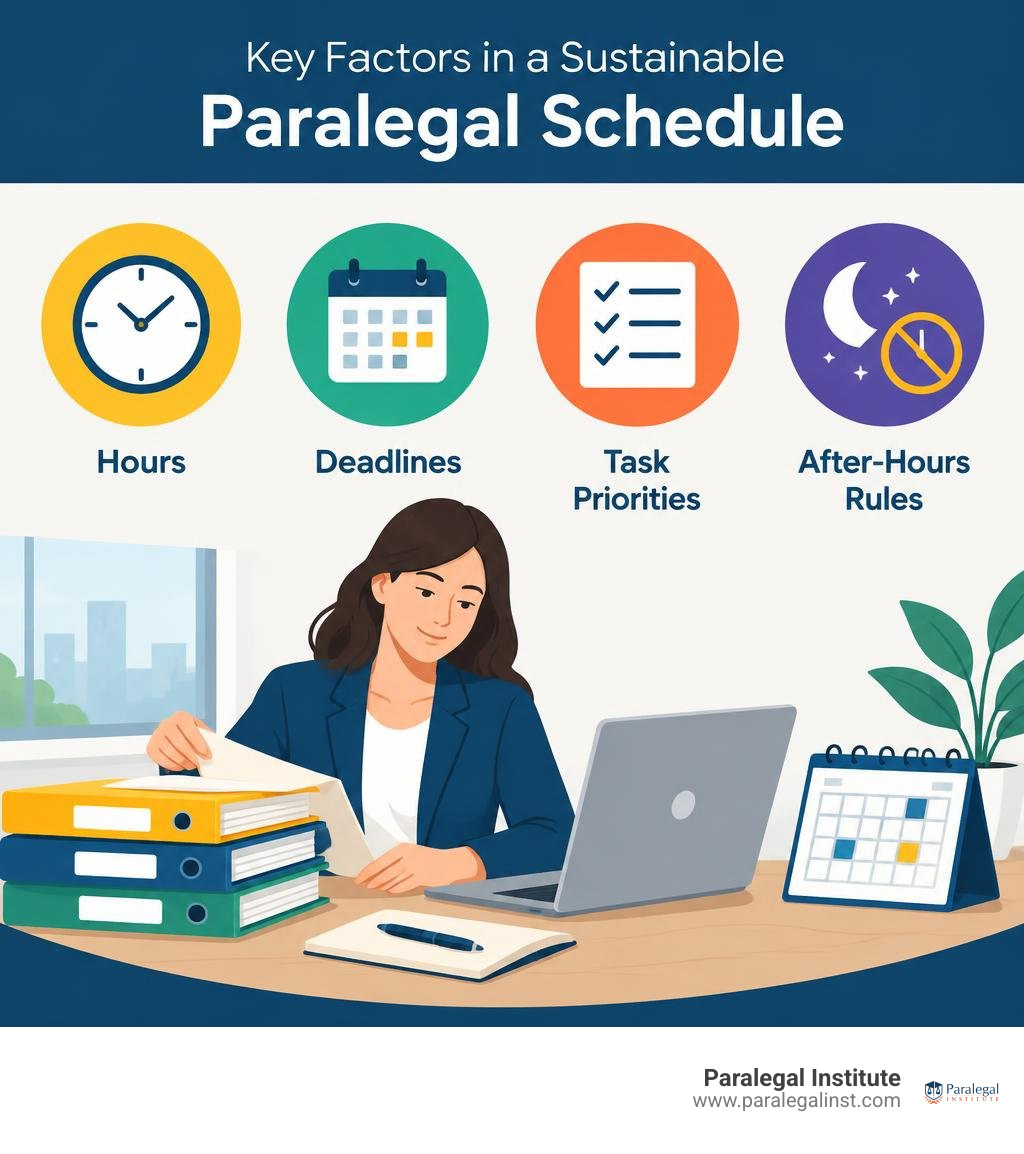
Finding a sustainable equilibrium in the legal field requires understanding the operational structures of modern law offices. Legal work is notoriously demanding, with industry studies consistently revealing elevated stress levels across both attorneys and support staff. However, the root causes of workplace strain often manifest differently depending on your specific job title.
| Operational Factor | Attorney Demands | Paralegal Demands |
|---|---|---|
| Primary Pressure | High billable hour quotas and client retention | Rapid task-switching and discovery execution |
| Administrative Burden | Delegating routine casework | Absorbing administrative overflow and docket management |
| Overtime Drivers | Final case strategy and client consultations | Court filing cutoffs and urgent trial preparation |
| Schedule Control | Greater autonomy over daily calendar | Structured operational hours with urgent triage needs |
To build long-term sustainability, we must analyze how these pressures diverge and how professionals manage them daily.
Paralegals vs. Attorneys: Distinct Pressures and Expectations
While attorneys shoulder final legal accountability and demanding billable quotas, paralegals often bear the brunt of operational friction. In many litigation firms, a paralegal must juggle discovery responses, record indexing, and trial preparation while fielding spontaneous requests from multiple supervising attorneys.
When professionals transition into law or seek a career pivot after burnout in another high-stress field, they quickly realize that legal support sustainability depends on clear role definitions. Without structured workflows, non-billable overhead can consume the standard workday, forcing complex legal drafting into evening hours.
Role Saturation and Administrative Offloading
Role saturation occurs when a skilled paralegal is expected to execute substantive legal duties—such as drafting discovery motions or summarizing deposition transcripts—while simultaneously managing general office tasks. When professionals are pulled away from detailed casework to restock supplies, coordinate facility maintenance, or prepare refreshments for routine meetings, focus fractures.
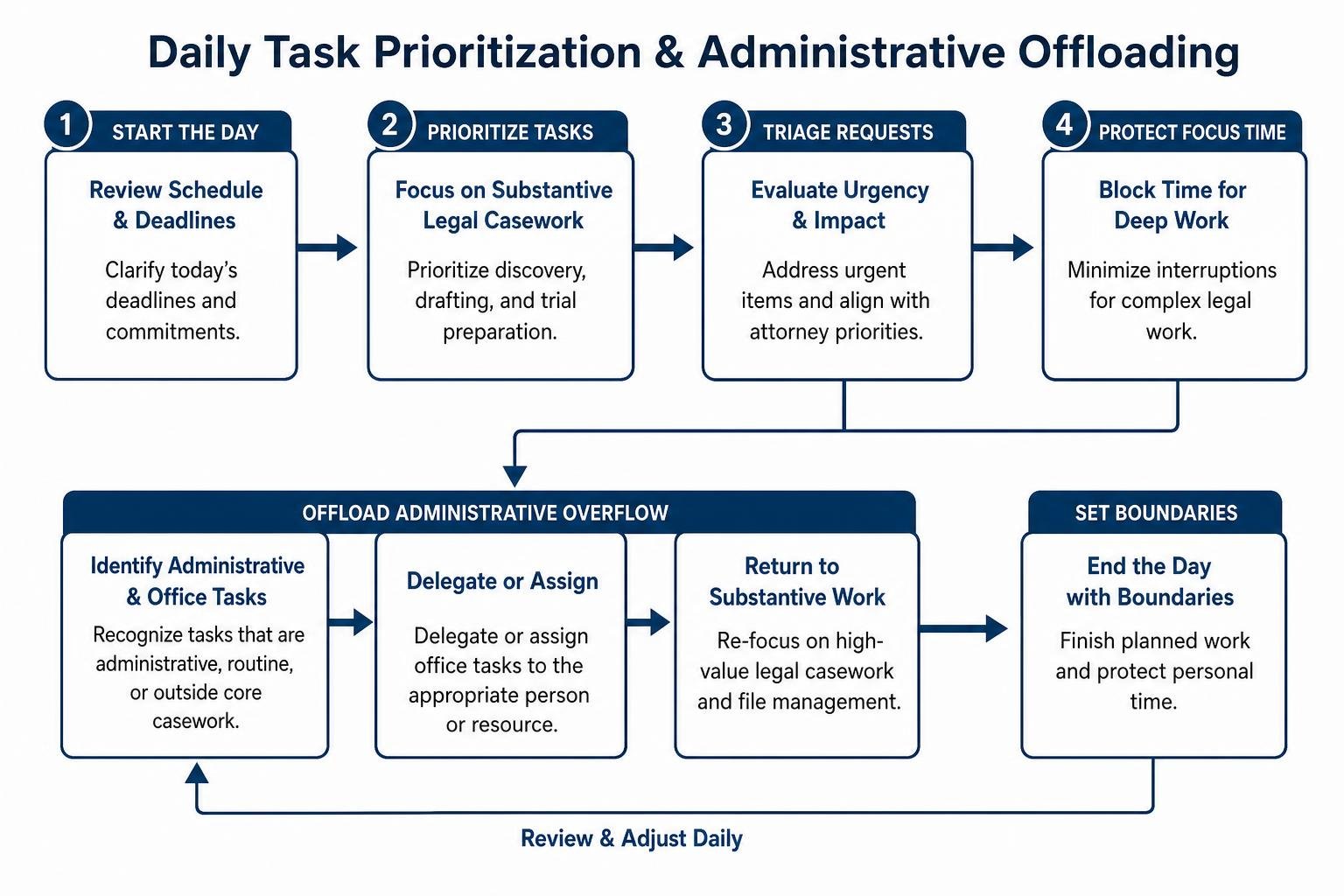
To maintain equilibrium, legal professionals must learn to prioritize tasks effectively as a paralegal. By establishing clear boundaries between substantive legal casework and general administrative duties, teams protect their cognitive energy for complex file management.
Proven Time Management and Boundary-Setting Techniques
Sustainable schedules are built through deliberate daily habits and structured communication. When legal professionals actively manage their calendars rather than reacting to incoming emails, balance becomes achievable.
Segmented Time Blocking and Daily Triage
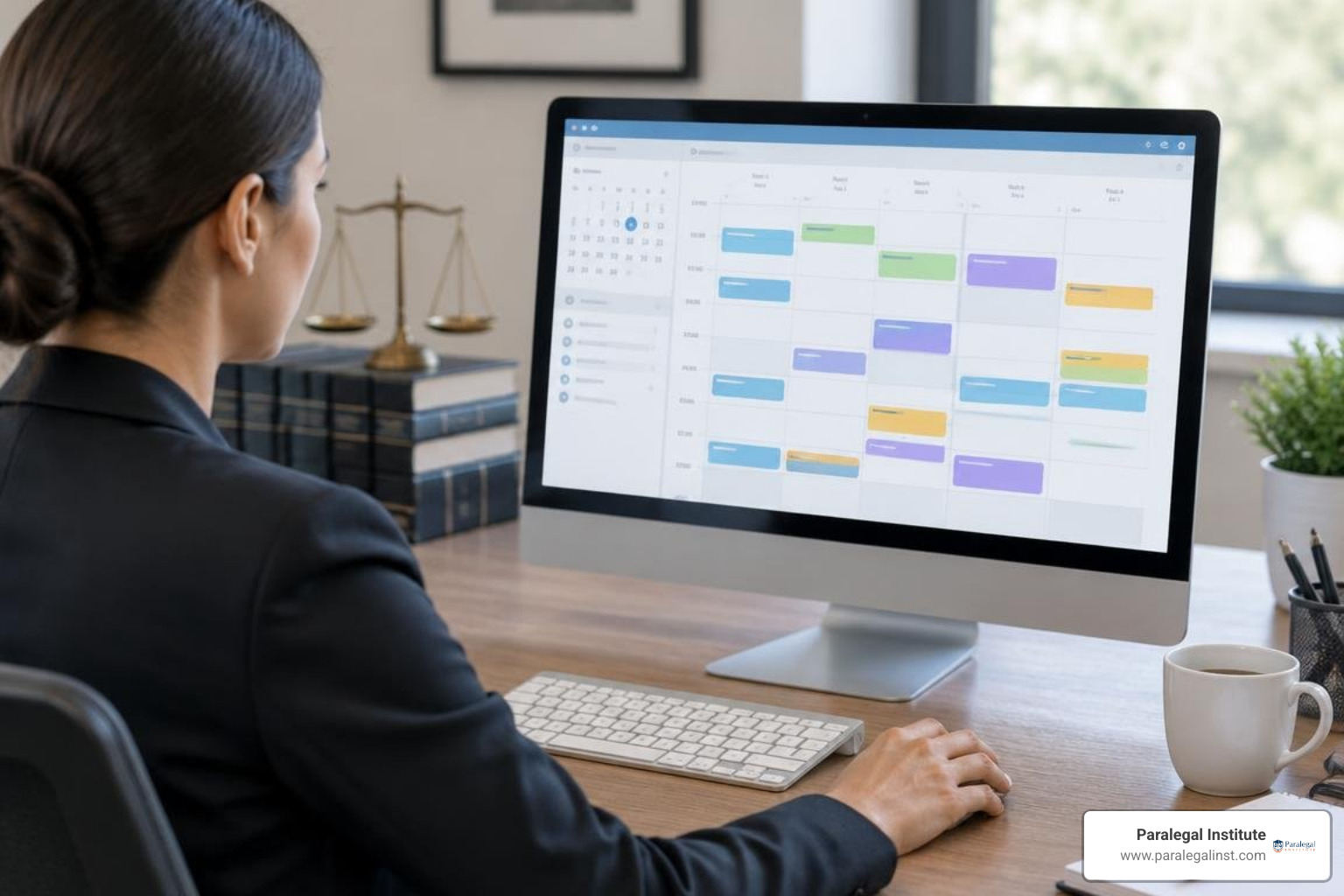
Segmented time blocking involves dividing the workday into dedicated periods for specific tasks:
- Morning Focus Blocks: Reserved exclusively for drafting pleadings, summarizing medical records, and preparing discovery requests without interruptions.
- Mid-Day Administrative Windows: Set aside for returning routine client calls, indexing correspondence, and updating court dockets.
- Afternoon Triage: Dedicated to reviewing incoming filings, organizing digital folders, and planning the next day's top priorities.
Mastering time management for paralegal students and practicing professionals shields your calendar against constant interruptions, ensuring that court filing cutoffs do not trigger unnecessary overtime.
Digital Boundaries and Off-Clock Communication Protocols
The rise of mobile practice platforms means work can follow you home if you let it. Establishing off-clock protocols is vital for long-term health. Setting clear communication boundaries—such as disabling firm chat alerts after standard office hours and using scheduled send for late-night draft reviews—prevents chronic digital overexposure.
Navigating Technology and Operational Workflows
Legal technology should streamline daily casework, not extend the workday into the evening hours. When leveraged properly, automated tools reduce tedious manual data entry and enhance organizational clarity.
How Technology Impacts Paralegal Work-Life Balance
Modern legal practice platforms and digital filing systems provide immediate access to case dockets, enabling efficient document assembly and automated deadline tracking. These tools allow legal teams to identify work from home paralegal positions that maintain rigorous productivity standards while eliminating exhausting daily commutes.
However, technology must be implemented thoughtfully. Relying entirely on generic automated virtual assistants can sometimes create more work if documents lack local jurisdictional compliance, requiring experienced in-house paralegals to rewrite filings from scratch.
Collaborative Case Intake and Workload Transparency
Workload transparency prevents individual team members from becoming bottlenecks. By maintaining shared case intake dashboards, attorneys and paralegals can evaluate case complexity before accepting new matters.
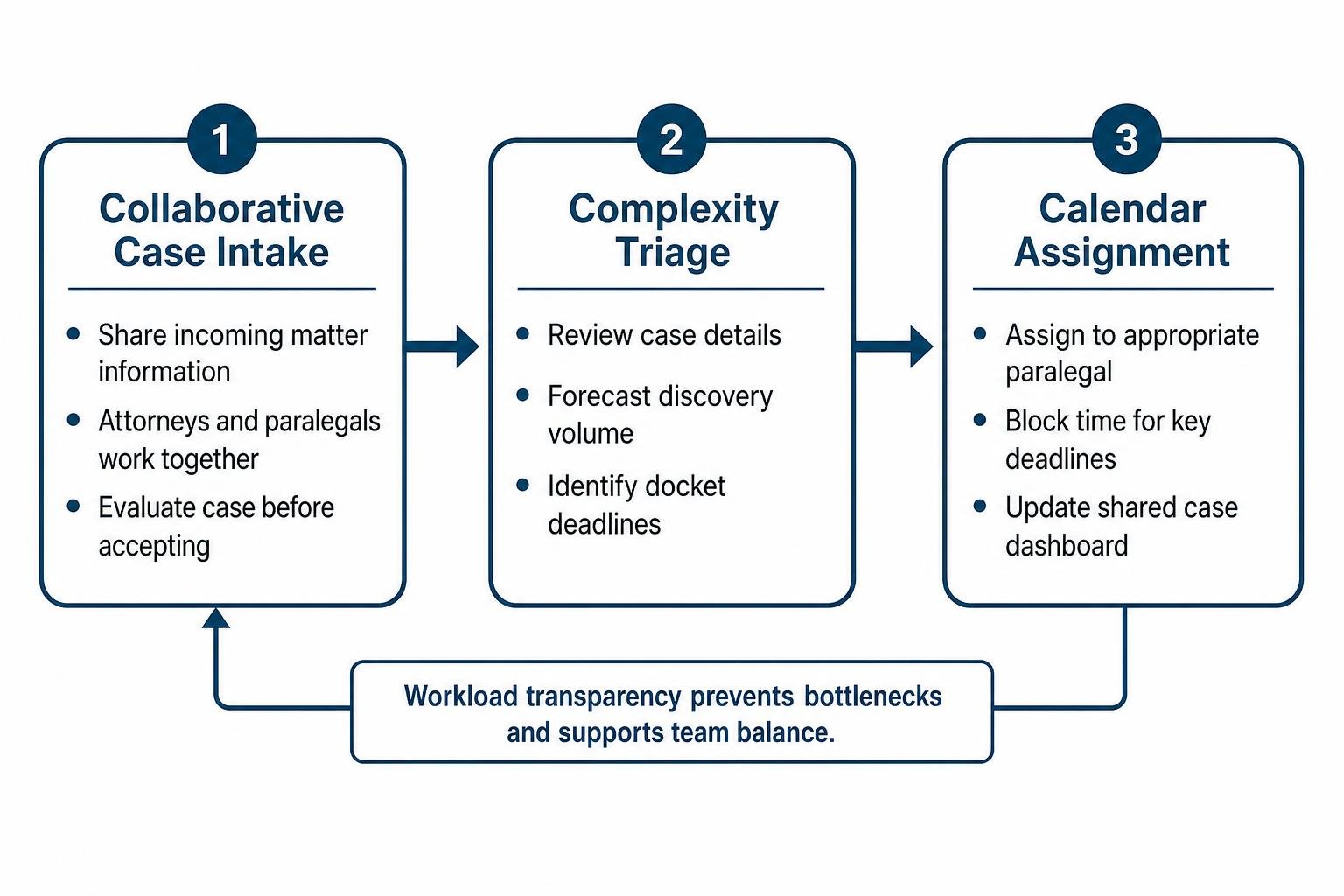
When attorneys involve paralegals during initial triage, the team can forecast discovery volume and docket deadlines accurately. This shared visibility is essential for handling stress during paralegal certificate studies and throughout active practice.
Managing Emotional Labor, Caregiving, and Mental Health
Legal support work frequently involves high-stakes disputes, emotional client interactions, and personal family commitments outside the office.

Mitigating Compassion Fatigue in High-Stress Practice Areas
Paralegals working in family law, personal injury, and criminal defense regularly interact with clients experiencing significant personal trauma. Front-line client communication requires genuine empathy, but absorbing client distress leads to compassion fatigue.
Adopting objective communication strategies and maintaining healthy professional detachment protects your mental resilience. Understanding how to avoid burnout in paralegal training helps you establish sustainable emotional boundaries early in your legal career.
Strategies for Caregivers to Maintain Paralegal Work-Life Balance
Balancing legal casework with parenting or eldercare requires transparent communication with firm leadership. Successful caregiving professionals establish clear availability windows and separate their physical workstations from family living spaces.
Many working parents launch their legal careers by enrolling in online paralegal classes for parents with live instruction, allowing them to balance family routines while acquiring practical legal skills. Maintaining personal routines is equally critical for sustaining work-life balance during paralegal certificate studies and throughout a long legal career.
Cultural Shifts: Respect, Recognition, and Firm Advocacy
A healthy work environment is grounded in mutual professional respect and equitable recognition across all staff members.
Navigating Mixed-Professional Dynamics and Implicit Bias
In busy legal environments, support staff may occasionally face misaligned professional dynamics where non-legal tasks are disproportionately assigned to certain team members. Establishing clear titles, recognizing seniority, and ensuring that all team members are introduced by their professional designations during client meetings fosters an equitable workplace culture.
Professionals balancing work and paralegal schooling can advocate for their professional growth by actively participating in case strategy discussions and demonstrating practical mastery of court procedures.
Frequently Asked Questions About Paralegal Scheduling and Well-Being
How many hours a week does a typical paralegal work?
Most full-time paralegals work a standard 37.5 to 40 hours per week. During active trials, substantial discovery deadlines, or major transaction closings, temporary overtime may be required, which is typically compensated under federal and state labor standards.
Can paralegals work effectively from home?
Yes. Secure cloud-based practice tools and digital court filing systems enable paralegals to conduct legal research, draft pleadings, and communicate with clients effectively from remote workstations.
What practice areas offer the most predictable schedules?
Practice areas such as corporate governance, estate planning, and transactional real estate generally offer predictable business hours. Litigation and criminal defense practice areas experience cyclical workload spikes driven by court appearance dates and discovery deadlines.
Conclusion
Achieving a healthy work-life balance in the legal profession is entirely attainable when you possess practical skills, clear communication boundaries, and a supportive workplace structure. By mastering efficient daily triage, leveraging modern legal software, and advocating for operational transparency, you can build a rewarding, long-term legal career that leaves ample time for your personal life.
At The Paralegal Institute, we prepare career-focused adults for the realities of modern legal practice. Our accelerated 15-week paralegal certificate program delivers practical, job-ready training taught directly by experienced attorneys and legal professionals. Whether you choose our online with live instruction format or attend in-person classes in Las Vegas, NV, you will gain the hands-on skills needed to manage casework confidently from day one.
To learn more about entering this dynamic field, learn what a paralegal does day to day and begin your journey toward a balanced, fulfilling legal career.