
How to Find Paralegal Training That Leads to Work
Look for practical training and evidence of hiring support, not a promise of an instant job. Ask each program what legal tasks you will practice, whether it connects students with employers, and how it measures graduate job outcomes. Then apply to entry-level legal assistant and paralegal roles while you train. Immediate placement is possible, but no certificate guarantees an offer.
The Paralegal Institute offers a 15-week certificate focused on skills for legal work. As you weigh your options, check whether classes are online with live instruction or in-person classes, and choose a schedule you can finish.
I’m Matt Pfau, a practicing U.S. attorney who hires and trains paralegals and teaches at the Paralegal Institute. When I assess paralegal training with immediate job placement claims, I look for hands-on preparation and clear evidence of hiring support.
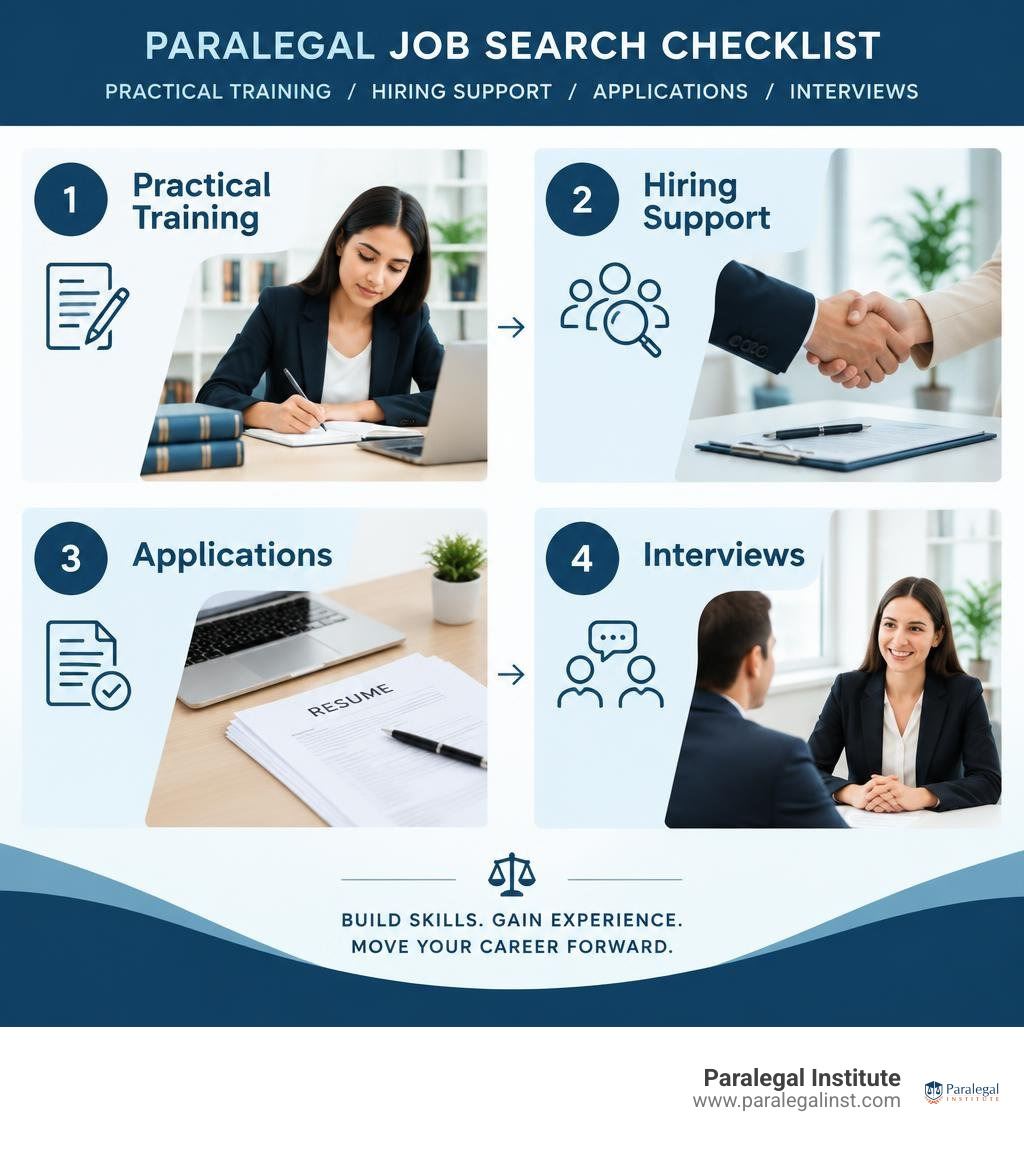
Key Pathways for Paralegal Training with Immediate Job Placement

When law firms seek to hire staff quickly, they look for candidates who can manage real discovery and casework on day one. Many traditional degree programs focus heavily on legal theory and history. While theory has its place, it rarely prepares someone to draft a deposition notice or organize an evidentiary binder under tight deadlines.
Accelerated, skills-driven learning fills this gap. Training delivered online with live instruction provides the immediate feedback of a physical classroom with the convenience of remote study. In contrast, self-paced recorded modules often lack direct accountability, leaving students without the practical guidance needed for immediate workplace transition.
| Feature | Online with Live Instruction | In-Person Classes | Traditional Degree Routes |
|---|---|---|---|
| Duration | 15 Weeks (Accelerated) | 15 Weeks (Accelerated) | Multi-Year Timeline |
| Instruction Style | Real-time, interactive legal faculty | Classroom lectures & physical workshops | Theory-heavy academic lectures |
| Core Focus | Practical legal drafting & discovery | Hands-on casework & trial preparation | General education & jurisprudence |
| Workforce Readiness | Immediate workforce entry | Immediate workforce entry | Delayed entry due to extended study |
Choosing Accelerated Paralegal Training for Immediate Job Placement
To secure a position quickly, focus on programs that prioritize legal drafting, document review, and trial preparation. At the Paralegal Institute, our 15-week curriculum is built around these core demands. Knowing that paralegal education prepares you for real legal tasks gives you the confidence to manage complex litigation files.
Law offices move fast, and attorneys need team members who understand court rules, motion formatting, and trial support. A focused paralegal certificate program prepares you for legal work by teaching the procedural fundamentals that firms expect from day one.
Direct Employer Pipelines vs. Staffing Recruitment Agencies
Entering the workforce typically follows one of two routes: direct employer hiring pipelines or legal staffing agencies.
- Direct Employer Pipelines: Applying directly to law firms eliminates intermediary recruiters. This allows candidates to showcase their specific interest in the firm's practice areas and long-term casework goals.
- Staffing and Placement Agencies: Staffing agencies specialize in matching candidates with immediate openings, short-term document reviews, and project-based litigation needs.
For those pursuing entry-level paralegal training, understanding both routes is essential. While recruitment firms provide quick access to project casework, direct applications help build lasting relationships with senior partners and litigation teams. You can review postings like the Claims Handler / Legal Assistant / Paralegal listing on Jobflixs to see how direct hiring pipelines operate in practice.
In-Demand Legal Roles and Salary Expectations in 2026

The legal job market in 2026 demands versatility across multiple practice areas. Firms are actively hiring support staff who understand modern civil discovery rules, transactional documentation, and compliance frameworks.
General Practice and Regional Firm Opportunities
Local general practice and regional litigation firms handle steady caseloads involving personal injury, family law, estate planning, and civil claims. These practices prioritize practical administrative execution, including client intake, witness coordination, and calendar management.
Securing an entry-level paralegal job in a regional firm allows new professionals to handle varied responsibilities across different practice areas. If you are considering this path, exploring how hard it is to get an entry-level paralegal job will help you understand the core competencies managing attorneys look for during interviews.
Specialized Corporate and Finance Fixed-Term Contracts
Corporate legal departments and financial practices frequently hire support staff for fixed-term contracts to manage regulatory audits, transactional due diligence, and compliance reviews. These positions often require rapid onboarding and immediate availability.
Reviewing immediate hire paralegal jobs shows that firms value candidates who can organize document productions and cross-reference regulatory standards. For a complete market overview, consult our paralegal jobs complete guide 2026. Job listings such as the Finance Paralegal contract role on StudySmarter highlight the steady demand for specialized corporate support.
Remote and Multi-Jurisdictional Legal Assistant Positions
Remote legal support has expanded the reach of modern law practices. Virtual legal assistants and remote paralegals assist with digital filing, legal research, and contract management across diverse organizational structures.
These positions require strong technical proficiency, secure hardware, reliable internet, and a solid understanding of data privacy rules. Openings like the Paralegal Assistant position at Wing Assistant illustrate how firms leverage remote workflows for ongoing support.
How to Transition from Non-Legal Backgrounds into Immediate Roles
Many successful paralegals begin their careers in corporate administration, customer service, or healthcare operations. These backgrounds provide foundational skills directly applicable to legal casework:
- Customer Service & Client Intake: Managing difficult conversations, collecting factual narratives, and communicating with empathy translate directly to client intake and witness preparation.
- Administrative Operations: Document version control, calendar management, and database tracking align with litigation docketing and court filing workflows.
- Analytical Research: Reviewing policy manuals or complex reports mirrors the analytical rigor required for statutory research and discovery analysis.
For a structured roadmap on repositioning your experience, review our paralegal career transition guide. With targeted training, breaking into paralegal work without experience is a clear and achievable goal.
Top Entry-Level Roles Targeting Paralegal Training with Immediate Job Placement
Entry-level roles often focus on operational execution before advancing to complex trial work. Common initial titles include:
- Legal Assistant / Intake Specialist: Coordinates incoming case leads, conducts initial conflict checks, and organizes preliminary documentation.
- Discovery Clerk: Focuses on cataloging evidence, formatting exhibit binders, and managing subpoena responses.
- Document Review Specialist: Reviews records for relevance, privilege, and regulatory compliance.
Even if you are seeking a paralegal job without experience, completing an intensive practical certificate demonstrates that you understand the expectations of a working firm. Our guide on the transition to work after paralegal training outlines how to make an immediate impact during your first month on the job.
Avoiding Common Pitfalls in Entry-Level Legal Applications
When reviewing applicant resumes, attorneys look for attention to detail. Common application errors that can hurt your chances include:
- Generic Resumes: Failing to tailor your objective and skills to the specific legal practice area of the hiring firm.
- Over-Reliance on Academic Jargon: Highlighting theoretical legal philosophy instead of practical proficiencies like document drafting, filing, and case indexing.
- Proofreading Overlooks: Typos, incorrect citation formatting, or inconsistent styling in a resume signal a lack of the precision required for legal work.
To refine your strategy, read our step-by-step guide on how to get a paralegal job and optimize your ongoing paralegal job search.
Interview Preparation and Long-Term Legal Career Progression
Preparing for a legal interview requires more than memorizing answers to common questions. You should be ready to discuss practical casework scenarios, outline your approach to statutory research, and explain how you handle short-notice filing deadlines.
Take time to review the prep for first job as a paralegal guide and explore paralegal internship opportunities to gain direct exposure to working attorneys.
Short-Notice Project Readiness and Career Advancement Pipelines
Litigation practices often experience sudden surges in casework due to court-ordered discovery deadlines or impending trial dates. Firms frequently bring on dedicated project support to review large volumes of discovery, verify witness statements, and index exhibits on short notice.
Opportunities like the Paralegal listing with Ryder Reid Legal show how law firms rely on qualified support for immediate project demands. For long-term career planning, consult our comprehensive paralegal career guide 2026.
Remote vs. Office-Based Working Dynamics
Choosing between remote and in-office work involves balancing flexibility with direct mentorship:
- In-Office Environments: Provide immediate access to supervising attorneys, hands-on trial preparation, and exposure to courtroom proceedings.
- Remote Environments: Offer greater schedule flexibility and eliminate commutes, but require strong self-management and independent research skills.
For deeper insights into how the legal workplace is evolving, examine our analysis of paralegal job prospects and the updated paralegal job guide 2026.
Frequently Asked Questions About Paralegal Training with Placement
How fast can I secure an entry-level paralegal position after training?
Graduates who actively apply to law firms while completing their studies can often secure positions shortly after finishing their program. Accelerated courses focus directly on the procedural drafting and research skills managing attorneys look for during hiring.
Can I transition into paralegal work without a law degree?
Yes. The vast majority of working paralegals do not hold a law degree. Law firms value specialized certificate training that emphasizes practical casework, discovery management, and professional document preparation over general academic degrees.
What starting salaries can entry-level paralegals expect in 2026?
Compensation varies based on geographic region, firm size, practice area, and whether the position is remote or in-office. Entry-level staff handling complex corporate transactions or specialized litigation support often command higher starting compensation.
Conclusion
A successful legal career begins with practical, focused instruction. The Paralegal Institute offers a 15-week certificate program designed and taught by practicing legal professionals, ensuring you graduate with the exact skills attorneys need. Whether you choose online with live instruction or in-person classes, you will receive structured, hands-on training built for immediate workforce entry.
Explore our paralegal training online program today and take the first step toward launching your legal career.