
How to Get a Job as a Paralegal
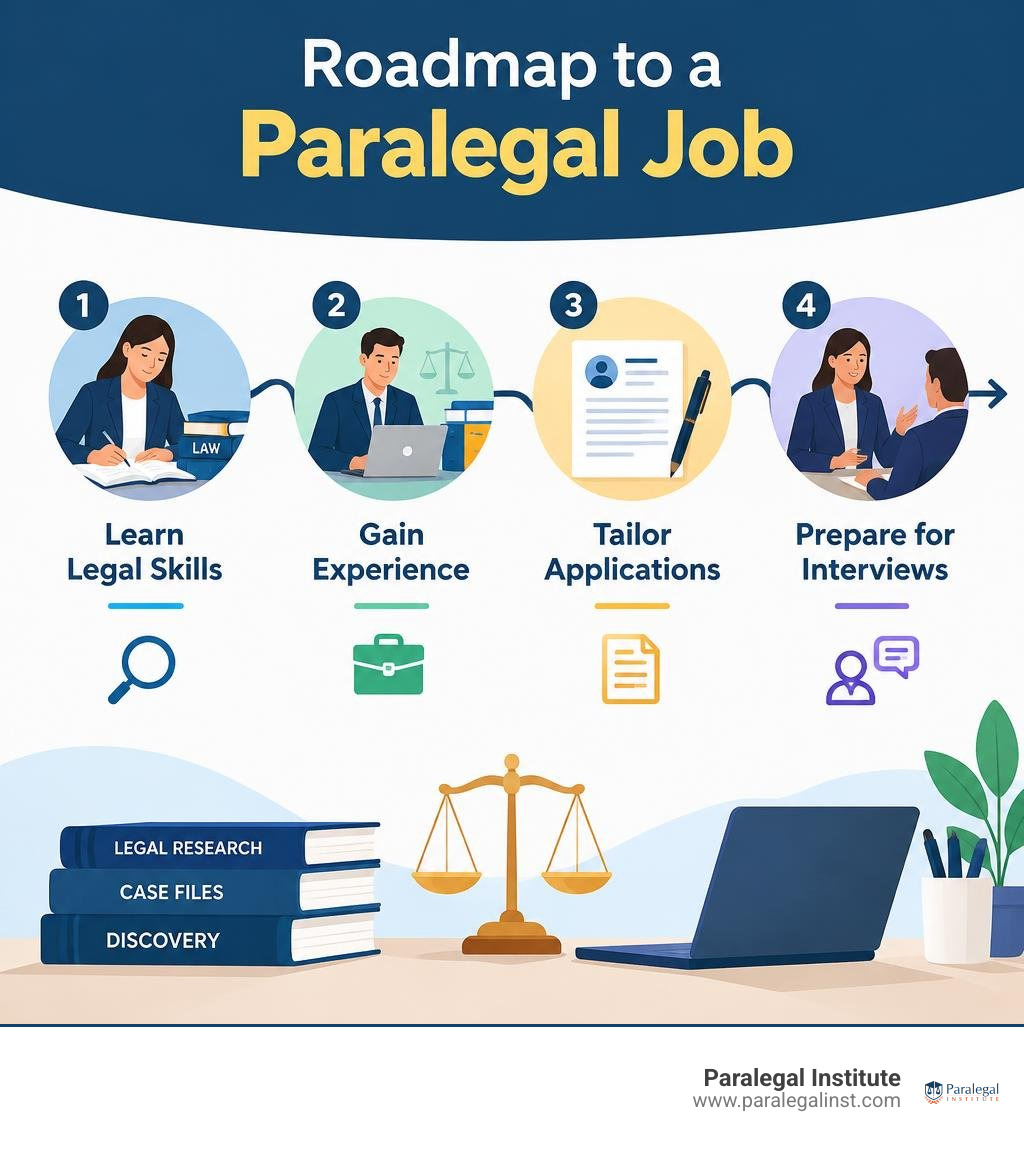
Getting a job as a paralegal starts with showing a law firm you can handle its work. Learn the basics of legal research, case files, and discovery. Build experience through an internship, volunteer role, or entry-level legal support job. Then tailor your resume to each opening, include a polished writing sample, and prepare to explain how you manage details and deadlines.
I'm Matthew Pfau, a practicing attorney who has hired and trained paralegals and now teaches at Paralegal Institute. I'll use that experience to show you what matters most when getting a job as a paralegal.
Understanding the Paralegal Role and Market Outlook in 2026
As a practicing attorney, I rely heavily on our paralegal team every day. Paralegals are not administrative secretaries; they handle substantive casework that directly drives litigation, transactions, and client outcomes.
A paralegal's daily duties include:
- Conducting detailed client and witness interviews.
- Investigating case facts and organizing complex evidence.
- Drafting pleadings, discovery requests, motions, and trial exhibits.
- Executing legal instruments such as wills and contracts under attorney supervision.
- Coordinating calendar deadlines, court filings, and hearing logistics.
The job outlook for legal support professionals remains strong. Law firms and corporate legal departments continue expanding their paralegal staffing to manage rising caseloads efficiently while maintaining top-tier representation. To see what local law practices are currently seeking, you can explore the regional job market demands in our area. Reviewing our paralegal career advice will also help you align your professional goals with what managing partners expect from new hires.
| Work Environment | Primary Casework Focus | Pace & Daily Culture | Career Advantage |
|---|---|---|---|
| Private Law Firms | Litigation, discovery, trial prep, transactional filings | Fast-paced, driven by court deadlines and billable files | Direct trial exposure and rapid skill development |
| Corporate In-House | Regulatory compliance, contract review, risk management | Structured, project-focused business environment | Broad exposure to commercial transactions |
| Public Sector & Agencies | Administrative hearings, public records, statutory filings | Highly predictable schedules, standardized workflows | In-depth understanding of agency rules and procedures |
Essential Strategies for Getting a Job as a Paralegal
When I review applications for an open position at my firm, I look for candidates who understand law office workflow and can jump into active casework without creating a training bottleneck. If you are breaking into paralegal work without experience, you must present your transferable skills clearly.
Many successful professionals start in related entry-level positions:
- Legal Secretary or Intake Specialist: Managing initial client calls, opening files, and organizing calendar deadlines.
- Document Review Clerk: Organizing discovery productions and indexing records.
- Office Administrator: Managing records, incoming court notices, and client billing files.
Law firms frequently promote dedicated support staff into full paralegal roles once they prove their reliability, discretion, and grasp of legal terminology.
Strategic Pathways for Getting a Job as a Paralegal with No Experience
If you have never worked in a law office, you might wonder how hard it is to get an entry-level paralegal job. The secret is targeting practices with high-volume workflows, such as solo practitioners and small personal injury firms.
Small litigation practices often handle heavy caseloads and need organized individuals to manage client intake, gather medical records, and prepare demand packages. Working in a personal injury or general practice setting exposes you to every phase of a case, from the initial client meeting through settlement or trial. This hands-on casework builds the exact litigation experience larger corporate firms look for later in your career.
Gaining Practical Experience Through Volunteering and Alternative Roles
You do not need a paid law firm job to build relevant legal experience on your resume. Pro bono organizations and community legal clinics regularly need volunteers to assist staff attorneys with client screening, evidence organization, and case preparation.

Serving as a Court Appointed Special Advocate (CASA) gives you direct courtroom exposure and practical experience writing factual reports for judges. Temporary document management assignments or project-based legal support roles also provide valuable experience with real case files and demonstrate your familiarity with the litigation cycle.
Building Competitive Application Materials and Credentials
When hiring managers review a stack of applications, a generic resume will not make the cut. You need materials that highlight your practical knowledge of legal drafting, court deadlines, and case file organization. Reviewing our guidance on preparing for your first job as a paralegal and exploring how to get a paralegal job will help you present your background effectively.
Designing a Standout Legal Resume and Writing Portfolio
Your resume must demonstrate strict attention to detail. A single typo or formatting inconsistency can disqualify an application at a law firm because accuracy is critical in legal practice.

Build a dedicated legal writing portfolio that includes:
- A Drafted Complaint or Answer: Showing your understanding of civil litigation structure and formal pleading formatting.
- A Discovery Request Set: Demonstrating your ability to draft interrogatories and requests for production of documents.
- A Legal Research Memorandum: Highlighting your ability to analyze factual issues and cite relevant statutory rules accurately.
- A Case Chronology or Medical Summary: Illustrating how you extract key facts from extensive case files.
Choosing Training and Credentials That Support Workforce Entry
Earning a paralegal certificate is the most reliable way to prove your job readiness to law firm partners. While traditional college degree programs require substantial time and expense, our accelerated 15-week certificate program at the Paralegal Institute gives you direct training in practical law firm skills.
Taught by practicing attorneys, our curriculum focuses on civil litigation, legal research, discovery drafting, and courtroom preparation. We offer our programs through in-person classes and online with live instruction, giving you direct access to working legal professionals who can answer questions in real time and prepare you for immediate workforce entry. For more insight on starting your career, review our guide on transitioning to work after paralegal training.
Networking, Cold Outreach, and Uncovering Hidden Job Markets
Many of the best paralegal jobs are filled before they are ever posted on major job boards. Uncovering this hidden legal job market requires proactive networking, connecting with local legal professionals, and conducting an efficient paralegal job search.
Attend local legal industry events, participate in open educational seminars, and introduce yourself to practicing attorneys and paralegal managers. When you reach out to professionals in your area, treat every conversation as an opportunity to demonstrate your industry knowledge and enthusiasm for legal casework.
Leveraging Targeted Outreach and Cold Emails for Getting a Job as a Paralegal
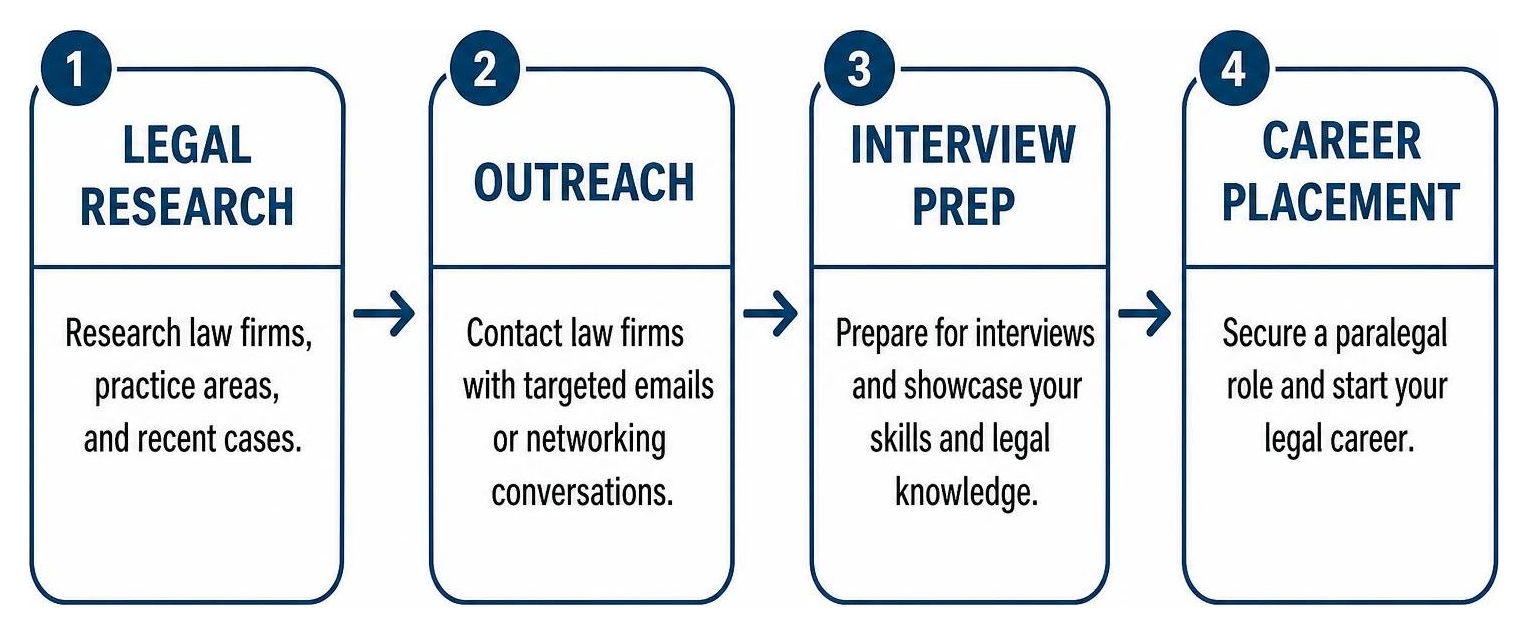
Well-crafted, laser-focused cold outreach can open doors at competitive firms. Rather than sending generic resumes to every firm in town, research a specific law office and review recent cases, published legal articles, or news stories related to their practice.
Address your email directly to a managing partner or paralegal supervisor. Reference a specific legal article or case published by their team, explain how your practical training prepared you to assist with that type of litigation, and attach your writing portfolio. This targeted approach mirrors real-world strategies, much like The bold, cold email that landed a law student a paralegal role at a global firm.
Finding Mentors and Utilizing Legal Recruiting Agencies
A mentor working as a senior paralegal or attorney can provide guidance on firm culture, review your writing portfolio, and connect you with unlisted job opportunities. Reach out to experienced professionals on LinkedIn for brief informational discussions about their practice areas.
You can also register with specialized legal staffing agencies. Legal recruiters maintain direct relationships with law firm hiring managers and frequently place candidates in contract, temporary, or direct-hire positions that are never advertised publicly.
Mastering the Law Firm Interview Process
A legal interview is your chance to show an attorney that you can manage a busy caseload with poise and precision. Partners want to see that you understand court deadlines, communicate clearly, and take pride in organized casework.
Before your interview, review our actionable paralegal interview tips. Research the firm's recent filings, understand its core practice areas, and come prepared with thoughtful questions about its litigation workflow.
Common Law Firm Interview Questions and Winning Answers
When I interview paralegal candidates, I ask practical questions to evaluate their problem-solving skills and grasp of office procedures:
- "What made you decide to pursue a career as a paralegal?"
- Winning strategy: Connect your organizational strengths and interest in the law to a desire to support attorneys and advocate for clients during critical legal matters.
- "How do you ensure zero errors when managing strict discovery and court deadlines?"
- Winning strategy: Explain your methodical approach to dual-calendaring, tracking statutory response deadlines, and maintaining detailed file checklists.
- "Describe a time you contributed to improved efficiency on a complex project."
- Winning strategy: Share how you organized high-volume documents, indexed exhibits, or created a template that saved time for the team.
- "How do you handle a situation where a client is distressed or emotional over the phone?"
- Winning strategy: Highlight your professional empathy, clear boundary setting (clarifying that you cannot provide legal advice), and ability to capture factual details accurately for the supervising attorney.
Critical Application and Interview Mistakes to Avoid
Avoid these common missteps during your job search:
- Sending Generic Cover Letters: Always tailor your letter to the specific firm and practice area.
- Overlooking Typos: Even minor errors in your materials will raise concerns about your proofreading abilities.
- Demonstrating Low Commercial Awareness: Failing to research a firm's practice focus signals a lack of preparation.
- Neglecting Post-Interview Follow-Up: Always send a concise, professional thank-you email within 24 hours that references a specific topic discussed during the meeting.
Frequently Asked Questions About Becoming a Paralegal
How long does it typically take to get hired as a paralegal?
Most candidates secure an entry-level position within three to six months of focused searching. Submitting targeted applications, maintaining an organized tracking spreadsheet, and networking locally will help you secure interviews more quickly.
Can you become a paralegal without a formal law degree?
Yes. Law firms hire paralegals based on practical skills, document drafting abilities, and knowledge of legal procedures. A focused paralegal certificate demonstrates your readiness to handle casework from day one.
What are the best entry-level practice areas for new paralegals?
Personal injury, family law, insurance defense, and general civil litigation are excellent entry points. These areas manage steady caseloads, offering new paralegals hands-on experience with intake, discovery, motion practice, and trial preparation.
Conclusion
Building a successful legal career requires practical skills, attention to detail, and a clear understanding of law firm operations. By gaining hands-on training, assembling a strong writing portfolio, and reaching out to local firms with confidence, you will position yourself as an asset to any legal team.
At the Paralegal Institute, our 15-week certificate program is designed and taught by practicing attorneys to give you the exact skills law firms look for. With flexible options available through in-person classes and online with live instruction, you can master civil litigation, discovery drafting, and casework management on an accelerated schedule. Explore our complete guide to landing a paralegal job to take your next step toward a rewarding career in the legal field.