What a Certificate in Law and Paralegal Studies Can Do for Your Career
A certificate in law and paralegal studies is one of the fastest, most practical ways to break into the legal field — without spending years in a traditional degree program.
Here's a quick overview of what it is and who it's for:
| Question | Quick Answer |
|---|---|
| What is it? | A focused training program that prepares you to work as a paralegal under attorney supervision |
| Who is it for? | Career changers, legal staff seeking advancement, and aspiring legal professionals |
| How long does it take? | Programs range from a few months to about 18 months, depending on format |
| What will you learn? | Legal research, document drafting, civil litigation, ethics, and law office technology |
| Do you need a degree first? | Varies by program — some require a bachelor's or associate's degree, others accept a high school diploma |
| What can you do after? | Work in law firms, corporate legal departments, government agencies, and more |
The legal field is growing. Paralegal employment is projected to grow around 12 percent through 2030 — faster than many other professions. That means real opportunities for people who get the right training now.
But with so many programs out there — online, in-person, full-time, part-time, credit-bearing, non-credit — it can be hard to know where to start.
That's exactly what this guide is here to solve.
I'm Matthew Pfau, a practicing attorney who has hired and trained numerous paralegals throughout my legal career and now teaches paralegal courses at Paralegal Institute — giving me a perspective on what employers actually look for in candidates who hold a certificate in law and paralegal studies. In the sections ahead, I'll walk you through everything you need to make a smart, informed decision about your next step.
What is a Certificate in Law and Paralegal Studies?
A Certificate in Paralegal is a specialized educational credential designed to equip you with the specific skills needed to perform substantive legal work. Unlike a general academic degree, this program focuses almost entirely on the "how-to" of the legal world.
Think of it as a bridge between theory and practice. You aren't just reading about the law; you are learning how to draft the documents, conduct the research, and manage the case files that keep a law firm running. As an attorney, I can tell you that when I hire someone, I’m not looking for someone who can quote Plato—I’m looking for someone who knows how to file a motion and organize a discovery production.
Paralegals are the backbone of any successful practice. They work under attorney supervision to perform tasks that would otherwise fall to the lawyer, allowing the firm to operate more efficiently. This includes everything from interviewing witnesses to investigating the facts of a complex case.

Ideal Candidates for a Certificate in Law and Paralegal Studies
Who is the "right" person for this path? In our experience, we see a few common profiles:
- Career Changers: We often see professionals like teachers, nurses, or law enforcement officers who want to transition into a corporate or legal environment. Their previous life experience, combined with an accelerated certificate, makes them highly effective in various legal practices.
- Legal Staff: Many people already working as file clerks or legal secretaries realize they want more responsibility. A certificate in law and paralegal studies is the logical next step to increase their value to the firm.
- Aspiring Attorneys: Some students use a certificate program as a "litmus test" for law school. It’s a smart way to see if you actually enjoy the day-to-day reality of legal work before committing to a three-year law degree.
- Professional Growth Seekers: Even if you aren't planning to become a full-time paralegal, understanding the legal system can be a huge asset for business managers, real estate professionals, and government employees.
The Value of a Paralegal Certificate
This is one of the most Common Questions About Paralegal Certificates. In the legal industry, earning a certificate is the most direct way to prove you have the necessary training and education to work in the field. This is the primary credential most employers look for when hiring entry-level paralegals.
A paralegal certificate provides the foundation of your professional training. It demonstrates to attorneys that you have the practical skills to contribute to a legal team immediately. By focusing on a certificate program, you ensure that your education is targeted toward the specific tasks you will perform in a law office, making you a career-ready candidate from day one.
Essential Curriculum and Skills for Modern Paralegals
The modern law office is a environment that relies heavily on technology and precise communication. A quality Certificate in Legal Practice Guide will show you that a curriculum must be rooted in the real world to be effective. For a broader overview of the profession itself, the paralegal article on Wikipedia offers helpful background on how paralegals support attorneys in legal practice.
Core Skills Taught in a Certificate in Law and Paralegal Studies Program
When you enroll in a program, you should expect to dive deep into the following areas:
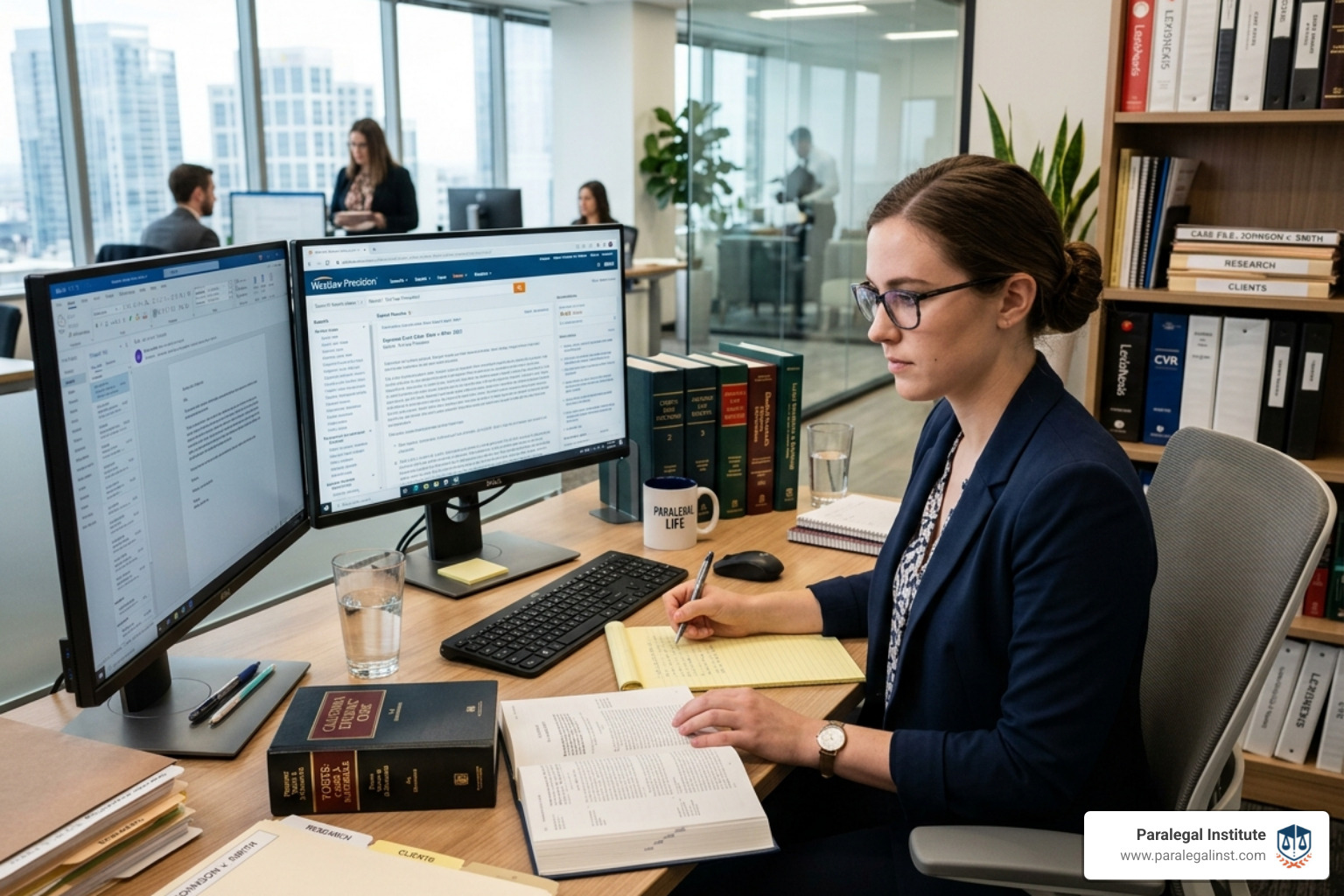
- Legal Research and Writing: This is the bread and butter of the profession. You’ll learn how to find statutes, court rules, and case law, and then how to synthesize that information into a persuasive interoffice memo or a demand letter.
- Tort Law and Contract Law: These are the foundations of civil litigation. You need to understand how people are held liable for injuries and how legally binding agreements are formed and breached.
- Civil Litigation and Discovery: You will learn the "rules of the game." This includes drafting pleadings (complaints and answers), motions, and managing the discovery process-where parties exchange evidence before a trial.
- Investigative Techniques: This involves learning how to interview witnesses, pursue factual investigations, and conduct background checks.
Technology in the Modern Law Office
Gone are the days of dusty law libraries and manual filing cabinets. Today’s paralegals must be tech-savvy. According to our Online Legal Studies Certificate Complete Guide, several key technological skills are now mandatory:
- E-Discovery: Managing the massive amounts of electronic data (emails, texts, digital files) that are now standard in litigation.
- Legal Software: Proficiency in legal office software that handles scheduling, docket control, and time billing.
- E-Filing: Most courts now require documents to be filed electronically. Knowing the specific portals and formatting requirements is a critical skill.
- Document Production: Using advanced word processing and PDF tools to create professional, court-ready documents.
Choosing the Right Program Format for Your Career
The format you choose can drastically impact how quickly you enter the workforce. Traditional degrees can take two to four years, but for many adults, an accelerated path is the smarter investment.
| Feature | Accelerated Certificate (PI) | Traditional Degree (AA/BA) |
|---|---|---|
| Duration | 15 Weeks | 2 to 4 Years |
| Focus | Practical, Hands-on Skills | General Education + Theory |
| Instruction | Practicing Professionals | Academic Professors |
| Cost | More Affordable | Higher Tuition & Fees |
| Goal | Immediate Job Readiness | Broad Academic Foundation |
Online vs. In-Person Instruction
Deciding between online and in-person learning depends on your lifestyle. At Paralegal Institute, we believe the key isn't just "online"—it's live instruction.
Many online programs are "asynchronous," meaning you just watch recorded videos and take quizzes. We find that How to Get Your Paralegal Certificate Online effectively requires real-time interaction. Our online classes feature live, instructor-led sessions where you can ask questions and engage with peers, just like a physical classroom. This provides the flexibility of staying at home with the rigor of a real-time learning environment.
Post-Baccalaureate vs. Undergraduate Options
Some programs are "post-baccalaureate," meaning they require you to already have a bachelor's degree. Others are open to anyone with a high school diploma or equivalent.
If you already have a degree in another field, a post-baccalaureate certificate is a great way to "top off" your education with specific legal skills. However, if you don't have a degree, don't worry. Many successful paralegals start with a standard certificate program and build their careers from there. Check out our Paralegal Certificate or Degree Ultimate Guide for a deeper dive into which path fits your background.
Navigating the Enrollment Process
Getting started is often the hardest part, but the process is generally straightforward. Most Paralegal Certificate Programs Complete Guide resources will tell you that schools are looking for potential, not just a perfect transcript.
Admission Requirements for a Certificate in Law and Paralegal Studies
While every school differs, here are the typical requirements you’ll encounter:
- Prior Education: At a minimum, a high school diploma. Some advanced programs may require an associate or bachelor's degree.
- GPA Requirements: Many programs look for a minimum cumulative GPA (often around 2.5 to 2.7) to ensure you can handle the academic rigor.
- Communication Skills: Since paralegals write all day, you need strong English proficiency and word processing skills.
- Professional Experience: Some programs value work history, especially if you’ve spent time in a professional office environment.
Financial Aid and Scholarship Opportunities
We understand that tuition is a major consideration. Choosing an accelerated certificate is already a "smart investment" because it gets you into a paying job much faster than a multi-year degree.
To make things even more accessible, many programs offer payment plans to help spread out the cost. Because these programs are often focused on workforce development, they are designed to be an affordable path for those looking for a Paralegal Certificate No Degree Best Path.
Career Paths and Professional Ethics
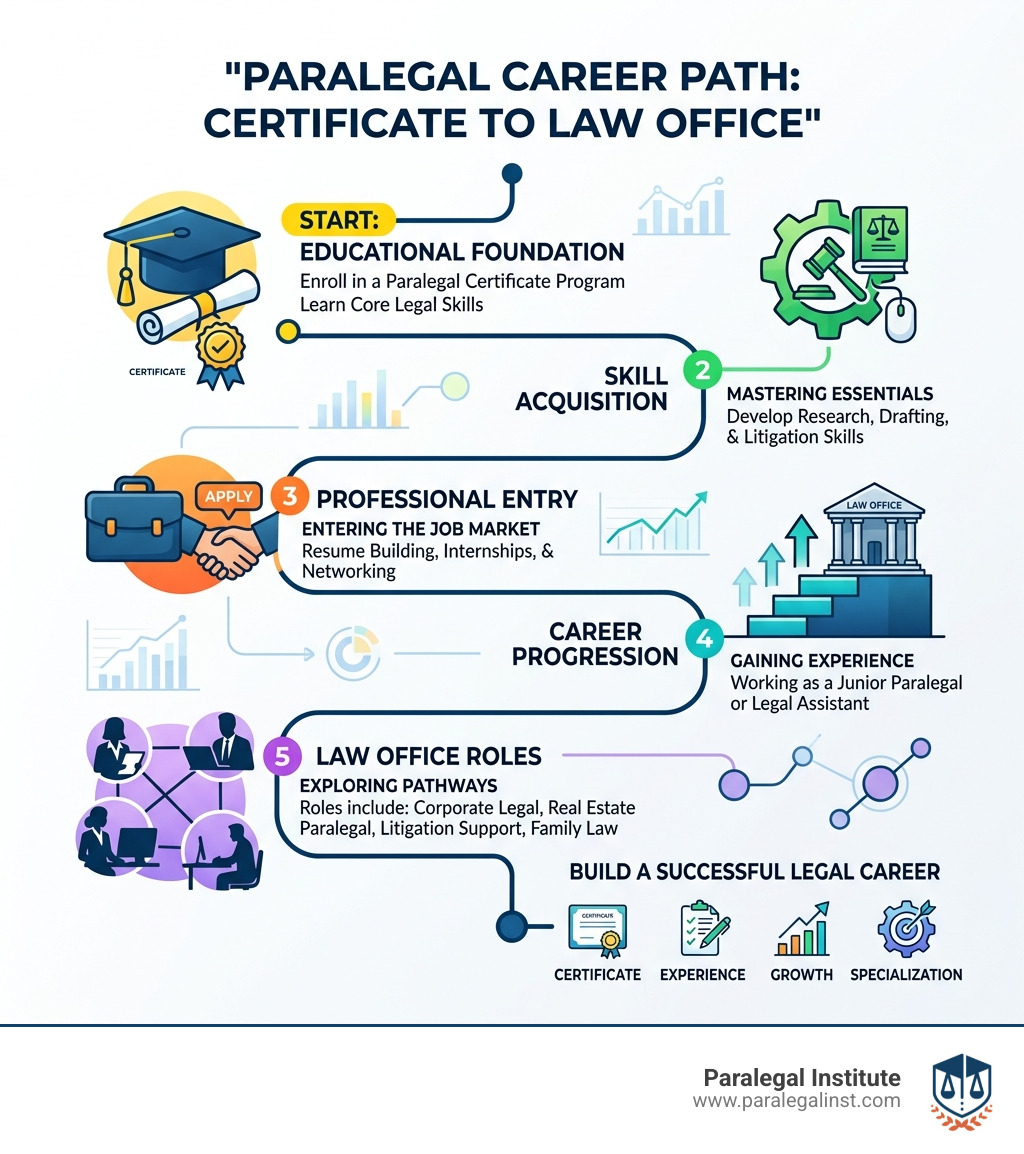
Once you have your certificate in law and paralegal studies, where can you actually work? The options are broader than you might think.
- Law Firms: From small "boutique" firms to massive international practices.
- Corporate Legal Departments: Large companies (like banks or insurance providers) have their own in-house legal teams.
- Government Agencies: Public defenders, district attorneys, and administrative agencies all rely on paralegals.
- Non-Profits: Legal aid societies and advocacy groups.
Ethical Responsibilities and Limitations
This is the most important rule in the industry: Paralegals may not provide legal services directly to the public.
As a paralegal, you must always work under the supervision of a licensed attorney. You cannot:
- Give legal advice.
- Set legal fees.
- Represent a client in court.
- Accept a case on your own.
Violating these rules is considered the "unauthorized practice of law," which can lead to serious legal trouble for both you and your supervising attorney. Your job is to be the attorney's right hand, not the attorney themselves.
Practical Experience and Career Support
The best programs don't just teach you from a book; they give you hands-on projects. We focus on building a career portfolio. This is a collection of your best work—drafted motions, research memos, and discovery requests—that you can show to a potential employer during an interview.
When weighing the Pros and Cons of Paralegal Certificate Programs, look for schools that offer career support, such as resume drafting and job placement assistance. In the legal world, your ability to hit the ground running is your greatest asset.
Frequently Asked Questions about Paralegal Certificates
How long does it take to earn a certificate?
At the Paralegal Institute, our program is designed to be completed in just 15 weeks. Other traditional academic programs can take anywhere from 12 to 18 months.
Can I work as a paralegal without a degree?
Yes. While some firms prefer a degree, many employers prioritize specific training and a certificate in law and paralegal studies. If you have the skills and a professional portfolio, you can find a rewarding career in the legal field without a four-year degree.
What is the difference between synchronous and asynchronous learning?
- Synchronous: You meet live with your instructor and classmates at a scheduled time (even if it's online). This allows for real-time discussion and immediate feedback.
- Asynchronous: You work on your own schedule, watching pre-recorded videos. While flexible, it lacks the personal interaction and accountability of a live class.
Conclusion
The path to a new career doesn't have to be long or prohibitively expensive. A certificate in law and paralegal studies provides a direct, practical route into one of the most stable and growing industries in the country.
At the Paralegal Institute, we’ve refined this process into a 15-week program that focuses on exactly what attorneys like me are looking for. By combining live instruction with a curriculum designed by practicing legal professionals, we ensure our graduates are ready for the workforce on day one.
If you're ready to take the next step, explore our Paralegal Studies Certificate and see how quickly you can transform your professional life.