Core Paralegal Career Description and Daily Responsibilities
A comprehensive paralegal career description revolves around performing delegated substantive legal tasks under the direct supervision of a practicing lawyer. Unlike administrative support staff who handle general office operations, paralegals focus on the actual mechanics of law practice. They examine legal precedents, gather factual evidence, and draft the core documents that drive legal proceedings forward.
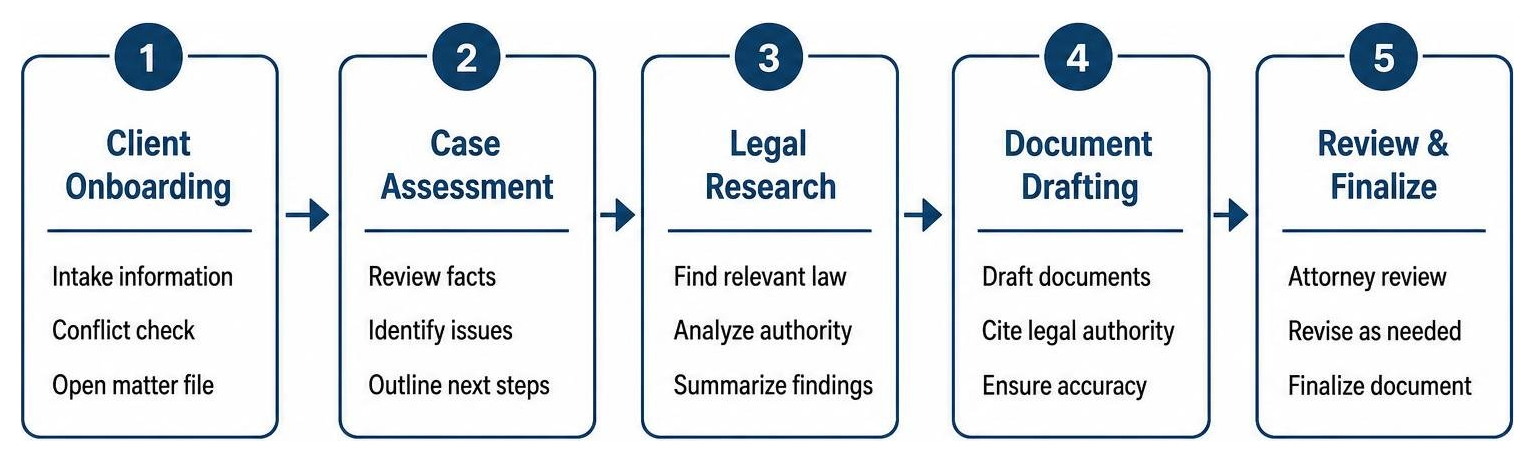
To understand how these tasks fit into everyday practice, we can break down the primary 5 Typical Duties of Paralegals:
- Factual Investigation: Gathering case background, interviewing witnesses, reviewing medical records or financial statements, and verifying public records.
- Legal Research: Analyzing statutes, judicial opinions, legal codes, and administrative rules to support an attorney’s legal strategy.
- Document Preparation: Drafting pleadings, motions, appellate briefs, contract agreements, wills, and corporate resolutions.
- Discovery Management: Collecting, indexing, reviewing, and organizing documents disclosed during the discovery phase of litigation.
- Court and Administrative Filings: Coordinating formal submissions with court clerks and government regulatory agencies.
By taking on these substantive duties, paralegals allow law offices to operate far more efficiently while keeping legal services accessible.
Daily Workflows in a Paralegal Career Description
The day-to-day rhythm of a paralegal changes based on case deadlines, court schedules, and client needs. On any given morning, a paralegal might start by reviewing client intake notes, speaking with witnesses to outline key statements, or coordinating with expert witnesses. Communication is a large part of the job; paralegals act as a central point of contact for clients who need updates on their casework.
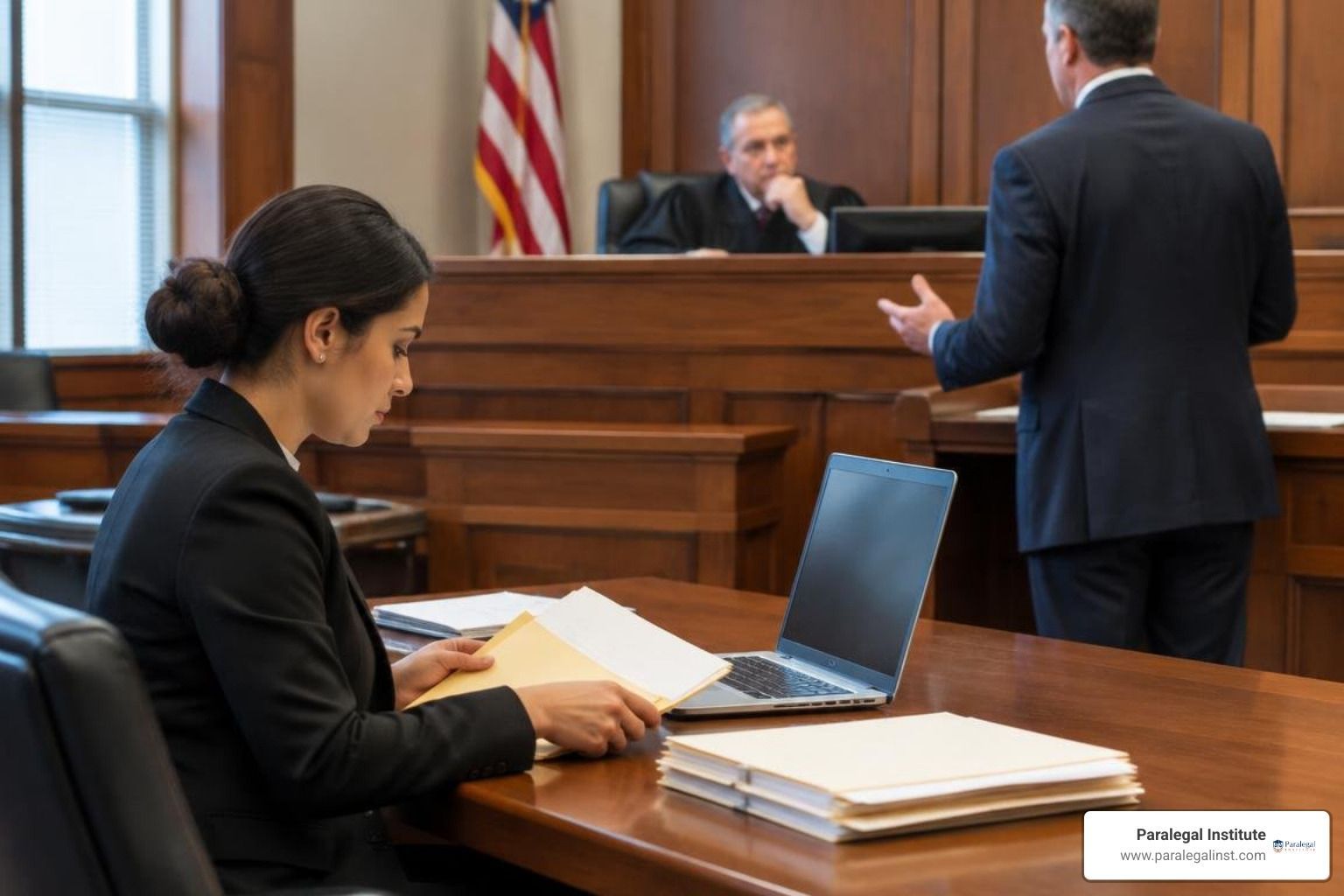
As cases move toward hearings or trials, daily tasks shift toward courtroom preparation. Paralegals organize master evidence files, prepare trial binders, format physical or electronic exhibits, and keep track of strict court calendaring deadlines. During trial, paralegals frequently join attorneys at counsel table to manage documents, coordinate witness appearances, and track evidence exhibits introduced during proceedings. Detailed insights on daily routines can be explored further in our guide on What Does a Paralegal Do.
Key Practice Specialties in a Paralegal Career Description
While the foundational skills remain consistent, a paralegal career description varies across legal practice areas:
- Litigation Support: Focuses heavily on managing discovery, conducting factual investigation, indexing trial exhibits, drafting pre-trial motions, and coordinating courtroom logistics.
- Corporate Practice: Focuses on business formation filings, drafting shareholder agreements, maintaining corporate records, tracking regulatory compliance, and supporting merger or acquisition transactions.
- Family Law: Involves working closely with clients during difficult life transitions, collecting personal financial records, drafting divorce petitions, preparing child custody parenting plans, and drafting financial affidavits.
- Bankruptcy Filings: Centered on evaluating debtor financial schedules, reviewing asset appraisals, conducting title searches, and preparing Chapter 7 or Chapter 13 petitions for federal bankruptcy court.
- Real Estate Practice: Concentrates on conducting property title searches, preparing closing documents, reviewing environmental reports, and coordinating deeds with local land recording offices.
Educational Requirements and Credentials for Becoming a Paralegal
Entering the legal field as a paralegal requires structured education that builds practical research, writing, and procedural skills. While specific background requirements vary by employer, legal hiring managers consistently seek candidates who understand court systems, modern casework processes, and exact legal drafting techniques. Detailed national standards for knowledge profiles can be reviewed on the official O*NET Occupational Profile.
Certificate Programs and Accelerated Legal Training
For career-focused adults, earning a paralegal certificate offers a direct route into the profession. Certificate programs deliver targeted instruction in legal terminology, legal research, document drafting, civil procedure, and ethical principles without requiring years of general education courses.
We offer an accelerated 15-week paralegal certificate program at the Paralegal Institute designed specifically for fast entry into the legal workforce. Students can choose between an online format featuring live instruction or in-person classes taught by practicing legal professionals who bring real-world court experience into every lesson. This focused practical training ensures graduates enter law firms ready to handle real casework immediately. Prospective students can evaluate career entry options in our detailed overview of a Career as Paralegal.
Professional Credentials and On-the-Job Training
After completing formal education, professionals can pursue optional credentials to demonstrate mastery of advanced legal concepts and dedication to professional standards.
On-the-job training complements classroom learning. Working alongside experienced attorneys and senior staff allows new paralegals to refine their research techniques and adapt their drafting skills to the specific preferences of their firm. You can learn more about credentials in our article on What It Means to Be Certified Paralegal.
Paralegal vs. Legal Assistant vs. Attorney: Prohibited Tasks and Key Roles
Understanding how legal roles differ is critical for anyone exploring this field. While attorneys, paralegals, and legal support staff work together on client matters, their daily duties and professional boundaries are distinct.
| Feature / Responsibility | Attorney | Paralegal | Legal Assistant / Secretary |
|---|---|---|---|
| Primary Focus | Strategy, trial litigation, final legal work product | Substantive legal research, drafting, discovery | Administrative support, scheduling, dictation |
| Education Path | Juris Doctor (Law School) + Bar Exam | Paralegal certificate or practical legal training | High school diploma or administrative training |
| Give Legal Advice? | Allowed | Strictly Prohibited | Strictly Prohibited |
| Set Legal Fees? | Allowed | Strictly Prohibited | Strictly Prohibited |
| Sign Pleadings? | Allowed | Strictly Prohibited | Strictly Prohibited |
| Represent Clients in Court? | Allowed | Strictly Prohibited | Strictly Prohibited |
| Draft Legal Documents? | Allowed | Allowed (under supervision) | Basic typing/formatting support |
| Manage Client Discovery? | Allowed | Allowed (under supervision) | Document filing/tracking |
Ethics rules prevent non-lawyers from engaging in the unauthorized practice of law. Paralegals carry out complex legal research, analyze documents, and prepare initial drafts of pleadings, but every piece of work must be reviewed, approved, and signed off by an attorney. A paralegal must never advise a client on legal rights, accept cases on behalf of a firm, establish billing rates, or present arguments before a judge.
In contrast, legal assistants and legal secretaries manage firm scheduling, format documents, handle dictation, manage billing invoices, and organize office calendars. For a deeper breakdown of administrative versus substantive roles, read our guide on Legal Secretary vs Paralegal.
Salary Expectations, Job Outlook, and Top Employer Settings

Paralegals work across a wide range of industries in both the public and private sectors. According to data published in the BLS Occupational Outlook Handbook, private legal service providers employ approximately three-quarters of all paralegals. Other significant employers include federal, state, and local government agencies, corporate legal departments, banks, insurance underwriters, healthcare organizations, and non-profit legal aid groups.
Work settings influence day-to-day duties. Paralegals in small law firms often act as generalists handling every step of a case from initial client intake to post-trial filings. In contrast, paralegals in corporate legal departments or large litigation firms tend to specialize in specific areas like electronic discovery, contract administration, or regulatory filings.
Public sector roles offer another distinct career path. Municipal prosecutors, public defender programs, and state agencies regularly employ paralegals to process administrative cases, conduct public record checks, and organize official records. Across all settings, paralegals are vital team members who keep complex casework organized and moving forward.
Essential Skills and Strategies to Land Your First Job

Building a successful legal career starts with mastering core technical and interpersonal skills. Law firms look for candidates who demonstrate strong attention to detail, clear written communication, and structured problem-solving abilities.
Key skills for modern legal practice include:
- Legal Research: Navigating online databases, legal libraries, and public record indexes to uncover relevant case law and statutes.
- Legal Writing: Drafting clear, concise legal correspondence, pleadings, discovery requests, and objective legal memorandums.
- Analytical Ability: Reviewing large volumes of discovery documents, identifying key evidence, and organizing facts logically.
- Organization and Time Management: Managing tight case deadlines, court dockets, and multiple active client files at once.
- Digital Literacy: Using modern office tools, legal databases, and electronic court filing systems.
To stand out in the job market, highlight practical legal training on your resume. Emphasize experience with real-world document drafting, discovery indexing, and legal research platforms. Candidates transitioning into the field can explore practical tips in our guide on Paralegal Skills or review broader industry entry recommendations on the Indeed Career Guide.
Frequently Asked Questions About Paralegal Careers
What is the main difference between a paralegal and a legal assistant?
A paralegal performs substantive legal work delegated by an attorney, such as conducting case research, drafting legal documents, interviewing witnesses, and managing discovery. A legal assistant focuses primarily on administrative tasks like scheduling appointments, answering phones, organizing physical files, and assisting with general office operations. For more information, read our detailed comparison on Paralegal Roles and Responsibilities.
What are paralegals legally prohibited from doing?
Paralegals are non-lawyer legal professionals and are legally prohibited from practicing law. Specifically, they cannot provide legal advice to clients, set legal representation fees, accept or reject new clients on behalf of a practice, or represent clients in courtroom proceedings.
What kind of schedule does a paralegal work?
Most paralegals work full-time, standard business hours. However, overtime is common during major trial preparations, complex discovery reviews, or when meeting strict court filing deadlines.
Conclusion
A clear paralegal career description highlights a dynamic, detail-driven role at the heart of legal practice. By combining legal research, document drafting, case management, and factual analysis, paralegals help attorneys manage heavy dockets while delivering quality services to clients.
For adults looking for a fast, career-ready entry into this field, acquiring hands-on skills is the best way to stand out to law firms. The Paralegal Institute provides an accelerated 15-week paralegal certificate program designed to deliver real-world legal training. Taught by practicing legal professionals, our courses focus on immediate workforce preparation through flexible online classes with live instruction as well as in-person options. To discover how paralegals contribute to modern legal practice, explore our resource on the Role of Paralegals in Law Firms today.