Why Career Changers Are Pivoting to the Legal Field
Career changers can transition into the legal field by completing a focused paralegal certificate program that builds on their existing professional strengths. Practical paralegal training for career changers teaches the specific legal procedures, terminology, and drafting techniques needed to perform substantive casework under attorney supervision—without requiring a multi-year law degree.
Over my years practicing law in Nevada, I have worked alongside paralegals from every conceivable professional background: former teachers, retail managers, medical billers, administrative coordinators, and customer service leads. When these professionals enter our classrooms, they often tell a similar story. They hit a ceiling in their previous industry, faced stagnant wages, or simply needed a structured career pivot after burnout.
The legal sector offers strong stability and intellectual engagement. Litigation, corporate compliance, real estate, and family law require dedicated staff who understand how to handle complex casework. Many adults choose this path because it offers genuine career advancement without the multi-year timeline or heavy commitment of law school.
| Previous Career Field | Transferable Skill Set | Direct Legal Practice Application |
|---|---|---|
| Healthcare / Nursing | Medical records analysis, terminology, HIPAA compliance | Personal injury, medical malpractice, insurance defense casework |
| Administrative / Executive Assistant | Calendar management, client intake, filing systems | Civil litigation document production, court deadline tracking |
| Business / Operations | Vendor contracts, compliance auditing, process oversight | Corporate legal departments, contract management, entity filings |
| Education / Teaching | Research, structured communication, high attention to detail | Brief preparation, trial exhibits, witness interview summaries |
| Customer Service / Retail | Conflict de-escalation, rapid problem-solving, active listening | Client intake interviews, mediation coordination, discovery requests |
How Transferable Skills Apply to Legal Work
You do not need to discard your previous work history when you enter the legal field. In fact, attorneys value candidates who understand professional environments, adhere to deadlines, and manage client expectations under pressure.
If you have an administrative background, transitioning from admin work to paralegal career pathways allows you to turn basic office coordination into precise legal document preparation, court filings, and calendar control. If you come from healthcare, your familiarity with medical charts makes you an immediate asset to personal injury and workers' compensation practices. Business professionals bring an innate understanding of commercial transactions, regulatory compliance, and corporate governance.
My job in the classroom is simply to take those foundational strengths and layer on the specific legal procedures, terminology, and drafting techniques required in everyday practice.
Understanding the Modern Paralegal Role
A paralegal is a legal professional who performs substantive legal work under the direct supervision of a licensed attorney. To understand what does a paralegal do on a day-to-day basis, consider a standard civil dispute.
Throughout the lifecycle of a case, paralegals:
- Conduct preliminary client intake interviews and gather background evidence.
- Perform primary and secondary legal research to identify relevant statutes and case precedents.
- Draft pleadings, motions, settlement demand letters, and discovery requests.
- Manage document production, organize deposition exhibits, and summarize deposition transcripts.
- Prepare trial binders, witness lists, and courtroom exhibits for trial proceedings.
Paralegals do not give legal advice, set legal fees, or represent clients in court. Outside of those statutory restrictions, a skilled paralegal serves as the substantive backbone of an attorney's casework.
Educational Pathway: Paralegal Certificate Programs
When career changers decide to enter the legal field, they face an important choice regarding education: enroll in a multi-year degree program or pursue an accelerated paralegal certificate.
For working adults and mid-career professionals, spending two to four years in a traditional multi-year degree program is often unnecessary and inefficient. If you already have work experience or prior college credits, an accelerated certificate is the most direct, cost-effective route to job readiness. Reviewing a comprehensive paralegal certificate or degree guide confirms that practical skills matter far more to hiring attorneys than general education electives.
Program Delivery: Online with Live Instruction vs. In-Person Classes
Balancing professional responsibilities and family commitments requires flexible scheduling. Modern training programs offer two primary formats:
- Online with Live Instruction: Students attend scheduled virtual sessions in real time, interacting directly with practicing attorney instructors, asking questions, and participating in live legal drafting exercises.
- In-Person Classes: Students learn in a traditional classroom environment, collaborating directly with peers and instructors on campus.
Weighing the pros and cons of paralegal certificate programs shows that live interaction—whether in an in-person setting or online with live instruction—is essential. Self-paced, pre-recorded programs often lack the real-time feedback required to master intricate legal rules and drafting standards.
Key Curriculum Topics for Paralegal Training for Career Changers
A practical certificate program strips away unrelated general education courses to focus exclusively on real-world legal tasks. When evaluating what a paralegal course can teach you, ensure the curriculum covers essential practice areas:
- Civil Litigation: Navigating the lifecycle of a lawsuit from the initial complaint through discovery, summary judgment motions, and trial.
- Torts and Personal Injury: Establishing negligence, evaluating damages, assembling medical record chronologies, and drafting demand packages.
- Contract Law: Analyzing key contractual clauses, reviewing agreements, and drafting enforceable provisions.
- Legal Research & Writing: Locating mandatory authority, parsing statutory language, and drafting structured legal memoranda.
- Legal Ethics: Navigating attorney-client privilege, maintaining client confidentiality, and identifying conflicts of interest.
How to Choose the Best Paralegal Training for Career Changers
Not all legal education programs are built the same. As an attorney who reviews resumes and hires support staff, I look for candidates who have practiced real legal tasks, not just memorized legal theory.
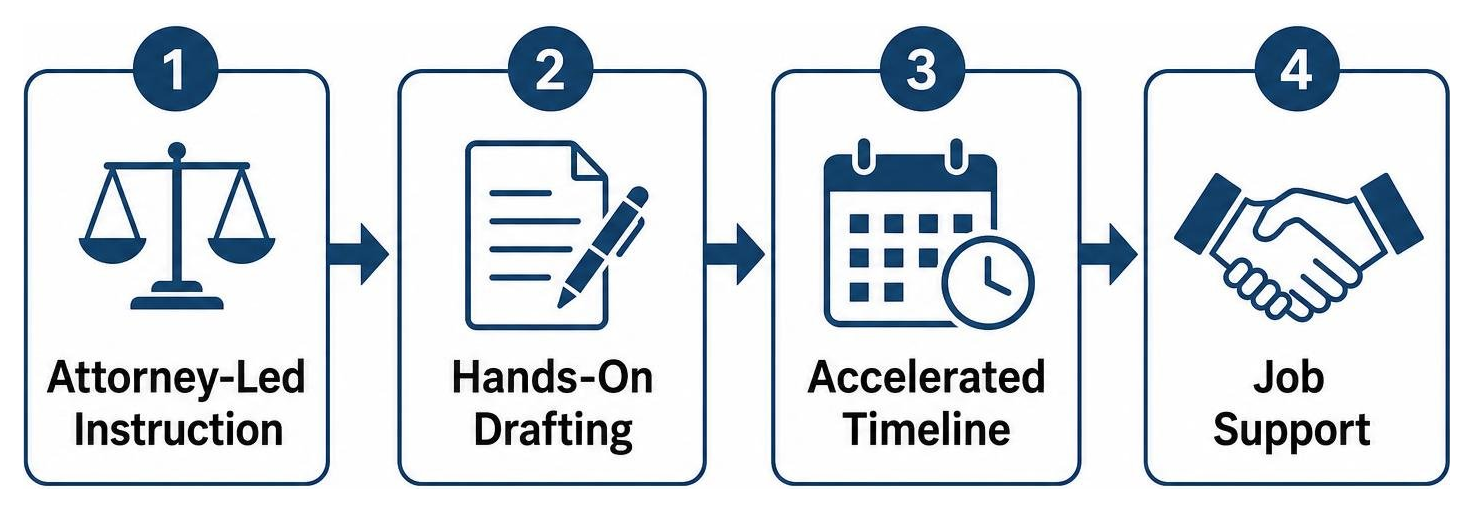
When evaluating options, consult an accelerated paralegal certificate program guide and prioritize institutions that provide:
- Instruction delivered directly by practicing attorneys and senior legal professionals.
- Real-world assignments centered on drafting genuine court pleadings, motions, and discovery responses.
- Accelerated timelines that minimize your time out of the workforce.
- High placement support and practical job preparation resources.
Practical Experience and Placement Support in Paralegal Training for Career Changers

The primary hurdle for many career changers is showing employers that they can execute legal tasks from day one. You can bridge this gap by building professional portfolio during paralegal training courses.
Your portfolio should contain redacted samples of work you completed in class:
- A drafted complaint and summons for a civil action.
- Formal interrogatories, requests for production of documents, and requests for admission.
- A legal memorandum analyzing a specific legal question based on local statutes.
- Deposition summaries and organized medical records indexes.
When you pair a practical portfolio with targeted resume workshops and interview prep, hiring partners see immediate proof of your competence.
Overcoming Career Change Challenges to Secure Your First Legal Role
Transitioning into a new industry naturally brings challenges. Career changers often worry about competing against candidates with prior legal backgrounds or adjusting to the fast pace of law firm deadlines.
Overcoming these hurdles comes down to framing your narrative effectively. Reviewing strategies for breaking into paralegal work without experience shows that confidence comes from competence. When interviewing with law firms, emphasize your maturity, problem-solving skills, and the practical drafting training you received in your certificate program.
Salary Potential and Long-Term Job Outlook
The legal support field continues to see steady demand across law firms, corporate legal departments, and government agencies. Legal employers rely heavily on paralegals to manage discovery, organize casework, and prepare filings cost-effectively.
Paralegals who develop strong foundational skills can advance into specialized litigation roles, senior casework management, or in-house positions. For a detailed breakdown of industry earnings and long-term earning trajectories, consult our corporate paralegal salary guide 2026 to see how experience and specialization build earning power over time.
Frequently Asked Questions About Paralegal Career Changes
How long does paralegal training take for someone with a non-legal background?
Program duration depends entirely on the educational route you choose. Traditional university degree programs require two to four years of study. In contrast, an accelerated, fast track paralegal certificate path like our 15-week certificate program allows you to complete intensive, practical coursework and enter the workforce in just under four months.
Do I need a college degree before entering a paralegal program?
In most jurisdictions, a prior college degree is not a mandatory prerequisite for paralegal employment. When asking do you need a degree to be a paralegal, the answer depends on the hiring firm and your specific career goals. While many career changers enter certificate programs with prior degrees or professional backgrounds, individuals with high school diplomas or partial college credits can succeed by completing a focused certificate program that emphasizes hands-on procedural training.
Can I work while completing paralegal training?
Yes. Most career changers maintain full-time or part-time employment while completing their studies. Programs structured specifically for busy adults considering paralegal school offer evening schedules, holding classes either through in-person classes or online with live instruction so you can balance your current career with your legal education.
Conclusion
Switching careers is a major milestone, but you do not need to spend years in school or incur substantial debt to establish a fulfilling career in the legal field. By combining your existing professional experience with focused, practical instruction, you can quickly position yourself as an indispensable asset to law firms, corporate legal teams, and public agencies.
At the Paralegal Institute, our 15-week certificate program is built around the practical tasks attorneys look for: civil litigation, drafting, legal research, and hands-on casework taught directly by practicing attorneys. Whether you join us through in-person classes in Las Vegas or participate online with live instruction, we give you the tools and confidence to enter the legal workforce immediately.
Take the next step in your professional journey and enroll in accelerated paralegal training online today.