Understanding What a Paralegal Does: The Foundation of Legal Support
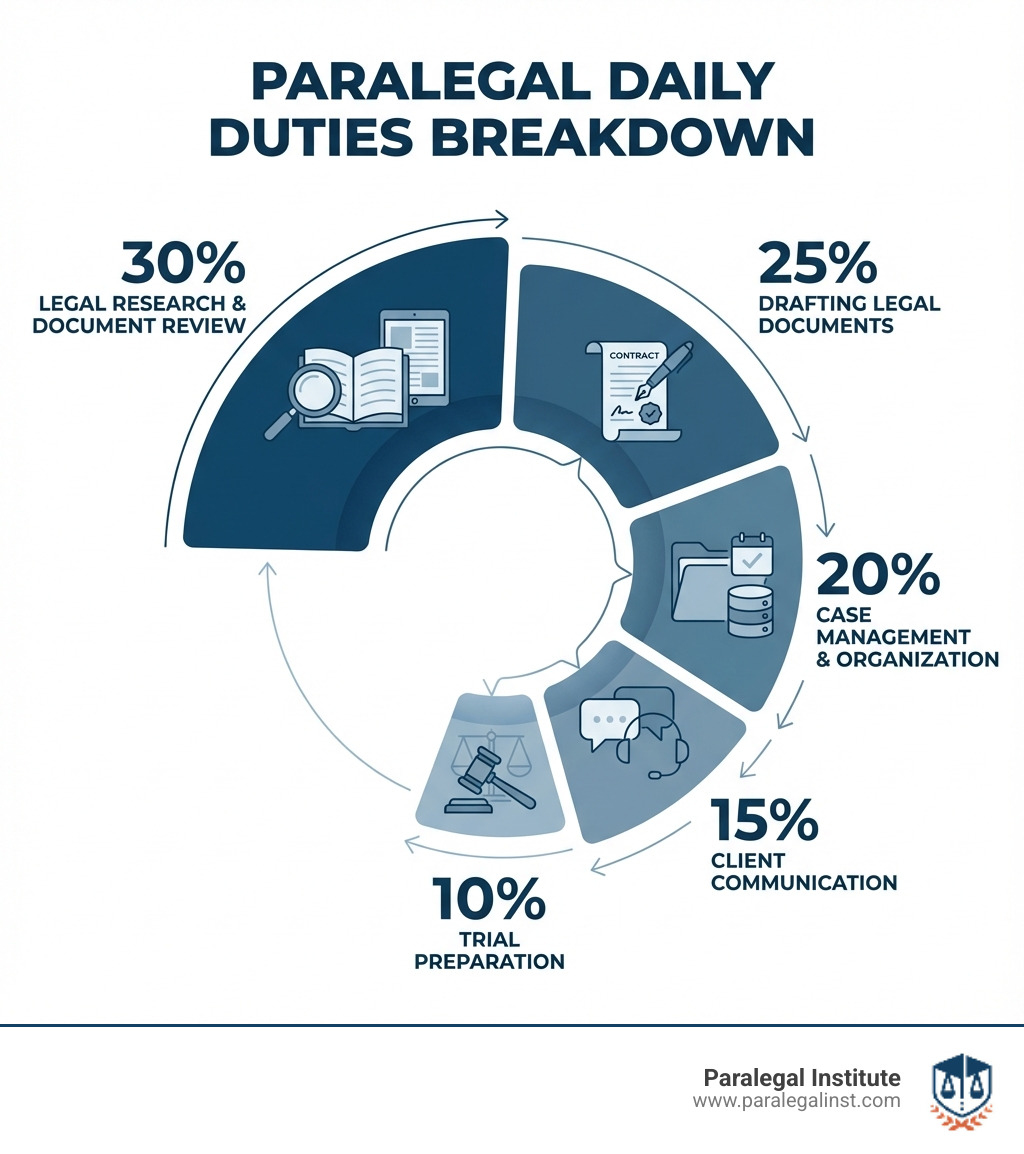
What does a paralegal do in the legal profession? Paralegals perform substantive legal work under attorney supervision, including:
- Legal Research: Investigating case law, statutes, and legal precedents to support cases
- Document Preparation: Drafting pleadings, motions, contracts, and legal correspondence
- Case Management: Organizing case files, tracking deadlines, and managing documentation
- Client Communication: Interviewing clients, gathering facts, and serving as a liaison
- Trial Preparation: Organizing exhibits, preparing trial notebooks, and coordinating witnesses
- Discovery Support: Preparing discovery requests, reviewing documents, and summarizing depositions
Behind every legal victory in the courtroom—or in the boardroom—lies hours of hard work. Much of that work is handled by paralegals who support attorneys through research, document drafting, and case preparation. Yet many people still confuse paralegals with legal assistants or don't fully understand the scope of what paralegals actually do.
The distinction matters. Paralegals perform substantive legal work —the kind that requires legal knowledge and training. They conduct legal research, draft motions and briefs, prepare cases for trial, and interact directly with clients. Legal assistants, by contrast, handle administrative tasks like scheduling and filing.
This confusion affects career decisions. If you're considering a legal career but don't want to spend years in law school, understanding what does a paralegal do helps you make an informed choice about your path forward.
I'm Matthew Pfau, a practicing attorney who owns a law firm and teaches at the Paralegal Institute. Through hiring, training, and supervising numerous paralegals, I've gained insight into what does a paralegal do daily and what skills make them invaluable to legal teams.
Defining the Roles: Paralegal vs. Legal Assistant vs. Lawyer
In the intricate world of law, clarity about roles is paramount. While they all contribute to the legal process, paralegals, legal assistants, and lawyers have distinct responsibilities, educational backgrounds, and ethical boundaries. Understanding these differences is crucial for anyone navigating the legal field, whether as a professional or a client.
Let's explain these roles:
Paralegal Definition: A paralegal is a legal professional qualified through education, training, or work experience to perform substantive legal work that requires knowledge of legal concepts. According to the U.S. Bureau of Labor Statistics, these professionals support lawyers by investigating facts, preparing legal documents, or researching legal precedent. This work is always performed under the supervision of a licensed attorney. Paralegals are integral to legal teams, handling tasks that directly contribute to case strategy and preparation. Their time for substantive legal work is often billed to clients, much like an attorney's time, but at a lower hourly rate.
Legal Assistant Definition: A legal assistant, while also supporting legal operations, primarily focuses on administrative and clerical tasks. Their duties might include managing office calendars, organizing physical and digital files, handling correspondence, scheduling appointments, and performing general office duties. While important for the smooth functioning of a law office, legal assistant roles typically do not involve the substantive legal analysis or document drafting that paralegals undertake. In smaller firms, paralegals might occasionally handle some administrative duties, but their core function remains substantive legal support.
Lawyer Definition: A lawyer is a professional who has earned a Juris Doctor (J.D.) degree, passed a state bar examination, and is licensed to practice law. Lawyers are the only legal professionals authorized to provide legal advice, represent clients in court, set legal fees, and accept clients. They make strategic decisions, argue cases, and are ultimately responsible for the legal services provided to clients.
Here’s a quick comparison to highlight the distinctions:
| Feature | Paralegal | Legal Assistant | Lawyer |
|---|---|---|---|
| Key Responsibilities | Substantive legal work (research, drafting, case management) under attorney supervision. | Administrative and clerical support (scheduling, filing, document organization). | Provide legal advice, represent clients, argue cases, make strategic decisions. |
| Education | Specialized training or a certificate in paralegal studies. | High school diploma, some college, or administrative training. | Juris Doctor (J.D.) degree, bar exam pass, state license. |
| Legal Advice | Cannot provide legal advice. | Cannot provide legal advice. | Can provide legal advice. |
| Court Representation | Cannot represent clients in court (support role only). | Cannot represent clients in court. | Can represent clients in court. |
| Supervision | Works under attorney supervision. | May work under paralegal or attorney supervision. | Independently practices law. |
| Billing | Time often billed to clients at a lower rate. | Time typically not billed to clients for substantive legal work. | Time always billed to clients for legal services. |
Ethical Boundaries and Professional Standards for Paralegals: A crucial aspect of what does a paralegal do involves adhering to strict ethical guidelines. Paralegals operate under the direct supervision of an attorney and cannot practice law independently. This means they cannot:
- Give legal advice.
- Set legal fees.
- Accept or reject clients.
- Represent a client in court (except in a support role to an attorney).
These boundaries are in place to protect the public and ensure that legal services are provided competently and ethically. Paralegals must always make their non-lawyer status clear in all communications to avoid any misunderstanding. Professional associations provide ethical codes that guide paralegals in their daily practice, emphasizing competence, confidentiality, and integrity.
What Does a Paralegal Do? A Deep Dive into Daily Duties
At its core, what does a paralegal do is support attorneys in delivering legal services by performing substantive legal work. This isn't just busywork; it's the backbone of legal practice. Paralegals are often the unsung heroes who ensure that cases move forward efficiently and effectively. Their daily tasks are diverse, demanding, and require a keen understanding of legal principles.

From the moment a case comes in until its resolution, paralegals are involved in critical aspects of client interaction, case management, investigation, research, document drafting, and trial preparation. We're talking about tasks that directly impact the outcome of legal matters.
So, what does a paralegal do in practice?
Let's break down the practical, day-to-day duties that define the paralegal role:
- Client Interviews and Fact Gathering: Paralegals often serve as the first point of contact for clients, conducting initial interviews to gather essential facts and information. This involves asking precise questions, listening empathetically, and documenting details crucial for building a case.
- Organizing Case Files and Tracking Deadlines: Imagine a complex legal case with hundreds or thousands of documents. Paralegals are masters of organization, carefully maintaining client files, categorizing evidence, and ensuring every piece of information is easily retrievable. They also track critical deadlines for filings, court appearances, and discovery responses, ensuring nothing falls through the cracks. This requires a sharp eye and meticulous attention to detail.
- Factual Investigation and Witness Interviews: Attorneys rely on paralegals to dig deep into the facts of a case. This can involve interviewing witnesses, collecting statements, reviewing police reports, and even visiting accident scenes. Their investigative work helps uncover critical evidence and provides a clearer picture of events.
- Legal Research Using Industry-Standard Tools: This is a cornerstone of what does a paralegal do. They dig into legal databases like Westlaw, LexisNexis, and other online resources to research statutes, case law, regulations, and legal precedents. The goal is to find relevant legal authority that supports an attorney's arguments or helps anticipate an opponent's strategy. This requires strong analytical skills and a knack for navigating complex information.
- Drafting Pleadings, Motions, and Discovery Documents: Under attorney supervision, paralegals draft a wide array of legal documents. This includes initial pleadings (like complaints and answers), various motions (requests to the court), discovery requests (formal requests for information from the opposing party), and responses to discovery. They also draft subpoenas, affidavits, and legal correspondence. This work demands precision, a solid grasp of legal terminology, and excellent writing skills.
- Managing Evidence and Preparing Trial Materials: As a case progresses toward trial, paralegals become central to preparing all necessary materials. This involves organizing exhibits, creating demonstratives, preparing witness lists, and compiling comprehensive trial notebooks. Their work ensures that attorneys have everything they need at their fingertips during court proceedings.
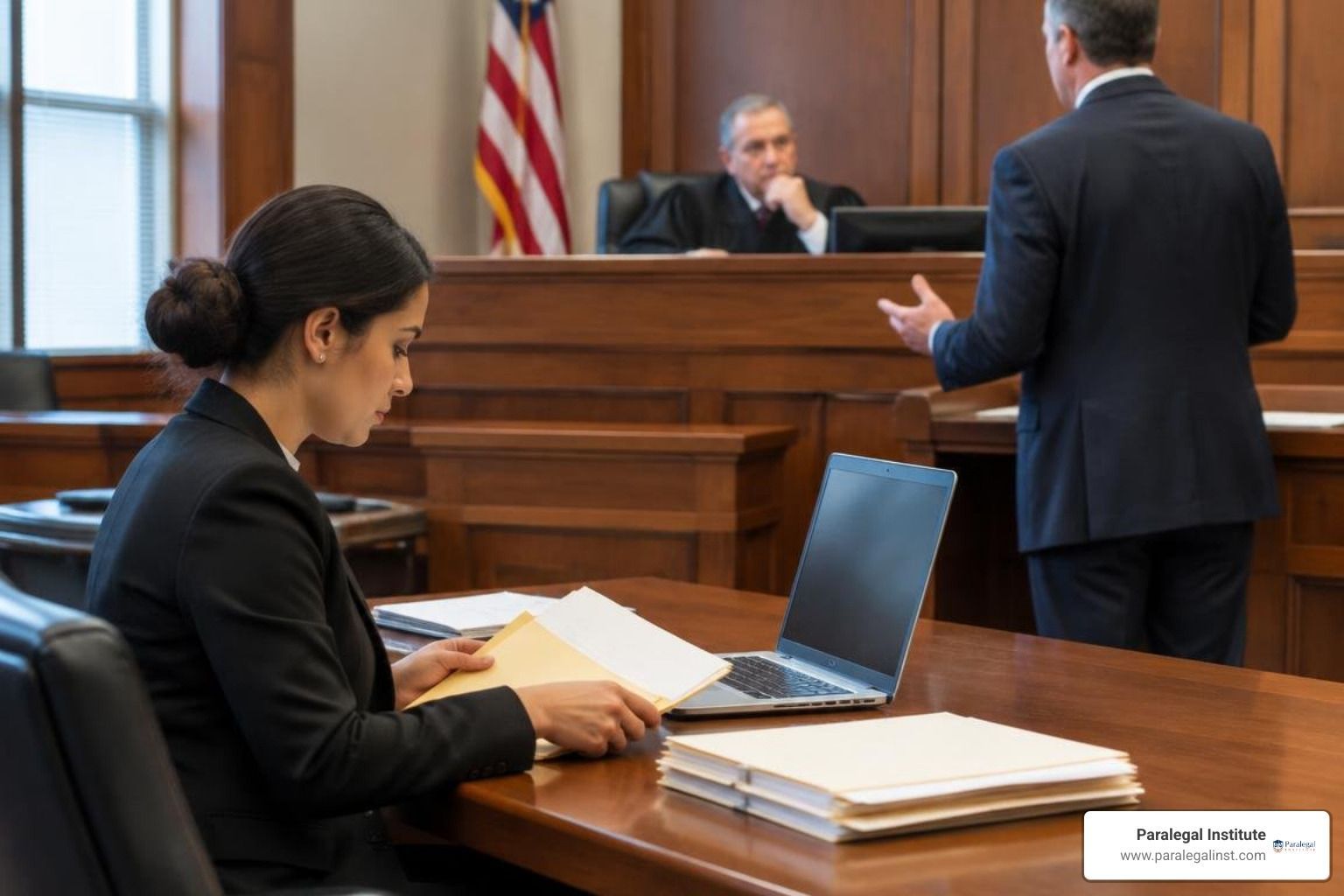
- Assisting Attorneys in Court: Organizing Exhibits, Preparing Trial Notebooks: While paralegals do not argue cases, they frequently attend court to provide crucial support. This could mean sitting at counsel table, managing exhibits, taking notes during testimony, retrieving documents for the attorney, or coordinating with witnesses. They are the attorney's right hand, ensuring the logistical aspects of trial run smoothly.
Without the diligent efforts of paralegals performing these substantive tasks, many law firms would struggle to process cases effectively. They are essential to the efficiency and success of legal practice.
Paralegal Specializations: Finding Your Niche in the Legal Field
One of the most exciting aspects of a paralegal career is the ability to specialize. Just as doctors specialize in different areas of medicine, paralegals can focus on specific branches of law, developing deep expertise in their chosen field. This allows them to tailor their skills to areas they're passionate about, making for a more engaging and impactful career.
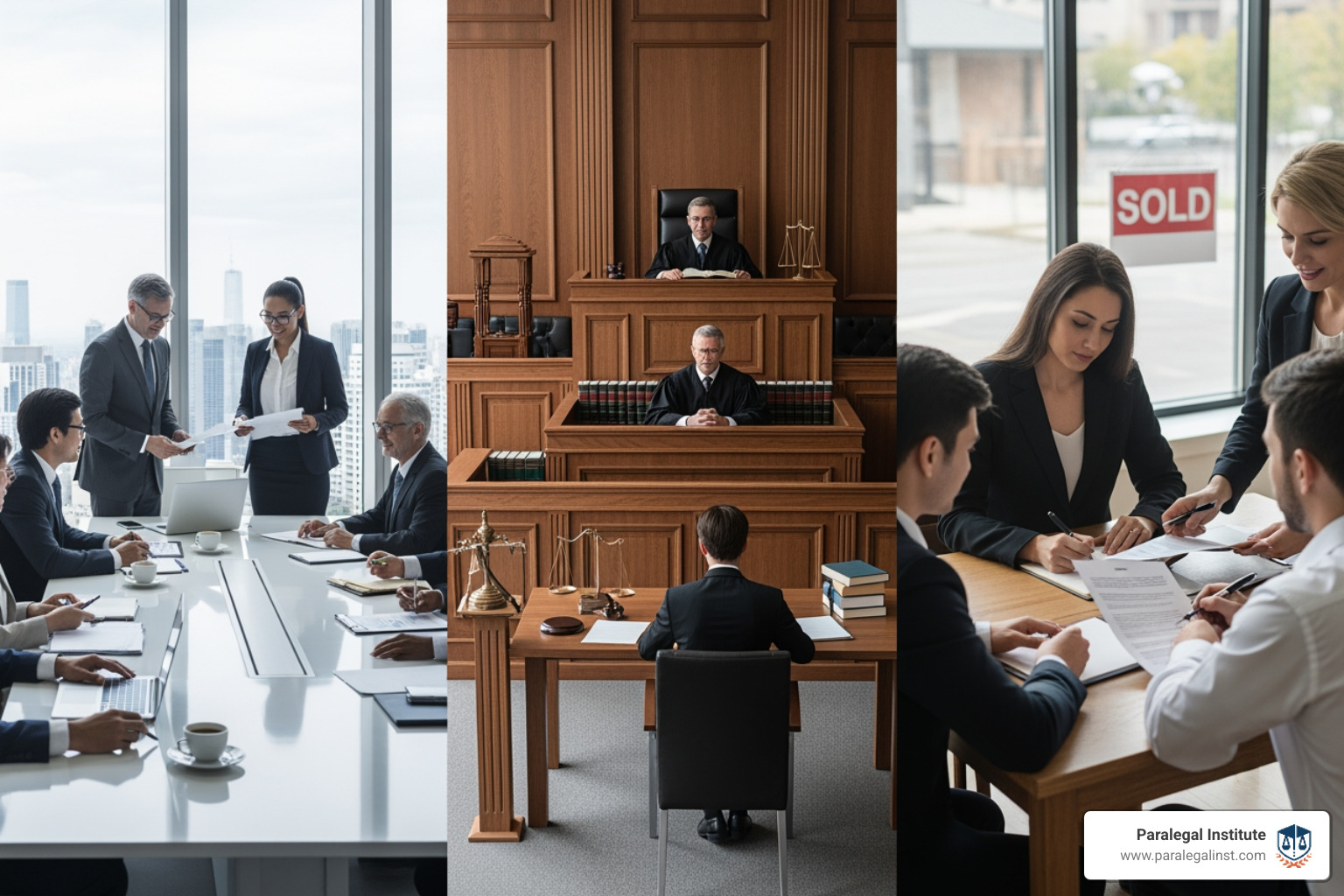
The legal landscape is vast, and paralegals are needed across virtually all practice areas. Here's an overview of some common specializations:
- Litigation Paralegal: This is often the most common area. Litigation paralegals assist attorneys throughout the entire lawsuit process, from the initial complaint to trial and appeals. Their duties include extensive discovery management, drafting pleadings, preparing for depositions, coordinating witnesses, and managing all aspects of trial preparation. They are the organizational backbone of a trial team.
- Corporate Paralegal: Working for corporations (either in-house or at a law firm serving corporate clients), these paralegals focus on business law. Their tasks include assisting with entity formation, mergers and acquisitions, contract management, corporate governance, regulatory compliance, and preparing shareholder materials. They help ensure business decisions are legally sound and properly documented.
- Family Law Paralegal: This specialization involves highly sensitive and often emotionally charged cases. Family law paralegals assist with divorces, child custody disputes, adoptions, and domestic violence cases. They draft petitions, financial affidavits, support agreements, and help prepare clients for court appearances or mediation. Strong communication and empathy are key here.
- Real Estate Law Paralegal: These paralegals handle legal aspects of property transactions. They assist with property purchases, sales, leases, and zoning issues. Their duties include drafting deeds, reviewing title documents, preparing closing statements, and coordinating with real estate agents, lenders, and clients.
- Personal Injury Paralegal: This is a critical specialization, especially in a city like Las Vegas, Nevada, where personal injury cases are frequent. These paralegals assist victims of accidents and negligence. They gather medical records, police reports, and accident reconstruction data. They interview witnesses, prepare demand letters, assist with settlement negotiations, and help prepare cases for trial. Our guide on Personal Injury Paralegal Duties Complete Guide provides an even deeper dive into this impactful role.
- Criminal Law Paralegal: These paralegals support either prosecution or defense attorneys in criminal cases. They help investigate facts, review police reports, interview witnesses, organize evidence, and assist with various stages of criminal proceedings, from arraignment to trial and post-conviction relief.
What does a paralegal do in a specific field like personal injury?
Let's zoom in on a specialization particularly relevant to our community in Las Vegas, Nevada: Personal Injury. In this field, what does a paralegal do is often pivotal to helping injured clients receive justice and compensation.
- Medical Records Analysis: Personal injury cases heavily rely on medical evidence. Paralegals carefully gather, organize, and summarize extensive medical records and bills, identifying key treatments, diagnoses, and prognoses that prove the extent of a client's injuries.
- Accident Report Review: They obtain and analyze police reports, incident reports, and witness statements to understand the dynamics of an accident, identify liable parties, and assess the strength of a claim.
- Client Communication and Support: Beyond gathering facts, they provide crucial support to clients during a stressful time. They explain legal processes, answer questions (without giving legal advice), and keep them informed about their case's progress.
- Lien Management: They help identify and manage medical liens or subrogation claims from insurance companies, ensuring these are addressed as part of any settlement or judgment.
- Discovery Preparation: This involves preparing detailed interrogatories (written questions) and requests for production of documents (requests for evidence) to the opposing party, as well as helping clients respond to similar requests.
- Settlement Package Drafting: Paralegals often prepare comprehensive demand letters and settlement brochures that detail the client's injuries, medical treatment, lost wages, and pain and suffering, presenting a strong case for compensation.
The specialized knowledge and skills required for a Personal Injury Paralegal are a testament to the depth and impact of the paralegal profession. It's a role that truly makes a difference in people's lives.
The Path to Becoming a Paralegal: Education and Essential Skills
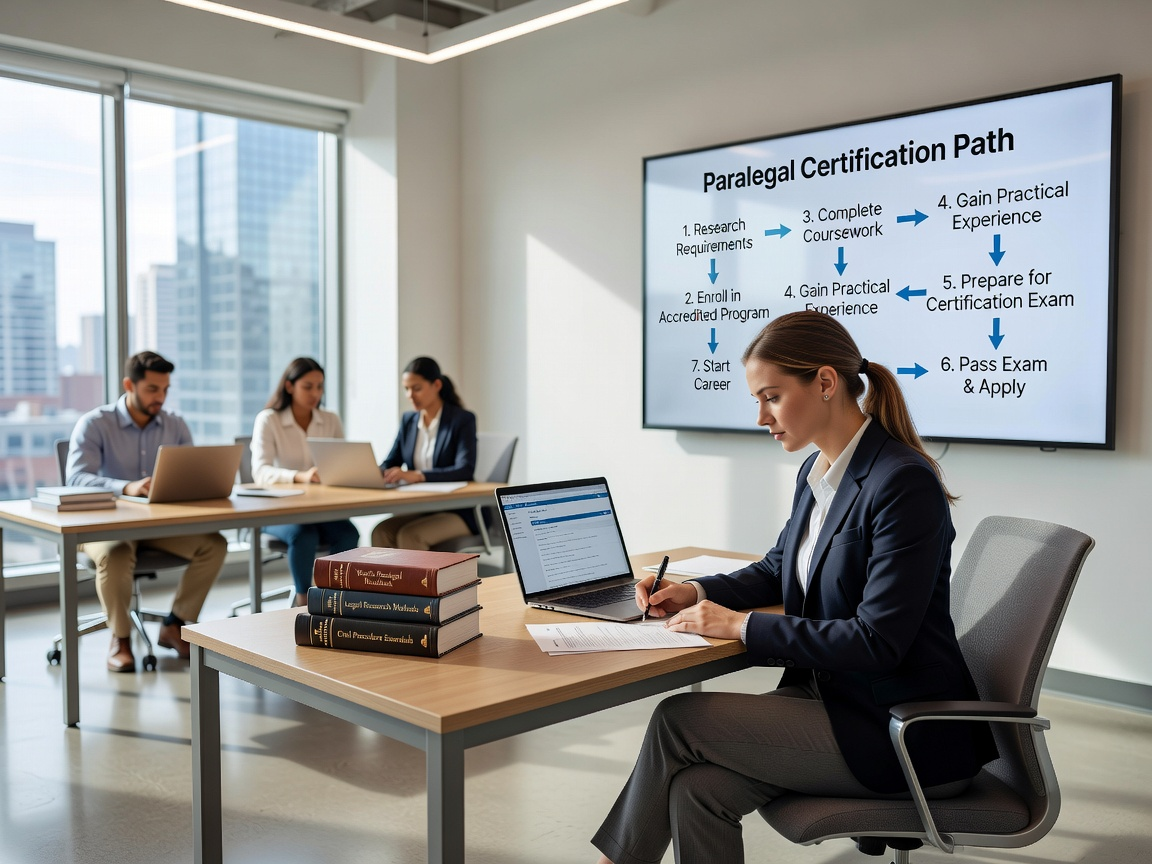
Starting on a paralegal career is an exciting journey, and the right educational foundation is your first step. While there are various pathways, our focus at Paralegal Institute is on providing a fast, practical, and career-ready route into the legal field, particularly in locations like Las Vegas, Nevada.
Educational Pathways: While some educational paths provide a comprehensive legal education over several years, many individuals seek a more direct and efficient route to employment. For this reason, paralegal certificate programs have become incredibly popular.
Paralegal Institute’s Accelerated Certificate Advantages: At the Paralegal Institute, we pride ourselves on offering a program that stands out for its effectiveness and efficiency. Our 15-week paralegal certificate program is designed with the career-focused adult in mind, providing distinct advantages:
- Faster Career Entry: Unlike longer educational programs, our accelerated format gets you job-ready in just 15 weeks. This means you can enter the workforce and begin your legal career much sooner, a significant advantage for those looking to make a swift transition.
- Practical, Real-World Skills Focus: Our curriculum is not just theoretical; it's practical. Designed and taught by practicing legal professionals, we focus on the exact skills and knowledge you'll use on day one in a law office. We teach you what does a paralegal do in the real world, not just in textbooks. This hands-on training ensures you're prepared for immediate workforce entry.
- Cost-Effectiveness: Investing in your education is a smart decision, and our program offers a highly cost-effective alternative to longer educational paths. You gain the essential skills needed for a successful paralegal career without the extensive time and financial commitment of a multi-year program.
- Live Instruction—Online or In-Person: We believe in the power of live interaction. Whether you choose our online program with live instruction or our in-person classes in Las Vegas, Nevada, you'll benefit from real-time engagement with instructors and peers. This interactive environment allows for immediate feedback, deeper understanding, and the opportunity to ask questions as they arise, mimicking the collaborative nature of a law firm. This is far more effective than self-paced, pre-recorded courses.
Essential Hard Skills: To excel in what does a paralegal do, you'll need a robust set of hard skills:
- Legal Research and Writing: The ability to conduct thorough legal research and draft clear, concise, and accurate legal documents is non-negotiable. Our program hones these skills, teaching you to navigate legal databases and construct persuasive legal arguments.
- Technology Proficiency: Modern law offices are highly digitized. Proficiency with office software, legal research platforms, and general computer applications is essential. We equip you with the technological savvy needed to thrive.
- Critical Thinking: Paralegals must analyze complex legal problems, identify relevant facts, and apply legal principles. Our training emphasizes developing strong critical thinking skills to tackle these challenges effectively.
Essential Soft Skills: Beyond technical aptitude, certain soft skills are paramount for a paralegal's success:
- Attention to Detail: This is perhaps the most critical soft skill. A misplaced comma, a forgotten deadline, or an overlooked fact can have significant legal consequences. Paralegals must possess an almost obsessive commitment to accuracy and thoroughness. We emphasize the Importance of Attention to Detail in Paralegal Work throughout our curriculum.
- Organization: With multiple cases, documents, and deadlines, paralegals must be highly organized. Effective Strategies for Paralegals to Stay Organized are taught and practiced, ensuring you can manage workloads efficiently.
- Communication: Paralegals interact with attorneys, clients, court personnel, and opposing counsel. Clear, professional, and empathetic communication—both written and verbal—is vital.
By focusing on these essential skills and offering an accelerated, practical, and interactive learning environment, the Paralegal Institute prepares you to confidently step into the legal field.
Frequently Asked Questions about the Paralegal Role
It's common to have questions about a profession as dynamic and nuanced as that of a paralegal. Here, we address some of the most frequently asked questions to provide even greater clarity on what does a paralegal do.
Can a paralegal give legal advice?
No, absolutely not. This is one of the most fundamental ethical boundaries in the legal profession. Paralegals cannot provide legal advice, even if they know the answer. Providing legal advice is considered the Unauthorized Practice of Law (UPL) and is strictly reserved for licensed attorneys. A paralegal's role is to assist attorneys in preparing cases and providing legal services, but they must always refer questions requiring legal judgment or advice directly to the supervising attorney. Maintaining this clear distinction is crucial for protecting clients and upholding the integrity of the legal system.
Do paralegals go to court?
Yes, paralegals often go to court, but their role there is strictly supportive. When they attend court, they are there to assist the attorney, not to represent the client or argue the case. Their duties in court might include:
- Organizing and managing exhibits.
- Ensuring the attorney has all necessary documents readily available.
- Taking notes during testimony or arguments.
- Coordinating with witnesses outside the courtroom.
- Handling any last-minute logistical needs for the attorney.
Think of them as the indispensable stage managers for the attorney's performance in court. They ensure everything runs smoothly behind the scenes so the attorney can focus entirely on presenting the case.
Can a paralegal become a lawyer?
Yes, paralegal experience can be an excellent stepping stone for someone who ultimately wishes to become a lawyer. Working as a paralegal provides invaluable real-world experience in the legal system, offering deep insights into daily legal practice, case management, and legal research. This practical foundation can be incredibly beneficial for future law students, providing a context for their academic studies that many of their peers won't have.
However, becoming a lawyer requires a completely separate and rigorous educational path. It involves:
- Completing the required undergraduate education.
- Attending and graduating from a law school to earn a Juris Doctor (J.D.) degree.
- Passing the bar examination in the state where you wish to practice.
- Meeting all character and fitness requirements for licensure in that state.
While paralegal experience doesn't shorten the academic requirements for becoming a lawyer, it certainly provides a unique advantage and a clearer understanding of whether the legal profession is the right long-term fit. It's a testament to the comprehensive nature of what does a paralegal do that it can serve as such a robust foundation for further legal aspirations.
Conclusion: Is a Paralegal Career Right for You?
We've explored the multifaceted world of the paralegal, detailing what does a paralegal do and how this vital role underpins the success of legal teams across various specializations. From conducting rigorous legal research and drafting critical documents to managing complex cases and assisting in court, the paralegal's work is substantive, challenging, and profoundly rewarding. It’s a career that demands sharp intellect, meticulous attention to detail, and a passion for justice.
If you're seeking a career that offers intellectual stimulation, direct impact on legal outcomes, and a professional environment, then becoming a paralegal might be an excellent choice for you. It's a pathway to a legal career that doesn't require the extensive time and financial commitment of becoming an attorney, yet still places you at the heart of the legal system.
At the Paralegal Institute, we are committed to preparing you for this impactful career with an approach designed for the modern, career-focused adult. We stand by our method, which emphasizes:
- Hands-on training: Our curriculum is built around practical, real-world tasks that you'll encounter daily in a law office.
- Live instruction from experienced legal professionals: You learn directly from practicing attorneys and seasoned paralegals, gaining insights and mentorship that are invaluable. Whether online or in-person in Las Vegas, Nevada, our live classes foster a dynamic learning environment.
- Focus on job readiness: Our accelerated 15-week program is specifically designed to equip you with the essential skills for immediate workforce entry, making you a highly desirable candidate in the legal job market.
The legal field is always evolving, and the demand for skilled paralegals remains constant. If you're ready to take the next step towards a fulfilling legal career, we invite you to explore the resources available at the Paralegal Institute. Find how our unique approach can fast-track your entry into this exciting profession.
To learn more about how we can help you achieve your career goals, visit our Top Resources for Paralegal Education page. We're here to guide you every step of the way.