Do Paralegals Go to Court? Yes, but They Support Rather Than Represent
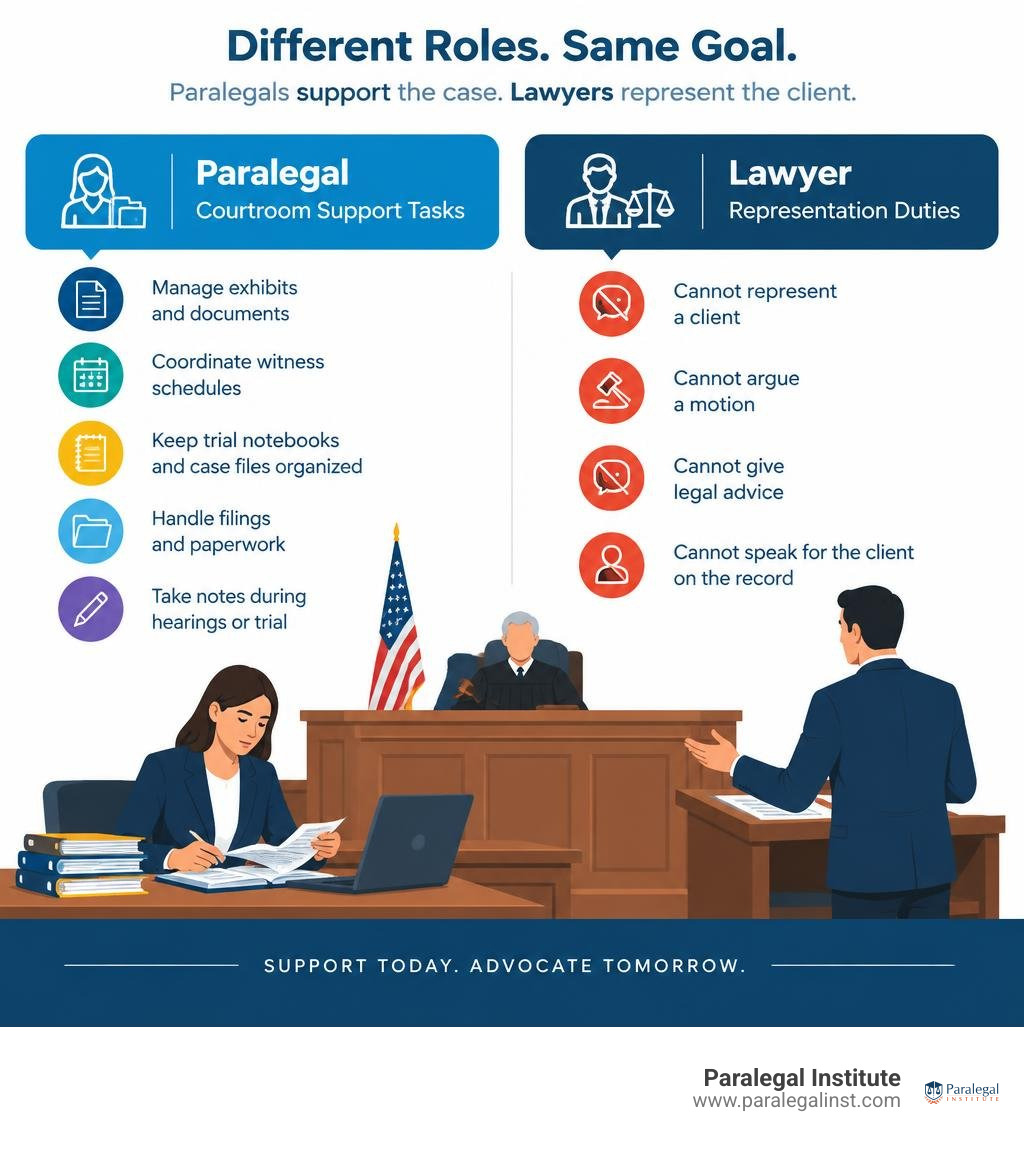
Do paralegals go to court? Some do, especially in civil litigation, criminal defense, and family law. They may sit at counsel table and help the attorney manage exhibits, witness schedules, trial notebooks, filings, and notes during hearings or trial.
But a paralegal generally cannot represent a client, argue a motion, give legal advice, or speak for the client on the record. Those are lawyer duties. A paralegal's courtroom role is practical and important: keeping the casework organized so the attorney can focus on advocacy.
Not every paralegal appears in court. A litigation paralegal may attend hearings often, while a corporate, real estate, or compliance paralegal may spend nearly all of their time on transactions, documents, and discovery outside the courtroom.
I am Matthew Pfau, a practicing U.S. attorney who has handled jury trials, hired and trained paralegals, and taught paralegal courses. In answering do paralegals go to court , I will show where their courtroom work begins, where it ends, and how aspiring legal professionals can prepare for this support role.
Do Paralegals Go to Court? The Core Answer and Practice Specializations
The direct answer is yes, but courtroom attendance depends heavily on the practice area. When exploring the fundamental role of paralegals in law firms, you quickly discover that legal support divides into dispute resolution and transactional practice.
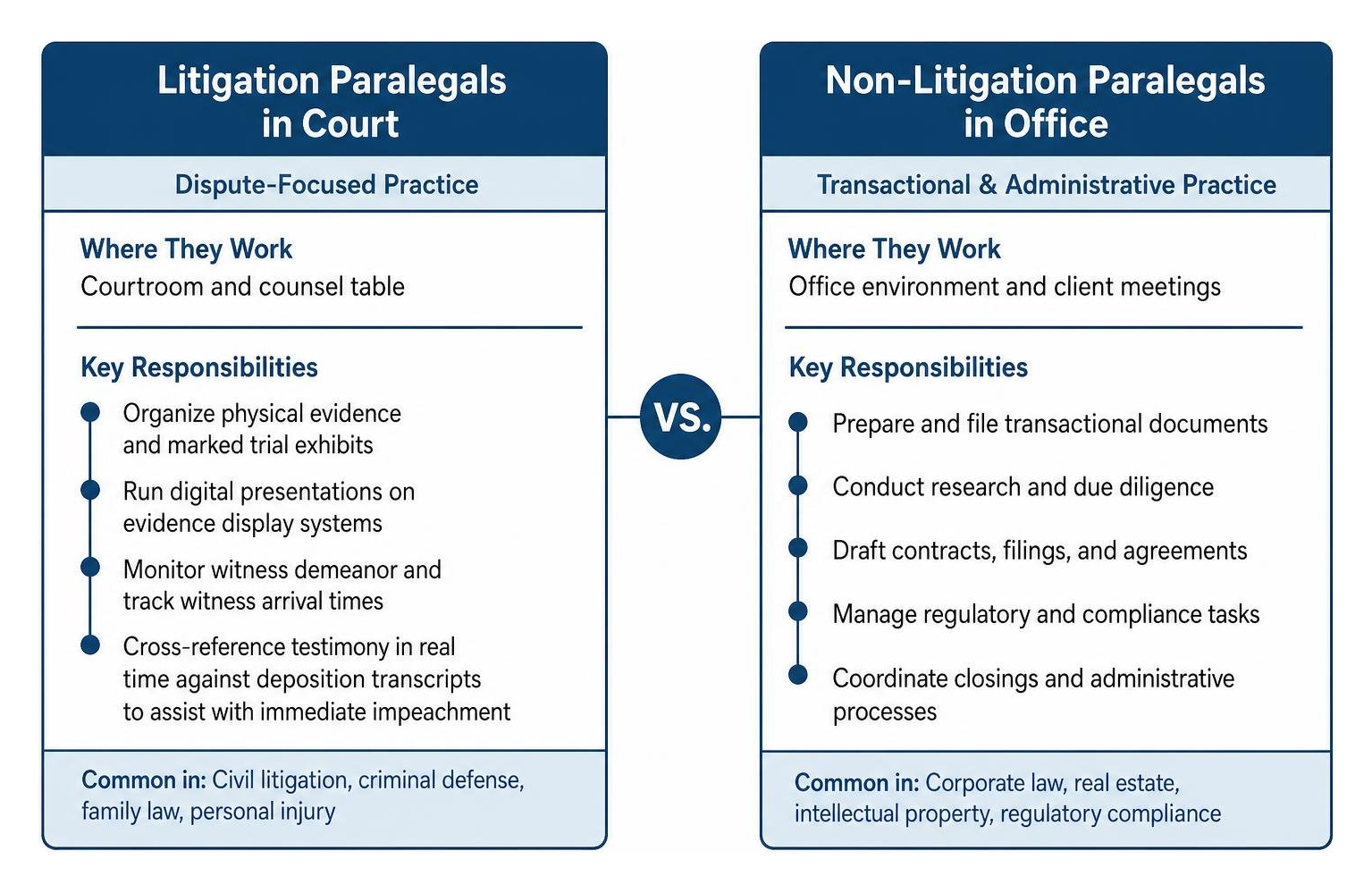
Paralegals working in dispute-focused sectors—such as civil litigation, criminal defense, family law, and personal injury—frequently enter the courtroom. In local public jurisdictions, such as requirements outlined in Clark County judicial support specifications, court-facing staff and support specialists must be intimately familiar with courtroom logistics, document handling, and docket management.
Why Do Paralegals Go to Court in Litigation and Criminal Law?
In litigation and criminal defense, a trial or evidentiary hearing involves moving parts that no solo attorney can handle while examining witnesses. Paralegals provide substantive litigation support by:
- Organizing physical evidence and marked trial exhibits.
- Running digital presentations on evidence display systems.
- Monitoring witness demeanor and tracking witness arrival times.
- Cross-referencing testimony in real time against deposition transcripts to assist with immediate impeachment.
In high-stakes environments, such as mass torts and multidistrict litigation (MDL), the volume of casework is massive. As of June 30, 2026, there were 162 pending MDL dockets holding 203,915 actions nationwide, with just 21 dockets accounting for roughly 94 percent of all pending actions. Managing cases of that scale requires dedicated litigation paralegals inside and outside the courtroom to ensure trial teams maintain control of discovery and pleadings.
Non-Litigation Roles: When Do Paralegals Go to Court Rarely or Never?
Many paralegals rarely or never set foot in a courtroom. Transactional and administrative practice areas operate almost entirely through office environments, client meetings, and regulatory filings:
- Corporate Law: Focuses on entity formation, mergers and acquisitions, contract drafting, and corporate governance filings.
- Real Estate Law: Centers on title searches, closing documents, lease agreements, and escrow tracking.
- Intellectual Property (IP): Handles patent applications, trademark filings, and licensing agreements with regulatory bodies.
- Regulatory Compliance: Manages corporate disclosures, workplace policies, and administrative audits.
These professionals perform substantive casework, but their work is transactional rather than dispute-centered.
Key Courtroom Responsibilities: What Paralegals Do During Trial
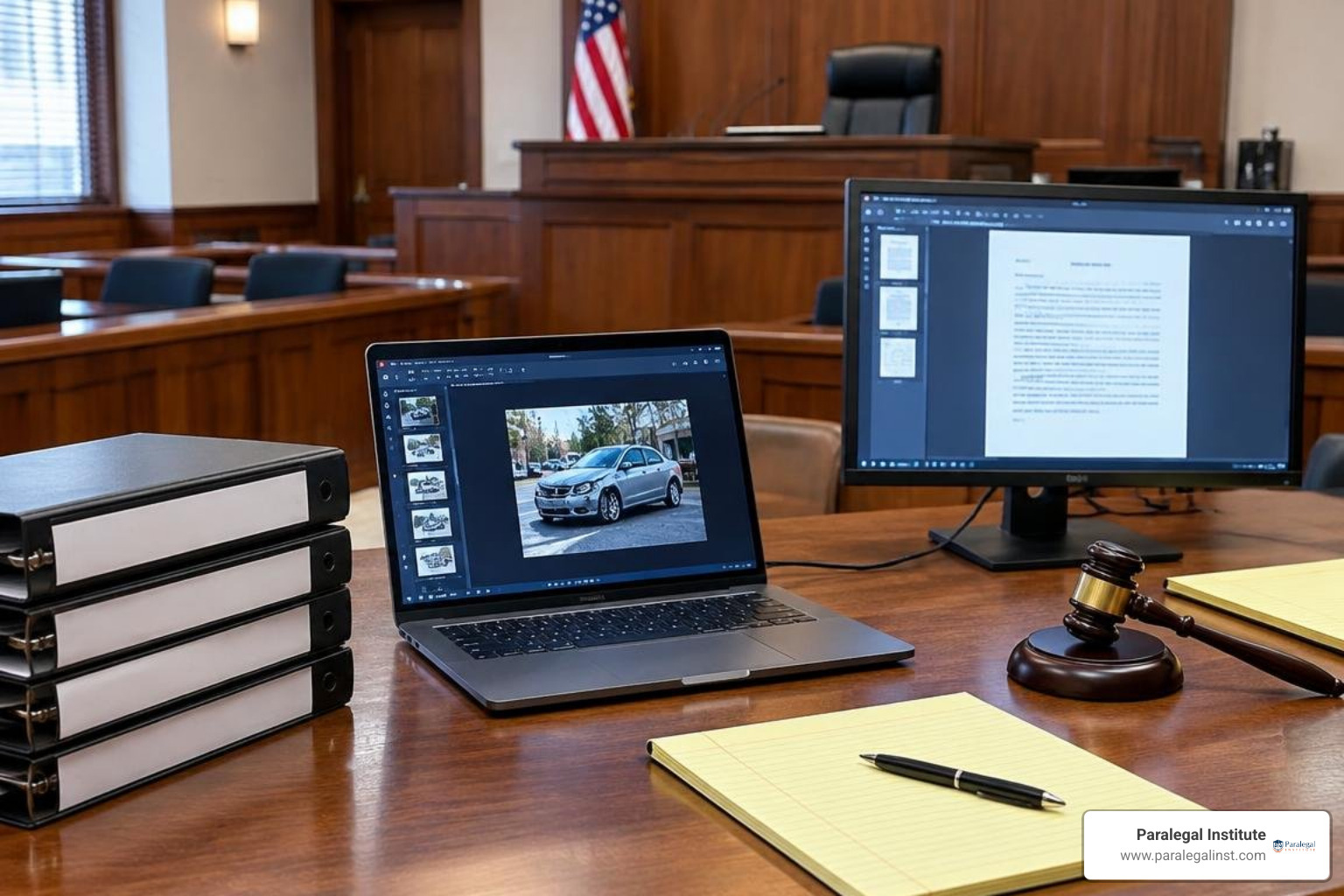
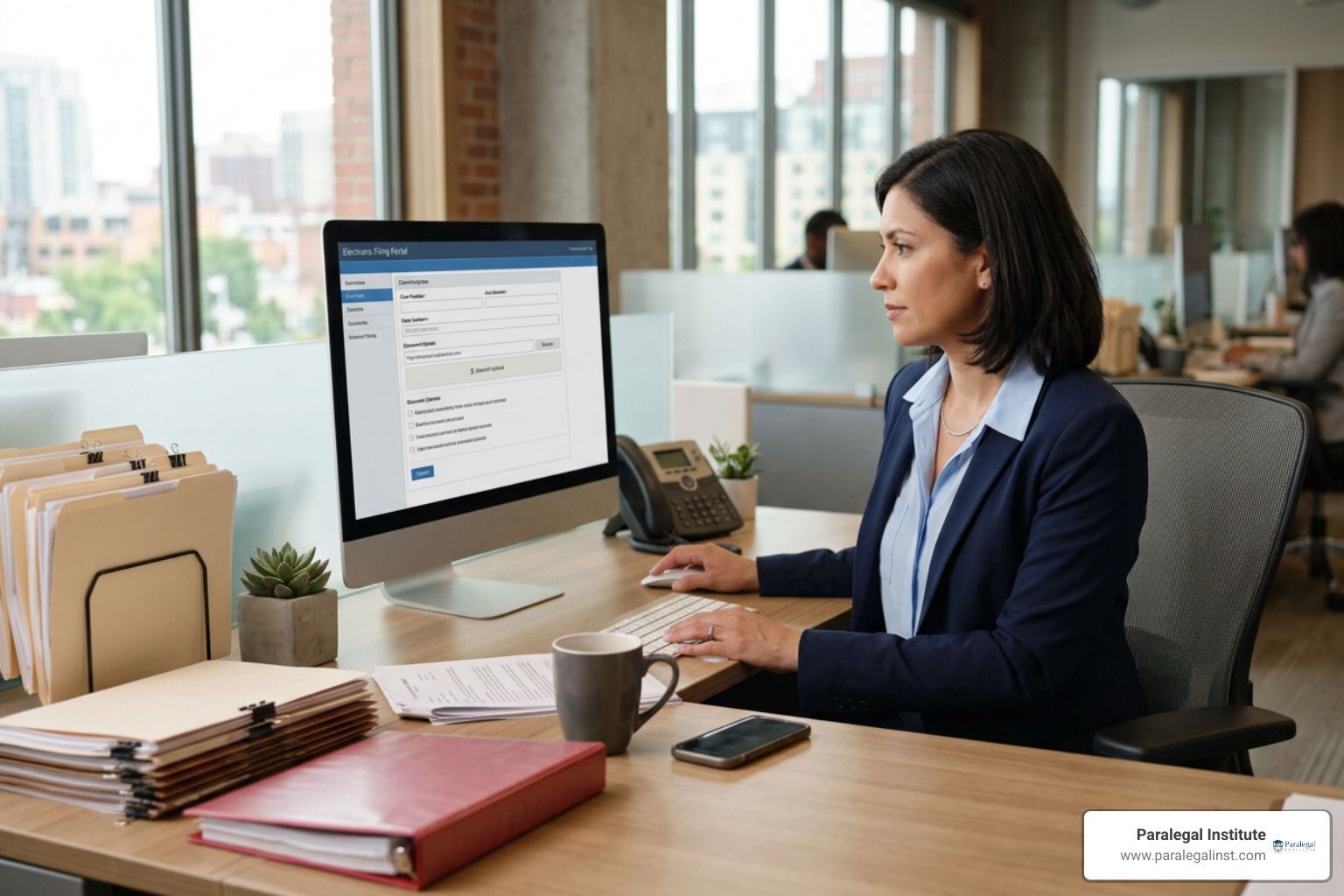
When paralegals attend court, they are not spectators. They work at counsel table or directly behind the attorney in the gallery well, ensuring that the legal team operates without delays. Understanding electronic court filing procedures and local court rules allows a paralegal to manage the flow of evidence seamlessly.
Exhibit Management and Evidence Tracking
Evidence presentation can make or break a trial. Paralegals maintain the master exhibit log, ensuring that every document offered into evidence matches the pretrial disclosures.
- Physical Exhibit Maintenance: Keeping original documents, photo evidence, and physical items arranged in marked binders or folders for rapid retrieval.
- Chain of Custody Tracking: Documenting the handling and verification of sensitive evidence.
- Digital Evidence Display: Operating courtroom trial presentation software to project exhibits, highlight deposition video segments, and display demonstrative graphics for the judge and jury.
- Foundation Verification: Tracking whether an exhibit has been marked for identification, offered, objected to, or admitted into evidence on the official record.
Witness Coordination and Real-Time Case Logistics
During trial, attorneys must focus on their line of questioning. Paralegals manage witness logistics by tracking subpoena service, communicating with expert and lay witnesses regarding arrival times, and providing witness packets before testimony begins.
When a witness takes the stand, the paralegal tracks the testimony against prior statements taken during the discovery phase. If a witness contradicts their deposition, the paralegal pulls the exact page and line reference within seconds, placing the transcript directly in the trial attorney's hands for cross-examination.
Legal Boundaries, UPL, and Exceptions to Court Representation
The division between attorney and paralegal duties is strict. The legal profession enforces rigorous standards around the Unauthorized Practice of Law (UPL), reinforced by legal ethics courses.
Unauthorized Practice of Law and Attorney Supervision
Under established professional ethics rules, including Model Rule 5.5, non-lawyers are prohibited from engaging in the practice of law, and attorneys are prohibited from assisting non-lawyers in doing so. In the courtroom, this means a paralegal cannot:
- Present opening statements or closing arguments.
- Examine or cross-examine witnesses.
- State legal objections or argue motions on the record before a judge.
- Enter appearances on behalf of a client.
- Provide direct legal advice to a client regarding trial strategy or settlement offers.
All substantive casework performed by a paralegal must occur under the direct supervision of a licensed attorney. A paralegal who attempts to act as legal counsel faces serious consequences, including civil liability, contempt of court, and potential misdemeanor criminal charges.
Special Exceptions: Federal Administrative Hearings and State Paraprofessional Programs
While traditional state and federal courtrooms require an attorney's license, specific exceptions exist where trained non-attorneys may represent individuals:
- Federal Administrative Agencies: The Social Security Administration (SSA) allows designated non-attorney representatives to advocate for claimants during disability hearings. The Department of Justice allows non-attorney representatives to appear in immigration court under strict agency recognition rules. Non-lawyer patent agents may also represent parties before the United States Patent and Trademark Office (USPTO).
- State Paraprofessional Licensing: A few states have created specific non-attorney licensing paths for limited representation in narrow practice areas (such as family law or small civil claims), though traditional courtroom representation remains restricted to licensed attorneys.
Courtroom Roles Compared: Paralegal vs. Lawyer vs. Legal Assistant
To understand how a legal team functions inside the courtroom, it helps to compare the distinct duties of each professional.
| Role | Primary Courtroom Duty | Seating Location | Authority to Speak on Record? | Core Work Focus |
|---|---|---|---|---|
| Trial Lawyer | Legal advocacy, examining witnesses, making objections, presenting arguments | Counsel Table (Front) | Yes | Legal strategy, arguments, trial presentation |
| Paralegal | Managing exhibits, tracking testimony, operating trial technology, trial notebooks | Counsel Table or Well | No(Support only) | Substantive casework, evidence logistics, trial coordination |
| Legal Assistant | Organizing logistics, coordinating travel, handling correspondence, managing general office files | Gallery / Law Office | No | Administrative support, scheduling, billing |
Essential Skills and Career Preparation for Courtroom Support

Succeeding as a litigation paralegal requires a solid foundation in procedural rules and practical trial preparation. Essential paralegal skills needed for courtroom success include:
- Procedural Mastery: Understanding the Federal Rules of Civil Procedure, local court rules, and evidentiary standards.
- Case Organization: Maintaining comprehensive trial notebooks, discovery responses, and marked exhibit binders.
- Technical Proficiency: Running courtroom display systems, digital docketing, and case management tools under pressure.
- Composed Communication: Managing witness schedules, client updates, and courtroom logistics without disrupting trial proceedings.
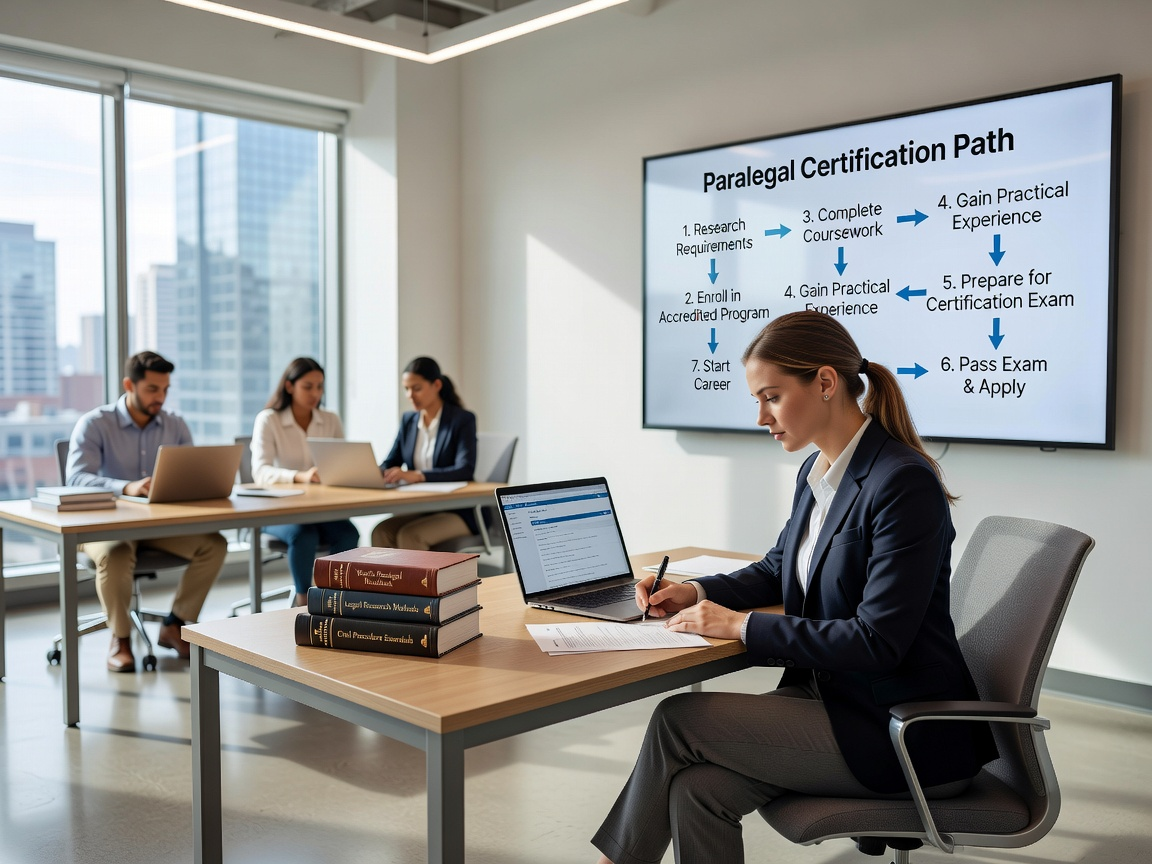
For adults looking to build these capabilities quickly, practical training is essential. Lengthy theoretical coursework often focuses heavily on abstract concepts and general education subjects that take years to complete.
At the Paralegal Institute, we offer an accelerated 15-week paralegal certificate program designed and taught directly by practicing attorneys. Our curriculum emphasizes practical training for immediate job readiness, affordable tuition, and high job placement. Students learn the exact skills law firms demand—from drafting pleadings and managing discovery to preparing trial exhibits—available through online classes with live instruction or in-person classes in Las Vegas, NV.
Frequently Asked Questions About Paralegals in Court
Can a paralegal speak on the record or argue motions before a judge?
No. A paralegal cannot speak on the record, argue legal positions, make objections, or address the judge on substantive legal matters. The transcript and proceedings are reserved exclusively for licensed attorneys of record and self-represented litigants.
What happens if a paralegal engages in unauthorized practice of law in court?
If a non-attorney attempts to represent a client or argue a case in court, the judge can issue a contempt citation, refer the matter for criminal prosecution (misdemeanor UPL), and impose disciplinary sanctions against the supervising attorney.
What is the career outlook for paralegals who assist in court?
Litigation paralegals who master discovery, trial preparation, and courtroom logistics remain in consistent demand across law firms, corporate legal departments, and government agencies, providing essential casework support throughout the entire case lifecycle.
Conclusion
Understanding what paralegals do in court shows why they are essential to modern legal practice. While they do not argue motions or deliver closing statements, litigation paralegals serve as the logistical backbone of trial teams, ensuring evidence, witnesses, and filings are managed flawlessly.
If you are exploring what a paralegal does and want a direct, practical route to a legal career, the Paralegal Institute provides an accelerated, cost-effective pathway. Our 15-week paralegal certificate program offers hands-on training led by experienced legal professionals, available through convenient online classes with live instruction or in-person classes in Las Vegas, NV. Take the next step toward a rewarding legal support career today.