Evaluating a Paralegal Program: Structure and Credibility
When career-focused adults evaluate university-affiliated legal training, brand recognition is often the first element that catches the eye. Many prospective students researching a university-affiliated paralegal program or similar extension offerings are really asking a broader question: what structural qualities separate a credible certificate from one that leaves graduates unprepared for real casework. As Matt Pfau, a practicing U.S. attorney and instructor at Paralegal Institute who manages active litigation and trains legal professionals, I evaluate credentials based on the tangible casework skills an applicant brings to my office on day one. Navigating legal certificates requires a careful review of structure, delivery methods, and institutional design. A helpful starting point for understanding how modern programs are constructed is our online paralegal education guide.
Continuing education divisions of major universities operate separately from standard academic degree programs. They provide adult learners with workforce development courses designed for professional transitions. When you evaluate any program, you must examine whether the curriculum emphasizes hands-on procedural work or abstract theory. For example, a prospective student researching a university extension option should look beyond the campus name and ask how much time is spent drafting discovery, preparing litigation files, and managing court deadlines.
Program Delivery: In-Person Classes and Online with Live Instruction
Flexibility dictates whether working professionals can complete their coursework without sacrificing existing employment and family responsibilities. High-quality legal training generally centers on two primary delivery formats: in-person classes or online with live instruction.
Pre-recorded, self-paced modules often leave students isolated when trying to master dense procedural rules and legal terminology. In contrast, online courses that feature direct, live instruction allow students to engage in real-time legal analysis, ask questions during complex lectures, and receive immediate feedback on draft pleadings. Evening schedules and structured live sessions ensure that students balance demanding work schedules while building practical competency and genuine workplace confidence.
Curriculum Breakdown and Practical Skill Development
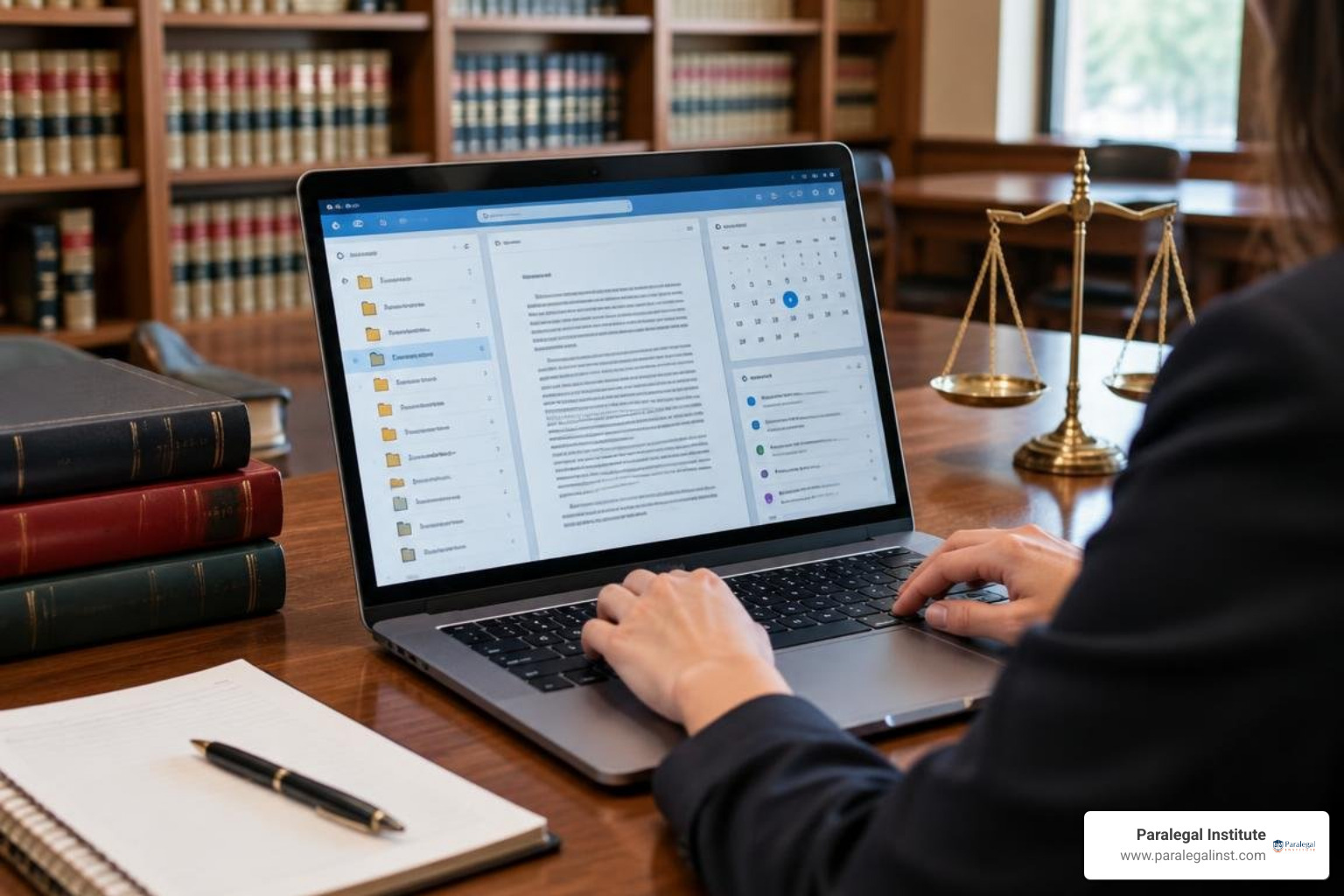
A paralegal curriculum must bridge the gap between statutory rules and courtroom execution. Attorneys need team members who understand civil procedure, evidence gathering, and court deadlines. To see how foundational topics are mapped out across structured modules, review our detailed paralegal curriculum.
Core Curriculum of a Paralegal Program
A practical certificate program should ground students in fundamental areas of civil and criminal practice. Essential coursework topics include:
- Civil Litigation and Procedure: Understanding the lifecycle of a lawsuit, from initial complaints and service of process to responsive pleadings, evidentiary motions, and trial preparation.
- Contract Law: Analyzing agreements, identifying material breaches, and drafting foundational business provisions.
- Family Law: Managing sensitive domestic relations matters, custody documentation, dissolution petitions, and support calculations.
- Discovery and E-Discovery: Managing modern document collections, formulating interrogatories, drafting requests for production, requesting admissions, and organizing electronically stored information.
- Legal Research and Writing: Navigating legal databases, analyzing precedent, Shepardizing authorities, and drafting clear internal legal memoranda for supervising counsel.
- Calendaring and Docketing: Calculating jurisdictional deadlines, statutory notice periods, and hearing dates with absolute accuracy under court rules.
- Client Intake and Interviewing: Gathering factual narratives, identifying core legal issues, and screening for potential conflicts of interest.

Practical Experience, Internships, and Nonprofit Advocacy
Gaining direct exposure to real-world files is a vital component of legal education. Practical training often extends into specialized public interest sectors and legal clinics:
- Trauma-Informed Legal Care: Interviewing clients dealing with domestic crisis or victim advocacy scenarios, ensuring communication remains professional, supportive, and legally precise.
- Nonprofit Legal Departments: Assisting legal aid organizations with housing disputes, protective orders, and administrative benefits hearings.
- Case File Preparation: Assembling deposition binders, drafting witness lists, organizing exhibit tabs, and managing electronic evidence for trial presentation.
This hands-on approach mirrors the daily work of legal support professionals in private firms, corporate legal departments, and public interest organizations. The federal court system and local jurisdictions maintain rigorous filing and procedural standards, underscoring why intensive, practical preparation is indispensable for modern legal teams.
Admissions, Tuition, and Institutional Support
Choosing the right educational path involves comparing entry requirements, institutional resources, and long-term value. Exploring different paralegal certificate and degree programs helps clarify which model aligns best with your professional timeline and financial investment.
| Feature | Traditional Multi-Year Degree | Accelerated Professional Certificate |
|---|---|---|
| Typical Completion Time | Multi-Year | 15 Weeks |
| Delivery Model | In-person classes | Online with live instruction |
| Curriculum Focus | Broad general education and theory | Intensive, practical casework and discovery |
| Target Audience | Traditional college students | Career-focused adults seeking rapid workforce entry |
Admissions and Prerequisites for a Paralegal Program
Admission standards for professional certificates are typically designed to accommodate working adults. Common requirements include:
- A high school diploma or equivalent secondary education credential.
- Official transcripts demonstrating basic academic proficiency and foundational writing skills.
- An application detailing professional background, personal motivation, and career objectives.
- Strong English reading comprehension and written communication abilities.
Unlike traditional multi-year tracks, professional certificate admissions rarely demand standardized test scores, focusing instead on a candidate's readiness to handle rigorous legal training.
Campus Integration and Career Services
Institutional resources can aid a graduate's transition into the legal field. Key support services often include:
- Resume and Cover Letter Labs: Tailoring past administrative, business, or service experience into legal-specific qualifications.
- Legal Career Fairs: Direct networking events connecting students with regional private practices and corporate legal teams.
- Mentorship and Public Service Fellowships: Connecting learners with active practitioners in public advocacy and government administration.
Career Outcomes and Legal Industry Value

Law firms and corporate legal departments value candidates who require minimal administrative supervision. When reviewing a program's outcomes, consider how well its graduates integrate into legal environments. Our online paralegal program guide outlines the core competencies modern employers look for across diverse practice areas.
Private Practice vs. Public Interest and Nonprofit Roles
A well-rounded legal education prepares graduates for multiple professional environments:
- Private Law Firms: Supporting civil litigation, personal injury cases, commercial transactions, and estate planning through discovery drafting, deposition summaries, subpoena preparation, and motion support.
- Corporate Legal Departments: Assisting in-house counsel with regulatory filings, compliance audits, contract lifecycle tracking, and corporate record maintenance.
- Public Interest and Nonprofit Legal Services: Delivering community-focused legal assistance, managing intake for underserved populations, and drafting documentation for administrative law hearings.
As supervising attorneys, we consistently prioritize practical proficiency over institutional prestige. A graduate who can immediately manage discovery deadlines, organize complex case files, and draft litigation documents brings measurable value to a legal team from their very first week on the job.
Frequently Asked Questions About Paralegal Studies
How long does it take to complete the paralegal certificate?
Program lengths vary widely based on institutional structure. University extension programs often take between 9 and 24 months depending on course scheduling and term availability. In contrast, accelerated programs are structured to deliver comprehensive, practical training in as little as 15 weeks.
What formats are available for completing coursework?
Legitimate certificate programs offer either in-person classes or online with live instruction. Online delivery with live instruction allows working students to experience interactive lectures and real-time legal drafting exercises from home without sacrificing the accountability of live faculty engagement.
Are there prerequisites required prior to enrollment?
Most certificate programs require a high school diploma or equivalent secondary education credential. Prior legal experience is not required, as foundational modules introduce legal terminology, research methods, and civil procedure from the ground up.
Conclusion
Evaluating a paralegal training path requires balancing academic pedigree against real-world utility, pacing, and procedural preparation. While long-term university extension certificates offer broad exposure over multiple academic terms, many adult learners need a direct, focused route into the legal field.
At Paralegal Institute, we believe practical legal education should be efficient, comprehensive, and focused on workplace readiness. Our 15-week certificate program features an accelerated curriculum designed and taught directly by practicing legal professionals. Through live online instruction, hands-on discovery drafting, and dedicated casework exercises, we provide the skills necessary to step confidently into a legal career. Take the next step in your professional journey and accelerate your legal education and career today.