



A Quick Start Guide to Paralegal Training for Career Changers
Start Your Legal Career Transition With Focused Training
Paralegal training for professionals can help career changers move into legal work without committing to law school. Start by choosing a program that fits your work schedule, teaches practical skills such as legal research, document drafting, discovery, and casework, and leads to a paralegal certificate that matches local employer expectations.
Before enrolling, compare programs based on:
- Format: Online with live instruction or in-person options that work around a job and family responsibilities.
- Curriculum: Hands-on training in legal writing, research, litigation support, ethics, and casework.
- Time and cost: A realistic completion timeline and affordable total investment, not just the advertised length.
- Instructional quality: Programs taught directly by practicing attorneys who bring real courtroom and law office experience into every lesson.
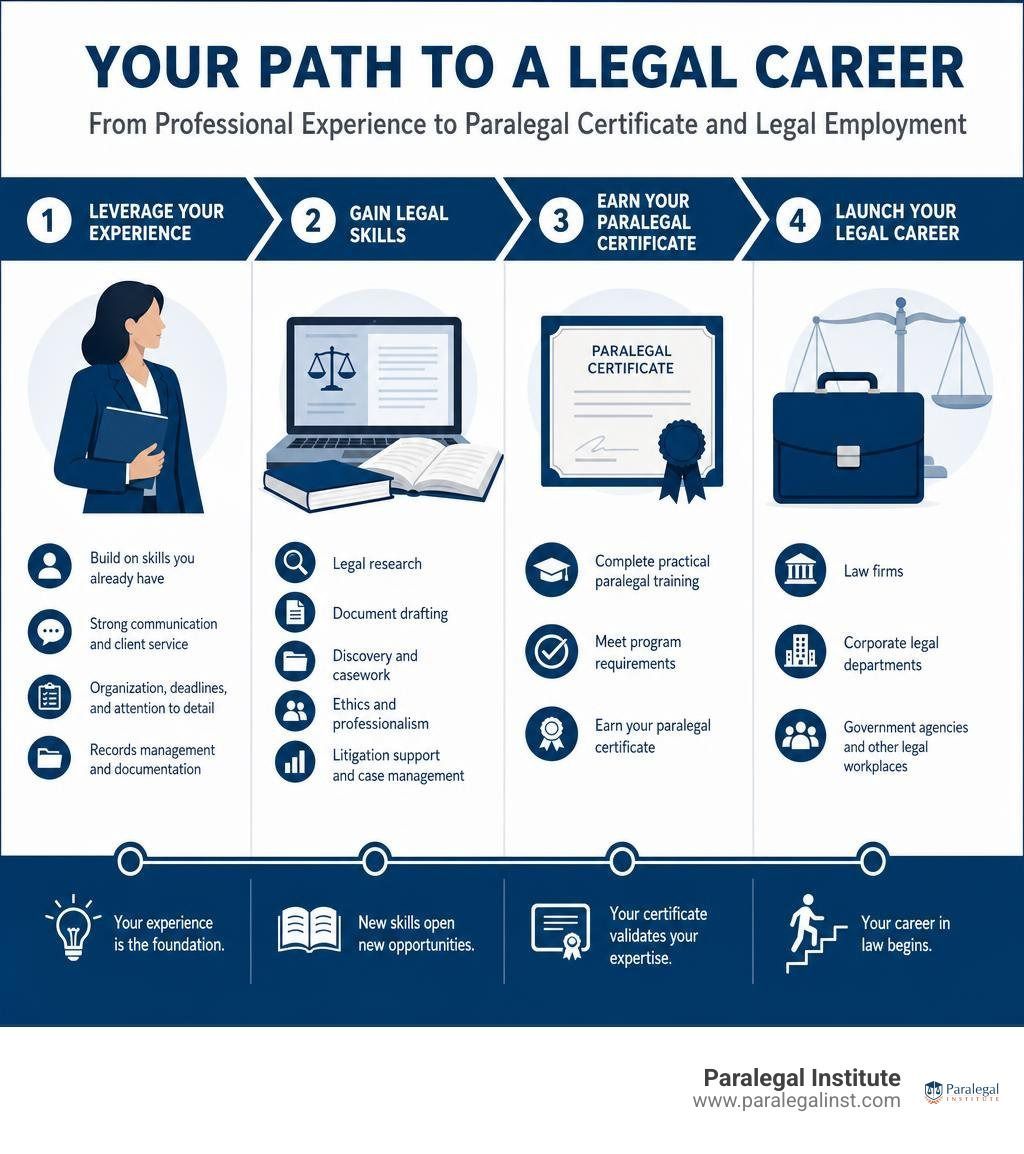
A strong training path builds on skills you may already have, including organization, client communication, deadlines, records management, and careful writing. The goal is to turn those strengths into job-ready legal skills for a law firm, corporate legal department, or other legal workplace.
I am Matthew Pfau, a practicing U.S. attorney who teaches paralegal courses at Paralegal Institute and has hired and trained paralegals in my law practice. I created this guide to help adults evaluate paralegal training for professionals with a clear view of what supports a faster, practical transition into the legal field.
Choosing the Right Paralegal Training for Professionals
When shifting careers, you cannot afford to waste months on abstract legal theory that never translates to the desk of a law firm. Finding the right program means identifying coursework that balances rigorous legal education with actionable adult education strategies. As you explore the online paralegal education guide 2026, you will quickly see that practical application is what separates programs that simply deliver lectures from those that prepare you to handle real client files on day one.
Law firms and corporate legal departments value efficiency. When we hire legal support staff, we look for candidates who understand legal terminology, know how to manage discovery deadlines, and can handle drafting tasks without requiring basic procedural handholding. Choosing the right program requires looking beyond high-level overviews to ensure the curriculum is directly aligned with modern legal operations.
Program Formats and Options in Paralegal Training for Professionals
Adult learners balancing professional careers, family commitments, and education need learning structures that respect their time. Today, students typically choose between extended multi-year pathways and accelerated certificate options.
While traditional multi-year academic tracks focus on broad general coursework, accelerated certificate tracks focus strictly on actionable legal education. For career changers who already possess substantial professional work experience, spending years in general lecture courses rarely makes sense.
When evaluating modern options, delivery format is equally critical. Quality paralegal training online provides the flexibility working adults require. At the Paralegal Institute, we offer two distinct formats designed for complete engagement: online classes with live instruction and in-person classes at our Las Vegas, NV campus. Our online format means live instruction where you interact with practicing attorneys in real time, ask questions, and collaborate with peers, rather than navigating static recordings alone.
| Program Type | Typical Completion Timeline | Instructional Delivery | Focus Area |
|---|---|---|---|
| Accelerated Certificate | 15 Weeks | Live Online or In-Person | Practical legal skills, discovery, document drafting |
| Traditional Multi-Year Program | Multi-Year | In-Person or Asynchronous | Broad general education combined with basic legal theory |
Essential Core Competencies and Curriculum Design
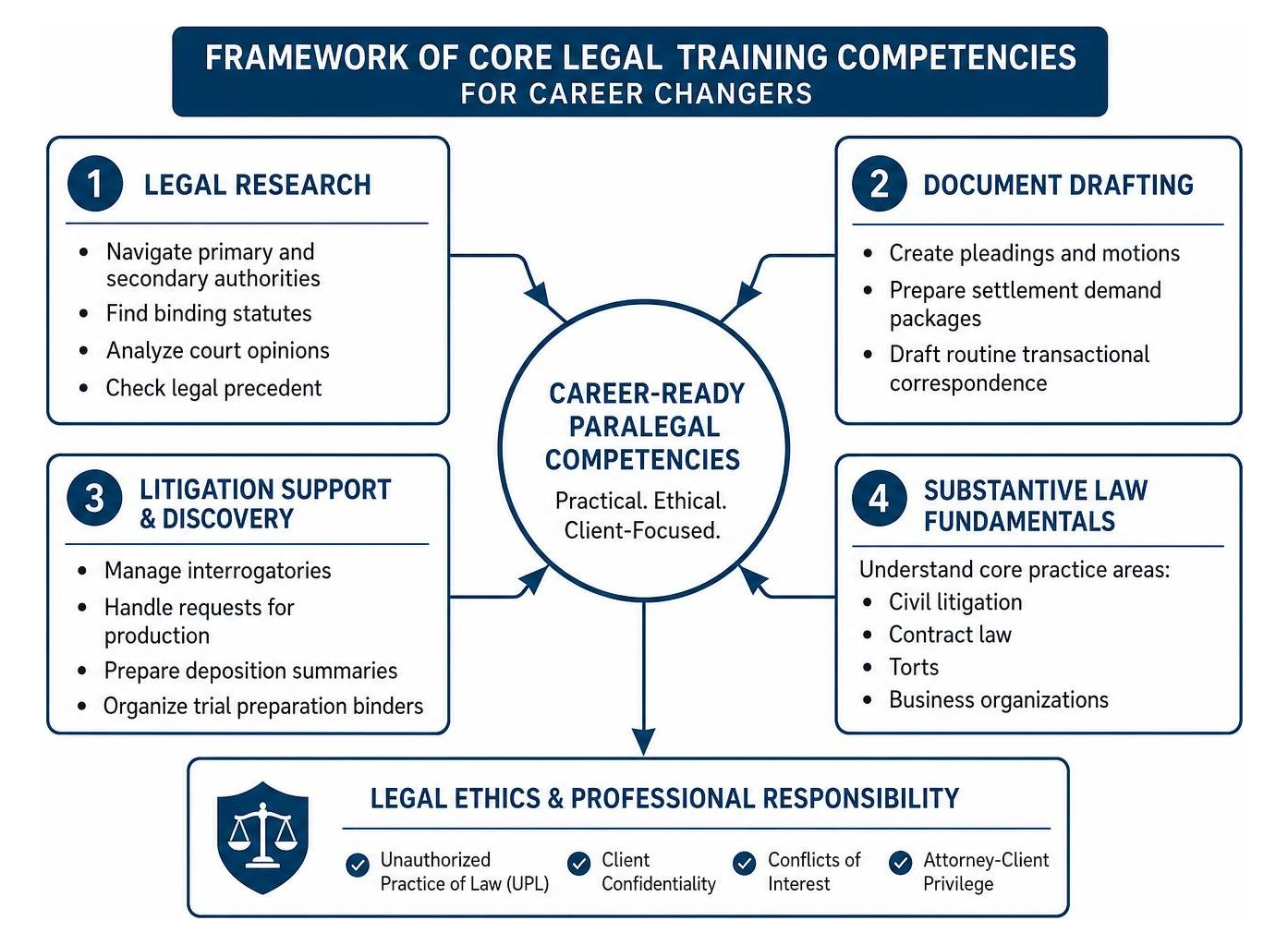
A well-designed legal training curriculum should immerse you in the tools and tasks you will encounter daily in a legal environment. Developing robust paralegal skills requires mastering several essential practice areas:
- Legal Research: Navigating primary and secondary authorities, finding binding statutes, analyzing court opinions, and checking legal precedent.
- Document Drafting: Creating pleadings, motions, settlement demand packages, and routine transactional correspondence.
- Litigation Support and Discovery: Managing interrogatories, requests for production, deposition summaries, and trial preparation binders.
- Substantive Law Fundamentals: Understanding core practice areas including civil litigation, contract law, torts, and business organizations.
Focusing on building practical skills in paralegal training ensures you are confident from your very first day on the job. Moreover, comprehensive coursework must integrate legal ethics in paralegal training, instructing students on the unauthorized practice of law (UPL), maintaining strict client confidentiality, managing conflicts of interest, and upholding attorney-client privilege.
Evaluating Practice-Focused Training and Curriculum Standards
As prospective students research training paths, understanding how practical curriculum benchmarks and professional instruction function helps you make an informed decision aligned with your specific career trajectory.
Law firms and corporate legal departments look for legal assistants and paralegals who can contribute immediately to civil litigation and transactional casework. When evaluating training programs, adults transitioning from other careers benefit most from coursework that replicates daily law firm workflows rather than purely theoretical academic studies.
Choosing Practitioner-Led Instruction Over Theory
For career changers seeking efficient workforce entry, the quality of faculty and practical application is paramount. While multi-year academic degrees emphasize broad theory, accelerated certificate programs concentrate directly on the actionable duties paralegals perform every day.
Key factors to evaluate when reviewing curriculum quality include:
- Direct instruction from active attorneys who understand current court procedures and filing systems.
- Practical exercises covering discovery demands, pleadings, motions, and trial preparation.
- Comprehensive training in legal research methods and clear legal writing.
- Live class discussions where students can ask questions and receive immediate feedback on assignments.
Practical Certificates for Fast Workforce Entry
Many career changers prioritize targeted, accelerated learning that delivers direct workforce entry. In most legal markets, hiring attorneys prioritize demonstrated competency, practical capabilities, and real-world proficiency when building their teams.
Choosing paralegal training taught by professionals provides a distinct operational advantage. Practicing attorneys know exactly what legal teams need during trial preparation, deposition scheduling, and complex document discovery. By learning directly from active legal practitioners, students gain practical insight into how law offices function, allowing them to bypass years of general theory and transition directly into career-ready roles.
Key Criteria When Evaluating Legal Education Programs
Selecting the right program requires assessing your personal schedule, budget, and professional goals. Because returning to school is an investment of time and energy, you must evaluate how effectively a program supports adult learners.
Key considerations include:
- Instruction Quality: Are the courses taught by active legal practitioners who bring current courtroom and transactional experience into the classroom?
- Schedule Structure: Recognizing that flexibility matters in online paralegal training, does the program accommodate your current employment through evening sessions or structured live online formats?
- Program Duration: Does the pathway allow you to enter the workforce quickly, or will it require multi-year academic commitments?
- Practical Application: Does the coursework focus on real casework, or is it confined to textbook theory?
Core Decision Factors for Working Adults
For working adults, the ultimate measure of any training program is career readiness. A strong curriculum emphasizes hands-on legal training that simulates the day-to-day workflow of a legal office.
During your studies, focus on building professional portfolio during paralegal training. Compiling real writing samples, mock pleadings, research memoranda, and discovery requests gives you tangible proof of your abilities to present during interviews. This practical evidence often carries significantly more weight with hiring attorneys than an abstract diploma.
Leveraging Paralegal Training for Professionals to Transition Fast
Career changers bring valuable assets to the legal sector. Professionals moving from corporate management, healthcare, finance, education, or administrative roles already possess vital organizational, communication, and analytical abilities.
Enrolling in a focused professional legal training course bridges the gap between your prior career and the legal field. High-quality entry-level paralegal training transforms your existing strengths into specialized legal skills, allowing you to master citation, draft legal arguments, and assist with complex litigation casework.
Frequently Asked Questions About Paralegal Programs
What training is required to start working as a paralegal?
When reviewing your options and determining what training is required to be a paralegal, training requirements vary by employer, and many firms focus primarily on practical skills and direct legal knowledge. Completing a focused, practice-oriented paralegal certificate program provides the hands-on legal drafting, research, and discovery skills employers value most.
What should career changers look for in a paralegal program?
Career changers should look for programs that emphasize practical skills, live instruction, and direct learning from practicing attorneys. Choosing a program that helps you compile a professional portfolio of writing samples, pleadings, and discovery documents will give you tangible proof of your abilities during job interviews.
How does live online paralegal training work?
Whether you are learning through paralegal training online or attending in-person, live online formats allow you to participate in real-time lectures, engage in class discussions, and collaborate directly with attorney instructors from any location. This ensures you gain the same interactive legal training as on-campus students without having to navigate static, pre-recorded modules on your own.
Conclusion
Transitioning into the legal field does not require spending years in school or putting your life on hold. For career-focused adults, choosing an accelerated, practitioner-led program provides the most practical and efficient route into the legal profession.
At the Paralegal Institute, we offer a focused 15-week paralegal certificate program designed specifically to prepare you for immediate workforce entry. Taught directly by practicing legal professionals, our curriculum delivers hands-on instruction in two formats: in-person at our Las Vegas, NV location or online with live instruction. If you are ready to apply your professional background to an exciting new career in law, explore our online paralegal program and take the first step toward your new career today.