What Paralegals Actually Do Every Day
Paralegal roles and responsibilities form the backbone of modern legal practice, yet many people don't fully understand what these essential professionals actually do. Paralegals are trained legal professionals who work under attorney supervision to perform substantive legal work that directly supports the legal system. They are the indispensable partners to attorneys, ensuring that cases move forward efficiently and effectively.
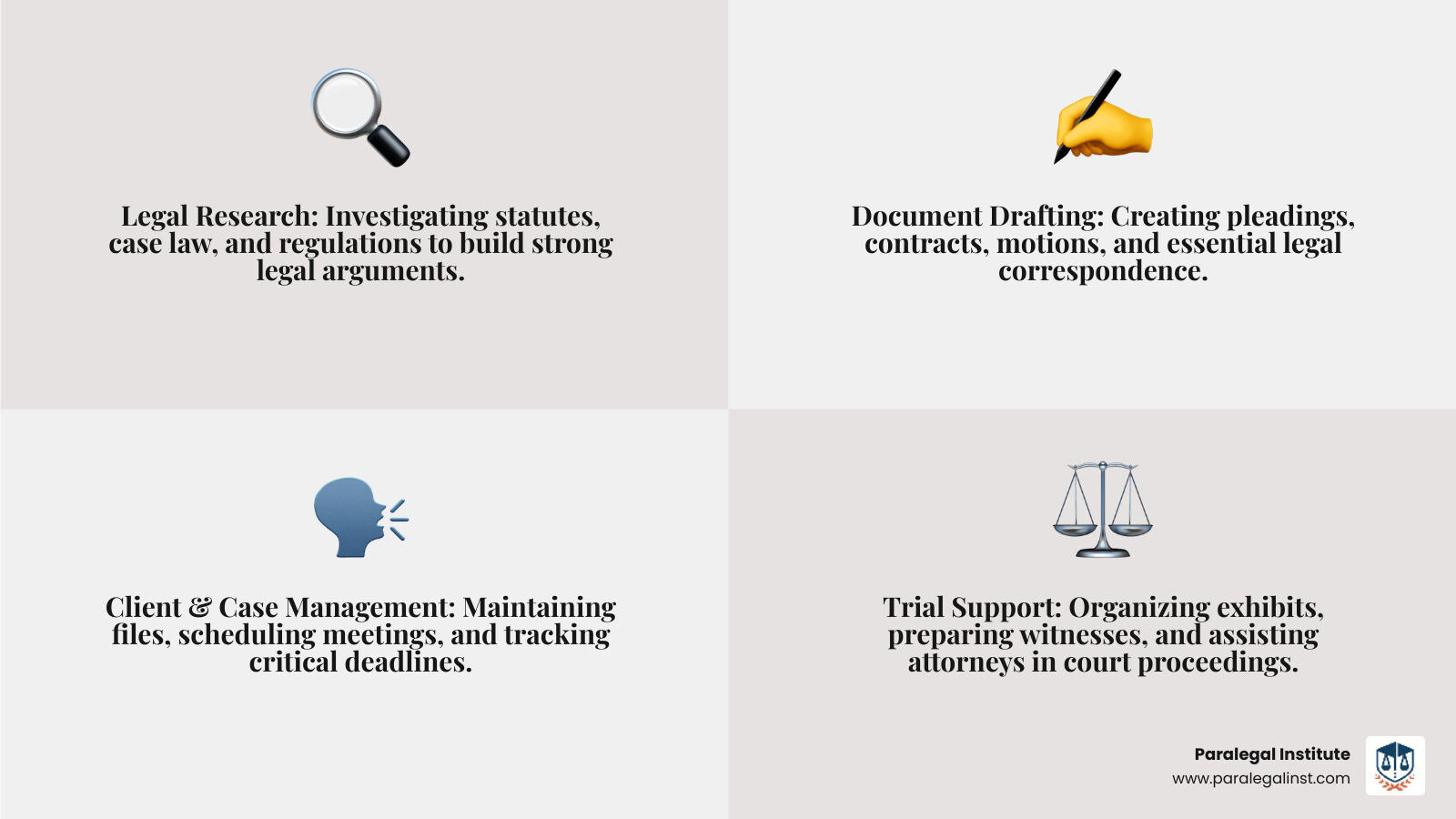
Core paralegal responsibilities include:
- Legal Research- Investigating case law, statutes, and regulations
- Document Drafting- Creating pleadings, contracts, and correspondence
- Client Communication- Serving as the primary contact between clients and attorneys
- Case Management- Organizing files, tracking deadlines, and managing evidence
- Trial Support- Preparing exhibits, coordinating witnesses, and assisting in court
Paralegals cannot provide legal advice or represent clients in court - these tasks are reserved for licensed attorneys. However, they handle much of the behind-the-scenes work that makes legal proceedings possible. Their work product merges with attorney work product, and they bill clients at lower hourly rates than attorneys while maintaining the same professional standards. This makes legal services more accessible and affordable for the public.
The profession has evolved far beyond traditional law firm roles. While many paralegals thrive in the dynamic environment of a private practice, countless others are finding fulfilling careers in diverse settings. Today's paralegals work in corporations, government agencies, insurance companies, and non-profit organizations. They specialize in areas like family law, corporate law, litigation, and intellectual property, applying their skills to a wide array of legal challenges.
I'm Matthew Pfau, and I've spent years hiring, training, and working alongside paralegals in my law practice. I've seen how a well-trained paralegal can transform a legal team's effectiveness. My hands-on experience with paralegal roles and responsibilities led me to develop curriculum at Paralegal Institute to help aspiring professionals gain the practical, real-world skills needed to enter this rewarding field and make an immediate impact.
A Deep Dive into Core Paralegal Duties

When you peek behind the curtain of any successful law firm, you'll find paralegals working tirelessly to keep everything running smoothly. Their paralegal roles and responsibilities span far beyond simple administrative tasks - they're the legal detectives, master organizers, and communication bridges that make complex legal cases possible.
Every day brings new challenges for paralegals. They might start their morning conducting factual investigations for an upcoming trial, then shift to client interviews in the afternoon, and finish the day with legal writing that will help shape a case's direction. The variety keeps the work interesting, but it also demands a unique blend of analytical rigor, technical skill, and interpersonal adaptability.
Breaking Down the Day-to-Day Paralegal Roles and Responsibilities
Legal research forms the foundation of most paralegal work. Think of it as being a detective with a law degree - paralegals dive deep into precedent analysis, hunting through court decisions to find cases that support their attorney's arguments. They also conduct statutory research, making sure every relevant law and regulation is identified and understood. The ability to synthesize this information into a clear, concise memo is a hallmark of a great paralegal.
This research directly feeds into another core responsibility: drafting legal documents. Paralegals craft everything from initial pleadings that start lawsuits to motions that ask courts for specific actions. They also prepare findy requests and responses, affidavits, corporate resolutions, contracts that protect their clients' interests, and routine correspondence that keeps cases moving forward. Precision is paramount, as a single misplaced word can alter the meaning of a critical document.
One of the most crucial but often overlooked duties is organizing evidence. Paralegals transform chaotic piles of documents, photos, and records into clear, logical presentations that judges and juries can easily follow. This involves creating detailed indexes, managing digital files, and preparing evidence logs. This organizational skill can literally make or break a case. For those looking to master these essential research techniques, Mastering Legal Research: Tips, Tools, and Techniques offers valuable insights.
Client Communication and Case File Management
Here's where paralegals really shine as the human face of legal services. They often serve as the primary point of contact between anxious clients and busy attorneys. This means scheduling meetings, providing case updates, and answering the hundred little questions that clients have throughout their legal journey. A key part of this role is managing client expectations with empathy and professionalism, providing reassurance without crossing the line into giving legal advice.
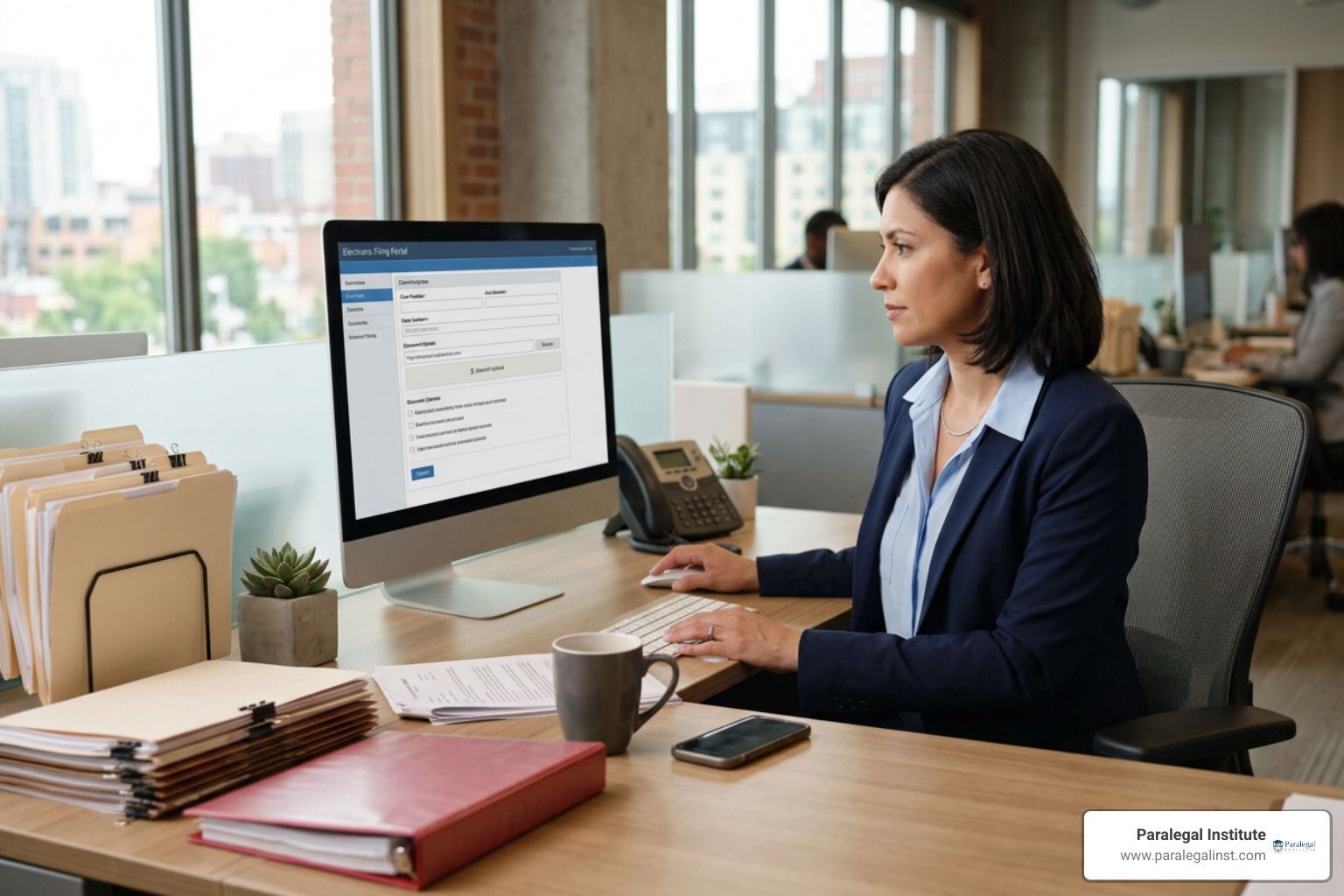
Maintaining client files might sound mundane, but it's actually one of the most critical paralegal roles and responsibilities. Modern paralegals use sophisticated document management systems to ensure that every piece of paper, every email, and every piece of evidence is exactly where it needs to be when it's needed. This meticulous organization is vital for efficiency and for meeting strict court deadlines.
Confidentiality isn't just a nice-to-have - it's absolutely essential. Paralegals handle some of the most sensitive information in people's lives, from family disputes to corporate secrets. They must maintain the highest standards of discretion and professional ethics, understanding that a breach of confidentiality can have severe legal and personal consequences. Those interested in developing these crucial skills can find more information through Legal Support Staff Training.
Assisting in Trial and Courtroom Proceedings
When a case heads to court, paralegals shift into high gear with intensive trial preparation. They become master organizers, creating comprehensive trial notebooks that contain everything an attorney might need during proceedings. They're also responsible for organizing exhibits- ensuring that every piece of evidence is properly labeled, authenticated, and ready for presentation. This often involves coordinating with vendors for demonstrative aids like charts and models.
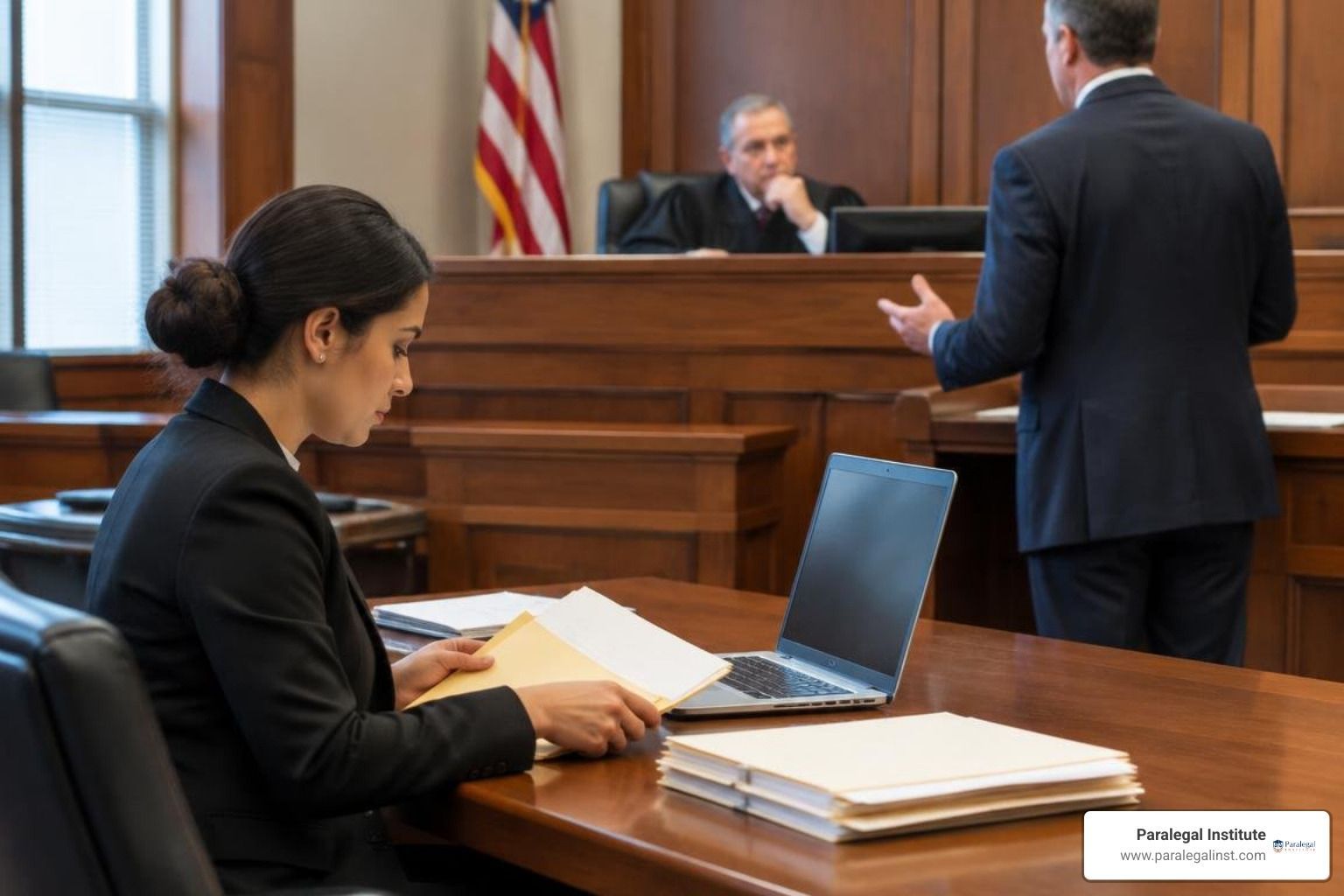
During actual court proceedings, paralegals work behind the scenes assisting attorneys in court. While they can't argue cases or represent clients, they're busy taking notes, managing files, operating courtroom presentation software, and making sure their attorney has immediate access to any document or piece of information needed.
Coordinating witness schedules is another crucial trial-related duty. Paralegals juggle multiple calendars, ensuring that witnesses appear at the right time and place, and that they're properly prepared for their testimony. For a detailed look at what goes into preparing for trial, check out An Inside Look at Paralegal Trial Preparation.
The courtroom experience can be intense, but many paralegals find it the most rewarding part of their job. There's something deeply satisfying about seeing months of careful preparation come together in a successful outcome for clients.
Paralegal vs. Lawyer vs. Legal Assistant: Clarifying Key Differences
The legal profession can seem confusing from the outside, with various roles that sound similar but have very different responsibilities. Understanding where paralegal roles and responsibilities fit within this landscape is essential for anyone considering this career path or seeking legal help.
Paralegals operate under strict ethical boundaries that prevent us from practicing law without a license. We cannot give legal advice to clients, set legal fees, accept new clients on behalf of a firm, or represent clients in court proceedings. These activities constitute the unauthorized practice of law and are reserved exclusively for licensed attorneys. This ethical framework is the bedrock of the profession, ensuring clients are always protected by the guidance of a licensed lawyer.
The fundamental difference lies in legal authority and education. Lawyers have completed law school and passed the state bar exam, giving them the license to practice law. This means they can provide legal advice, represent clients in court, sign legal documents on behalf of clients, and make strategic legal decisions. They are ultimately responsible for the legal outcomes of a case.
Paralegals perform substantive legal work but always under direct attorney supervision. We're the skilled professionals who handle much of the behind-the-scenes work that makes legal practice efficient and accessible. Our work product becomes part of the attorney's work product, and we help deliver legal services at lower hourly rates than attorneys while maintaining professional standards. This creates a powerful, cost-effective partnership.
Legal assistants typically focus on administrative tasks within law offices. They manage calendars, organize general files, handle billing and client intake paperwork, answer phones, and keep the office running smoothly. While there can be overlap (especially in smaller firms), paralegal roles and responsibilities involve deeper engagement with the substance of legal cases, including legal concepts, research, and document preparation.
The scope of our work sets us apart. We apply legal knowledge to specific tasks, analyze case law, draft complex legal documents, and interact directly with clients about the factual aspects of their cases. Legal assistants handle more of the operational aspects that keep a law office functioning day-to-day, while paralegals are directly involved in the progression of the legal work itself.
| Feature | Paralegal | Lawyer | Legal Assistant |
|---|---|---|---|
| Permitted Duties | Legal research, document drafting, client interviews, case management (under attorney supervision) | Legal advice, court representation, signing legal documents, accepting clients | Administrative tasks, scheduling, file organization, basic correspondence |
| Education Path | Specialized legal training | Law school plus bar exam passage | Administrative or on-the-job training |
| Primary Function | Substantive legal support work under attorney supervision | Licensed legal practice and client representation | Administrative and clerical support for legal operations |
This clear division ensures that clients receive appropriate legal services while maximizing efficiency. Paralegals bridge the gap between basic administrative support and full legal representation, making legal services more accessible and cost-effective for clients. They act as a force multiplier for attorneys, allowing the legal team to handle more work with greater precision.
For more information on how paralegals integrate into legal teams and support attorney work, visit More info about the Role of Paralegals in Law Firms.