Understanding the Legal Secretary vs Paralegal Distinction
The legal secretary vs paralegal question is one of the most common sources of confusion for anyone exploring a career in the legal field. Here's the quick answer:
Legal Secretary:
- Performs administrative and clerical tasks
- Manages schedules, communications, and office operations
- Typically requires a high school diploma with on-the-job training
- Supports the office infrastructure
Paralegal:
- Performs substantive legal work under attorney supervision
- Conducts legal research, drafts documents, and manages cases
- Requires formal paralegal education
- Supports the legal work itself
While both roles are essential to a law firm's success, they represent fundamentally different career paths. Legal secretaries keep the office running smoothly through administrative excellence. Paralegals dive into the legal work—researching case law, drafting motions, preparing for trial, and contributing directly to legal strategy.
The confusion often stems from the fact that both roles work closely with attorneys and require knowledge of legal terminology. But the core distinction is straightforward: administrative support versus substantive legal work.
I'm Matthew Pfau, a practicing attorney who hires, trains, and works alongside both legal secretaries and paralegals daily. Through my experience building a law firm and teaching at the Paralegal Institute, I've seen how understanding the legal secretary vs paralegal distinction helps aspiring legal professionals choose the right path and training for their career goals.
What Is a Legal Secretary? The Administrative Engine of the Firm
A legal secretary is the organizational backbone of a law office, ensuring that administrative operations run smoothly so attorneys can focus on their cases. This role is centered on clerical and support functions within a legal context. Think of a busy law firm: court deadlines are looming, clients are calling, and documents need filing. The legal secretary is the one who keeps this organized chaos from becoming actual chaos. While the legal secretary vs paralegal distinction can be confusing, a legal secretary's focus is clear: they make sure the trains run on time, even if they aren't drafting the legal strategy.
Primary Responsibilities and Daily Tasks
The daily life of a legal secretary revolves around keeping the office running efficiently. Their work touches nearly every aspect of law firm operations.
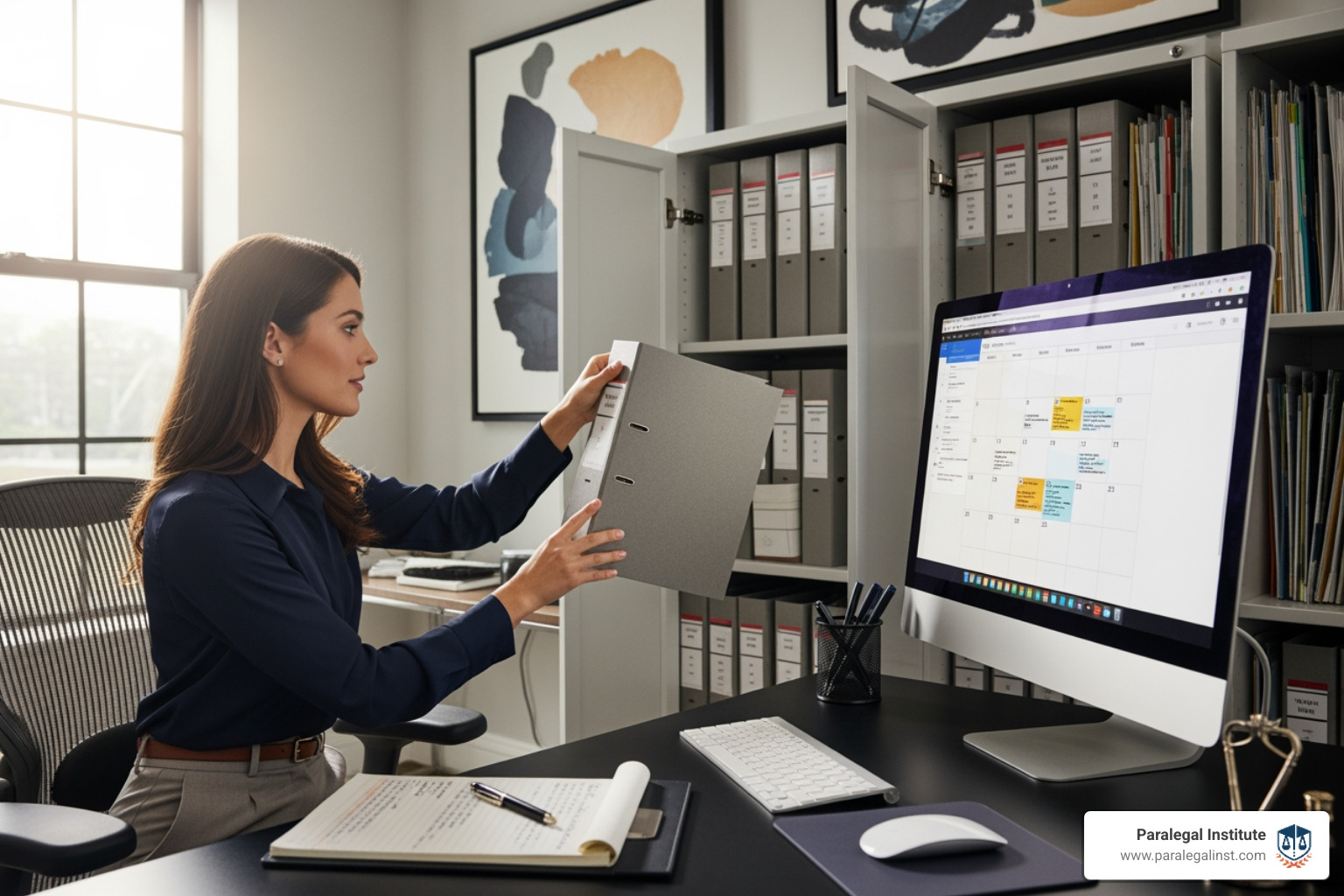
- Administrative and Clerical Support: This forms the core of the role. Legal secretaries manage communications, handle mail, transcribe dictation from attorneys, and maintain an efficient office environment. They are often the first voice a client hears, making their professionalism essential.
- Scheduling and Calendar Management: In a law firm, this is an art form. Attorneys have court appearances, client meetings, depositions, and filing deadlines that must be carefully coordinated. A legal secretary tracks all these moving pieces to ensure nothing falls through the cracks.
- Document Preparation and Filing: This requires meticulous attention to detail. Legal secretaries format documents according to strict court rules, proofread for accuracy, prepare documents for e-filing, and maintain organized filing systems—both digital and physical.
- Client Interaction: While legal secretaries never provide legal advice, they frequently interact with clients to arrange meetings, confirm appointments, and gather basic information. They also handle billing support, preparing invoices and managing client inquiries.
Education and Skills for a Legal Secretary
The path to becoming a legal secretary is more straightforward than the paralegal route. A high school diploma is the typical baseline, with many gaining expertise through on-the-job training. This hands-on experience is often the most valuable education.
Vocational courses in legal support can also provide a strong foundation. Programs covering legal terminology and office procedures give aspiring legal secretaries a head start. For those looking to formalize their skills, Legal Support Staff Training can be incredibly beneficial.
The most important skills for this role include:
- Exceptional organizational skills to manage multiple tasks and priorities.
- Strong attention to detail to prevent errors in documents and scheduling.
- Excellent communication skills for professional interaction with clients, courts, and colleagues.
- Proficiency with office and legal software to manage documents and firm operations.
The legal secretary role is perfect for someone who loves organization and takes pride in supporting a team. It's administrative work that directly impacts an attorney's ability to serve clients effectively.
What Is a Paralegal? A Partner in Substantive Legal Work
A paralegal is a trained professional who performs substantive legal work under the direct supervision of an attorney. Unlike administrative support, this work is billable to clients, reflecting its direct contribution to casework. Paralegals dive into legal research, drafting documents, and preparing for trial. If an attorney is the architect of a legal strategy, the paralegal is the skilled builder who helps construct it.
Primary Responsibilities and Daily Tasks
The paralegal's day is intellectually demanding and directly tied to the outcome of legal matters. Every task requires legal knowledge, analytical thinking, and precision.

- Legal Research: Using professional legal databases, paralegals locate and analyze relevant statutes, case law, and regulations to support an attorney's arguments.
- Drafting Legal Documents: Under attorney supervision, paralegals prepare a wide range of documents, including complaints, motions, contracts, and briefs. This requires strong legal writing skills and procedural knowledge.
- Discovery Management: The discovery process - where parties exchange information in a lawsuit - is where paralegals shine. They draft interrogatories and requests for documents, then organize and review the materials received to identify key evidence.
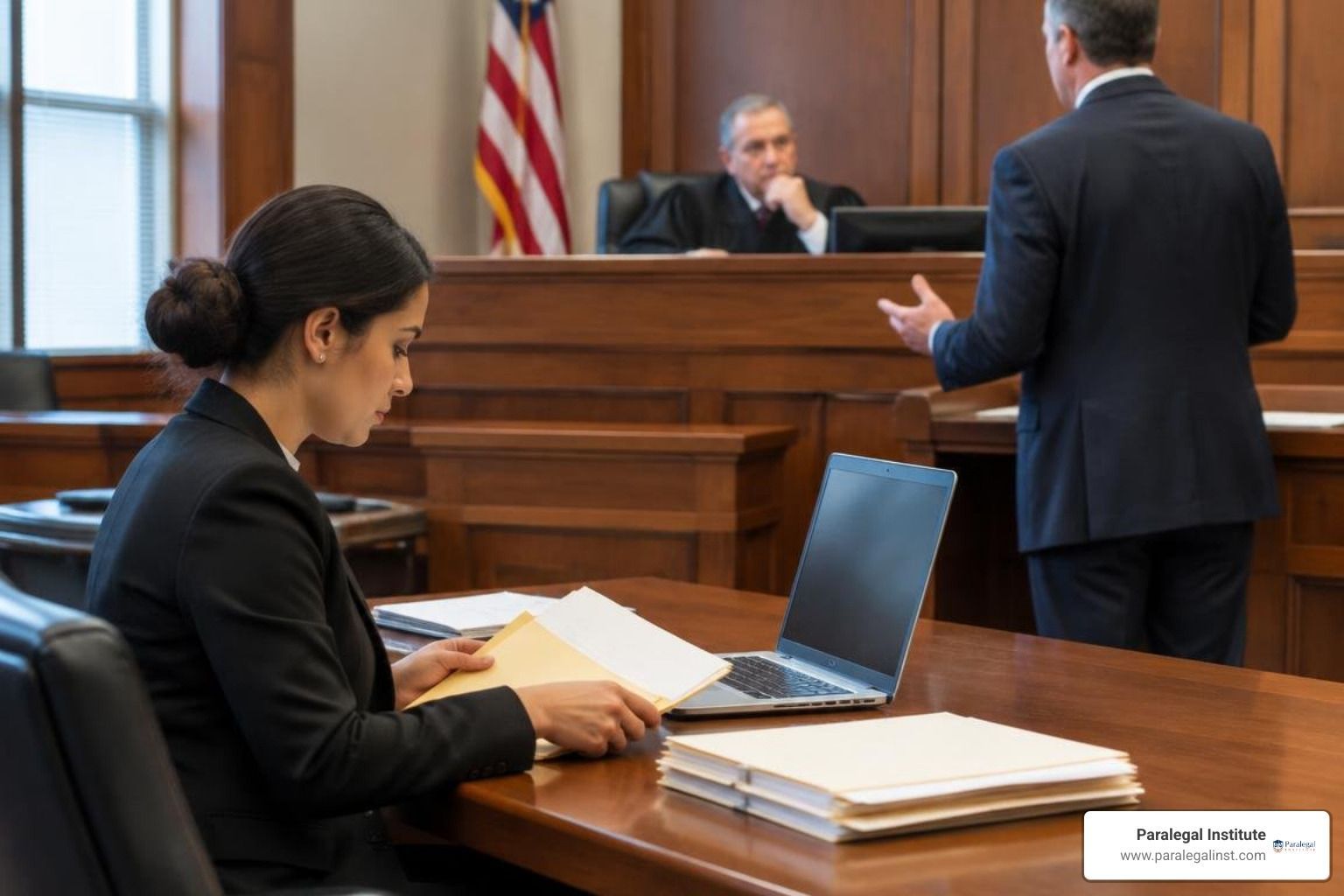
- Case Management and Trial Preparation: Paralegals maintain case files, track critical deadlines, organize evidence, and prepare for trial. They may interview witnesses, prepare exhibits, and assist the attorney in court.
- Client Communication: Paralegals often serve as a key point of contact for clients, gathering facts and providing updates on case progress. They must be careful not to give legal advice.
Understanding the full scope of these duties is key. The Role of Paralegals in Law Firms is a demanding one that requires legal knowledge and the ability to work independently under attorney supervision.
Ethical and Professional Obligations
Because they perform substantive legal work, paralegals operate under strict ethical guidelines. The most important rule is that paralegals cannot give legal advice. Doing so constitutes the unauthorized practice of law (UPL), which is illegal.
Every task a paralegal performs must be under attorney supervision, with the attorney taking ultimate responsibility for the work. Furthermore, client confidentiality is sacred. Paralegals are bound by the same strict confidentiality rules as attorneys. Understanding these ethical boundaries is essential to being a trusted member of the legal team. For a deeper look, explore Professional Ethics for Paralegals. The legal secretary vs paralegal distinction becomes clear when you see that paralegals aren't just helping the office run; they're helping build legal cases.
Legal Secretary vs Paralegal: A Head-to-Head Comparison
Understanding the core differences between a legal secretary and a paralegal is crucial for choosing your career path. The decision comes down to one question: Do you want to support the office infrastructure, or do you want to perform substantive legal work?
Key Differences in Responsibilities
The clearest way to see the legal secretary vs paralegal distinction is in their daily work.
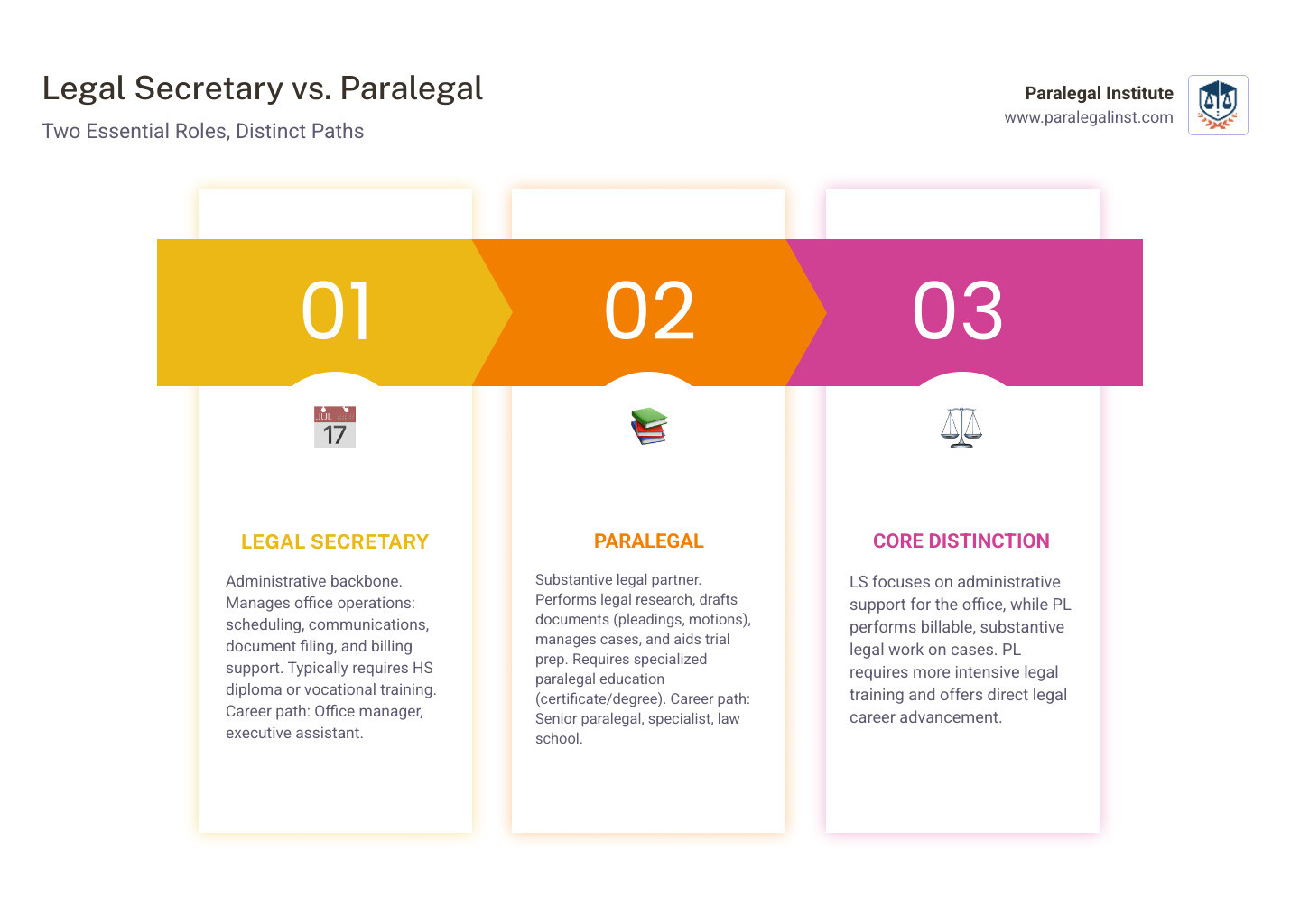
A legal secretary has an administrative focus, managing the firm's operations through scheduling, communications, and document formatting. Their expertise is in organization and efficiency. A paralegal has a substantive legal focus, performing billable work like legal research, drafting motions, and managing discovery.
In short, a legal secretary is task-oriented and supports the office, ensuring attorneys can focus on the law. A paralegal is case-oriented and supports the case, helping attorneys with the law itself. While some duties may overlap in smaller firms, the core purpose of each role is distinct, as outlined in an Entry Level Paralegal Job Description.
Education and Training Pathways
The educational paths for these roles reflect their different responsibilities. Legal secretary training often involves a high school diploma followed by on-the-job training or vocational courses focused on office skills.
Paralegal education is a more intensive, legally focused curriculum. The Paralegal Institute offers a smart alternative for career-focused adults.
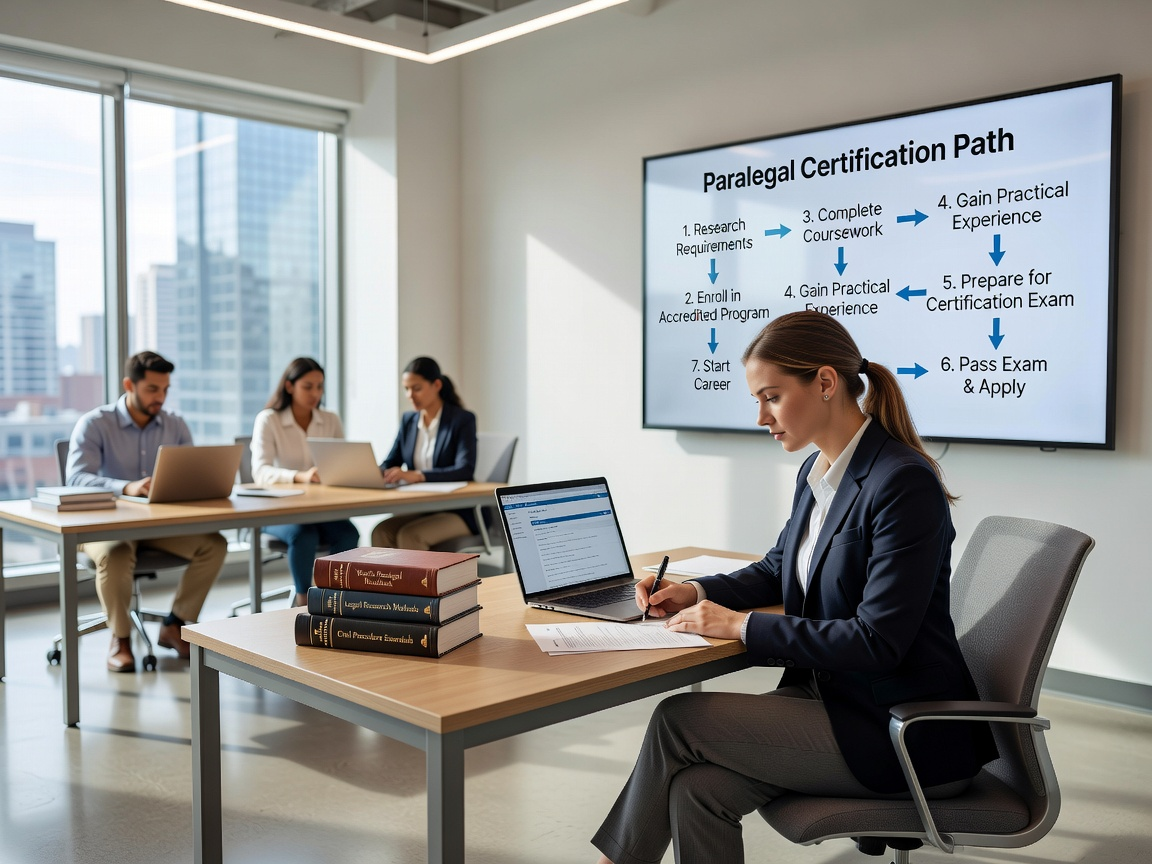
Our 15-week paralegal program delivers job-ready skills through live instruction from practicing legal professionals. The accelerated format gets you into the workforce quickly with practical training in legal research, document drafting, and case preparation. We offer our program in two formats: online with live instruction or in-person classes. Both provide the real-time interaction you need to build confidence and succeed. Our approach to Entry Level Paralegal Training is a fast, smart investment in your future.
Career Advancement and Opportunities
Both roles offer growth, but the paths diverge. Legal secretary advancement is typically administrative, leading to roles like office manager or executive assistant. Some transition to a paralegal role after completing formal paralegal education.
Paralegal career paths offer more growth within the legal field itself. Paralegals can specialize in different areas of law, advance to senior paralegal or paralegal manager positions, and handle more complex casework. The role is also an excellent pathway to law school, providing an invaluable foundation for a legal education. As firms increasingly rely on paralegals to improve efficiency, the demand for well-trained professionals remains strong. Understanding How to Get Paralegal Job is a key step in planning for this dynamic career.
Choosing Your Path: Substantive Legal Work or Administrative Support?
The legal secretary vs paralegal decision comes down to your strengths and interests. Both roles are essential, but they appeal to different professional personalities. Ask yourself: Are you drawn to making an office run smoothly, or are you fascinated by the law itself? Your answer will point you toward the right career.
The Paralegal Path: For Those Drawn to the Law
If you are curious about how the legal system works and enjoy analytical challenges, the paralegal career is a great fit.

This career is ideal for those with an interest in legal theory and a knack for problem-solving. Paralegals don't just file paperwork; they help construct legal arguments. You'll dig through facts, research case law, and connect the dots. What makes this career rewarding is the direct involvement in cases. Your work—from research to drafting documents—directly impacts the outcome.
The paralegal profession offers meaningful engagement with the law without the time and expense of law school. It's a career with clear advancement opportunities, and for some, it's a stepping stone to becoming an attorney. If this sounds energizing, exploring whether Is Paralegal an Entry Level Job can clarify your starting point.
The Legal Secretary Path: For Organizational Experts
If your satisfaction comes from creating order out of chaos and ensuring everything runs on time, a legal secretary role is where you belong.
This career is perfect for those with an interest in administration and process management. Legal secretaries are the operational backbone of a firm, allowing attorneys and paralegals to focus on legal work. You'll excel at supporting a team and take pride in knowing your organizational skills are critical to its success.
The role requires strong coordination and people skills, as you'll interact with clients, courts, and other law offices. You are the person everyone relies on to keep things running smoothly. The legal secretary role offers stability and the satisfaction of being indispensable. For many, it's a better fit for their skills and professional preferences.
Frequently Asked Questions about Legal Support Roles
Is a paralegal "higher" than a legal secretary?
In a firm's structure, a paralegal role carries more substantive legal responsibility and requires more specialized training. This is not about one role being "better," but about the nature of the work. Paralegals perform billable legal work (research, drafting, discovery), while legal secretaries provide essential administrative support (scheduling, filing, communications). This difference in responsibility often translates to different earning potential, but both roles are indispensable to a successful law firm.
Can a legal secretary become a paralegal?
Absolutely. Many successful paralegals start as legal secretaries. The key to this transition is completing a formal paralegal education program. While a secretarial role provides great exposure to a law office, a paralegal education program is necessary to develop the skills for substantive legal work, such as legal research and writing. Our 15-week paralegal program at the Paralegal Institute is an accelerated path for professionals looking to make this career move, providing job-ready skills in under four months.
What is the most important skill for a paralegal?
While organization and attention to detail are vital, legal research and writing is the cornerstone of the paralegal profession. A paralegal's primary value is their ability to find relevant legal authority and communicate it clearly. This skill allows you to draft motions, prepare legal memos, and contribute meaningfully to case strategy. It is what separates a paralegal from an administrative assistant. That's why our curriculum at the Paralegal Institute emphasizes practical legal research and writing from day one, teaching the real-world skills employers demand.
Conclusion: Launching Your Career in the Legal Field
The legal secretary vs paralegal distinction is clear: legal secretaries provide expert administrative support to keep the office running, while paralegals perform substantive legal work to help build cases. Both roles are essential, but they require different skills and educational paths.
If you are fascinated by the law and want to contribute directly to case strategy, the paralegal profession offers an intellectually engaging career. It's a path that puts you in the middle of the legal action, where your work has a direct impact.
The Paralegal Institute's 15-week paralegal program is designed to get you workforce-ready fast. Taught by practicing attorneys, our curriculum focuses on practical, job-ready skills. We emphasize live instruction —both online and in-person—so you get real-time feedback and can ask questions as they arise. This accelerated format is a smart alternative to longer, more expensive programs.
Completing a paralegal program opens doors to a stable and challenging career. As law firms seek to increase efficiency, the demand for skilled paralegals remains strong.
Ready to take the next step? To understand how you'll contribute to a legal team, explore the role of paralegals in law firms. Your legal career is closer than you think.