What Shapes Paralegal Job Satisfaction?
Paralegal job satisfaction depends on the work you do and the support you receive. Research offers a mixed picture: one career survey rates paralegals' happiness at 2.7 out of 5, while a separate salary survey reports job satisfaction of 3.78 out of 5. Because the surveys ask different questions of different people, the most useful test is whether a role offers fair compensation, manageable deadlines, respect from attorneys, and chances to use your skills.
Daily casework can be rewarding when you help with discovery, draft documents, and prepare for trial. It can also be stressful when deadlines pile up or your work is limited to routine tasks. This guide looks at both sides so you can assess the career realistically.
I'm Matt Pfau, a practicing attorney who hires and trains paralegals and teaches paralegal courses at the Paralegal Institute. That direct courtroom and law office experience shapes how I assess paralegal job satisfaction: by looking closely at the substantive casework, communication standards, and supervision behind each legal role. When attorneys delegate meaningful legal projects, support staff members build lasting professional confidence and enjoy long, productive legal careers.

Key Factors Driving Paralegal Job Satisfaction in Modern Law Firms
In the paralegal courses I teach at the Paralegal Institute, we see every day how firm culture dictates career longevity. Paralegals do not operate in a vacuum; they function as the operational core of litigation teams, corporate legal departments, and specialized practices. When firms treat paralegals as substantive legal professionals rather than clerical support, engagement metrics rise significantly across the entire organization.
The primary driver of career satisfaction is task autonomy within structured ethical boundaries. When an attorney trusts a paralegal to manage complex discovery responses, organize extensive trial exhibits, and coordinate directly with expert witnesses, the paralegal experiences meaningful ownership over their cases. Conversely, when tasks are limited to basic administrative filing without context, morale declines rapidly. Professional legal work thrives on analytical engagement, factual analysis, and procedural mastery rather than monotonous data logging.
Professional respect directly influences daily performance. Modern legal teams succeed when attorneys treat paralegal input on procedural matters, court rules, and docket deadlines as essential to litigation strategy. A positive workplace culture recognizes that substantive casework requires intellectual engagement, dedicated focus time, and direct communication channels between counsel and support staff. When open dialogue is encouraged, errors decrease and operational efficiency improves.
Measuring Paralegal Job Satisfaction Across Casework and Skills Utilization
Skills alignment remains a decisive factor in workplace happiness. When legal professionals spend their days conducting legal research, drafting initial pleadings, summarizing depositions, and managing complex discovery schedules, their sense of professional value increases noticeably.
According to the U.S. Bureau of Labor Statistics Occupational Outlook, paralegals perform a wide array of substantive tasks that extend far beyond administrative filing, requiring formal preparation and procedural accuracy. When law firms underutilize these specialized capabilities, job satisfaction inevitably drops among qualified professionals.
| Casework Dimension | High Autonomy / Substantive Focus | Routine Administrative Burden |
|---|---|---|
| Pleadings & Briefs | Drafting substantive motions, complaints, and legal memoranda | Merely reformatting captions or printing physical copies |
| Discovery Management | Drafting interrogatories, analyzing production disclosures, indexing depositions | Basic data entry and routine scanning without review |
| Trial Preparation | Assembling exhibit binders, coordinating witnesses, managing courtroom tech | Scheduling courier services and ordering basic office supplies |
| Case Management | Tracking statutes of limitations, calculating filing deadlines, direct client updates | Answering general phone inquiries without procedural involvement |
When firms align daily assignments with high-level competencies, staff members report higher engagement, greater self-efficacy, and significantly lower fatigue throughout intense litigation cycles.
The Attorney-Paralegal Dynamic: Supervision and Professional Trust
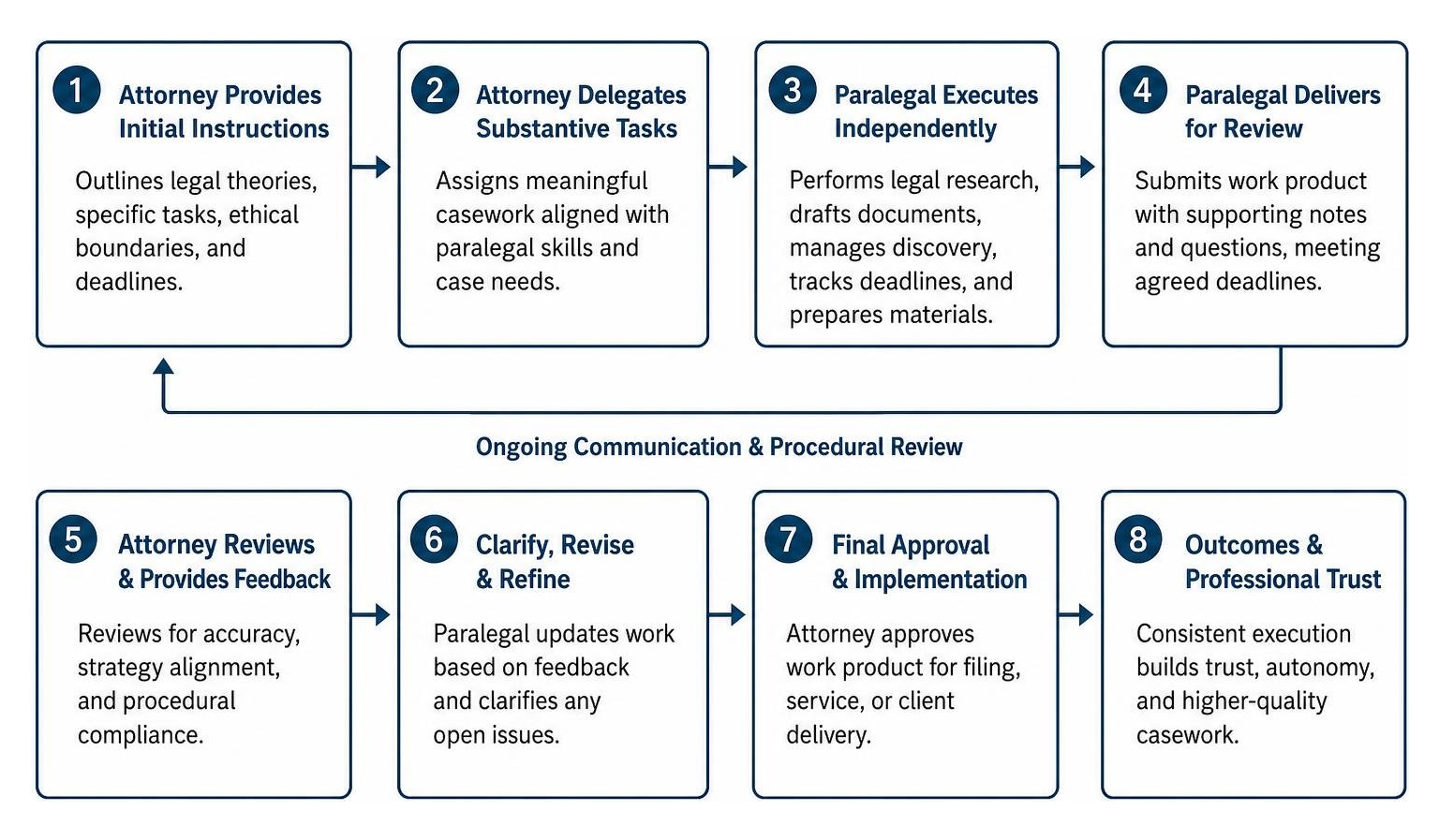
The working relationship between an attorney and a paralegal sets the tone for daily operations. Delegation models must be built on mutual trust, clear expectations, and regular procedural reviews. Attorneys who provide comprehensive initial instructions, outline specific legal theories, and supply clear deadlines create an environment where paralegals can execute complex casework independently and effectively.
Supervisory trust develops over time through consistent procedural execution and clear communication. In client intake procedures, for example, an experienced paralegal conducts thorough factual investigations, spots initial legal issues, and synthesizes relevant facts before briefing the attorney. Establishing strong working partnerships early supports steady career satisfaction and more effective casework.
Daily Casework Realities: Balancing Substantive Legal Work and Administrative Load
A paralegal's workday involves balancing detailed legal drafting with rigorous calendar deadlines. Substantive casework includes preparing initial discovery requests, drafting motions for summary judgment, compiling trial briefs, and organizing comprehensive evidentiary disclosures across active dockets.
The US News Best Jobs Ranking consistently rates the profession as a vital legal role due to its balance of analytical responsibilities and direct community impact. However, maintaining that satisfaction requires managing the administrative pressures that accompany heavy litigation dockets and rapid court timelines.

When court deadlines converge, administrative tasks such as filing proof of service, bates-stamping production volumes, and auditing service lists can become overwhelming if not balanced with substantive analytical projects. Successful firms implement workflow structures that protect focused drafting time, ensuring that urgent filings do not crowd out thorough legal research and case analysis. Protecting uninterrupted project blocks maintains overall drafting accuracy and preserves team morale during demanding trial phases.
How Attorney Supervision Shapes Daily Paralegal Job Satisfaction
Attorney oversight directly influences whether a high-volume caseload feels manageable or overwhelming. Constructive feedback transforms everyday challenges into professional growth opportunities. When an attorney takes three minutes to explain why a specific objection was added to a discovery response, the paralegal expands their procedural knowledge for future casework.
Equitable caseload distribution prevents burnout during intense trial preparation phases. By actively monitoring docket commitments and encouraging strategic delegation, legal teams protect staff well-being while maintaining high standards of work. Building sustainable workload-management habits early in a legal career helps paralegals maintain resilience and continue developing professionally in demanding litigation environments.
Work Environment and Flexibility in Modern Legal Practice
The legal workplace continues to evolve, offering diverse operational structures across boutique practices, large litigation firms, and corporate legal departments. As documented in Law.com Legal Workplace Trends, flexible scheduling and modernized case workflows have reshaped how legal professionals coordinate daily assignments and manage complex litigation dockets.
Firms that establish clear communication protocols and realistic turnaround windows allow their support teams to manage complex filings without unnecessary stress or evening emergencies. Maintaining healthy boundaries during education and career transitions is equally important for lasting success.

Whether working on-site in Las Vegas, NV or coordinating across complex state court dockets, paralegals thrive when firms provide clear expectations, modern filing tools, and reasonable operational pacing that respects their personal time.
Career Progression Pathways and Long-Term Fulfillment
Long-term satisfaction in the legal field is closely tied to clear advancement opportunities. Paralegals who continuously develop their procedural knowledge can take on increasingly responsible paralegal roles with greater casework, coordination, and leadership responsibilities.
Developing procedural knowledge and taking on more complex assignments can give paralegals greater autonomy, responsibility, and professional confidence. If you feel stalled in your current role, reassess the work environment, supervision, and responsibilities that best match your professional goals and working preferences.
Planning your career path requires a clear understanding of market demands, court procedures, and industry standards. Consider local job postings and court-practice demands, along with the responsibilities that fit your long-term professional goals.
Frequently Asked Questions About Legal Support Careers
How does paralegal casework differ from attorney responsibilities?
Paralegals handle substantive legal tasks—including drafting pleadings, conducting legal research, summarizing deposition transcripts, and managing trial exhibits—under the direct supervision of a licensed attorney. Paralegals cannot give legal advice, set client fees, or represent clients in court proceedings.
What law firm environments foster the highest job satisfaction?
Firms with transparent supervisory structures, realistic caseload distributions, clear advancement paths, manageable billing expectations, and a culture of professional respect consistently report the highest satisfaction and retention rates among legal support staff.
How can legal staff transition into substantive paralegal casework?
Legal assistants and administrative staff can transition into substantive casework by completing focused training programs that emphasize procedural rules, hands-on legal drafting, discovery management, and practical litigation workflows. Choosing an accelerated, career-focused curriculum gives adult learners the practical confidence needed to handle complex court filings and substantive document management immediately upon entering the legal workforce.
Conclusion
Building a sustainable, high-satisfaction career in the legal field requires practical skills, procedural confidence, and an understanding of modern law firm dynamics. As practicing attorneys, we designed the Paralegal Institute's curriculum around real-world courtroom demands and everyday casework.
Our 15-week accelerated program delivers intensive, practical instruction tailored to workforce readiness. Delivered through online with live instruction or in-person classes in Las Vegas, NV, our courses are taught exclusively by practicing legal professionals who understand what law firms look for in competent support staff. This direct, hands-on model offers an affordable, accelerated path to job readiness compared to slow-paced multi-year academic degrees.
To explore how hands-on procedural training prepares you for modern legal practice, review the essential duties of modern paralegals and begin your path toward a rewarding career in legal support.