In my years of practice, I’ve seen that the most efficient researchers aren't necessarily the ones who type the fastest; they are the ones with a plan. Jumping straight into a database like Westlaw or Lexis+ without a map is a great way to burn through a client’s budget while finding absolutely nothing of substance.
At the Paralegal Institute, we teach a structured approach because "winging it" doesn't hold up in court. Mastering legal research skills requires a recursive process—meaning you’ll often circle back to refine your search as you learn more.
Gathering Critical Information and Establishing Goals
Before you touch a keyboard, you must understand the "who, what, when, where, and why" of the case. We call this the factual investigation. You cannot find the law if you don't understand the facts.
- Record the Facts: Identify the legally significant facts. If a client was injured in a slip-and-fall, the color of their shirt probably doesn't matter, but the weather conditions and the presence of "wet floor" signs certainly do.
- Identify the Legal Issue: Frame your research as a specific question. Instead of searching "personal injury," try "duty of care for commercial property owners in Nevada regarding transitory foreign substances."
- Establish Your Goal: Are you looking for a case to support a Motion to Dismiss, or are you trying to find the statute of limitations for a breach of contract? Knowing your objective narrows your search terms and saves hours of aimless scrolling.
Our Legal Research Skills Training emphasizes this "pre-research" phase because a solid plan is the best defense against research fatigue.
Developing Your Legal Research Skills Through Jurisdiction-Specific Precedent
One of the most common mistakes beginners make is finding a "perfect" case, only to realize it’s from Florida while their case is in Las Vegas. In the legal world, geography is destiny.
- Controlling Authority: These are the laws or court decisions that a judge must follow. For a state case in Las Vegas, controlling authority includes the Nevada Revised Statutes and decisions from the Nevada Supreme Court.
- Persuasive Authority: If there is no Nevada law on point, a judge might look at how California or Arizona handled the issue. This is "persuasive"—the judge can follow it if they find the reasoning sound, but they aren't required to.
Understanding the hierarchy of authority is a cornerstone of Legal Research Basics: A Step-By-Step Guide. Always start your search within your specific jurisdiction (State vs. Federal) before looking elsewhere.
Navigating Primary and Secondary Sources Effectively
When you’re staring at a blank search bar, it’s tempting to dive right into case law. Don't. If you aren't an expert in the specific area of law you’re researching, you’ll likely miss the nuances.
| Source Type | Examples | When to Use |
|---|---|---|
| Secondary Sources | Encyclopedias, Treatises, Law Reviews | At the start: to get background, context, and "leads" to primary law. |
| Primary Sources | Constitutions, Statutes, Case Law | After you understand the basics: to find the actual law that governs the case. |
For a deeper dive, check out our guide on Reliable Sources for Paralegal Research.
Starting with Secondary Sources for Context
Think of secondary sources as the "instruction manual" for the law. They don't have the force of law themselves, but they explain it beautifully.
- Legal Encyclopedias: Great for a broad overview of a topic you’ve never heard of.
- Treatises: These are deep dives into specific subjects (like Corbin on Contracts ). They are written by experts and provide incredible detail.
- Practice Guides: These are the "how-to" books for lawyers. They often include the specific vocabulary and keywords you’ll need for your database searches.
Starting here helps you build a "search vocabulary." You might start searching for "car accident," but a secondary source will teach you to search for "negligence per se" or "comparative fault."
Deep Diving into Primary Law: Statutes and Case Law
Once you have your keywords and a general understanding, it’s time to find the law itself.
Statutes: These are laws passed by the legislature (like the Nevada State Legislature or Congress).
- Annotated Codes: These are a paralegal’s best friend. They provide the text of the law plus summaries of court cases that have interpreted that law.
- Unannotated Codes: These give you just the law. They are great for official citations, but less helpful for research.
Case Law: These are judicial opinions. In a common law system like ours, the way a judge interpreted a statute 20 years ago might still be the rule today. You are looking for cases with similar fact patterns to your own.
Advanced Techniques to Verify "Good Law" and Ensure Accuracy
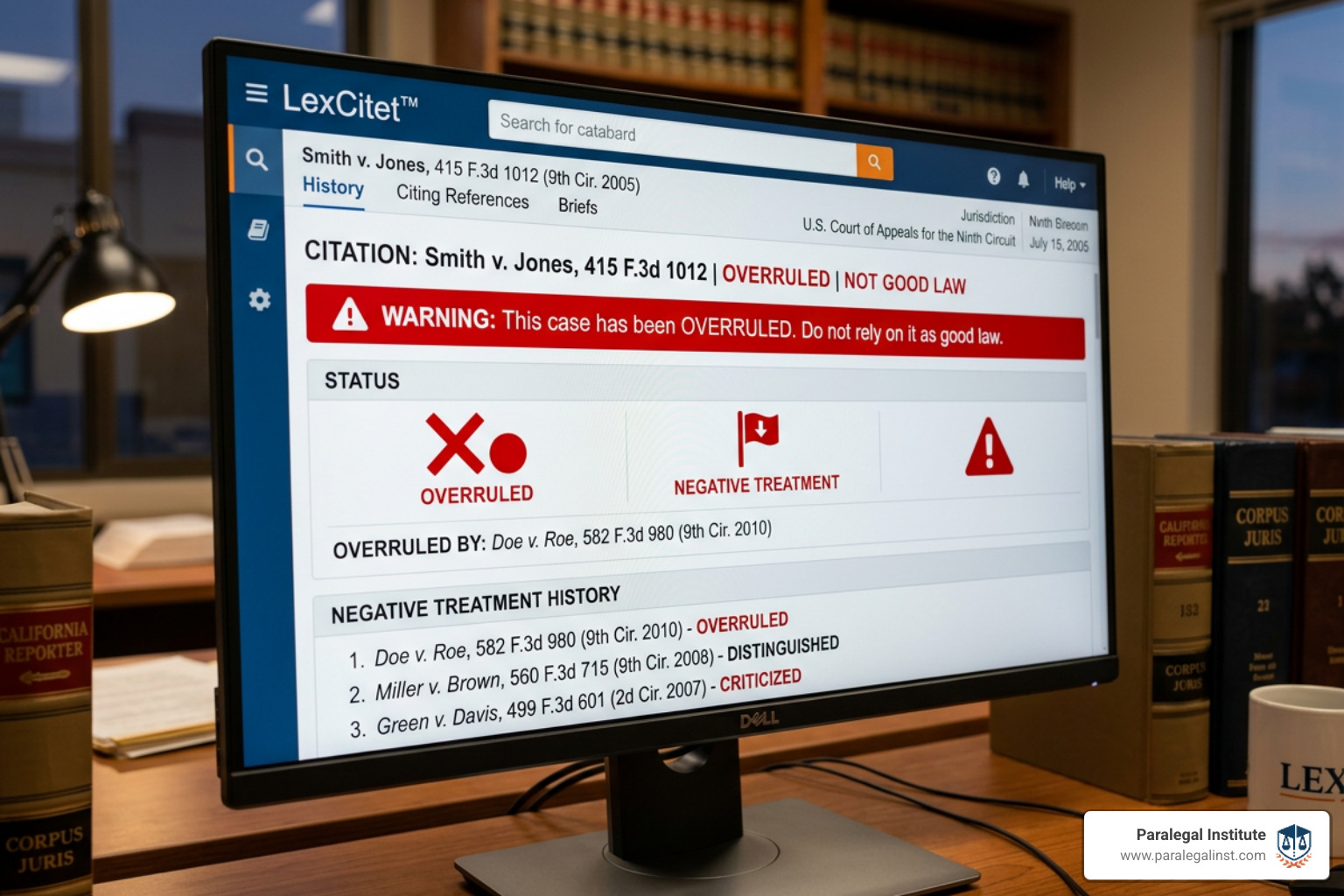
Finding a case that supports your argument is only half the battle. You must ensure that case hasn't been "killed." If you cite a case that was overruled three years ago, the judge will not be happy, and your reputation (and your firm’s) will take a hit.
Using Citators to Confirm Precedential Value
A citator is a tool that tracks the history of a case. It tells you if other courts have followed it, criticized it, or completely overturned it.
- Shepardizing: This is the process of using the Shepard’s tool on Lexis+ to check a case’s validity.
- Negative Treatment: Look for red flags or yellow warning signs. A red flag usually means the case is no longer "good law" for at least one of its legal points.
Checking for "good law" is a vital step in any Legal Research Guide for Paralegals. You can take a Guided tour of Lexis+ to see how these flags look in real-time.
Refining Search Queries with Boolean Operators and Filters
To truly sharpen your legal research skills, you need to move beyond "Google-style" searching. Boolean operators allow you to be surgically precise.
- AND:(e.g., "landlord AND mold") finds documents containing both terms.
- OR:(e.g., "car OR automobile") finds documents with either term—great for synonyms.
- NOT:(e.g., "trust NOT antitrust") excludes irrelevant topics.
- Root Expansion (*):(e.g., "negligen*") finds negligence, negligent, and negligently.
Don't forget to use filters! Limiting your results by date, jurisdiction, and court level can turn 5,000 results into 50 highly relevant ones.
Organizing and Synthesizing Findings for Winning Arguments
Research is useless if it stays in your head. You have to get it onto paper (or a screen) in a way that an attorney can use to win.
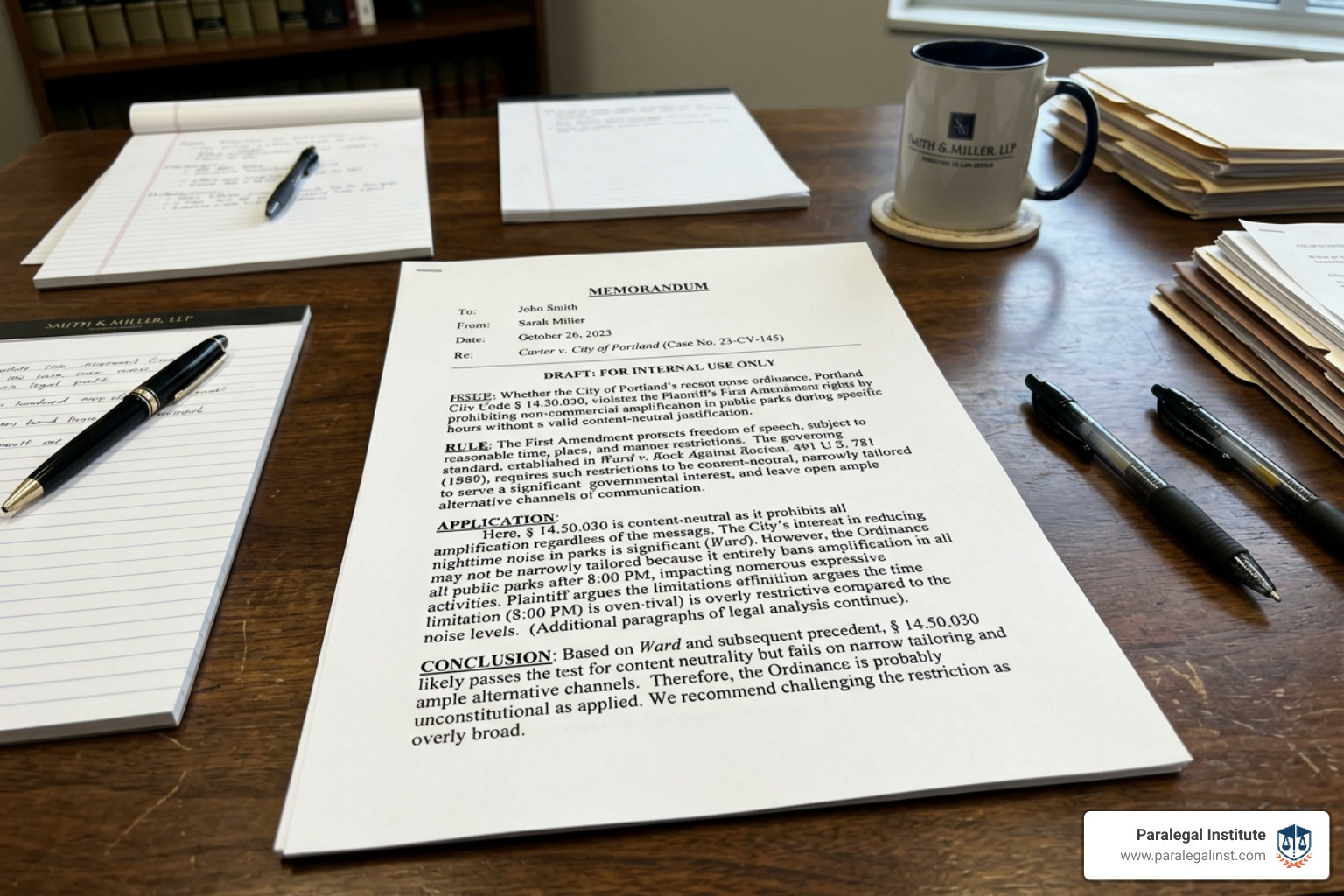
Synthesizing Information for Legal Memorandums
Synthesis is the art of taking five different cases and weaving them together to show a single, clear legal rule. We often use the IRAC method:
- Issue: What is the legal question?
- Rule: What is the law (statutes + case law)?
- Application: How does the law apply to our client’s specific facts?
- Conclusion: What is the likely outcome?
This process requires analogical reasoning—comparing the facts of the "old" cases you found to the "new" facts of your client’s case. If the facts are similar, the outcome should be the same.
Frequently Asked Questions About Legal Research Skills
How can I improve my research speed? Practice and planning. The more you understand the "language" of a specific area of law, the faster you’ll find what you need. Also, always start with secondary sources!
When do I stop researching? You stop when you start seeing the same cases over and over again. This is called "convergence." If you’ve searched three different ways and keep hitting the same five "seminal" cases, you’ve likely found the answer.
Is legal research different in a law office than in school? Yes. In a law office, time is money. You don't have the luxury of reading every case ever written. You need to find the controlling law quickly and accurately.
Conclusion
Mastering legal research skills is a journey, not a destination. Even after years as an attorney, I still find new ways to refine my searches. For aspiring paralegals, these skills are your "ticket" to being an indispensable part of a legal team.
At the Paralegal Institute, we don't believe in lengthy theories; we believe in 15-week results. Our accelerated, live instruction is designed by practicing professionals like myself to get you job-ready and confident in your research abilities. Whether you join us in person in Las Vegas or through our live online classes, you'll get the hands-on training needed to turn case files into courtroom victories.
Ready to put these skills to work? Start your career with the Paralegal Institute today and take the first step toward a rewarding career in the legal field.