
Why Legal Training Opens Doors Across Multiple Industries
As a practicing attorney, I see firsthand how careers related to paralegal training extend well beyond private law firms. Top paths include compliance officers, contract administrators, litigation support and eDiscovery specialists, real estate title examiners, government regulatory investigators, legal operations managers, and freelance legal researchers. Each of these roles applies the same core legal competencies—statutory analysis, deep legal research, document drafting, and discovery management—to corporate, technical, and public-sector environments.
When you learn how to read statutes, conduct deep legal research, draft pleadings, and manage complex discovery requests, you are doing more than preparing for a traditional law office. You are building an elite framework for analytical thinking, document drafting, regulatory compliance, and risk assessment.
Every major industry—from finance and technology to healthcare and public governance—operates under intricate regulatory frameworks. Organizations need professionals who understand how rules function, how liability arises, and how to organize vast amounts of critical casework under tight deadlines.
According to data from the U.S. Bureau of Labor Statistics employment projections, the demand for skilled legal support talent remains strong as organizations seek cost-effective ways to manage their legal, operational, and regulatory workflows. Reviewing the broader paralegal career outlook reveals that legal training opens dynamic paths across corporate boardrooms, tech startups, public agencies, and independent consulting practices.
7 High-Growth Careers Related to Paralegal Backgrounds
To help you explore what lies beyond private practice, let us examine how legal skills map directly to specialized corporate, technical, and government positions.
| Career Path | Primary Work Environment | Core Responsibilities |
|---|---|---|
| Compliance Officer | Healthcare, banking, corporate enterprises | Regulatory auditing, internal policy enforcement, risk analysis |
| Contract Administrator | Technology, manufacturing, supply chain | Contract lifecycle oversight, vendor negotiations, due diligence |
| Litigation Support Specialist | Corporate legal departments, consulting agencies | eDiscovery data extraction, forensic database review, case file management |
| Real Estate Title Specialist | Escrow firms, title companies, financial institutions | Title deed examination, closing package preparation, property records review |
| Government Investigator | Public agencies, municipal courts, regulatory boards | Fact-finding investigations, witness interviewing, evidentiary report drafting |
| Legal Operations Manager | Corporate in-house legal departments | Departmental workflow automation, matter tracking, vendor coordination |
| Freelance Legal Researcher | Remote consulting, project-based legal support | Appellate legal research, case law briefing, discovery document drafting |
1. Compliance Officer: Thriving Careers Related to Paralegal Skills
A compliance officer ensures that an organization strictly follows all relevant industry regulations, federal statutes, and internal ethical guidelines. In sectors like healthcare, pharmaceuticals, and financial services, a single regulatory oversight can result in severe fines or catastrophic lawsuits.
Professionals with legal training excel in compliance because they know how to interpret complex statutory language and cross-reference operational practices against regulatory standards. Rather than reacting to active litigation, you work proactively to audit internal processes, conduct internal reviews, draft clear workplace policies, and coordinate responses to government inquiries. Understanding how corporate paralegal roles intersect with business ethics provides the perfect foundation for stepping into high-level compliance roles.
2. Contract Administrator
Every modern commercial transaction depends on enforceable written agreements. Contract administrators manage the entire lifecycle of these legal documents—from initial drafting and redlining to vendor negotiation, execution, and renewal tracking.
In technology and corporate environments, administrators routinely review non-disclosure agreements, master services agreements, software licensing contracts, and vendor procurement packages. You ensure that business terms align with company risk tolerances, identify ambiguous clauses, and confirm that all legal conditions are met before signing. The rigorous attention to detail developed while mastering commercial paralegal duties translates directly to controlling company exposure and ensuring seamless commercial operations.
3. Litigation Support and eDiscovery Specialist
Modern discovery is driven by immense volumes of digital data. A litigation support and electronic discovery (eDiscovery) specialist bridges the gap between traditional legal practice and advanced technical database management.
Instead of sorting through physical file cabinets, these specialists collect, index, filter, and analyze gigabytes of emails, server logs, digital transactions, and internal records for trial teams. You coordinate with IT personnel to extract relevant data, identify privileged communications, maintain digital chains of custody, and ensure all evidentiary files are properly formatted for court presentation.
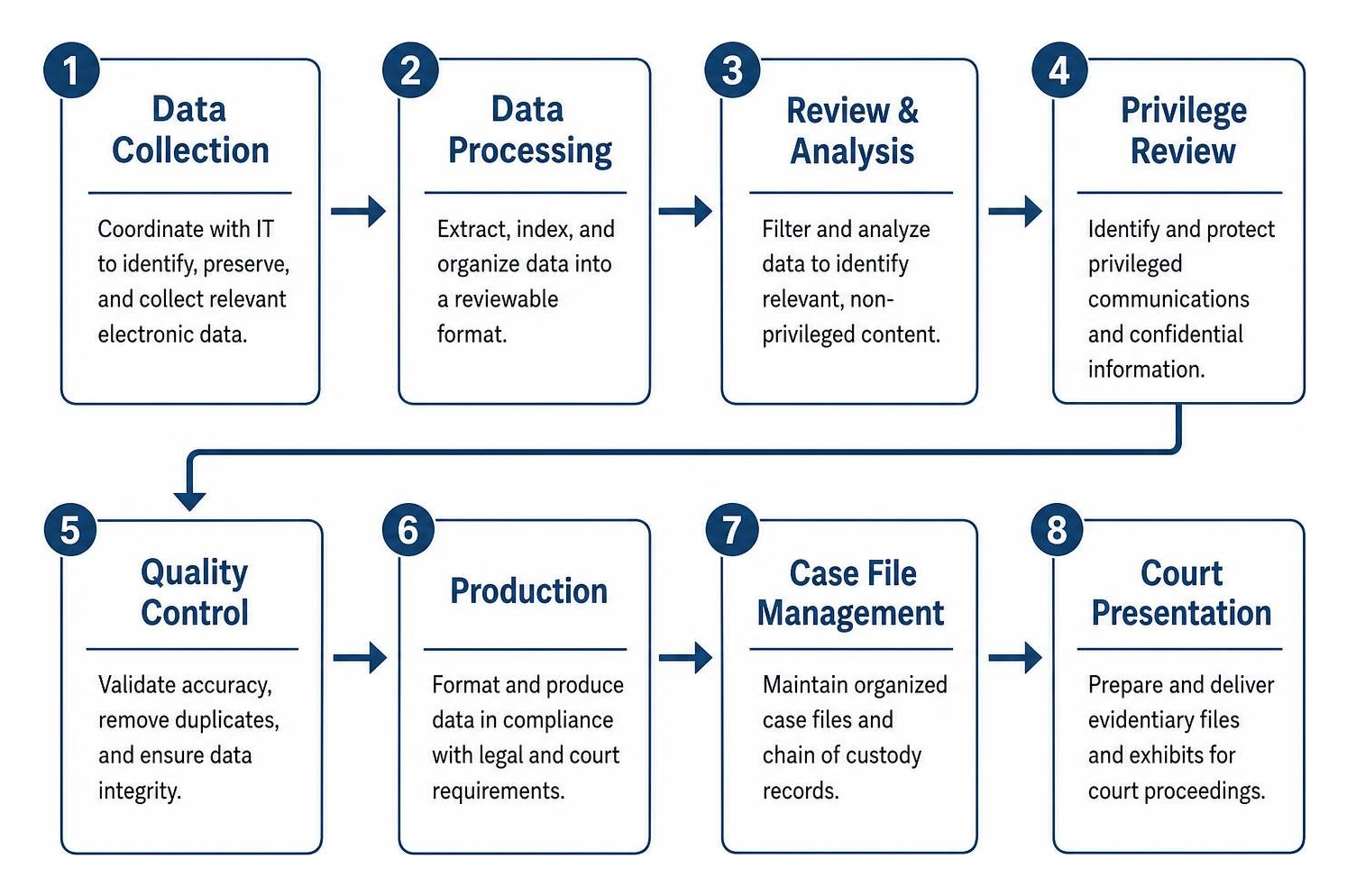
As detailed in our litigation support professional guide, this path is ideal for individuals who enjoy analytical problem-solving and digital tools alongside substantive legal casework.
4. Real Estate Title and Settlement Specialist
Real estate transactions involve substantial financial commitments, complex local zoning rules, and detailed public records. Real estate title and settlement specialists examine property chains of title to verify that no liens, easements, back taxes, or probate disputes cloud ownership before a sale or refinancing closes.
In this position, you analyze historical deed records, draft closing statements, coordinate escrow funding, and ensure all transfer deeds, mortgages, and settlement disclosures comply with municipal recording requirements. The methodical research habits and precise document preparation emphasized in comprehensive legal training make title examination a smooth and rewarding career transition.
5. Government Regulatory Investigator and Court Specialist
Federal, state, and county agencies rely on trained legal specialists to investigate consumer complaints, enforce administrative codes, and manage formal court documentation. Government regulatory investigators conduct field interviews, review financial records, gather physical and digital evidence, and write formal investigative reports for administrative hearings.
Similarly, within the judicial system, court paralegals and legal analysts help judges organize complex case dockets, review appellate petitions, and prepare summaries of legal motions. Positions such as court paralegal positions offer exceptional public service impact, predictable schedules, and strong stability. You can discover more about these stable public-sector career options by exploring paralegal government jobs.
6. Corporate Legal Operations Manager
As corporate legal departments grow in size and complexity, companies hire legal operations managers to optimize how their in-house teams operate. Legal ops professionals focus on running the legal department like a business.
Your responsibilities involve evaluating workflow efficiencies, implementing internal matter-management systems, coordinating with outside counsel, and streamlining document management processes. By pairing practical legal knowledge with organizational oversight, you eliminate administrative friction for corporate counsel. Those interested in advancing into structured leadership should review our breakdown of paralegal manager opportunities to understand how organizational management elevates your career ceiling.
7. Freelance Legal Researcher and Document Drafter
For professionals who value schedule autonomy, independent freelance legal support is an expanding field. Solo practitioners and boutique law firms frequently encounter sudden workload surges during active litigation and require experienced researchers to draft motions, summarize deposition transcripts, prepare appellate briefs, or manage complex document reviews on a project basis.
As a freelance researcher, you run your own legal support practice, choosing the clients and practice areas you want to support. You perform critical case law research, draft initial document packages, and deliver structured litigation support remotely while remaining under the supervising attorney's direction.
Essential Skills for Transitioning Beyond Traditional Law Practice

Transitioning successfully into these corporate, technical, and regulatory positions requires a solid foundation of transferable core competencies:
- Rigorous Written Communication: Drafting clear, unambiguous policy documents, summaries, and formal correspondence without unnecessary fluff.
- Digital Proficiency & Data Security: Safely navigating electronic filing systems, secure document repositories, and cloud-based review environments while protecting sensitive data.
- Deep Fact-Checking & Analysis: The ability to review vast discovery files or complex regulatory codes to locate critical inconsistencies that others overlook.
- Project and Matter Management: Tracking rolling deadlines, managing multiple overlapping priorities, and driving complex casework to completion.
In my practice and in the courses I teach at the Paralegal Institute, we build our curriculum around the direct, hands-on application of these core competencies from day one rather than spending semesters on broad theoretical lectures.
Frequently Asked Questions About Careers Related to Paralegal Work
What are the highest-paying careers related to paralegal training?
Specialized technical and corporate roles typically offer the strongest compensation paths for those with legal backgrounds. Careers in eDiscovery analysis, corporate compliance oversight, and legal operations management frequently reach the top tiers of legal support pay. You can review current industry compensation benchmarks and earnings potential in our corporate paralegal salary data.
Can paralegal education qualify you for non-legal corporate roles?
Yes. Corporate organizations place immense value on professionals who understand contractual liability, risk mitigation, and regulatory standards. Legal education trains your mind to process dense information, identify organizational risks, and maintain strict confidentiality—skills that directly qualify you for roles in procurement, human resources auditing, corporate governance, and operational risk assessment.
How do alternative corporate roles compare to law firm practice?
While private law firms often require strict billable-hour tracking and experience intense deadline pressure tied to court appearances, corporate and public-sector positions generally emphasize project-based milestones and standardized business hours. To better understand these structural differences, examine the day-to-day role of paralegals in law firms.
Conclusion
A legal education does not lock you into a single job title or a traditional law firm office. The deep analytical, research, and drafting skills you build can launch successful careers across compliance departments, corporate contract teams, technical eDiscovery units, and public regulatory agencies.
At the Paralegal Institute, we believe your education should lead directly to real-world career readiness without wasting years of your life or accumulating unnecessary debt. As an attorney teaching in our accelerated 15-week paralegal certificate program, I work alongside practicing legal professionals to deliver practical, hands-on training that prepares you for immediate workforce entry. We offer our curriculum through flexible formats: online with live instruction for interactive remote learning, or in-person classes at our Las Vegas, NV campus.
Take charge of your professional trajectory today. Explore our comprehensive paralegal career information and discover how our live instruction, practical coursework, affordable tuition, and dedicated career placement support can help you step confidently into your legal career.