
Understanding the Role That Powers Modern Legal Success
What is a litigation support professional? A litigation support professional is a specialized legal team member managing the technical and organizational aspects of complex lawsuits. They design and maintain litigation databases, organize electronic evidence, coordinate document review, prepare trial presentations, and ensure attorneys have instant access to the case information needed to win in court.
Key responsibilities include:
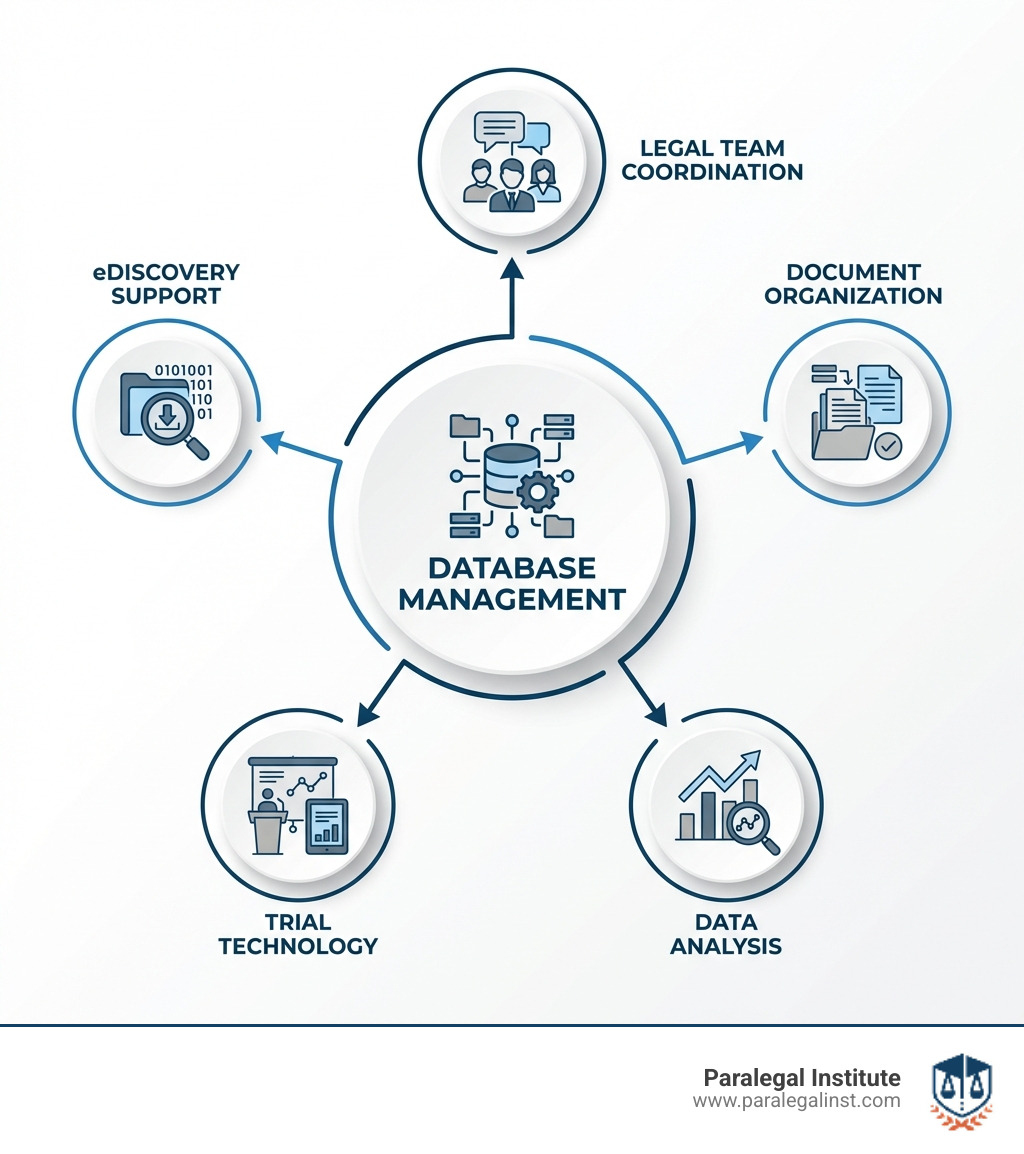
- Database Management- Building and maintaining systems for sorting, indexing, and retrieving case documents
- Discovery Support- Identifying, collecting, and processing electronically stored information (ESI)
- Trial Preparation- Creating exhibits, coordinating courtroom technology, and organizing evidence for presentation
- Document Control- Managing large volumes of physical and electronic documents throughout the case lifecycle
- Technical Consultation- Advising legal teams on technology solutions and data management strategies
In today's legal landscape, where cases involve thousands of electronic documents, emails, and digital records, litigation support professionals bridge legal strategy and technology. They free attorneys to focus on case arguments by ensuring all evidence is organized, accessible, and ready for court.
Why this role matters: Without skilled litigation support, attorneys would spend countless hours sorting through data instead of building winning strategies. These professionals reduce costs, prevent critical errors, and often make the difference between a case won and a case lost.
As Matthew Pfau, a practicing attorney who teaches at the Paralegal Institute, I've seen how essential these professionals are to law firm success. Understanding what is a litigation support professional helps aspiring legal professionals identify rewarding career opportunities. My experience has shown me that the right training prepares individuals to excel in this high-demand field from day one.
What is a Litigation Support Professional and What Do They Do?
A litigation support professional is a vital partner for attorneys and paralegals navigating complex modern lawsuits. They are the behind-the-scenes specialists ensuring legal teams have the organized information and technology to present their case effectively. Their role is to assist attorneys by managing the vast amounts of data characteristic of today's legal landscape, from the initial stages of discovery to the final moments of trial presentation.
Their primary responsibilities involve supporting every stage of a case. In a large corporate lawsuit with thousands of documents and emails, attorneys would be buried in data without a litigation support professional. These professionals provide critical data management, turning chaos into actionable insights and finding crucial evidence.
They are instrumental in streamlining legal workflows, allowing attorneys and paralegals to focus on legal strategy and client representation. By delegating the intricate tasks of data organization and technology management, legal teams can operate with greater efficiency. This partnership is crucial for managing large-scale litigation and ensuring all necessary information is not only available but also strategically integrated into the case.
The Core Responsibilities in Detail
The day-to-day tasks of a litigation support professional are diverse, requiring a unique blend of legal understanding and technical prowess. We often describe them as paralegal/IT cross-trained professionals because their work bridges legal strategy and information technology.
One of their foremost responsibilities is robust database management. This involves designing and maintaining specialized litigation databases. These are sophisticated systems for sorting, indexing, and abstracting data, providing attorneys with fast access to structured case information. The ability to instantly search thousands of documents for a specific keyword is made possible by their expertise.
Another critical area is document collection. They gather all relevant physical and electronic documents, ensuring every piece of potential evidence is secured. This might involve retrieving records from various sources, such as medical providers after a car accident. Once collected, they coordinate document review, often working with legal teams to categorize and prioritize documents for relevance and privilege.
When it comes to trial preparation, litigation support professionals are indispensable. They prepare exhibits, turning complex data into clear visual aids for court. They also play a crucial role in supporting courtroom technology, ensuring presentations run smoothly and evidence is displayed effectively. From setting up projectors to managing presentation software, they ensure technology improves the legal argument.
They work closely with legal teams, providing user support and training on software and coordinating with technology vendors. Their goal is to ensure the legal team has the tools and knowledge to leverage technology fully. For a deeper dive into managing case evidence, you might find our insights on Evidence Management in Paralegal Practice helpful. For understanding the skills required for navigating legal information, explore our Legal Research Guide for Paralegals.
How Litigation Support Drives Case Success

The impact of skilled litigation support on case success cannot be overstated. These professionals are instrumental in creating a significant strategic advantage for legal teams. Their work ensures cases are well-prepared and presented with maximum impact.
First, their expertise brings organization to a chaotic process. In cases involving thousands of documents, identifying meaningful data is a monumental task. Litigation support professionals systematically organize case information, making it easily retrievable. This meticulous approach prevents critical evidence from being overlooked, which can delay proceedings and increase costs.
This organization leads to improved efficiency. By taking on the heavy lifting of data management, these professionals allow attorneys and paralegals to dedicate their time to legal analysis and courtroom strategy. This division of labor ensures every team member operates at their highest capacity.
Moreover, their data analysis capabilities provide a powerful strategic advantage. They can identify patterns and trends within vast datasets that might otherwise go unnoticed. This analysis helps attorneys craft data-informed strategies, anticipate opposing arguments, and build a more robust case.
By minimizing errors and ensuring all pertinent information is accessible, litigation support professionals contribute to the cost-effectiveness of legal proceedings. Their work reduces the time attorneys spend on administrative tasks, which translates into cost savings for clients. They equip legal teams to effectively represent their clients, dramatically impacting case success. Understanding how various roles contribute to a law firm's operations can be found in our discussion on the Role of Paralegals in Law Firms.
The Essential Skills and Education for a Litigation Support Career
A career as a litigation support professional requires a unique blend of abilities where technical prowess meets legal acumen. Successful professionals in this role combine robust technical skills with a solid understanding of legal processes, excellent communication, and a commitment to accuracy.
What Skills and Qualifications Are Essential for a Litigation Support Professional?
To excel in this dynamic field, a litigation support professional must cultivate a diverse set of skills. We've identified several key areas that are absolutely essential:
- Solid IT Knowledge: A strong grasp of various software, hardware, and network environments is foundational.
- Familiarity with Document Management Systems: Expertise in platforms for organizing, storing, and retrieving legal documents is essential. These systems are the backbone of modern legal discovery and casework.
- Proficiency in Trial Presentation Software: The ability to use tools for creating and delivering compelling courtroom presentations is vital for showcasing evidence.
- Exceptional Organizational Abilities: With cases involving thousands of documents, the capacity to ingest, analyze, and track information carefully is paramount.
- Critical Thinking Skills: Litigation support professionals must analyze complex data, identify patterns, and anticipate issues to help legal teams develop stronger case strategies.
- Keen Attention to Detail: An eagle eye for detail is a must, as errors in data entry or document review can have significant consequences.
- Strong Communication Skills: Clear communication is essential for interacting with attorneys, paralegals, and vendors, especially when explaining technical concepts to non-technical teams.
- Problem-Solving Skills: The ability to identify and resolve problems efficiently, from troubleshooting software to devising data management strategies, is key.
- Project Management Skills: Coordinating multiple moving parts, deadlines, and resources makes project management a valuable asset.
These skills are put into practice daily to ensure the smooth operation of legal casework. Our Paralegal Program Curriculum is designed to build many of these fundamental competencies, and our Legal Research Skills Training further refines the analytical capabilities needed for this role.
Educational Pathways to Becoming a Litigation Support Professional
The journey to becoming a litigation support professional can take several paths, but a strong educational foundation is always critical. While some enter the field through traditional university programs, others find success through more specialized and accelerated routes.
Many successful professionals in this area have backgrounds in paralegal studies, legal studies, or information technology. While some educational paths provide a broad foundation, I believe that practical, hands-on training through a specialized paralegal program can be a highly effective pathway.
At the Paralegal Institute, we emphasize the value of live instruction and real-world experience. Unlike traditional programs that can be lengthy and heavily theoretical, our accelerated 15-week paralegal program is designed to equip students with the practical skills needed for immediate workforce entry. We focus on what you need to know in a legal environment, taught by practicing legal professionals who understand the demands of the field. This means you gain relevant skills without the extended commitment and cost of some other educational routes.
Our approach is designed for career-focused adults who are looking for a fast, affordable, and job-ready path into the legal field. You don't need a law degree to become a highly valued litigation support professional. You need the right training that provides a solid understanding of legal procedures combined with advanced technical skills. Our programs, including our Paralegal Programs and our Online Paralegal Program with live instruction, are designed to meet this demand.
Technology at the Core: Discovery and Data Management

In the legal world, technology is integral to nearly every legal process, especially litigation. At the heart of this revolution is electronic discovery, or e-discovery, a critical component of modern litigation support. The sheer volume of Electronically Stored Information (ESI)—emails, texts, and digital documents—requires legal teams to be adept at managing digital evidence. This is where the litigation support professional shines, leveraging legal technology to navigate the digital landscape.
The e-discovery process is guided by a framework known as the Electronic Discovery Reference Model (EDRM), which outlines the stages of managing electronic data in litigation. This framework provides a systematic, legally defensible approach to handling ESI. E-discovery is the process of identifying, collecting, preserving, analyzing, and producing electronic evidence, forming the core of modern litigation support by turning potential chaos into organized, usable evidence.
For aspiring legal professionals, understanding technology's role in law is paramount. Our programs include training that touches upon Legal Technology for Paralegals and explores emerging AI Tools for Paralegals, ensuring our students are prepared for the technological demands of today's law firms.
The Role of e-Discovery in Modern Litigation
E-discovery is a multi-faceted process, and each stage is vital for the integrity of digital evidence. Let me break down its critical steps:
- Identification: This phase involves locating all potential sources of ESI relevant to a case, including email systems, cloud storage, mobile devices, and social media accounts.
- Preservation: Once identified, ESI must be preserved to prevent alteration or deletion. This often involves implementing "legal holds" to maintain all relevant records. Maintaining the chain of custody is paramount.
- Collection: This stage involves gathering the preserved ESI using strict protocols to ensure the evidence remains admissible, often with digital forensics tools.
- Processing: Raw data is converted into a format suitable for review. This step removes duplicate files, extracts metadata, and prepares data for analysis.
- Review: Legal teams, with the help of litigation support professionals, review processed documents for responsiveness and privilege using specialized litigation database systems.
- Production: Finally, relevant, non-privileged ESI is produced to the opposing party in an agreed-upon format, requiring careful attention to legal standards.
Throughout these stages, litigation support professionals manage these intricate processes, ensuring digital evidence is handled with precision, making it admissible and persuasive in court.
How Litigation Support and e-Discovery Work Together
While intertwined, it's helpful to understand the complementary nature of litigation support and dedicated e-discovery roles. Litigation support is the broader umbrella for all technical and organizational assistance, while e-discovery is a specialized component focusing on electronic information.
| Feature | Litigation Support Professional | e-Discovery Specialist |
|---|---|---|
| Scope of Work | Broad technical and organizational assistance for all case materials, both physical and electronic. | Specific focus on managing ESI through the entire EDRM lifecycle. |
| Primary Focus | Case management, database design, document organization, exhibit preparation, trial technology. | Data identification, preservation, collection, processing, review, analysis, and production of digital evidence. |
| Technical Skills | Document management systems, trial presentation software, general database applications, project management. | Advanced data processing platforms, digital forensics, database query languages, analytics tools, information governance. |
| Legal Knowledge | Understanding of legal procedures, discovery rules, and trial presentation best practices. | Deep knowledge of e-discovery rules (e.g., FRCP), data privacy regulations, and evidentiary standards for ESI. |
| Career Pathways | Litigation Support Specialist, Manager, Director, Trial Technology Consultant. | e-Discovery Project Manager, Data Processing Analyst, Forensic Analyst, e-Discovery Counsel. |
In practice, a litigation support professional might oversee the entire process, coordinating with specialized e-discovery teams. The e-discovery specialist provides deep technical expertise to process digital evidence, while the litigation support professional integrates that evidence into the overall case strategy and prepares it for presentation. This collaboration ensures both the digital integrity and strategic presentation of evidence are expertly managed.
Building Your Career in Litigation Support
The legal field is constantly evolving, and with the explosion of digital data, the demand for skilled litigation support professionals is growing rapidly. This career path offers significant opportunities for progression and specialization in a dynamic and intellectually stimulating environment. We believe it's a fantastic field for those who enjoy the intersection of law and technology.
Where Do Litigation Support Professionals Typically Work?
Litigation support professionals are highly sought after across various sectors within the legal industry. Their skills are essential wherever complex lawsuits and large volumes of data are present.
You'll primarily find these professionals in:
- Law Firms: From boutique practices to large, multi-national firms, law firms are major employers. They rely on litigation support for everything from managing discovery in a personal injury case to orchestrating complex corporate litigation.
- Corporate Legal Departments: Many large corporations have in-house legal teams that hire litigation support professionals to manage internal legal data and support external counsel.
- Government Agencies: Federal, state, and local government bodies often employ litigation support staff to manage their extensive caseloads and evidence.
- Legal Consulting Firms and Vendors: Specialized firms that offer litigation support services, e-discovery solutions, or trial technology consulting are also significant employers.
Regardless of the setting, the role is critical to the efficiency of legal operations. If you're looking for guidance on entering the legal job market, our resources on How to Get a Paralegal Job can be a great starting point.
Career Paths and the Value of Advanced Training
The career path for a litigation support professional offers significant upward mobility. Many begin as Litigation Support Specialists, handling daily data management and technical assistance. With experience and further training, they can advance to senior roles:
- Litigation Support Manager: These professionals oversee teams, manage larger projects, and develop firm-wide strategies for litigation technology.
- Director of Litigation Support: At this level, professionals are typically responsible for the entire department, setting policies, managing budgets, and implementing new technologies.
- Trial Technology Consultant: Specializing in courtroom presentation, these experts ensure evidence is displayed effectively during trials, often providing on-site support.
- e-Discovery Project Manager: This role involves managing complex e-discovery workflows, coordinating with legal teams, and ensuring compliance with discovery rules.
The demand for litigation support professionals is expected to grow, driven by the increasing complexity of technology in litigation. This means continuous learning and advanced training are essential for career advancement. While we don't offer specific "certification" programs in the traditional sense, the practical skills gained from a paralegal program are invaluable.
Our programs provide the foundational legal knowledge and technical understanding crucial for entry-level positions and future specialization. The ability to understand legal processes and apply technology effectively are core competencies that will serve you throughout your career. We prepare our students for an Entry Level Paralegal Job, equipping them with the practical skills to immediately contribute to a legal team.
Why Choose Paralegal Institute for Litigation Support Training?
When considering a career as a litigation support professional, the quality of your education is paramount. At the Paralegal Institute, I provide a superior learning experience that translates directly into career readiness. We understand adults need a fast, affordable, and effective path into the legal field with practical, relevant training from experts.
Our program stands out by offering live instruction—real-time learning. This isn't a self-paced, pre-recorded course. Instead, whether you attend online with live classes or in person, you engage directly with your instructor and classmates, asking questions and receiving immediate feedback. This interactive environment mirrors the collaborative nature of a law firm, preparing you for real-world legal teamwork.
We pride ourselves on providing practical, hands-on training. Our curriculum is designed and taught by practicing legal professionals, including myself. We focus on the skills you will actually perform as a litigation support professional or paralegal. This real-world legal training ensures our graduates are not just theoretically prepared but are truly job-ready, capable of making an immediate impact in a legal office.
Our accelerated path to legal careers is a key advantage. Our 15-week paralegal program is significantly faster than many traditional educational paths, allowing you to enter the legal workforce much sooner.
The Paralegal Institute offers an affordable, career-ready education. We provide a cost-effective alternative to longer, more expensive educational programs without compromising on quality. Our focus is on equipping you with the skills that lead to high job placement rates.
For those looking to gain the foundational skills essential for any legal support role, including that of a litigation support professional, our programs are specifically designed to provide comprehensive Legal Support Staff Training. I am committed to fostering confident, capable professionals ready to excel in the evolving legal landscape.
Conclusion: Your Future in the Evolving Legal Field
I've explored what is a litigation support professional, from their critical role and responsibilities to the essential skills and education for success. These professionals bridge legal strategy and technology, particularly through their expertise in e-discovery and data management. They are indispensable for navigating digital evidence and ensuring legal teams operate with maximum efficiency.
The legal field is dynamic, and the demand for skilled professionals who can manage vast amounts of information and leverage technology is only increasing. The future of law is intertwined with technological innovation, and litigation support professionals are at the forefront of this evolution. Their ability to organize, analyze, and present complex data directly contributes to the success of legal cases, making them invaluable members of any legal team.
For those aspiring to a career in this high-demand field, practical skills and real-world training are paramount. At the Paralegal Institute, I am committed to providing an education that is not only comprehensive but also directly applicable to the challenges you'll face. Our live instruction, hands-on approach, and accelerated programs are designed to ensure you are career-ready.
If you're a career-focused adult looking for a fast, affordable, and effective way to enter the legal field, I invite you to consider the Paralegal Institute. Your future as a litigation support professional —or any vital role within the legal support staff—begins with the right training. Let us help you start on a rewarding career where your skills will be highly valued.