Why Paralegal Training Taught by Professionals Matters
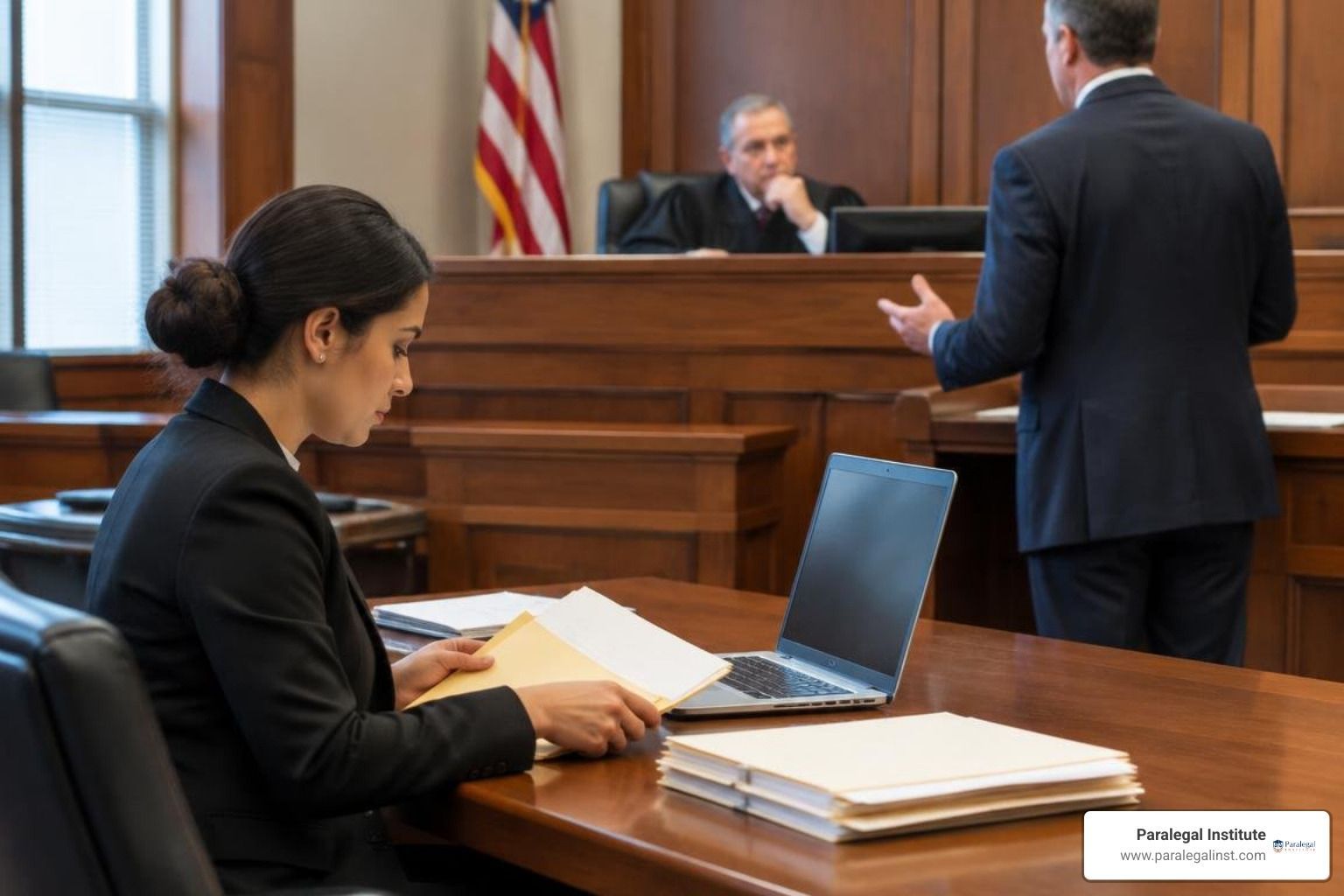
Paralegal training taught by professionals gives aspiring legal staff practical instruction from people who understand how law firms handle real casework. The strongest programs pair clear lessons with job-ready skills, such as drafting legal documents, organizing discovery, managing deadlines, communicating with clients, and working within legal ethics rules.
For adults seeking a faster, affordable route into the legal field, look for training that includes:
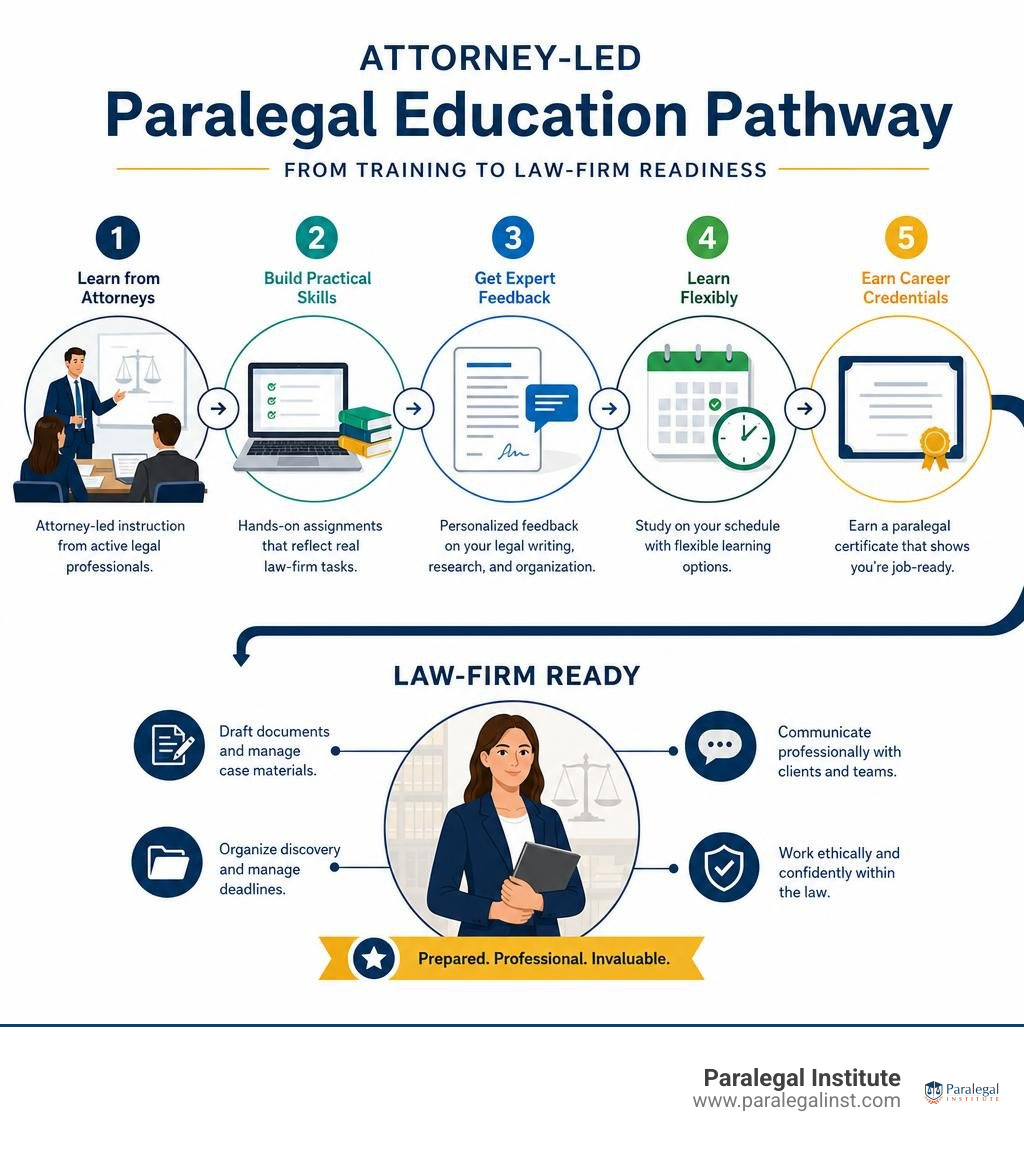
- Attorney-led instruction from lawyers with active legal practice experience.
- Hands-on assignments that reflect real law-firm tasks, not just textbook theory.
- Direct feedback on legal writing, research, document review, and case organization.
- Flexible learning options that fit work and family schedules.
- A paralegal certificate that demonstrates focused, career-ready legal training.
I am Matthew Pfau, a practicing U.S. attorney who teaches paralegal courses at Paralegal Institute, and I have hired, trained, and taught paralegals throughout my legal career. My perspective on paralegal training taught by professionals comes from seeing which skills help new legal professionals contribute to casework from day one.
Key Benefits of Paralegal Training Taught by Professionals
When you learn the law from those who practice it daily, you gain more than academic knowledge-you gain a clear understanding of how law offices operate. Paralegal training taught by professionals bridges the gap between abstract statutes and daily law-firm duties.
Why Attorney-Led Instruction Elevates Paralegal Training Taught by Professionals
Learning directly from practicing attorneys changes how legal concepts are absorbed. When an active lawyer explains court procedure or contract drafting, the lesson is grounded in real experience rather than hypothetical textbook examples.
Attorneys know exactly what they expect from their support team. They understand which mistake in a pleading causes a filing rejection, how improper handling of discovery creates court sanctions, and why precise formatting matters when filing pleadings. Through a professional legal training course, practicing legal instructors share practical insights that textbooks cannot capture.
Professional instruction also helps students understand where legal rules come from and why accuracy matters in daily casework. For example, public resources from the federal judiciary explain the structure of the United States courts, but attorney-led training shows students how those court systems affect deadlines, filings, pleadings, hearings, and client communication in a working law office.
In our courses, we guide students through genuine legal mentorship. We break down complex procedural rules into step-by-step actions that prepare students to enter any legal environment with confidence.
Practical Application in Paralegal Training Taught by Professionals
Theory alone does not prepare someone to handle client files or assist in trial prep on day one. A job-ready program prioritizes practical application over pure lecture.

Through hands-on legal training, students build practical experience by working through authentic legal scenarios. Key areas of focus include:
- Document Drafting: Preparing complaints, answers, motions, subpoenas, and settlement agreements.
- Discovery Management: Organizing document productions, drafting interrogatories, and indexing deposition transcripts.
- Legal Ethics & Confidentiality: Understanding client confidentiality, conflict checks, and keeping clear boundaries between administrative tasks and providing legal advice.
- Trial & Hearing Preparation: Assembling exhibit binders, organizing witness files, and preparing court calendars.
By working on realistic casework assignments, students develop direct familiarity with the core tools and tasks used in modern legal practice.
Understanding Paralegal Program Standards and Quality Metrics
Evaluating educational options requires looking beyond program titles and examining how well a course prepares graduates for actual workplace demands.
Professional Training Criteria and Program Quality
A high-quality curriculum should reflect current legal procedures and standards. When evaluating a program, prospective students should look closely at key quality metrics:
- Instructor Background: Are classes taught by active legal professionals who work with paralegals every day?
- Curriculum Design: Does the course focus on actionable legal skills and real-world application?
- Instruction Format: Is there direct, live interaction with instructors, or is the course merely self-guided reading?
- Efficiency & Focus: Does the structure allow career-minded adults to complete their training efficiently without taking on unnecessary general education courses?
Comprehensive legal office training prepares students to step smoothly into private practice, corporate legal departments, or government agencies.
Verifying Program Credibility and Reputation
Prospective students should thoroughly research any educational institution before enrolling. High-quality programs demonstrate transparent standards, clear course outlines, and a track record of workforce-ready graduates.
When evaluating programs, consider:
- Faculty Credentials: Verify that instructors hold legal degrees and maintain active professional standing.
- Practical Focus: Review syllabus details to confirm that course time is spent completing real legal assignments.
- Graduate Readiness: Look for programs designed specifically to build job skills valued by managing partners and office administrators.
Practical vs. Theoretical Paralegal Programs
Traditional multi-year academic programs often focus heavily on legal history, political theory, and general studies coursework. While academic, these broad topics do not always provide the daily execution skills managing attorneys look for when hiring.
Practical certificate programs, on the other hand, focus directly on core competencies, enabling students to master practical casework in months rather than years.

| Feature | Practical Certificate Program | Traditional Theoretical Program |
|---|---|---|
| Primary Focus | Hands-on document drafting, discovery, procedural skill-building | Academic legal theory, historical perspectives, general education |
| Instructor Type | Practicing attorneys with direct field experience | Full-time academic professors or tenured faculty |
| Time Commitment | Accelerated timeline tailored for career-focused adults | Two to four years of full-time study |
| Career Readiness | Immediate ability to assist with law firm casework | Deep theoretical background, requiring extensive on-the-job training |
Targeted legal support staff training ensures every lesson directly supports job placement and long-term performance.
Comparing Online and In-Person Legal Training Formats
Modern legal education offers options that fit varying schedules and learning preferences while maintaining high instructional standards.
Program Credentials Valued by Legal Employers
Employers prioritize applicants who demonstrate practical competence, attention to detail, and a strong understanding of attorney support roles. A practical certificate earned through rigorous instruction shows law firms that a candidate has mastered fundamental legal tasks.
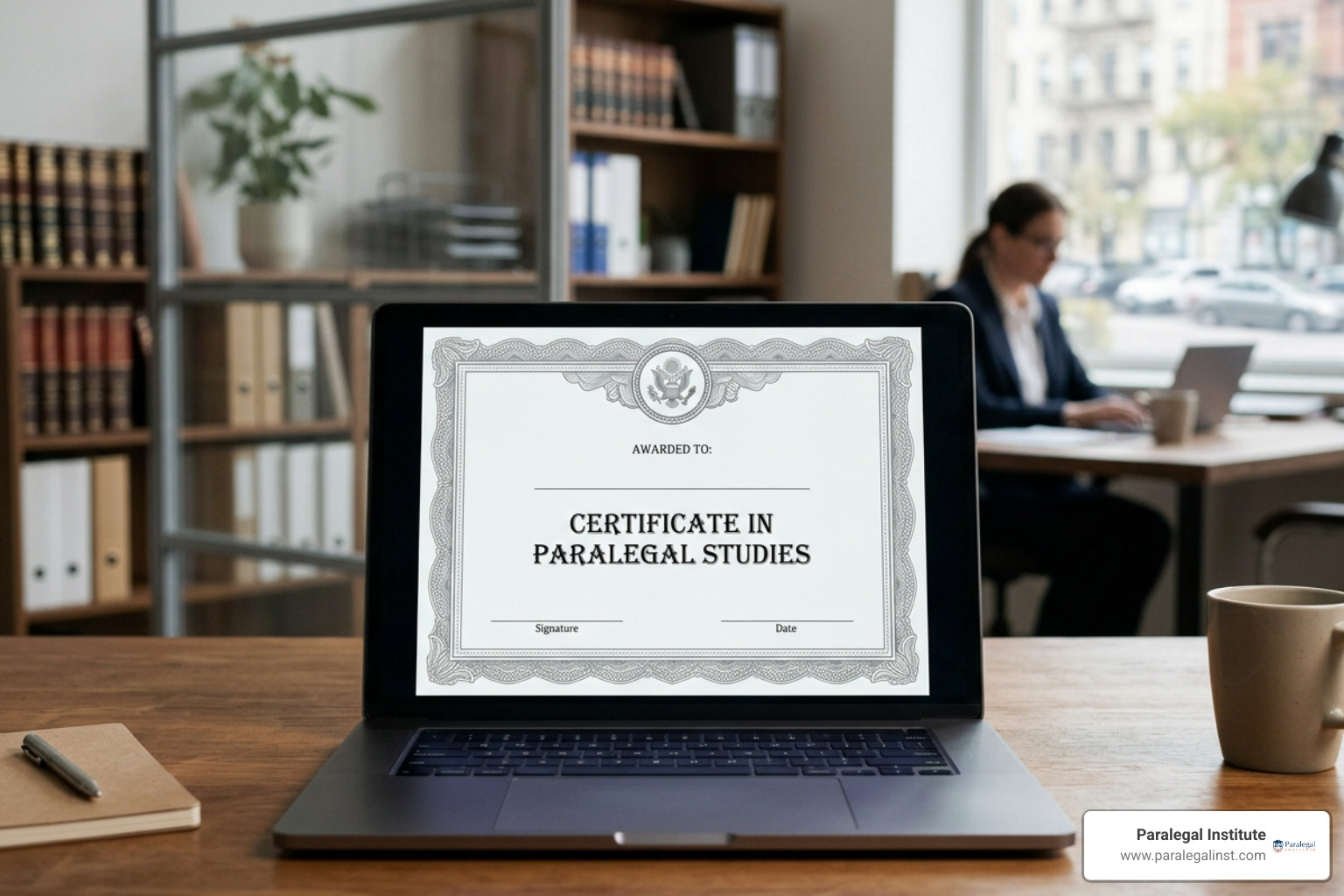
When enrolling in a paralegal skills training program, adult learners build a portfolio of completed work—such as legal research memos, court pleadings, and discovery logs—that directly proves their capability to prospective employers.
Quality and Flexibility in Online Paralegal Programs
Many adult learners require flexible scheduling options to balance education with career or family commitments. We offer two clear format choices: in-person classes and an online format featuring live instruction.
Our online format gives students real-time interaction with practicing attorney instructors without requiring a daily commute. Live online sessions preserve the collaborative atmosphere of a physical classroom while delivering the convenience of distance learning.
Through paralegal training online, students engage in discussions, ask real-time questions during legal lectures, and receive prompt feedback on their casework. Experience with digital tools during learning through paralegal training online also prepares students for modern law offices, which rely heavily on digital document workflows and remote communication.
Frequently Asked Questions About Professional Paralegal Training
How do I evaluate the quality of a professional paralegal program?
Focus on faculty qualifications, instructional delivery, and course content. Look for programs taught by practicing attorneys who bring real legal experience into the classroom. Ensure the curriculum includes hands-on tasks like document drafting, trial prep, and discovery organization, rather than relying exclusively on multiple-choice quizzes or theory reading.
What types of paralegal certificates do employers prefer?
Law firms and corporate legal departments value certificates that demonstrate direct, practical skill development. Employers appreciate graduates who understand office procedures and require minimal baseline training. Programs focused on building practical skills in paralegal training help candidates stand out during interviews by demonstrating immediate office readiness.
Are online paralegal courses taught by attorneys as effective as in-person classes?
Yes, provided the online format includes live instruction rather than self-guided reading modules. Live online training allows students to participate in discussions, ask questions as legal concepts are presented, and receive direct guidance on their legal writing. Mastering digital tools while acquiring key skills on paralegal training mirror the actual digital environment of modern law firms.
Conclusion
At Paralegal Institute, we believe the fastest path into a legal career comes from learning directly from practicing legal professionals. Our programs are designed and taught by experienced attorneys who know exactly what skills are needed in today's law firms.
We offer an accelerated 15-week hands-on training program available in two distinct formats: in-person classes and live online instruction. Both formats deliver direct interaction with practicing legal professionals, active document drafting practice, and direct feedback on real casework assignments.
Whether you are seeking a career transition or looking to enter the legal field for the first time, our goal is to provide a fast, practical, and highly focused path to career readiness. Ready to take the next step? Explore our Accelerated Online Paralegal Program and start building your legal career today.