
Why Understanding the Paralegal Course Curriculum Matters
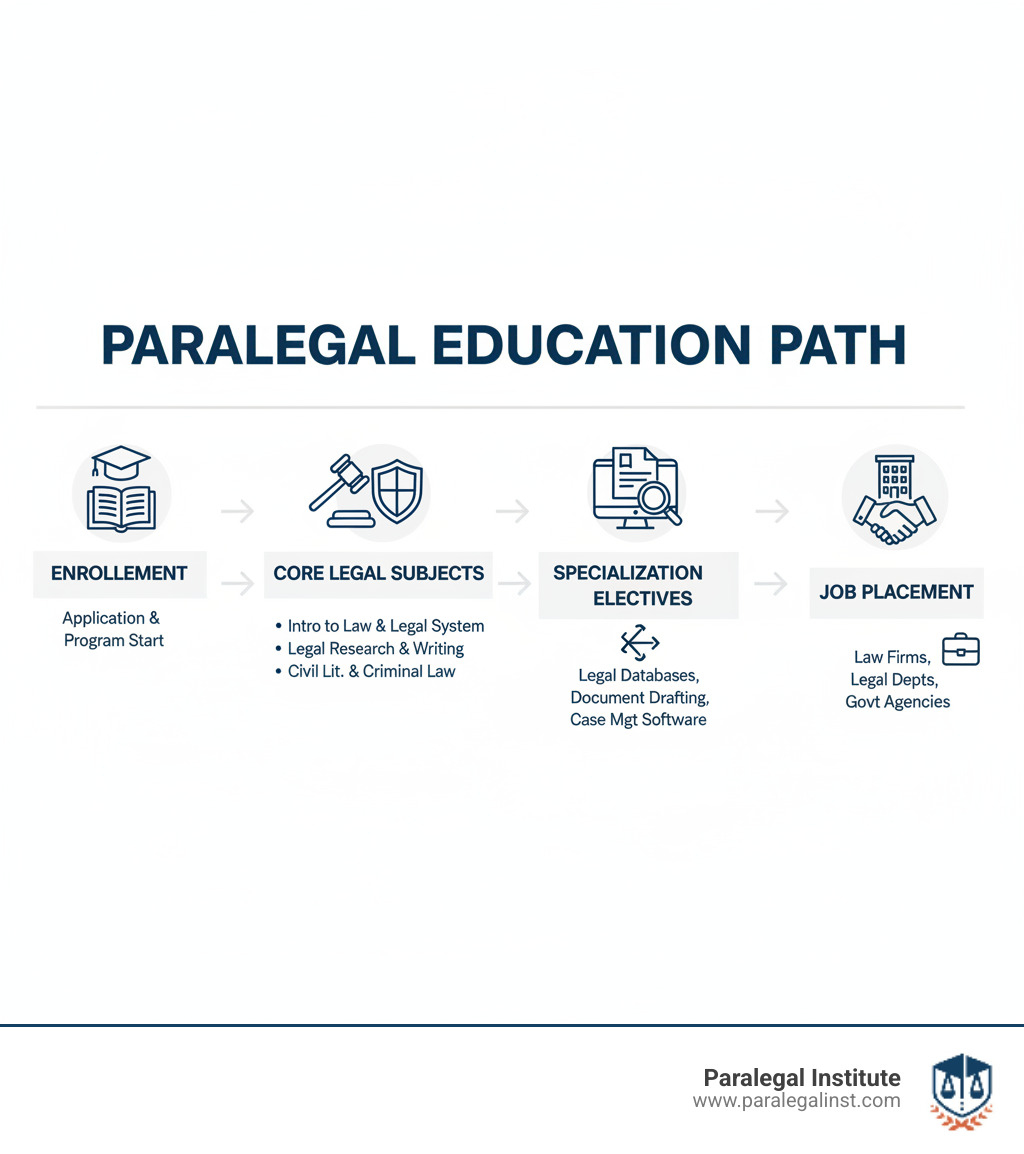
A paralegal course curriculum is your roadmap to the legal profession. A comprehensive program provides both the foundational knowledge and the practical skills that employers expect. Here's what you'll typically find:
Core Legal Subjects:
- Introduction to Law and the American Legal System
- Legal Terminology and Research Methods
- Civil Litigation and Criminal Law Procedures
- Contract Law, Family Law, Estate Planning, and Torts
- Ethics and Professional Responsibility
Essential Skills Training:
- Legal research using databases like Westlaw and LexisNexis
- Legal writing and document drafting
- Client interviewing and case investigation
- Law office technology and case management
Formal training is a critical foundation for success. A structured curriculum bridges the gap between classroom learning and real-world legal work. For example, one graduate now helps file motions, a practical skill learned in their program. A well-designed program emphasizes hands-on application through document preparation, legal research exercises, and case analysis—not just textbook learning.
I'm Matthew Pfau, and I've spent years hiring and training paralegals in my law firm. This inspired me to develop a comprehensive paralegal course curriculum at Paralegal Institute, focusing on the exact skills new paralegals need to succeed from day one.
The Foundation: Core Subjects in a Paralegal Program
Every great paralegal career starts with mastering the fundamentals. These core subjects in a paralegal course curriculum build your legal toolkit, giving you the essential knowledge to assist attorneys effectively.
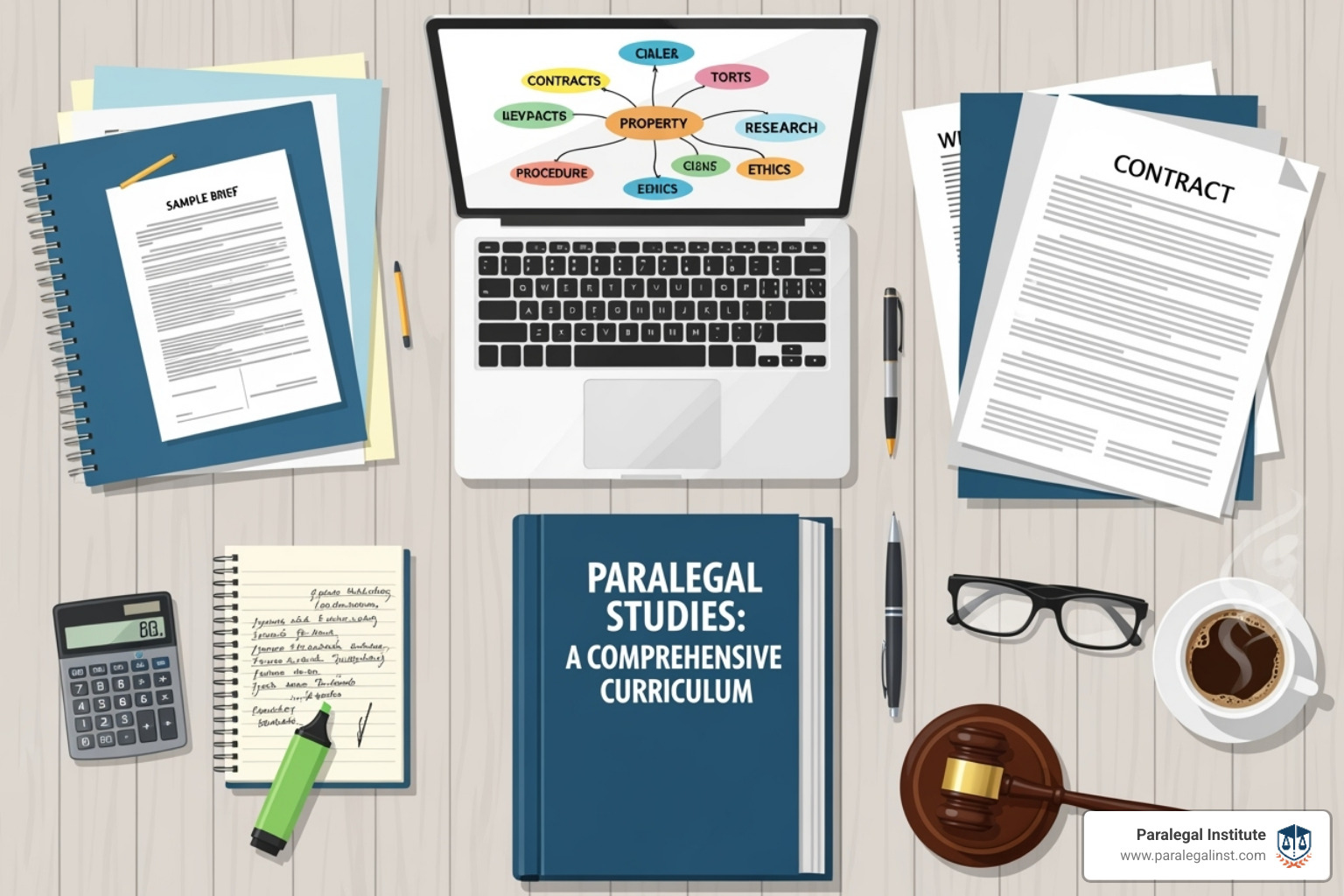
Your journey begins with an Introduction to Law and The American Legal System, where you'll learn how courts and laws interact and where paralegals fit in. Legal Terminology teaches the precise language of the law, building confidence in your communications.
From there, you'll dive into specific practice areas:
- Torts and Personal Injury covers civil wrongs and how people seek compensation for damages.
- Contract Law teaches you to analyze agreements to ensure they are enforceable and to spot potential issues.
- Criminal Law and Procedure provides insight into the justice system, from investigation through trial, where procedural details are critical.
- Civil Litigation, a cornerstone of paralegal education, walks you through the lawsuit process, from client interviews to trial preparation. You'll learn to draft pleadings, manage findy, and organize case files.
Our approach emphasizes practical application. You'll use legal concepts in realistic scenarios, preparing documents, researching cases, and developing the problem-solving skills attorneys depend on. Ready to explore these subjects? Check out more info about our courses.
The Cornerstone of the Profession: Ethics and Professional Responsibility
Ethics and Professional Responsibility is more than a required course; it's the foundation of a successful legal career. This training develops the critical thinking needed to analyze complex situations and uphold the integrity of the profession.
Key concepts include:
- Unauthorized Practice of Law (UPL): You'll learn the crucial boundaries between paralegal duties and those of a licensed attorney, protecting yourself, your firm, and your clients.
- Client Confidentiality: This covers attorney-client privilege and how to protect sensitive data in both digital and physical formats.
- Conflicts of Interest: Our training gives you the tools to identify potential conflicts before they become serious issues.
- Professional Conduct: These principles guide your interactions within the legal system, emphasizing competence, honesty, and integrity.
The legal profession places enormous trust in paralegals, and that trust is built on ethical practice. When you understand and follow these principles, you become an invaluable member of any legal team. Want to strengthen your analytical abilities? Learn more about Developing Critical Thinking Skills in Paralegal work.
From Theory to Practice: Building Essential Paralegal Skills
Successful paralegals apply their knowledge to real-world situations. Our paralegal course curriculum emphasizes turning theoretical understanding into practical, job-ready skills.
Our hands-on approach means you'll draft pleadings and conduct case investigations, not just read about them. This practical focus builds confidence, preparing you for tasks like filing motions and managing client communications from day one. That's the power of Hands-on Legal Training.
Mastering Legal Research and Writing
Legal research and writing are the backbone of paralegal work. Our curriculum treats these as foundational skills requiring serious practice. You'll learn to:
- Use legal research methods to find the exact statutes, case law, and regulations for any legal matter.
- Master online databases like Westlaw and LexisNexis, from basic searches to advanced techniques like "Shepardizing" to validate legal authorities. You'll also learn about professional usage governed by documents like the WESTLAW User Agreement.
- Cite legal sources properly using standard formats to ensure your work meets professional standards.
- Draft legal documents, including complaints, motions, and contracts.
- Write clear, persuasive memos and briefs, distilling complex legal concepts into usable documents for attorneys. Our focus on Improving Your Legal Writing Skills in Paralegal Courses develops precision and clarity.
Integrating Legal Technology
Today's paralegals work in a digital environment. Our curriculum ensures you are proficient with legal technology that makes work faster and more efficient. You'll get hands-on experience with:
- Law office software and case management systems for organizing information and tracking deadlines.
- E-discovery tools for efficiently managing electronic evidence like emails and digital documents.
- Document management systems for securely storing, tracking, and retrieving legal documents.
The principles you learn provide a foundation to adapt to evolving legal technology. Learn more from our resource on Legal Technology for Paralegals.
Developing Client and Case Management Skills
Legal work is about people. Our curriculum prepares you for this crucial human element of legal practice. You'll learn:
- Client and witness interviewing techniques to gather information effectively while making people feel heard and supported.
- Case investigation methods to systematically gather facts, analyze evidence, and uncover details to strengthen your team's position.
- Document organization systems for both physical and electronic files to keep vast amounts of case information accessible and prevent important data from getting lost.
These skills apply to overall workflow management. Our resource on Strategies for Paralegals to Stay Organized offers more insights.
Understanding the Paralegal Course Curriculum Structure
Understanding the structure of a paralegal course curriculum helps you choose the best option for your goals. Modern paralegal education is flexible, with an option for everyone. Programs offer both online and in-person delivery. Online programs offer flexibility to learn from anywhere, while in-person programs suit those who prefer a traditional classroom.
Wondering if online learning fits your style? Check out Is Online Paralegal Training Right for You to help guide your decision.
Prerequisites and Admission Requirements
The barriers to entry for paralegal education are low, making the profession accessible to career changers and those new to the legal field. No prior legal experience is needed, as programs start from the beginning.
Common admission requirements include:
- High school diploma or GED
- Completion of basic prerequisite courses like English Composition
- Computer and internet access for online programs
The application process is typically straightforward. Getting started means Setting Expectations for your educational journey.
A Closer Look at the Paralegal Course Curriculum Timeline
Understanding the timeline for your paralegal course curriculum helps you plan your career transition. Typical program lengths vary; some take one to two years, while accelerated programs, like our 15-week program at Paralegal Institute, get you job-ready sooner.
Full-time and part-time study options allow you to choose a pace that fits your life. Full-time is faster, while part-time offers more flexibility for managing work and family responsibilities. Many students find our resources on Balancing Work and Paralegal Schooling helpful.
Tailoring Your Expertise: Electives and Specializations
Tailoring Your Expertise: Electives and Specializations within your paralegal course curriculum allows you to align your education with your career goals, making you more valuable in the job market. The importance of specialization is becoming a go-to expert, as law firms seek paralegals with focused training in specific areas.
Aligning electives with career goals means choosing courses that match your interests. This focused approach helps you stand out to employers. We offer guidance on Identifying Paralegal Programs for Your Career Goals.
Common Areas of Legal Specialization
Our paralegal course curriculum includes electives that let you dive deep into popular specialization paths:
- Litigation: This popular specialization is for those who enjoy the strategy of preparing cases for court. Advanced courses cover managing complex findy and organizing trial exhibits.
- Corporate and Business Law: This area involves mergers, acquisitions, and compliance. You'll learn to draft corporate documents and support business transactions, which can lead to an Entry Level Corporate Paralegal position.
- Family Law: This specialization requires legal knowledge and emotional intelligence to handle sensitive cases like divorces and custody disputes with compassion.
- Real Estate Law: In this field, you'll handle property transactions and learn in-demand skills like title searches, property transfers, and zoning regulations.
- Wills, Trusts, and Estates: This detail-oriented work focuses on helping people with future planning and is meaningful as you help families preserve their legacies.
The Role of Internships and Field Experience
The Role of Internships and Field Experience bridges the gap between classroom learning and professional practice. Gaining real-world experience provides a look into the legal profession and helps solidify what you've learned.
Internships may be optional or required, but they are always a valuable investment in your career, often leading to job offers or professional references. The networking opportunities are also invaluable, as you'll meet professionals who can become mentors or future employers.
Finding placements is manageable, as many programs offer assistance. We encourage students to consider these opportunities, and you can learn more at Paralegal Internship Opportunities.
Frequently Asked Questions about Paralegal Education
Choosing a paralegal course curriculum is a big decision, and it's normal to have questions. Here are answers to some of the most common ones.
How does a paralegal program prepare you for specific areas of law?
A great paralegal course curriculum blends broad foundational knowledge with focused, specialized training. The curriculum structure begins with core courses in the American legal system, research, writing, and ethics. These are the essential tools you'll use daily.
Then, through elective courses, you can specialize in areas like family law or corporate compliance. These electives include practical assignments and case studies that mirror real-world scenarios, ensuring you develop the judgment and skills to contribute from day one.
How are practical skills like legal research and writing taught in an online format?
Online learning can significantly improve practical skills. Modern online programs provide access to professional online research databases like Westlaw and LexisNexis. Instructors guide you through real research challenges, teaching you to find and evaluate information in the same digital environment you'll work in.
Legal writing skills are built through interactive assignments with detailed instructor feedback. As a result, our online graduates often feel more confident in their research and writing skills. Learn more at Legal Research in Online Paralegal Programs.
What are the typical learning outcomes of a paralegal program?
Completing a comprehensive paralegal course curriculum provides you with a specific set of professional competencies that employers seek. These practical skills will make you an indispensable part of the legal team. Key outcomes include:
- Drafting legal documents: You'll confidently prepare everything from client letters to complex pleadings, understanding the 'why' behind the structure and language.
- Conducting legal research: You'll learn to efficiently find and verify case law, statutes, and regulations to support legal arguments.
- Understanding ethical obligations: You'll learn to recognize conflicts of interest, maintain client confidentiality, and stay within the boundaries of paralegal practice.
- Managing case files: You'll develop systems for tracking deadlines, organizing findy materials, and maintaining detailed records to keep cases moving forward.
- Assisting attorneys: You'll learn to add value by anticipating needs and taking initiative, allowing attorneys to focus on strategic legal work.
Conclusion
Understanding the paralegal course curriculum is the first step to changing your career. We've covered the foundational subjects and hands-on skills that make you invaluable to a law office, from legal research and writing to ethics training and specialized electives.
The value of comprehensive and practical education is clear. A hands-on approach means you'll learn to draft documents, interview clients, and manage cases, so you can start your first job with confidence. Programs that focus on practical application from day one make the difference, turning you into the paralegal employers want to hire.
At Paralegal Institute, we've built our entire approach around this philosophy. Our accelerated, hands-on training gets you job-ready in just 15 weeks, taught by legal professionals who work in the field every day. They know exactly what skills you need because they use those same skills in their own practices.
We believe in getting you where you want to go—quickly, effectively, and with the confidence that comes from truly understanding your craft. Your legal career is waiting, and we're here to help you claim it.
Ready to start your change? Explore our Accelerated Paralegal Programs and take that first step toward the legal career you've been dreaming about.