Why Paralegal Litigation Support is the Backbone of Modern Legal Practice
Paralegal litigation support is the specialized legal work that helps attorneys manage lawsuits from start to finish. As the attorney's right hand, a litigation paralegal drafts court documents, manages the exchange of evidence during discovery, and helps prepare everything needed for trial. This work is crucial for making legal representation more affordable, allowing attorneys to focus on strategy, and ensuring cases run smoothly.
The role requires sharp organizational skills, attention to detail, and the ability to work under pressure. It has also evolved significantly with technology. Modern litigation paralegals use e-discovery platforms, trial presentation software, and AI tools to analyze massive amounts of data. Yet the core mission remains the same: support attorneys in building strong cases while keeping costs manageable for clients.
I'm Matt Pfau, a practicing attorney who has spent years hiring, training, and working alongside litigation paralegals. My experience has shown me how critical skilled paralegals are to successful case outcomes, which is why I'm passionate about training the next generation of legal professionals at Paralegal Institute.
What is Litigation Support and Why is it Crucial?
Litigation is the process of resolving disputes through the court system. For attorneys handling these cases, the workload of developing strategy, advocating in court, and managing thousands of details can be overwhelming. This is exactly why paralegal litigation support is essential to modern legal practice.
Paralegal litigation support covers the practical work that keeps a lawsuit moving forward, from filing a complaint through the final verdict. We handle the critical groundwork, organization, and analysis that attorneys need to represent their clients effectively. While attorneys give legal advice and represent clients in court, we execute their instructions, manage the massive amount of casework, and prepare the documents and evidence that bring cases to life. This division of labor makes the legal system work efficiently.
Our work touches every phase of a lawsuit. We manage cases by tracking deadlines and documents, organize evidence, and prepare for trial so attorneys walk into the courtroom with every piece of information at their fingertips. This detailed work requires the kind of critical thinking we emphasize in our training— developing critical thinking skills in paralegals that make them indispensable.
The Paralegal's Role in Driving Cost-Effectiveness
Every client cares about legal fees. Litigation is expensive, and this is where skilled paralegal litigation support makes a dramatic difference. Attorneys bill at significantly higher hourly rates than paralegals. When we handle tasks like document review, legal research, and organizing evidence, we provide the same quality work at a fraction of the cost. This is smart resource allocation.
Consider the hours spent responding to discovery requests, preparing for depositions, and organizing exhibits. A skilled paralegal can handle most of this workload, preventing attorneys from billing their higher rates for tasks we complete just as effectively. The result is lower legal fees and more accessible representation.
Our organizational skills create even more value. We implement efficient systems for document management and calendaring that keep cases moving smoothly. We teach our students the strategies for paralegals to stay organized even when handling multiple complex cases. This streamlined workflow reduces wasted time, improving both the law firm's profitability and client satisfaction.
Ethical Considerations and Professional Standards
Working in paralegal litigation support comes with serious ethical responsibilities. We are bound by strict professional standards designed to protect clients and maintain the integrity of the legal profession.
Client confidentiality is paramount. We handle sensitive information and must keep all case details strictly confidential, including protecting attorney-client privilege. A breach can have severe legal consequences.
The unauthorized practice of law (UPL) is another critical boundary. We work under the direct supervision of an attorney and are prohibited from giving legal advice, representing clients in court, or setting legal fees. Our role is to assist, not to act as lawyers.
Professional conduct means being honest, diligent, and competent. We must follow all court rules and procedures, ensuring filings are timely and accurate. In legal work, attention to detail is an ethical requirement, as a missed deadline can devastate a client's case. We teach the importance of attention to detail in paralegal work through practical exercises that mirror real-world legal practice.
The Core of Paralegal Litigation Support: From Discovery to Trial
The journey of a lawsuit unfolds in distinct stages, from the initial filing to the final verdict. As paralegal litigation support professionals, we are involved in every scene, ensuring each transition happens smoothly.
The litigation process flows from pre-trial tasks into the intensive discovery phase, then builds toward trial preparation and sometimes extends into post-trial work. Our contributions are essential to keeping each phase moving forward effectively.

Key Tasks in Pre-Trial and Discovery
The pre-trial phase lays the foundation. One of our first tasks is often drafting pleadings —the formal documents that initiate or respond to a lawsuit. While attorneys review and sign these documents, we typically prepare the initial drafts.
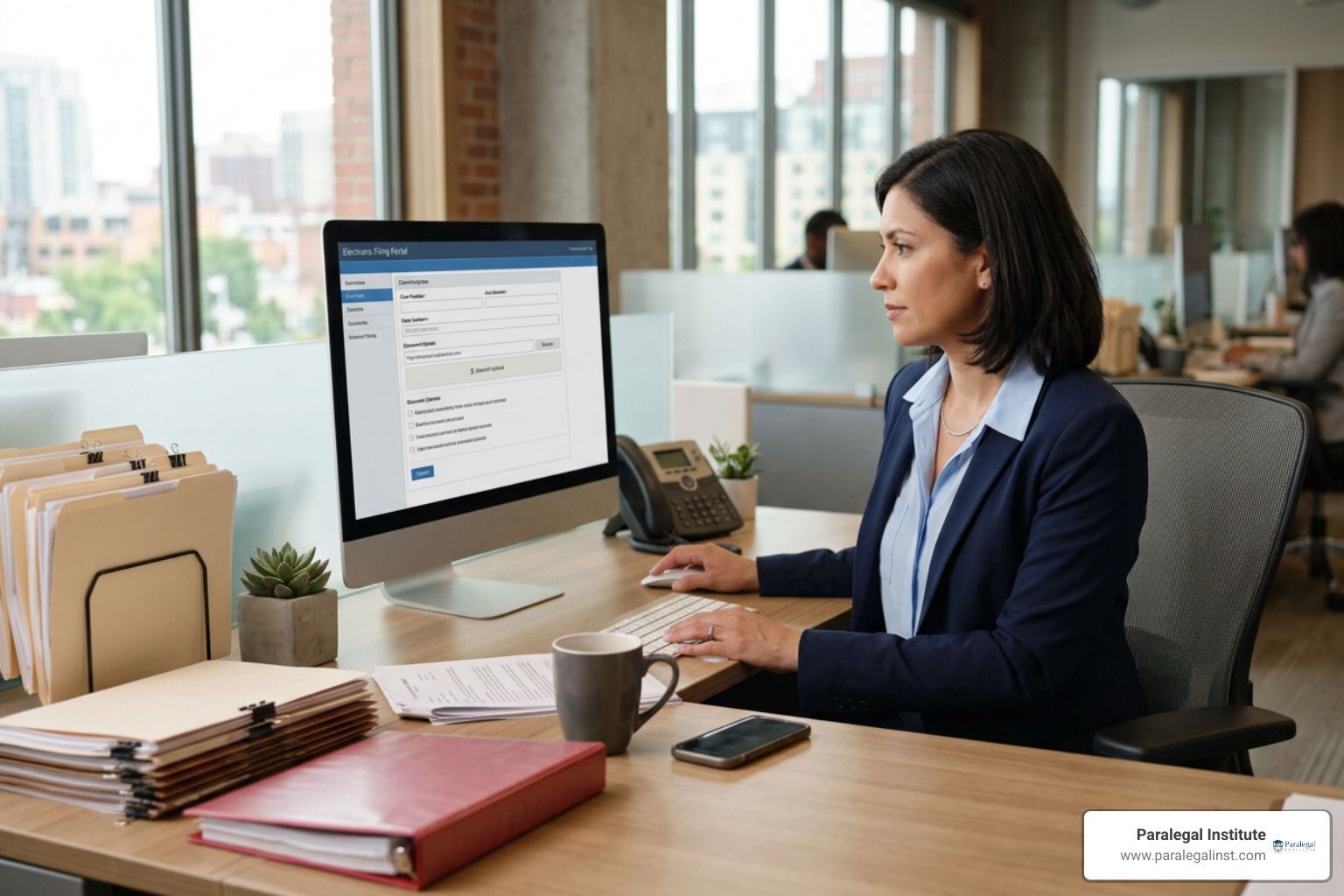
Once pleadings are filed, cases enter the discovery phase, where both sides exchange information and evidence. This is where paralegal litigation support is most intensive. Document review involves examining thousands of documents to identify what is relevant, privileged, or must be produced to the other side. E-discovery has transformed this process, as litigation paralegals now manage vast amounts of electronically stored information—emails, text messages, and digital files—using sophisticated software.
Paralegals also create deposition summaries that distill hours of sworn testimony into digestible highlights for attorneys. The legal research into statutes and case law provides the foundation for legal arguments. The legal research guide for paralegals we provide ensures you develop these essential skills.
Managing case calendars is critical, as missing a single deadline can have severe consequences. Litigation paralegals track filing dates, hearings, and discovery cutoffs with precision. Under attorney supervision, paralegals also conduct witness interviews to gather statements and help shape case strategy.
Assisting in the Courtroom: Trial Preparation and Execution
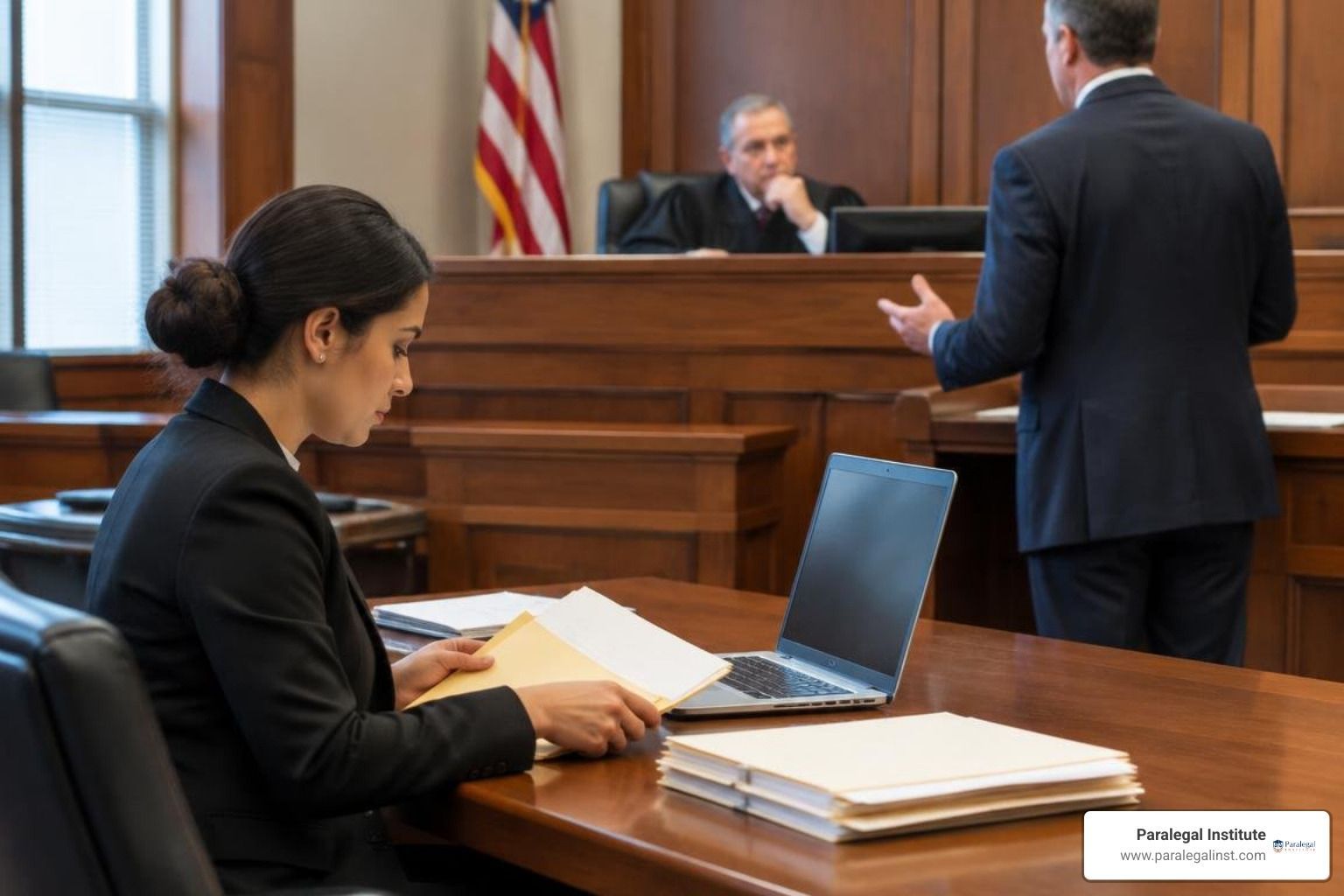
When a case heads to trial, our support role shifts into high gear. Creating trial notebooks is a comprehensive task where we organize every document, exhibit, and witness outline for the attorney's instant access in court. Exhibit management involves identifying, organizing, and preparing every piece of evidence for presentation.
Litigation paralegals are also responsible for coordinating witnesses, ensuring they are prepared and appear on schedule. During jury selection, they assist the attorney by tracking potential jurors' responses to help inform decisions. In modern courtrooms, they often serve as in-courtroom technology operators, displaying documents and video depositions to ensure presentations run flawlessly.
Our comprehensive hands-on legal training at Paralegal Institute prepares you for these high-stakes moments. During trial, we become the attorney's operational partner, managing documents and anticipating needs so they can focus on advocacy and persuasion.
Mastering the Modern Tools of Litigation
The practice of law has been transformed by technology, and nowhere is this more evident than in paralegal litigation support. Today's litigation involves staggering amounts of electronic information, and managing it manually is impossible. This is where e-discovery platforms become indispensable.
These tools allow litigation paralegals to efficiently process, search, and review electronically stored information. They can quickly locate specific documents, identify patterns, and organize massive data collections. Learning these platforms is fundamental to modern paralegal litigation support.
With this digital information comes the serious responsibility of cybersecurity. They handle confidential client data daily, and protecting it from breaches is an ethical requirement. Our comprehensive legal technology for paralegals curriculum ensures you're comfortable with the tools and security practices that define professional legal work today.
The Impact of AI and Automation on the Paralegal Role
When artificial intelligence entered the legal industry, many worried it would eliminate paralegal jobs. In practice, the opposite is true: AI and automation are making skilled paralegals more valuable.
AI excels at repetitive, high-volume tasks. For example, predictive coding helps prioritize which documents in a massive collection are most likely to be relevant, reducing review time and costs. Automated tools can scan thousands of pages in minutes, flagging key terms or finding relevant case law. These capabilities don't replace our judgment—they improve it, freeing us to focus on analysis, strategy, and complex problem-solving. At Paralegal Institute, we incorporate AI tools for paralegals into our curriculum, as we explore in our discussions about AI in the legal field. AI handles the tedious work so you can engage in the interesting work.
Essential Qualifications for a Career in Paralegal Litigation Support
Success in paralegal litigation support requires a specific combination of skills, knowledge, and personal qualities.
- Problem-Solving: Attorneys need team members who anticipate issues and propose practical solutions.
- Communication: You must write clearly and professionally, and interact effectively with clients, witnesses, and court staff.
- Technical Proficiency: Comfort with document management systems, legal research databases, and trial presentation software is non-negotiable. Our paralegal skills program emphasizes this real-world application.
- Organization: Managing hundreds of deadlines and thousands of documents requires meticulous organizational systems.
- Ability to Work Under Pressure: Litigation is demanding. The capacity to remain calm, focused, and efficient when deadlines loom is essential.
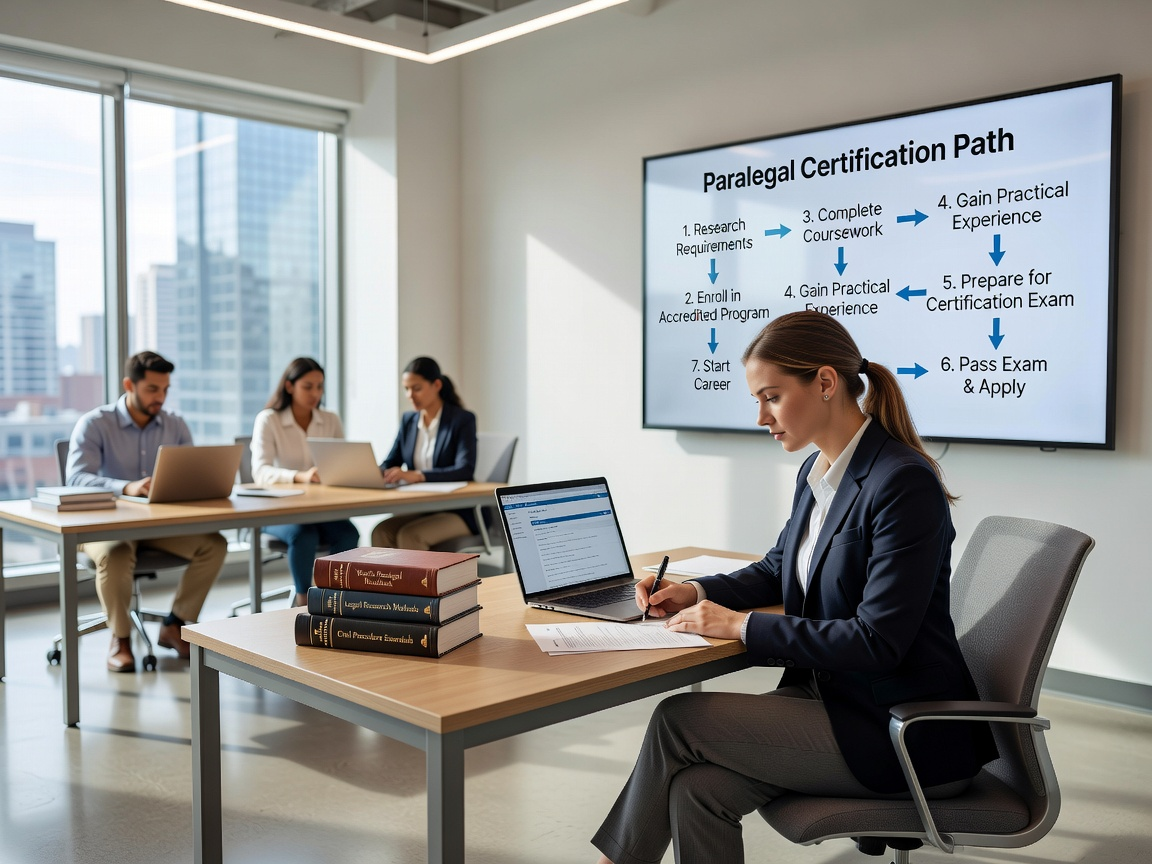
These qualifications are developed through proper training. Our 15-week program, taught by practicing legal professionals, focuses on building these capabilities so you can contribute from your first day on the job.
Frequently Asked Questions about Paralegal Litigation Support
I often hear similar questions from people considering a career in paralegal litigation support. Let's tackle the most common ones.
How does litigation support differ from other paralegal roles?
The biggest difference is that you're working in the middle of legal disputes. A transactional paralegal might help people buy houses or start businesses in a cooperative environment. As a litigation paralegal, you're in an adversarial setting. Your workday is tied to court deadlines, discovery schedules, and trial dates. You'll draft motions to convince a judge and organize evidence to prove your client's case. If you thrive on the energy of competition and resolving disputes, paralegal litigation support might be your calling.
What is the most challenging part of being a litigation paralegal?
This career is demanding. The most consistent challenge is managing tight deadlines that you cannot miss. A missed deadline can seriously harm a client's case. The high-pressure environment is another reality, as litigation often involves significant stakes. You must also manage a massive volume of information, from documents to electronic data, which requires strong technical skills and attention to detail. Finally, the continuous evolution of legal technology means you must always be learning.
These challenges are real, but they're also what make the career rewarding. At Paralegal Institute, we help you build the confidence and resilience to succeed, even addressing topics like overcoming imposter syndrome in paralegal training because mental toughness is as important as technical knowledge.
What is the career outlook for litigation paralegals?
The career outlook for paralegal litigation support professionals is strong. As long as there are legal disputes, there will be a need for skilled litigation paralegals.
Law firms recognize that hiring talented paralegals is smart business. We provide high-quality work at a lower cost than attorneys, which creates consistent, high demand. The field is also growing as cases become more complex. According to data from the Bureau of Labor Statistics, the paralegal profession offers solid career prospects.
This career also offers opportunities for specialization in areas like personal injury, intellectual property, or employment law, which can lead to even better career opportunities. The bottom line is that litigation paralegals are indispensable to law firms. Our focused career paralegal education at Paralegal Institute prepares you to step into this vital role.
Conclusion
The world of paralegal litigation support is where meticulous detail meets strategic thinking and your contributions directly impact real people's lives. At every stage of the litigation lifecycle, paralegals serve as the essential foundation that allows attorneys to build winning cases.
This career is not for the faint of heart. It involves tight deadlines, large volumes of information, and high-pressure situations. But for those who thrive on challenge and take pride in precision, paralegal litigation support offers the chance to be indispensable.
The legal field is evolving with technology, and the demand for skilled litigation paralegals who can blend traditional legal knowledge with modern technical proficiency continues to grow. Attorneys need professionals who can think critically and understand the ethical responsibilities of the role.
Success comes down to preparation. Law firms expect new hires to arrive with practical skills. They need someone who can organize a complex case file, draft a deposition summary, or manage e-discovery efficiently. This is exactly what we focus on at Paralegal Institute.
At Paralegal Institute, you can choose the format that fits your life: online with live instruction or in-person classes. Our accelerated, hands-on training delivers real-time learning, practical skills, and job readiness quickly—making it a smart, affordable path into the legal field with strong job placement support.
Our accelerated program provides hands-on training with live instruction from practicing legal professionals—attorneys like me who know what law firms are looking for. In just 15 weeks, you'll gain the real-world experience to become competitive in today's legal marketplace.
If you're ready to launch a career where your skills truly matter, paralegal litigation support might be your calling. We're here to help you get there.
Learn more about our Legal Support Staff Training and take the first step toward your future in the legal field.