Why Paralegal Program Reviews Matter More Than Marketing Promises
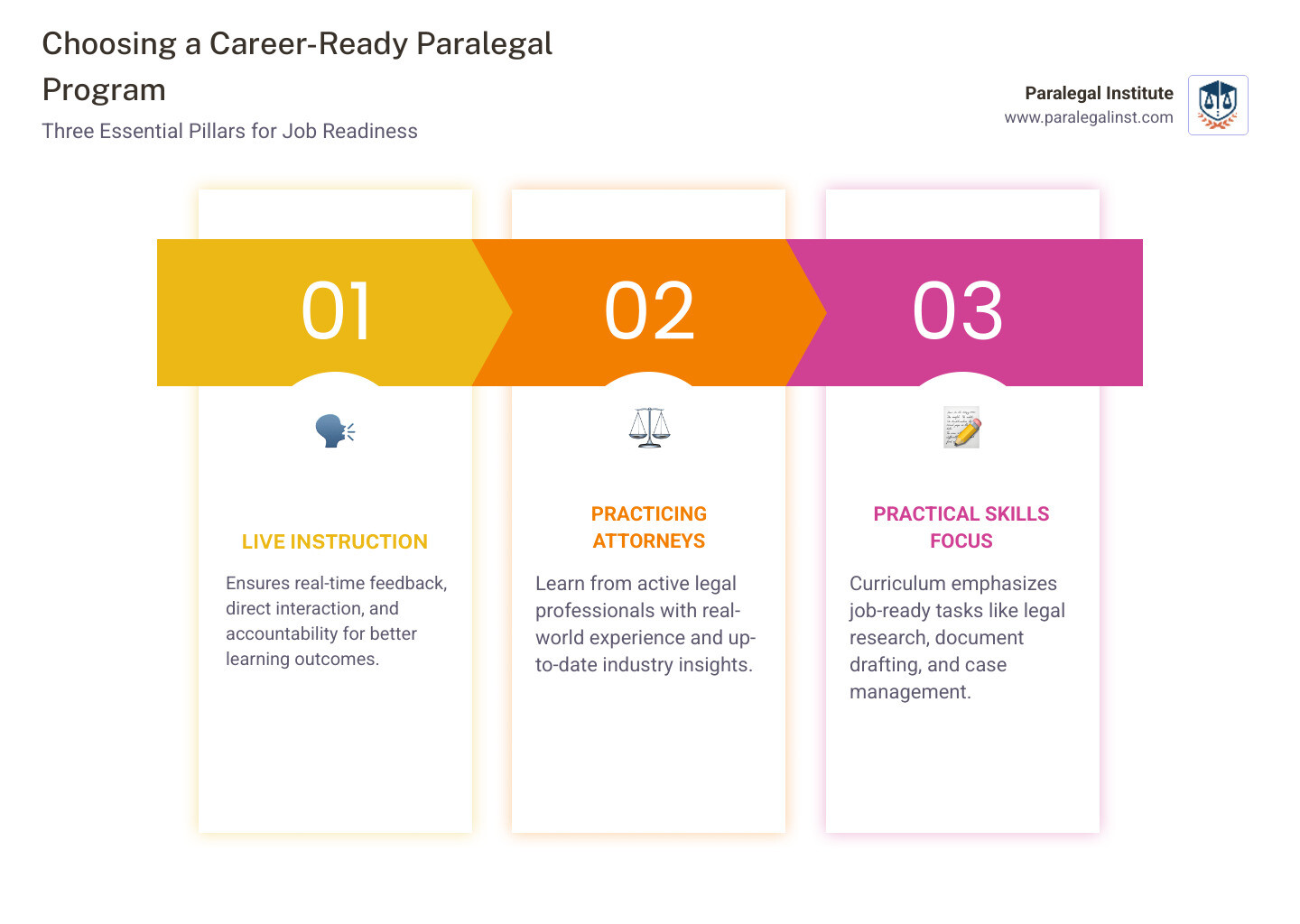
Paralegal program reviews can help you find the right training path, but only if you know what to look for. Here's what matters most when evaluating programs:
Key Factors in Program Reviews:
- Live instruction vs. self-paced- Real-time interaction with instructors leads to better learning outcomes.
- Practical skills focus- Job-ready training in legal research, document drafting, and casework.
- Instructor credentials- Practicing attorneys teaching current, real-world legal practice.
- Program length- Accelerated options that get you career-ready faster.
- Career preparation- Training that matches what employers actually need.
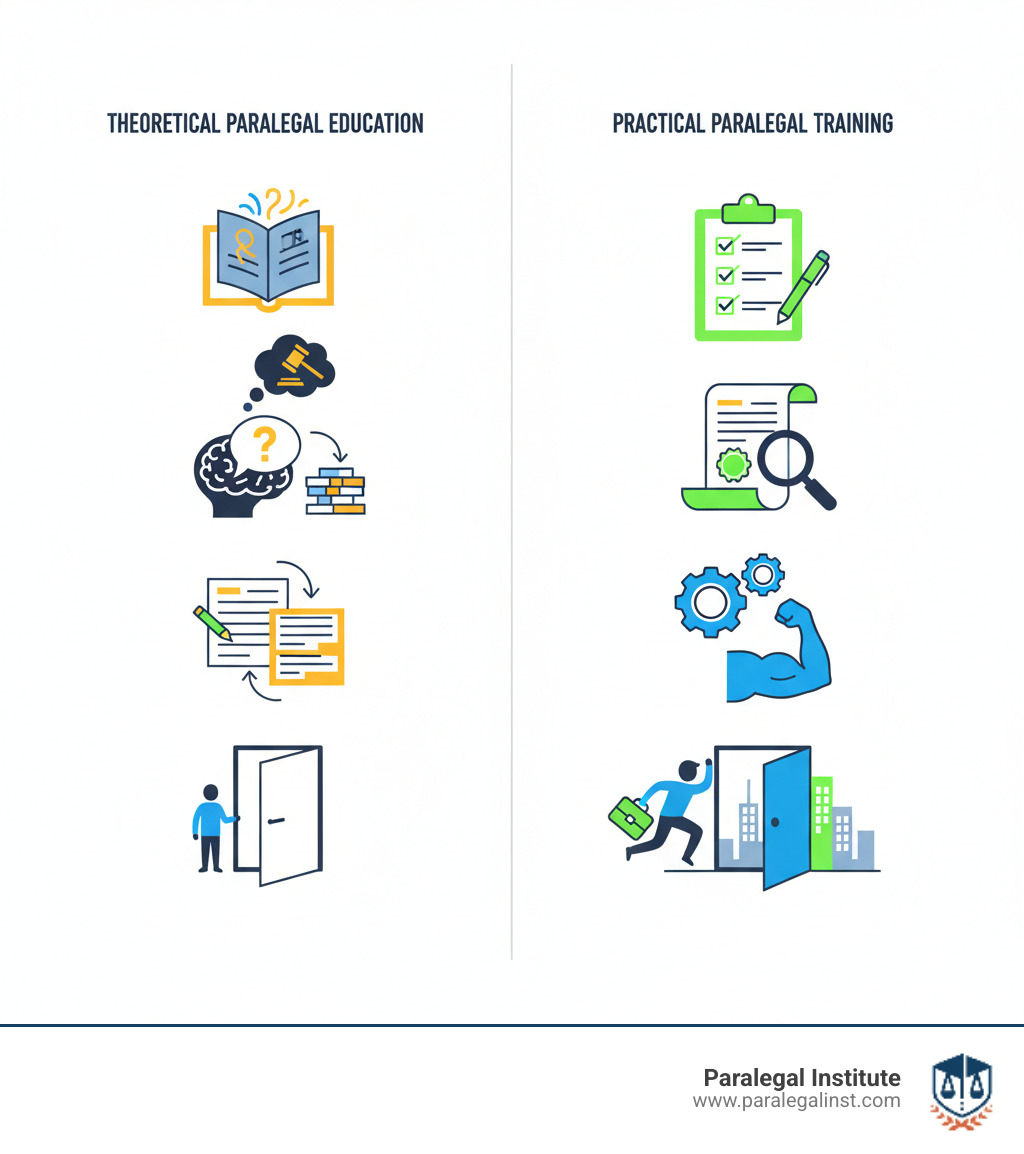
An effective program must teach the fundamental skills needed to provide legal services, which is the difference between theoretical coursework and practical, job-ready training.
Most reviews focus on surface details like cost or campus life. What really matters is whether you'll be ready for a law firm on day one. Can you draft a complaint? Conduct legal research? Manage case files? The gap between what paralegal school teaches and what the job requires is real, and the best programs bridge it before you graduate.
I'm Matthew Pfau, a practicing attorney who owns a law firm and teaches at the Paralegal Institute. After years of hiring and training paralegals, I developed our curriculum to focus on the practical skills you'll use in your legal career. This guide will show you how to read between the lines of paralegal program reviews and identify training that prepares you for real legal work.
Understanding Your Path: Focused Training vs. Traditional Programs
When exploring paralegal education, you'll find two main options: focused, skills-based programs and longer, traditional academic programs. Choosing the right path can save you years and help you start earning sooner.
Traditional programs are broad. They can take years to complete and include general education requirements alongside legal courses. While they provide a broad academic foundation, much of the coursework won't directly help you draft a complaint or conduct legal research, especially if you already have other education or life experience.
A focused paralegal program is different. It's laser-focused on preparing you for a law office. No required courses on ancient history or college algebra - the legal knowledge and hands-on skills you'll use daily as a paralegal.
The time difference is significant. While traditional programs take years, our program at the Paralegal Institute gets you career-ready in just 15 weeks. You could start your legal career this year, not years from now.
For career-changers, this focused approach is ideal. You invest specifically in legal training that translates directly to job readiness, rather than paying for education you already have. The return on investment is clear: less time in school means lower costs and faster entry into the workforce. You start earning while others are still in class.
At the Paralegal Institute, our program is for adults who want results. Our curriculum focuses exclusively on the practical skills law firms need. You'll learn legal research, document drafting, discovery procedures, and case management from practicing attorneys who know what works in real legal practice.
This career-focused approach is why many paralegal program reviews emphasize focused programs for those serious about entering the legal field quickly. It's the most direct route to your goal.
If you're weighing your options, our comprehensive guides can help: Paralegal Program or Degree: The Ultimate Guide and Pros and Cons of Focused Paralegal Programs. They explain why a focused program might be your fastest, most practical route into the legal profession.
Live Instruction vs. Self-Paced: What Paralegal Program Reviews Reveal

When reading paralegal program reviews, note how instruction is delivered. The difference between live instruction and self-paced learning is about effectiveness, not just convenience.
Self-paced programs seem flexible, but that flexibility has a hidden cost. Without scheduled classes and real-time interaction, you're essentially teaching yourself. When you hit a confusing legal concept, there's no one to immediately clarify it. You can't raise your hand and ask for another explanation.
At the Paralegal Institute, we know live instruction works better. We offer both online classes with live instruction and in-person classes, ensuring real-time engagement. In class, you actively participate, ask questions the moment they arise, and learn from your classmates' questions, too.
Imagine learning legal research or discovery procedures from a pre-recorded video. If something doesn't click, you're left to rewind or search online. In a live class, you simply ask. Your instructor - a practicing legal professional - clarifies it on the spot. That immediate feedback is invaluable.
Live classes also provide accountability, a factor reviews often overlook. Scheduled class times keep you engaged and on track, ensuring you absorb the material instead of procrastinating. This structure builds the confidence to handle real casework because you've learned with constant guidance and feedback.
If you're considering online learning, our guides can help: Is Online Paralegal Training Right For You? and Effective Learning in Online Paralegal Schools. The key takeaway is that live instruction - online or in-person - provides the interaction and feedback necessary for true job readiness.
The Ultimate Checklist for Analyzing Paralegal Program Reviews
Reading paralegal program reviews can be overwhelming. Many focus on minor details, but what matters is whether a program prepares you for a legal career. As an attorney who hires and trains paralegals, I know what separates job-ready graduates from those who struggle. Here are the quality indicators that genuinely matter.
Factor 1: Program Length and Flexibility
Most people don't want to spend years in school. That's why we designed our 15-week program at the Paralegal Institute. An accelerated program offers focused, intensive training without filler courses, getting you into the workforce faster. But speed isn't everything. Flexibility is also key. A quality program should offer full-time and part-time options to accommodate work and family responsibilities, allowing you to reach your career goals efficiently without putting your life on hold. For more on accelerated paths, see Fast Online Paralegal Program.
Factor 2: Curriculum: Practical Skills vs. Legal Theory
This is where most paralegal program reviews miss the mark. They mention topics like 'legal research' but don't clarify if you're learning to do these tasks as required in a real law office. Legal theory is interesting, but on your first day, an attorney will hand you a case file and expect you to know what to do. Real-world skills are what matter. Can you conduct legal research using professional databases? Draft a complaint that meets court requirements? Understand the discovery process well enough to prepare document requests? At the Paralegal Institute, our curriculum is built around these practical applications to ensure job-readiness. We explore this in Building Practical Skills in Paralegal Training, and you can learn more in our Legal Research Guide for Paralegals.
Factor 3: Instructor Credentials: Who's Teaching You?
Who is teaching your class may be the most important factor for your career preparation. At the Paralegal Institute, every instructor is a practicing attorney. This is a core principle of our teaching. Learning from someone active in the legal field provides a current, real-world perspective that textbooks can't offer. Practicing attorneys bring fresh case examples, explain the 'why' behind procedures, and teach the unwritten rules of legal practice. This creates invaluable mentorship opportunities and ensures you receive up-to-date industry knowledge, reflecting the profession as it exists today.
Factor 4: Job-Readiness: What Reviews Don't Always Say
Reviews mention career prospects but rarely define what "job-ready" means. It's about contributing meaningfully from day one. The U.S. Department of Labor projects demand for skilled paralegals - those with critical thinking and problem-solving abilities. True career preparation comes from hands-on experience with real tasks: drafting professional documents, managing case files, and understanding legal procedures. It also includes professional conduct, client communication, and ethics. At the Paralegal Institute, our training aligns with what employers need, making you an asset from your first day. This focus on applicability builds confidence, as we discuss in Developing Critical Thinking Skills in Paralegal. You can learn more about the profession's outlook at The Paralegal Profession.
Essential Skills Employers Demand (And Your Program Must Teach)

As an attorney who hires paralegals, I know what makes someone valuable: what they can do with real casework. When reading paralegal program reviews, look for evidence that these essential skills are taught through hands-on practice, not just theory.
- Legal research: The foundation of all legal work. You must be able to locate and analyze relevant statutes, case law, and regulations. This is learned by doing, not just reading.
- Legal writing: Exceptional paralegals write clearly and accurately. Every document, from client correspondence to discovery requests and court filings, reflects on the firm.
- Critical thinking: Attorneys need paralegals who can analyze facts, spot issues, and contribute to case strategy - thinking several steps ahead, not just following instructions.
- Organization: You will manage multiple cases with strict deadlines. Missing a deadline can have serious consequences, making strong organizational skills fundamental.
- Communication skills: You will interact with stressed clients, court staff, and opposing counsel. Clear, professional communication is essential for building trust and moving cases forward.
- Attention to detail: A single error in a contract or brief can damage a case. Meticulousness is what makes a paralegal indispensable. Learn more in our guide on the Importance of Attention to Detail in Paralegal Work.
- Technology proficiency: Modern law offices require comfort with legal software, e-filing, and emerging AI tools. Proficiency makes you more efficient and valuable. See where the profession is heading in AI in Legal Field.
At the Paralegal Institute, our curriculum develops these skills through hands-on training. You don't just learn about legal research and drafting; you do it, receiving feedback from practicing attorneys. This ensures you are capable, not just knowledgeable, upon graduation.
Frequently Asked Questions about Choosing a Paralegal Program
Choosing a paralegal program is a significant decision. As an attorney who teaches and hires paralegals, I've heard most of the common questions. Here are the answers.
How do I know if a paralegal program is high-quality?
Look past marketing and focus on what matters for your career. A high-quality program has three key features:
- A practical curriculum that teaches you how to perform legal research, draft documents, and manage casework, rather than focusing only on theory.
- Instructors who are practicing attorneys. They provide current, real-world insights that are essential for your training.
- A live learning format(online or in-person) that allows for real-time interaction, questions, and immediate feedback.
These indicators separate programs that truly prepare you from those that don't. For more guidance, read Identifying Paralegal Programs for Your Career Goals.
Is a focused, skills-based program enough to get a paralegal job?
Yes, absolutely. For many, a focused program is the smartest path. Employers care about one thing: can you do the job? A focused program teaches you the exact skills needed—legal research, document drafting, case management. This is especially true for career changers who already have other education or professional experience. Our 15-week program at the Paralegal Institute offers career-focused training and is the fastest path to employment in the legal field. You can be working in months, not years. We explore this in Focused Paralegal Program Without a Degree: Best Path.
What matters more: the school's name or the skills I learn?
Skills matter more than the school's name, every time. When I hire a paralegal, I'm not focused on where they went to school; I'm focused on what they can do. Can they conduct legal research? Draft an accurate document? Manage a case file? Your demonstrable skills and job-readiness are what get you hired. A prestigious name might open a door, but practical skills are what allow you to walk through it and succeed. Attorneys need paralegals who can contribute immediately. Focus on acquiring the skills that make you excellent at your job—that's the investment that pays off. Learn more about building these abilities in Skills on Paralegal Training.
Conclusion: Making Your Final Decision
Choosing the right paralegal program is about more than just reading through paralegal program reviews and picking the one with the highest star rating. It's about understanding what truly prepares you for a successful legal career and making a strategic investment in your future.
Throughout this guide, we've explored the key factors that separate career-ready programs from those that leave graduates unprepared for real legal work. Live instruction with practicing attorneys, a curriculum focused on practical skills over theory, accelerated pathways that get you working faster, and training that directly addresses what employers need – these are the elements that matter.
At the Paralegal Institute, we built our 15-week program around these principles because I've seen what works. As an attorney who hires paralegals and teaches them, I know the gap that exists between traditional academic programs and the actual demands of a law office. Our students learn to draft real legal documents, conduct thorough legal research, and manage casework because that's what they'll do on their first day of work.
Your paralegal education should be a bridge to your career, not a detour. It should equip you with demonstrable skills that make you invaluable to any legal team. When you learn from attorneys who are actively practicing, you gain insights that no textbook can provide – the practical wisdom that comes from years in courtrooms, law offices, and client meetings.
If you're ready to take a direct, efficient path into the legal profession with training that prioritizes your job-readiness, we'd be honored to guide you. Our program is designed to get you career-ready quickly, without sacrificing the quality and depth of skills you'll need to succeed.
Take the next step in your paralegal career