
Why Understanding Paralegal Tuition Cost Matters for Your Career Investment
Paralegal tuition cost varies widely depending on the program type you choose—and understanding these costs upfront is essential for making a smart investment in your legal career. Here's what you need to know:
Quick Cost Comparison:
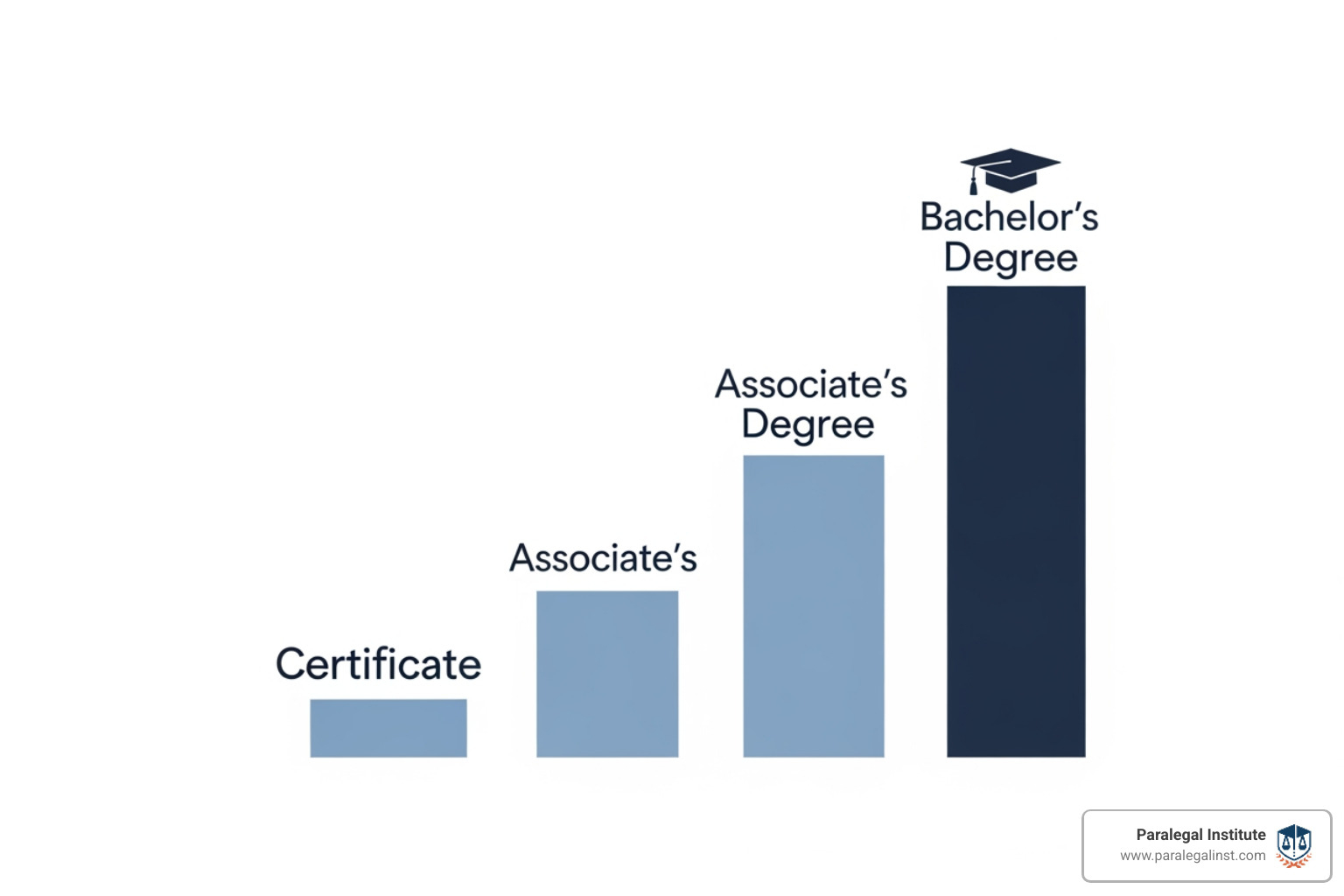
| Program Type | Typical Cost Range | Time to Complete |
|---|---|---|
| Certificate | Lower overall tuition than most degree programs | Typically 15 weeks |
| Two-Year Program | Higher overall investment than certificate programs | About 2 years |
| Four-Year Program | Highest total educational investment | About 4 years |
The numbers tell an important story even without specific price tags: certificate programs usually offer the fastest, most affordable path into the legal field, while degree programs require significantly more time and money—often without delivering faster career entry.
For career-focused adults, the choice isn't just about tuition. It's about return on investment. A shorter program means less time out of the workforce, fewer fees, and quicker access to paralegal positions. Yet many prospective students get caught up comparing institutions without understanding what they're actually paying for—or what hidden costs lurk beyond the advertised tuition.
The right educational choice balances cost, time commitment, and career readiness. Programs that focus on practical legal skills and live instruction, rather than years of general education requirements, deliver better value for aspiring paralegals who want to start working sooner, not later.
I'm Matthew Pfau, a practicing U.S. attorney who owns a medium-sized law firm and teaches paralegal courses at Paralegal Institute. My experience hiring and training paralegals has shown me what matters most when evaluating paralegal tuition cost: the quality of instruction, the relevance of the curriculum, and how quickly students can enter the workforce. At Paralegal Institute, we offer both in-person classes and online courses with live instruction, so students can interact in real time with practicing legal professionals while building job-ready skills.
Let's break down exactly what you're paying for—and how to fund your paralegal education strategically.

Deconstructing Paralegal Program Costs: What Are You Paying For?
When we look at the paralegal tuition cost, it's rarely a single, straightforward number. Several factors play a significant role in shaping the final price tag of your education. Understanding these elements is crucial for making an informed decision and avoiding any unwelcome surprises down the road.
Firstly, the program length is a major determinant. Naturally, longer programs with more credit hours will generally cost more. Secondly, the institution type matters immensely. Public community colleges often have different tuition structures than private universities, and focused training institutes like ours offer a streamlined, skills-based approach that can impact both cost and curriculum.
We believe in complete transparency. Beyond the headline tuition figure, there can be "hidden fees" that add up. These are the details we'll help you uncover so you can accurately compare options. For a deeper dive into the various types of paralegal programs available, explore our guide on More info about paralegal programs.

Program Length and Type: The Biggest Cost Driver
The type of paralegal education you choose is arguably the most significant factor influencing your overall paralegal tuition cost. The options generally fall into a few categories, including certificate programs and longer degree programs.
-
Paralegal Certificate Programs: These are often the fastest and most direct route into the paralegal profession. They typically focus on core legal skills and knowledge, cutting out years of general education requirements. Certificate programs at community colleges usually require less time and a lower overall investment than degree programs, while university-based certificates often require a higher investment and longer timelines.
Our accelerated paralegal certificate program at Paralegal Institute exemplifies a streamlined, career-focused path, designed to get you into the workforce quickly with practical, real-world skills. We offer both in-person and online options, and our online program uses live instruction so you can ask questions in real time and practice legal skills as you learn. This approach means less time commitment and a lower overall investment compared to longer degree programs.
-
Two-Year Programs: These programs typically take about two years to complete. They blend paralegal-specific courses with general education requirements. While they provide a broader academic foundation, they also extend your time in school and delay your entry into the job market, often at a higher overall cost compared to a focused certificate.
-
Four-Year Programs: A four-year program in legal studies or a related field usually requires a substantially higher total educational investment. These programs include extensive general education courses in addition to legal topics, making them the longest and most expensive option. For many adults whose primary goal is to become a paralegal, this can mean paying for years of coursework that does not directly accelerate entry into a paralegal role.
For adults seeking a focused career change or advancement, a program that prioritizes a career-focused curriculum, live instruction, and practical training over extensive general education usually offers a significantly better return on investment. Our accelerated program is specifically designed to bypass unnecessary coursework, delivering the essential skills you need without the added time and expense. To understand the distinctions further, explore our Paralegal Certificate or Degree Ultimate Guide.
Beyond Tuition: Uncovering the Hidden Costs of Paralegal Education
When budgeting for your paralegal education, it's easy to focus solely on the advertised paralegal tuition cost. However, as an attorney who has shaped legal education and hires paralegals, I can tell you there are often additional expenses that can significantly impact your total investment. We call these the "hidden costs," and recognizing them upfront is key to effective financial planning.
Here are some common additional costs beyond tuition:
- Textbooks and Study Materials: While some programs, like ours, strive to minimize textbook costs by integrating materials into the course or using more cost-effective resources, many programs still expect students to purchase multiple texts.
- Technology Fees: Many institutions charge technology fees to cover the cost of maintaining computer labs, online learning platforms, and other digital resources.
- Student Activity Fees: These fees support various student services and extracurricular activities, even if you're an online student.
- Legal Research Database Access: Access to professional legal research databases like Westlaw or Lexis is essential for paralegal training. While some programs include this in tuition, others might charge an additional fee or expect you to cover it yourself.
- Voluntary Exam Fees: After completing your education, you might choose to pursue voluntary national credentialing exams. These come with their own registration fees.
- Commuting and Parking: For in-person programs, don't forget to factor in the cost of transportation, whether it's gas, public transit fares, or parking fees. These can add up quickly.
At Paralegal Institute, we focus on providing a clear and comprehensive cost structure, aiming to minimize these ancillary expenses so you can concentrate on your studies. For a detailed breakdown of potential costs, refer to our Paralegal Certificate Program Cost Guide. Our goal is to ensure you have a complete picture of your investment and to remain a more practical, cost-effective choice than longer two-year or four-year alternatives.
Your Guide to the Average Paralegal Tuition Cost
Understanding the average paralegal tuition cost is crucial for setting realistic expectations and evaluating the value of different programs. While we can’t list every price point—because institutions change their tuition over time—we can compare relative cost levels to help you assess your options. The goal isn't just to find the lowest tuition, but the program that offers the best return on your investment in terms of career readiness, live instruction, and practical skills.
Typical Paralegal Tuition Cost for Certificate Programs
Certificate programs, especially those focused on practical skills, represent a highly efficient pathway into the legal field. The paralegal tuition cost for these programs can vary based on the institution and the depth of the curriculum.
Our accelerated paralegal certificate program at Paralegal Institute is designed to be a highly cost-effective option, delivering comprehensive training in a short timeframe. We focus on practical, hands-on legal training taught by practicing legal professionals, with both in-person classes and online courses that feature live instruction. You learn in real time, ask questions on the spot, and practice real legal tasks that mirror law office work. This makes our program an exceptional value for those seeking a direct and efficient path to a paralegal career, especially when compared to longer, more expensive university options that delay your entry into the legal workforce. For more insights into accelerated options, visit our page on Accelerated Paralegal Certificate Programs.
Understanding the Paralegal Tuition Cost for Degree Programs
While certificate programs offer a direct route, some degree programs provide broader academic foundations. However, this breadth comes with a significantly higher paralegal tuition cost and a longer time commitment.
- Two-Year Degree Programs: A two-year degree in paralegal studies typically involves two years of coursework. While these programs include paralegal-specific classes, they also incorporate general education requirements that extend the program duration and overall cost. For many adults who want to move into legal work quickly, this means spending more time in school and postponing full-time paralegal employment.
- Four-Year Degree Programs: A four-year degree in legal studies or a related field is the longest and most expensive option, usually requiring four years of study. These programs include a substantial amount of general education, which can be beneficial for broad academic development but does not necessarily translate into faster hiring or higher responsibility as a paralegal, especially in the early years of your career.
The longer time to completion and the inclusion of general education requirements mean a higher overall investment for degree programs. For career-focused individuals who want to enter the legal field efficiently, our accelerated paralegal certificate program offers a more strategic investment. It provides the essential legal training needed for immediate workforce entry, with live instruction and practical exercises that mirror real casework, allowing you to bypass the extended timelines and higher costs of degree programs.
To align your educational choices with your career aspirations, explore our insights on Identifying Paralegal Programs for Your Career Goals. We focus on providing the practical skills that employers in Las Vegas, NV, and nationwide are looking for, positioning Paralegal Institute as a more practical, career-ready, and cost-effective choice than traditional two-year or four-year academic routes.
How to Fund Your Paralegal Education: A Strategic Approach
Navigating the paralegal tuition cost doesn't have to be a solo journey. There are numerous funding options available, and a strategic approach can significantly reduce your out-of-pocket expenses. We encourage all prospective students to explore every avenue, from federal aid to scholarships and employer assistance. Building a comprehensive funding plan is just as important as choosing the right program.
At Paralegal Institute, our admissions team can help you understand how federal aid may apply to your situation and how to compare net costs across different program types.
Paralegal-Specific Scholarships and Grants
Beyond federal aid, scholarships and grants offer strong opportunities to reduce your paralegal tuition cost, as they don't need to be repaid. Many organizations recognize the value of paralegal professionals and offer awards to support aspiring students.
While we recommend exploring a wide range of options, here are some general categories of scholarships you might find:
- Legal Professional Associations: Various legal professional organizations and associations offer scholarships specifically for paralegal students. These can range from smaller awards to more substantial assistance, often requiring an essay, academic merit, or demonstrated financial need.
- Voluntary Exam Fee Support: Some organizations even offer funding specifically to help cover the cost of voluntary national credentialing exams, which can be a significant help as you near graduation.
- State and Local Groups: Many regional legal and educational organizations provide scholarship programs available to students within their geographic area.
Application Tips:
- Start Early: Research and apply for scholarships 6–12 months before your program begins.
- Tailor Your Application: Customize your essays and applications to align with the mission and criteria of each scholarship.
- Gather Recommendations: Secure recommendation letters from professors or employers well in advance.
- Apply Broadly: Even smaller awards add up. Apply for every opportunity you qualify for.
For more information on potential scholarship opportunities or guidance, please contact Paralegal Institute directly for current information on funding resources.
Leveraging Employer and Military Benefits
Sometimes, the best financial aid might come from unexpected places: your current or future employer, or your service to our country. Leveraging these benefits can drastically lower your paralegal tuition cost.
- Employer Tuition Assistance: Many employers, especially law firms or corporations with legal departments, offer tuition reimbursement programs for employees pursuing education relevant to their careers. Under IRS rules, up to a set amount per year in employer-provided educational assistance can be tax-free. If you're currently employed, speak with your HR department about their educational benefits. It's a powerful way to upskill and advance your career while your employer helps cover the costs. We see many students take advantage of this, particularly legal support staff looking to transition into paralegal roles.
- Military Benefits:
For veterans and active service members, a range of educational benefits can help cover paralegal tuition cost.
- GI Bill®: The GI Bill® is a registered trademark of the U.S. Department of Veterans Affairs (VA) and offers substantial educational assistance. Programs like the Post-9/11 GI Bill provide funding for eligible veterans and their dependents.
- Military Tuition Assistance (TA): Active duty service members may qualify for Military Tuition Assistance, which can cover a portion of tuition costs. The exact benefits depend on your branch of service.
- Vocational Rehabilitation and Employment (VR&E): Also known as Chapter 31, this program helps veterans with service-connected disabilities prepare for, find, and keep suitable employment. Paralegal education can be an approved path under VR&E.
We are committed to supporting our military personnel and veterans. For comprehensive details on education benefits offered by the VA, we encourage you to visit the official U.S. government website: More information about VA education benefits. These programs, combined with our accelerated, career-focused training and live instruction, can make paralegal education both accessible and highly cost-effective.
Frequently Asked Questions about Paralegal Program Costs
We understand that you likely have more questions about the paralegal tuition cost and how to manage it. Here are some of the most common inquiries we receive, along with our insights.
Are online paralegal programs cheaper than in-person ones?
The cost difference between online and in-person paralegal programs isn't always straightforward, and it doesn't solely depend on the delivery method. Many factors influence the paralegal tuition cost:
- Institution Type: A university's online program might still require a higher total investment than a community college's in-person program.
- Program Length and Type: As we've discussed, a certificate program will generally be less expensive than a degree program, regardless of whether it's online or in-person.
- Value of Live Instruction: While some online programs offer self-paced, asynchronous learning that might seem cheaper, they often lack the interactive engagement crucial for mastering complex legal concepts and real-world casework.
At Paralegal Institute, our online paralegal program features live instruction. This means real-time interaction with instructors—practicing legal professionals—and classmates, providing a dynamic learning environment similar to an in-person class, but with the flexibility of online access. We also offer in-person classes for students who prefer a classroom setting. We believe this live interaction, in both formats, is invaluable and sets our program apart, offering exceptional value compared to programs that rely heavily on prerecorded content.
Whether an online program is "cheaper" depends on its structure, the institution, and what's included. Always compare the total value, learning experience, and time to completion—not just the base tuition. For more details on what our flexible online program offers, visit our Online Paralegal Program page.
Can I get financial aid for a paralegal certificate if I already have a degree?
This is a common question, especially for career changers. If you already hold a four-year degree, your eligibility for certain types of financial aid will change:
- Pell Grants: As mentioned earlier, Pell Grants are generally not available to students who have already earned a four-year degree, even if they are pursuing a certificate or another undergraduate credential.
- Federal Student Loans: You may still be eligible for federal student loans to cover your paralegal tuition cost, though the specific types and amounts can vary.
- Private Loans: Private educational loans are another option, but they typically have higher interest rates and less flexible repayment terms than federal loans.
This is why we emphasize exploring alternative funding strategies like scholarships, employer tuition assistance, and military benefits, which often have different eligibility criteria and can be very beneficial for those with existing degrees.
Is a more expensive program always better?
As a practicing attorney who hires paralegals, I can confidently say: absolutely not. The price tag of a paralegal program doesn't automatically equate to better quality or superior job prospects. When evaluating the paralegal tuition cost, focus on the return on investment and how well the program aligns with your career goals.
Here's what truly makes a program valuable:
- Practical Skills: Does the program teach you the hands-on legal skills you'll use daily in a law office—such as legal research, drafting, and managing discovery? Our program is designed by practicing legal professionals to ensure our curriculum is immediately applicable to real casework.
- Career Readiness: How quickly can graduates enter the job market? An accelerated program that focuses on essential legal training often provides a faster path to employment than a longer, more expensive degree program with extensive general education requirements.
- Instructor Expertise and Live Interaction: Are your instructors practicing legal professionals who teach in real time and can share current, real-world insights? This practical perspective and live engagement are invaluable and often more impactful than purely academic instruction.
- Program Outcomes: Look at what graduates are doing. Are they finding jobs in legal settings? Are they well-prepared for the demands of the profession?
We design our program, with its accelerated curriculum, live instruction (online and in-person), and focus on real-world casework, to offer exceptional value. We prioritize delivering career-ready legal training efficiently and affordably, ensuring you make a smart investment in your future without unnecessary time or expense. For more on maximizing the benefits of your paralegal education, check out Maximizing Benefits Paralegal Education Programs.
Conclusion: Making a Smart Investment in Your Legal Career
Understanding the paralegal tuition cost is more than just looking at a price tag; it's about making a strategic investment in your future. We've explored how program type, length, institution, and hidden fees all contribute to the overall cost, and how a thoughtful approach to funding can make your legal career aspirations a reality.
The key takeaways are clear:
- Evaluate Program Type Carefully: Certificate programs, especially accelerated ones, often provide the most direct and cost-effective path to becoming a paralegal for career-focused adults. They prioritize practical, job-ready skills over lengthy general education requirements.
- Uncover All Costs: Always look beyond the headline tuition to factor in textbooks, fees, and potential certification exam costs.
- Develop a Funding Plan: Explore all available options, including federal financial aid (understanding FAFSA eligibility differences), scholarships and grants, and employer or military benefits.
- Prioritize Value Over Price: A higher tuition number isn't necessarily better. Focus on programs that offer practical training, live instruction from experienced legal professionals, and a clear path to employment.
At Paralegal Institute, we are dedicated to providing an accessible, high-quality legal education. Our accelerated paralegal certificate program is designed and taught by practicing U.S. attorneys and experienced legal professionals, ensuring you receive practical, hands-on training for immediate workforce entry. We offer both in-person classes and online courses with live instruction, delivering a dynamic and engaging learning experience that prepares you for the demands of real legal work efficiently and affordably.
For adults seeking a fast, affordable, career-ready path into the legal field, Paralegal Institute positions you ahead of traditional two-year and four-year options by emphasizing live learning, practical casework, and faster entry into paralegal roles.
Your journey into a rewarding legal career starts with a smart educational choice. We invite you to learn more about how our program can help you achieve your professional goals.