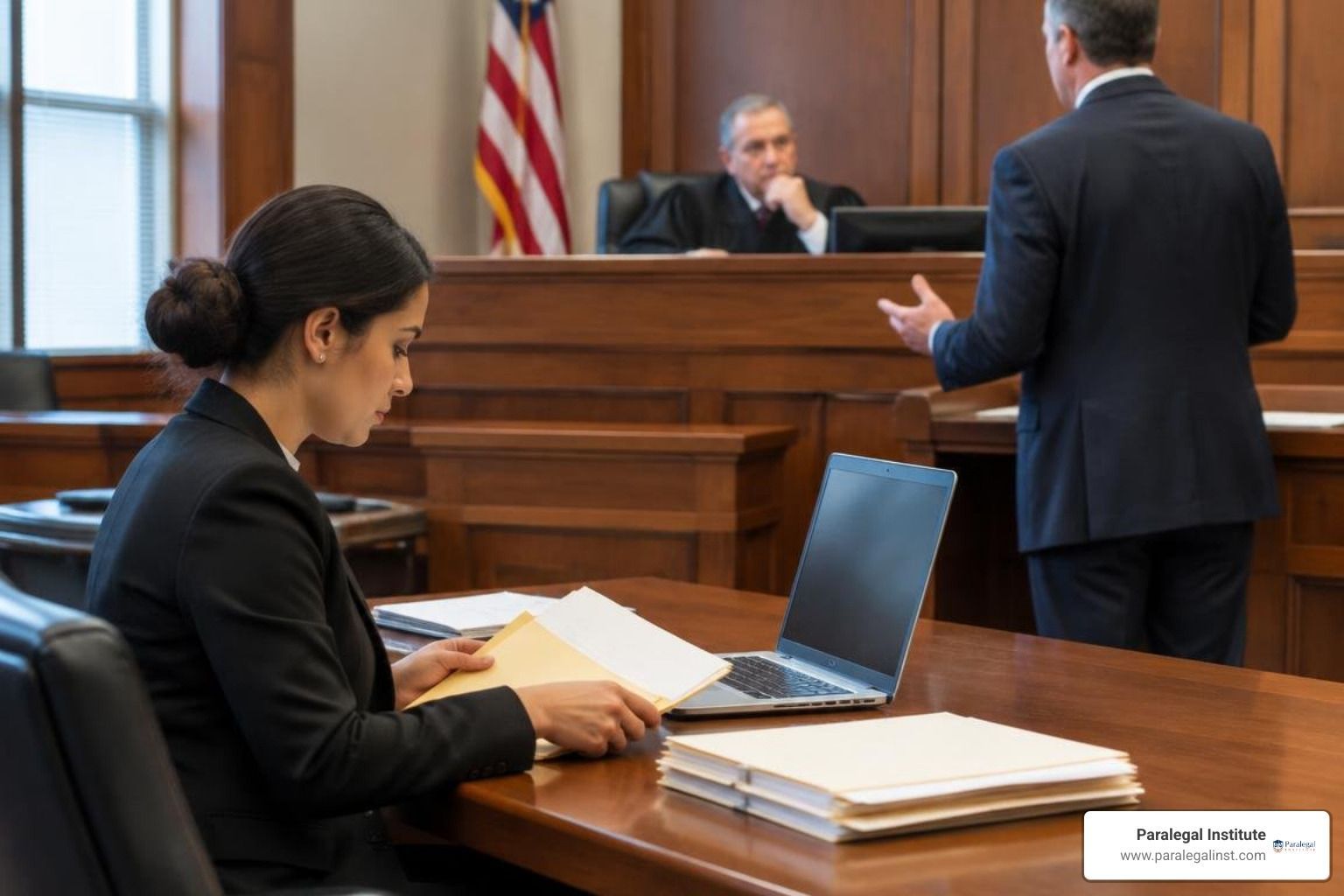
Managing evidence is a key part of a paralegal's job and requires attention to detail and organization. For those aspiring to join the legal field, understanding how to handle evidence efficiently is crucial.
Knowing the ins and outs of evidence management not only equips paralegal students with the skills they need but also sets the stage for a successful career. By building a strong foundation in this area, students can support legal teams effectively and ensure that justice is served accurately.
When you think about evidence in a legal setting, it might seem like a challenging topic. But it doesn't have to be that way. Evidence management involves straightforward practices like categorizing documents and keeping track of where everything is.
These simple steps, if followed properly, can make a huge difference in the legal process. It's like keeping your room tidy, having a place for everything and knowing where to find each piece when you need it makes life a lot easier.
Understanding Evidence Management
Evidence management is the process of organizing, maintaining, and handling evidence so that it can be effectively used in legal proceedings. This includes everything from organizing files to making sure evidence is stored securely. In the field of paralegal work, managing evidence correctly helps avoid any legal missteps and supports the overall integrity of any case.
There are several kinds of evidence that paralegals deal with on a regular basis:
- Physical evidence: These are tangible objects like documents, photographs, or items found at a crime scene. Paralegals often need to ensure these items are logged and stored safely.
- Digital evidence:
This type includes emails, electronic files, or digital photos that need special handling protocols to keep them secure.
- Documentary evidence: Within this category are contracts, written agreements, and any paperwork that supports the facts of a case.
Each type of evidence has its own requirements in terms of organization and handling. Paralegal students should familiarize themselves with the best practices for each, ensuring they can uphold high standards in their future roles.
By understanding the nuances of each evidence type, students can contribute efficiently to their legal teams, ensuring cases run smoothly and are built on a strong foundation. Proper management also reduces stress and increases efficiency, as each piece of evidence is ready to be presented when called upon by legal authorities.
Tips for Organizing Physical Evidence
Handling physical evidence properly is a major aspect of paralegal work. Here, an evidence log becomes your best friend. Maintaining detailed records helps catalog items thoroughly. These logs should include vital details like item descriptions and locations, dates of acquisition, and any related case numbers.
Next, focus on secure storage methods. Ensuring everything is labeled clearly and placed in the right spots is key. This helps prevent any mix-up or loss. Using locking cabinets or secure rooms for sensitive items can make a significant difference. Regularly checking your inventory helps ensure that nothing goes missing. Think of it like keeping track of your library books; knowing what you have and where it is avoids a lot of hassle down the road.
Managing Digital Evidence
Digital evidence presents its own set of challenges, but with the right approach, it can be managed smoothly. Start by setting up clear folder structures so everything is easy to locate when needed. Names should be logical and consistent, reflecting the contents of each file or folder.
Legal software tools come in handy here. Many offer features that organize, label, and securely store electronic files efficiently. While choosing software, look for features that align with your workflow needs. Regular backups, though often overlooked, are crucial. Ensuring duplicates of important files are stored can protect against unexpected data loss. It's similar to having a spare key to your home, it's always good to know there's one available when you need it.
Chain of Custody
Imagine a relay race, where the baton passes securely from one runner to the next. That's how the chain of custody works with evidence. It's all about ensuring the item is tracked and unchanged from collection to courtroom. Maintaining a clear chain of custody is crucial, as it assures the evidence hasn't been tampered with.
Document every step thoroughly. Record who handled the evidence, dates and times of transfers, and the purpose of movements. This documentation can be the linchpin in maintaining the integrity of evidence. Avoiding common pitfalls like incomplete records or mishandled transfers is easy if you stick to stringent procedures. Regular training and reviews can help ensure everyone on the team knows their role in this critical process.
Clear Communication with Legal Teams
Effective communication elevates a paralegal's role significantly. Regular updates and clear language help bridge the gap between paralegals and attorneys. When handling evidence requests, it's vital to listen carefully, clarify any confusion, and deliver information promptly.
Consider these strategies to smooth the communication process:
- Schedule regular check-ins to discuss ongoing cases and updates.
- Use clear, concise language in all communications to avoid misunderstandings.
- Keep thorough records of all interactions related to evidence handling.
Establishing transparent communication can prevent errors and strengthen the support you provide to legal teams. It also creates a positive effect, leading to better case outcomes and a more collaborative work environment.
Enhancing Your Evidence Management Skills
By adopting these strategies, paralegal students can build a strong foundation in evidence management. It's a skill set that not only benefits the individual but also contributes greatly to the legal community. Just like in any craft, continuous improvement and adaptability make all the difference. As you gain more experience, you'll become more proficient and valuable to your team.
Take these tips to heart, practice them diligently, and you'll be well on your way to mastering evidence management in your paralegal career. Remember, being organized and prepared not only paves the way for personal success but also ensures justice is served efficiently and accurately. These skills are your tools for becoming an indispensable member of any legal team.
Enhance your expertise in evidence management and set a solid foundation for your career by pursuing a
paralegal online degree with Paralegal Institute. Our comprehensive program offers the flexibility to integrate learning into your busy lifestyle, delivering the essential skills needed in the legal industry. Begin your journey today and be equipped to handle any challenge in the world of legal support.