Why a Mergers and Acquisitions Paralegal Career Is Worth Your Attention
A mergers and acquisitions paralegal sits at the center of some of the most complex — and high-paying — deals in the business world. From organizing due diligence files to preparing closing documents, this role keeps high-value transactions moving on schedule.
Here's a quick snapshot of what you need to know:
| Topic | Key Facts |
|---|---|
| What they do | Due diligence, document drafting, regulatory filings, closing coordination |
| Experience required | 3-5 years of corporate paralegal experience |
| Where they work | Law firms and in-house corporate legal teams |
| Earning potential | Top-paying paralegal specialty, above the national paralegal average |
| Demand | Most open roles are filled within days |
M&A paralegal work is and detail-driven. Deals involve securities law, antitrust regulations, and coordination with attorneys, investment bankers, and government agencies — all at once. Missing one filing deadline or overlooking a document can derail an entire transaction.
That's what makes this specialty both challenging and rewarding. It's also why employers move quickly when they find the right candidate.
I'm Matthew Pfau, a practicing attorney who owns a law firm and trains paralegals at Paralegal Institute. My hands-on experience hiring and working alongside paralegals — including those who support mergers and acquisitions paralegal work — gives me a real-world perspective on exactly what it takes to land and succeed in this role. Below, I'll walk you through smart, practical strategies to break into this high-demand specialty.
The High-Stakes Role of a Mergers and Acquisitions Paralegal

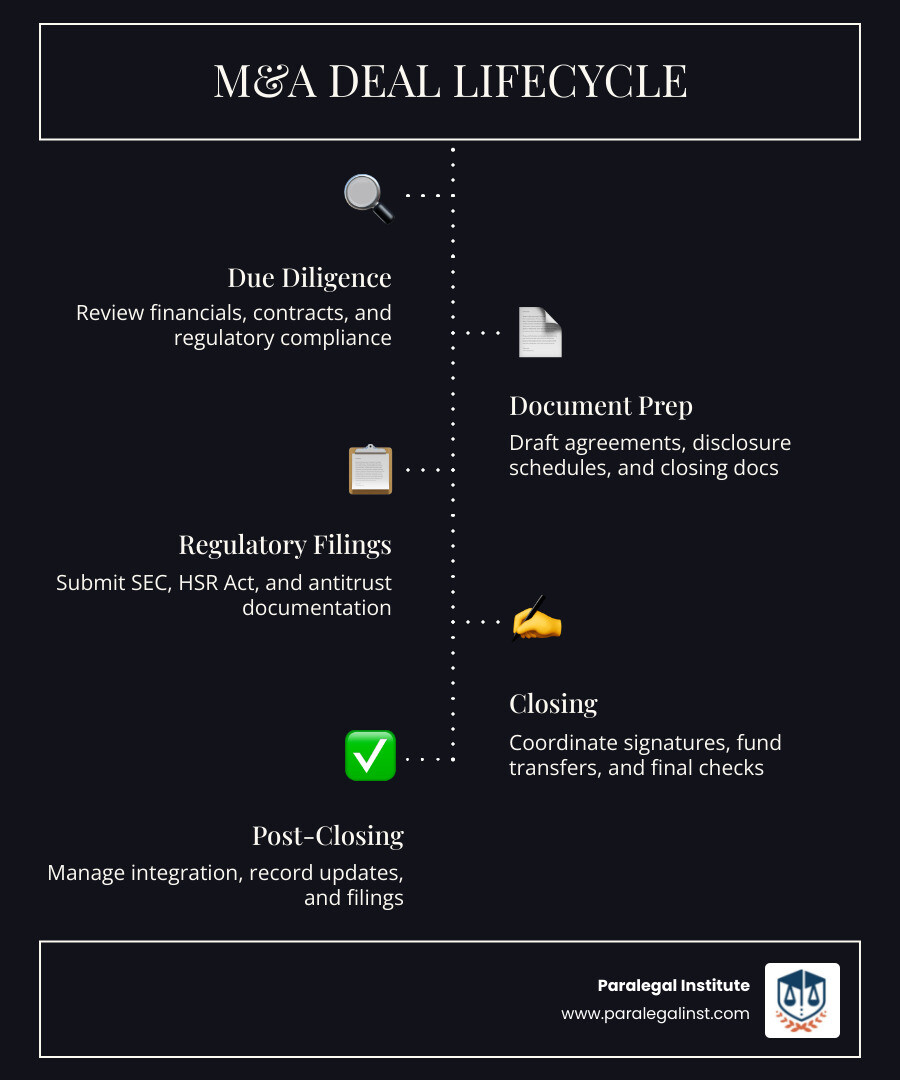
When we talk about the paralegal roles and responsibilities in M&A, we are talking about transaction management at its highest level. A mergers and acquisitions paralegal is the "engine room" of a deal. While the attorneys are negotiating the high-level terms of a merger, the paralegal is ensuring that every moving part—from corporate minutes to tax filings—is in perfect order.
The deal lifecycle is intense. It starts with the letter of intent and moves rapidly into a grueling due diligence phase. As a Mergers & Acquisitions Paralegal, you are responsible for maintaining the closing checklists. These checklists can sometimes feature hundreds of line items that must be "ticked and tied" before anyone signs on the dotted line.
Once the deal "closes," the work isn't over. Post-closing integration is a massive undertaking. We often see paralegals handling the "clean up"—ensuring that stock certificates are issued, name changes are filed with the Secretary of State, and all parties have their final closing binders.
Coordinating with Third Parties
One of the most exciting aspects of this role is the liaison duty. You aren't just sitting in a cubicle; you are the point of contact for:
- Investment Bankers: Coordinating the flow of financial data and ensuring the "data room" is populated.
- Financial Institutions: Managing the payoff of old loans and the filing of new UCC liens.
- Regulatory Agencies: Ensuring that the deal doesn't run afoul of the SEC or antitrust authorities.
Essential Skills and Qualifications for Success

To succeed in this niche, you need more than just a basic understanding of the law. According to our paralegal job description complete guide, M&A roles require a unique blend of analytical thinking and extreme attention to detail.
In May 2026, the standard for a mergers and acquisitions paralegal involves a deep dive into corporate governance. You must understand how entities are formed, how they are structured, and how "written consents" function to authorize a high-value sale. If a board of directors didn't properly vote to approve a deal, that's a legal landmine—and it’s often the paralegal who catches it.
Technical Proficiency for the Mergers and Acquisitions Paralegal
Technology has transformed this role. Gone are the days of physical "war rooms" filled with cardboard boxes. Today, you must be a master of:
- Virtual Data Rooms (VDRs): Platforms where thousands of sensitive documents are hosted and audited.
- SEC Filings: Knowledge of Edgar and other disclosure platforms is a must for public company deals.
- HSR Act Compliance: Understanding the Hart-Scott-Rodino filing requirements for antitrust purposes.
- UCC Searches: Performing and analyzing searches to ensure assets are "clean" of prior debts.
As noted in current Mergers and Acquisitions Paralegal Job in Miami postings, proficiency in legal research platforms like Westlaw or LexisNexis remains a foundational requirement for verifying case law and statutes across different jurisdictions.
Supporting Due Diligence and Regulatory Compliance
Due diligence is the "investigation" phase of any merger. The buyer wants to know exactly what they are buying, and the seller wants to prove their company is worth the price. This is where paralegal resources for law firms become vital.
As an M&A paralegal, you will spend weeks (or months) gathering documents, reviewing corporate minute books, and identifying legal risks. Are there outstanding lawsuits? Are the employment contracts valid? Are the intellectual property rights secured?
| Task | Buy-Side Paralegal | Sell-Side Paralegal |
|---|---|---|
| Data Room | Audits documents for missing info | Populates and organizes all files |
| Review | Identifies "red flags" and risks | Prepares disclosure schedules |
| Checklist | Tracks "conditions precedent" | Ensures all "deliverables" are ready |
| Filings | Prepares HSR and SEC disclosures | Files dissolution or name change docs |
Managing Transactional Documentation
The amount of paperwork in an M&A deal is staggering. You will be responsible for drafting and managing:
- Merger/Purchase Agreements: Assisting attorneys with the various schedules and exhibits.
- Stock Certificates: Canceling old shares and issuing new ones to the buyers.
- Written Consents: Drafting the resolutions for the Board of Directors and Shareholders.
- Closing Binders: The final, organized record of every document signed during the transaction.
Career Trajectories: Law Firms vs. In-House
One of the most common questions I get from students is whether they should work at a law firm or "go in-house." Both paths offer incredible paralegal career information and growth, but the daily experience is different.
Law Firm Life: In a firm, you are usually working on multiple deals for different clients. It is , high-pressure, and involves tracking "billable hours." You get exposure to a wide variety of industries and deal structures (asset purchases, stock swaps, spin-offs).
In-House Life: Working for a corporation’s internal legal department means you are focused on that one company’s strategic investments. You might manage global subsidiary entities, handle internal restructurings, and coordinate with outside counsel. It’s often more "strategic" and less "transactional" on a day-to-day basis.
Advancing as a Senior Mergers and Acquisitions Paralegal
Once you have mastered the basics of an entry level corporate paralegal role, the sky is the limit. Senior M&A paralegals often move into project management roles where they lead entire teams of junior paralegals.
Specialized expertise in areas like international tax reorganizations or cross-border acquisitions can make you indispensable. In fact, some of the most experienced M&A paralegals I know act as mentors to new associates at their firms, because the paralegal often knows the "mechanics" of the deal better than a first-year lawyer.
Smart Ways to Find Your Next M&A Opportunity
Because mergers and acquisitions paralegal roles are so specialized, they aren't always found on general job boards. Most of these high-level positions are filled through specialized staffing agencies or "hidden" legal talent networks.
If you are looking to break into this field in May 2026, you need a strategy. The market moves fast—often with roles being filled in just a few days.
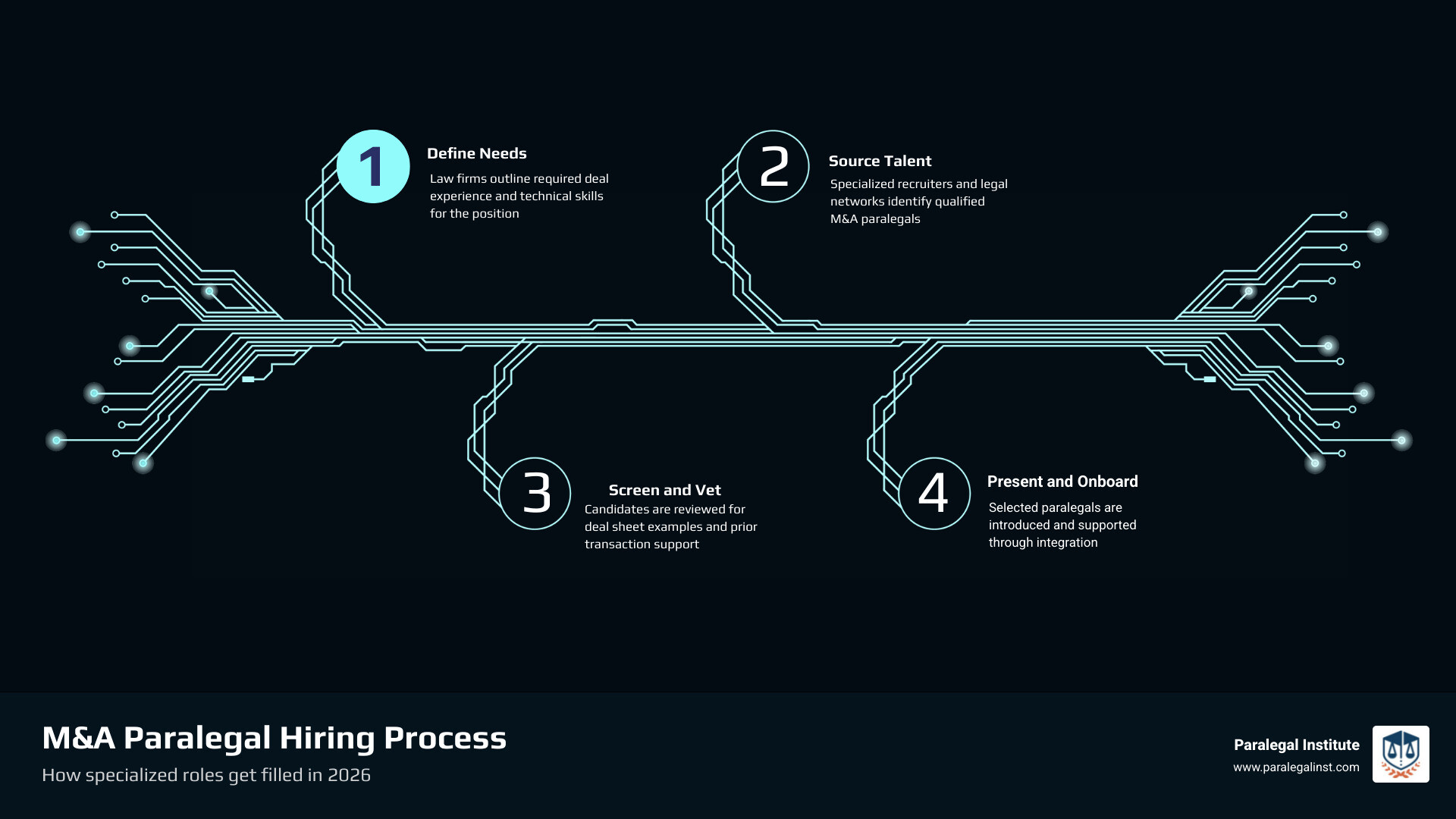
To find these roles:
- Target Specialized Recruiters: Look for firms that specifically mention "transactional staffing."
- Leverage Your Network: Many M&A deals are confidential, and firms prefer to hire via word-of-mouth from people they trust.
- Highlight Your "Deal Sheet": On your resume, don't just list your duties. List the types of deals you've supported (e.g., "Assisted in a significant asset acquisition for tech startup").
Frequently Asked Questions about M&A Paralegals
What are the primary documents managed by M&A paralegals?
M&A paralegals handle a massive volume of paperwork. The most common include the Letter of Intent (LOI), Disclosure Schedules, Bill of Sale, Assignment and Assumption Agreements, Stock Power forms, and Secretary’s Certificates. They also manage the "Closing Checklist," which is the master document that tracks every single signature needed to finish the deal.
How has technology impacted the M&A paralegal role in 2026?
In 2026, technology has made the role more analytical and less clerical. Artificial Intelligence (AI) tools are now used to perform initial "scans" of thousands of contracts during due diligence to find specific clauses (like "Change of Control"). This allows the mergers and acquisitions paralegal to focus on high-level risk analysis rather than just manual data entry. Virtual data rooms are also more integrated, allowing for real-time collaboration across different time zones.
What is the typical experience required for M&A roles?
Most firms and corporations look for a minimum of 3 to 5 years of experience in corporate law. Because M&A deals are so high-risk, employers want to see that you already understand entity structures, UCC filings, and the pressure of a closing deadline. However, starting as an entry level corporate paralegal is the best way to build that foundation.
Conclusion
The path to becoming a mergers and acquisitions paralegal is one of the smartest career moves you can make in the legal field. It offers a combination of high-stakes excitement, professional respect, and some of the best earning potential in the industry.
At the Paralegal Institute, we know that you don't have years to spend in a classroom. That’s why our 15-week certificate program is designed to get you career-ready through live, practical instruction from people like me—attorneys who actually work in the field. We focus on the real-world skills you need to walk into a law firm on Day 1 and be an asset to the team.
If you are ready to move past the entry-level and into corporate transactions, now is the time to start. Start your career as a corporate paralegal today and join the ranks of the most sought-after professionals in the legal industry.