
The Real Answer to Whether You Need a Degree to Be a Paralegal
If you're wondering do I need a degree to be a paralegal, here's the short answer: no, a degree is not required in most states. Many people enter the paralegal field through a certificate program, and employers across the country hire qualified candidates who have completed focused paralegal training rather than a multi-year college degree.
That said, what you study matters more than whether you have a degree. Employers want paralegals who can hit the ground running — someone who understands legal research, document preparation, and how a law office actually works.
This guide breaks down every path into the field so you can make the right choice for your goals, your timeline, and your budget.
I'm Matthew Pfau, a practicing attorney who owns and operates a law firm where I hire and train paralegals directly — which means I've seen what education and preparation actually gets candidates hired when they're asking do I need a degree to be a paralegal. That real-world experience is what shaped the curriculum at Paralegal Institute, where I now teach aspiring paralegals how to enter the legal field with confidence.
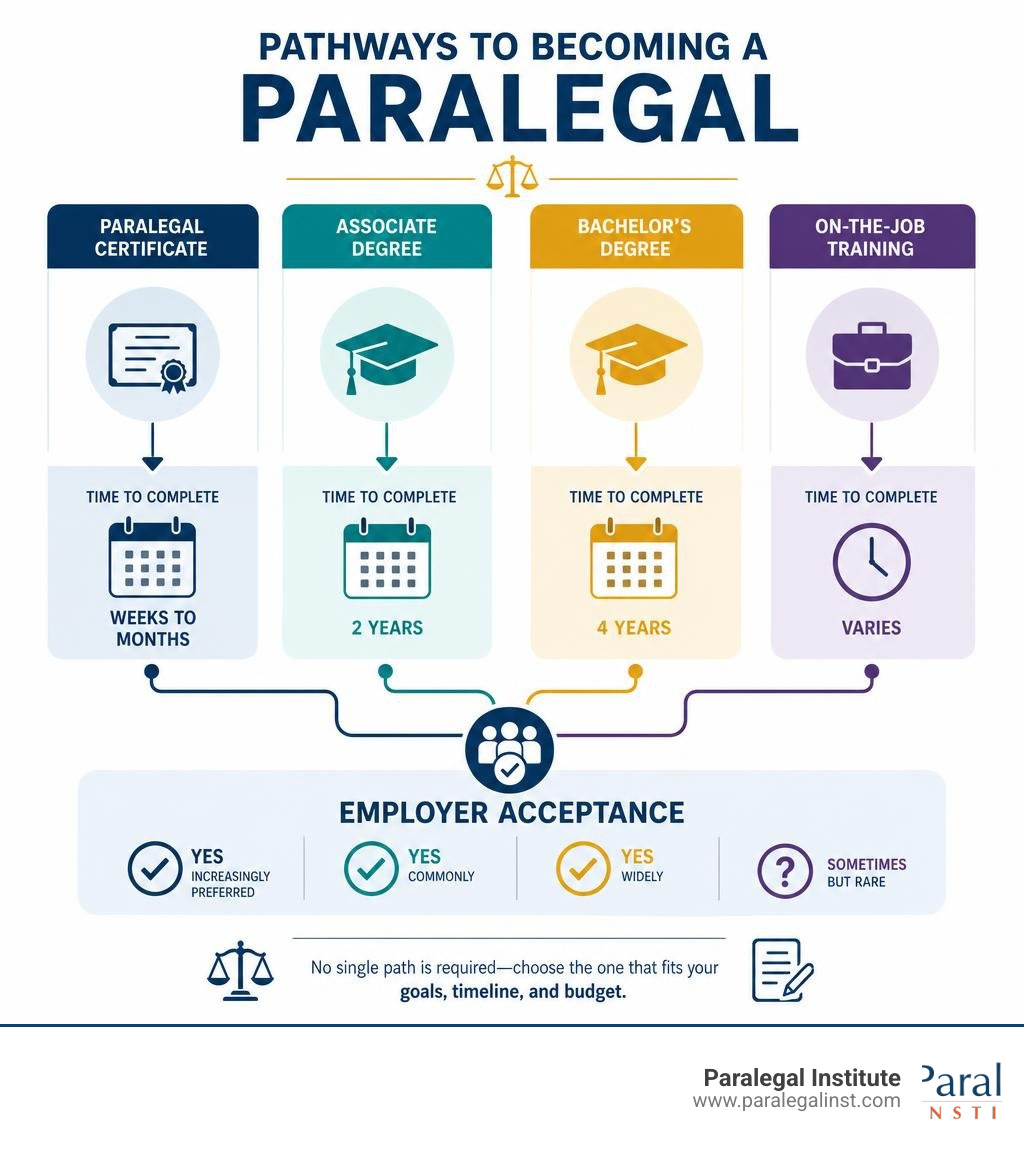
Do I Need a Degree to Be a Paralegal?
When you begin researching this career path, you will quickly find that the legal landscape does not have a single, rigid educational requirement for legal support staff. Unlike attorneys, who must earn a Juris Doctor and pass a state bar exam, paralegals are not subject to a federal licensing system. This means that in the vast majority of jurisdictions, there is no law requiring you to hold a college degree to work in this field.
While some states have explored different models of regulation, the general rule remains that individual employers set their own hiring standards. If you want to dive deeper into the legal definitions and national guidelines, you can review the Educational Information for Paralegals provided by national legal organizations.
Historically, some individuals were able to enter the profession through pure on-the-job training, starting as file clerks or receptionists and gradually taking on legal tasks. However, in today's legal environment, relying solely on on-the-job training is incredibly difficult. Law firms are busier than ever, and attorneys simply do not have the hours to teach you the basics of legal terminology, civil litigation, or document drafting from scratch.
That is why we see a clear trend: employers heavily prefer candidates who have completed some form of structured legal education. They want to know you already understand the rules of civil procedure, how to organize discovery, and how to conduct basic legal research. By earning a focused credential, you demonstrate your commitment to the profession and prove you can contribute to the firm starting on day one. For a comprehensive look at how this works, read our guide on Do You Need A Degree To Be A Paralegal.
Comparing Educational Paths: Traditional Degrees vs. Certificate
If you decide that self-training is too risky, you have different paths to choose from: a traditional multi-year college degree or a paralegal certificate. Each option has distinct advantages and drawbacks depending on your background, your timeline, and your career goals.
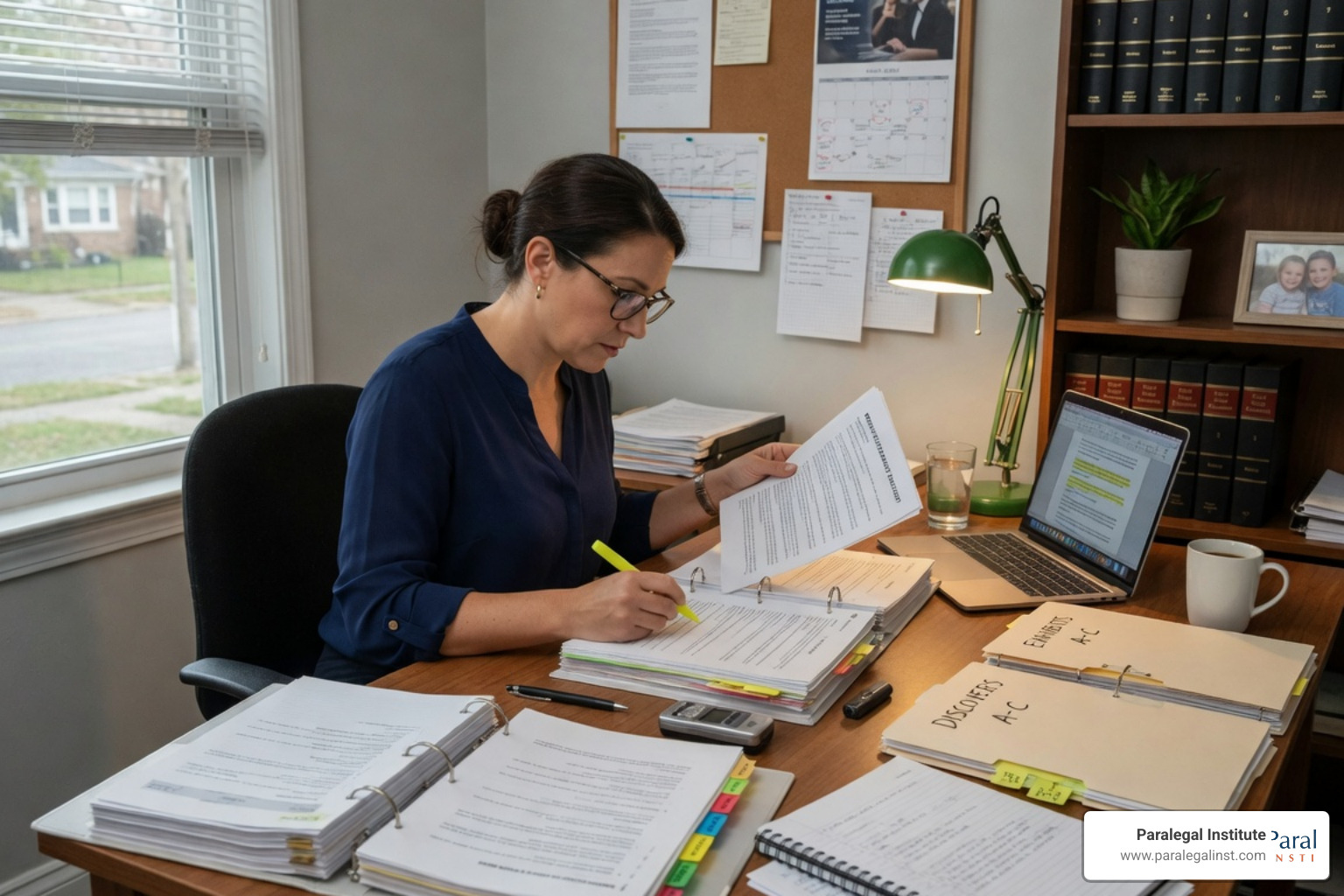
The Traditional College Degree Path
A multi-year college degree provides a broad, comprehensive education. It combines specialized legal coursework with general education requirements like history, science, and math.
While some large corporate law firms or federal government agencies look favorably on a college degree, this path requires a massive investment of time. Spending years in school before you can even apply for your first entry-level position is simply not practical for many adults, especially career changers who already have financial responsibilities. You will spend a large portion of your semesters taking general courses that have absolutely nothing to do with drafting a complaint, filing motions, or organizing client files.
If you are trying to decide between these traditional academic routes, our Paralegal Certificate Or Degree Ultimate Guide offers an in-depth comparison to help you weigh your options.
The Paralegal Certificate Path
A paralegal certificate is a non-degree academic credential designed specifically for students who want to skip the filler and focus entirely on practical legal skills. These programs strip away the general education requirements and deliver intensive, targeted training in substantive law and practical procedures.
A certificate program is highly attractive to two groups of people:
- Career Changers with Existing Degrees: If you already hold a degree in another field (such as business, healthcare, or criminal justice), you do not need to earn a second degree. A post-graduate certificate allows you to pair your existing education with specialized legal training, making you highly competitive in the job market. You can read more about how these options compare in our article on Criminal Justice Degree Vs Paralegal Certificate.
- Adults Seeking a Direct Path to the Workforce: If you do not have a college degree, a certificate program provides the fastest, most direct route to acquiring the practical skills employers demand, without forcing you to spend years taking unrelated general education courses.
| Feature | Traditional College Degree | Paralegal Certificate |
|---|---|---|
| Average Duration | 2 to 4 Years | Weeks to Months (15 Weeks at PI) |
| General Education Required? | Yes (Heavy) | No (100% Legal Focus) |
| Ideal For | Students wanting a traditional multi-year college experience | Career changers and adults wanting fast workforce entry |
| Practical Focus | Mixed academic and practical | Highly practical, job-ready training |
Why You Don't Need a Degree to Be a Paralegal if You Have a Certificate
The reality of the modern legal market is that attorneys do not hire you because you can write a great essay on medieval history or solve complex calculus equations. When I review resumes for my law firm, I look for one thing: can this person help me manage my casework immediately?
This is why a paralegal certificate is often the smartest path. Instead of spending semesters on general education, a certificate program focuses entirely on the day-to-day realities of legal work. You learn how to draft pleadings, organize complex discovery disclosures, conduct efficient legal research, and communicate professionally with clients and court staff.
By stripping away the fluff, a high-quality certificate program compresses the learning curve. You get the exact same core legal training found in a multi-year degree program, but you complete it in a fraction of the time. This accelerated approach allows you to enter the workforce, start earning a living, and begin building real-world experience while others are still sitting in general education lectures. For a deeper dive into why this is the most efficient route, check out our resource on the Paralegal Certificate No Degree Best Path.
Essential Paralegal Skills and Job Responsibilities
To understand why a practical certificate is so highly valued, it helps to look at what a paralegal actually does on a daily basis. As a paralegal, you are the engine room of the law office. While attorneys are responsible for setting strategy, giving legal advice, and representing clients in court, you are responsible for preparing the cases and keeping everything organized.
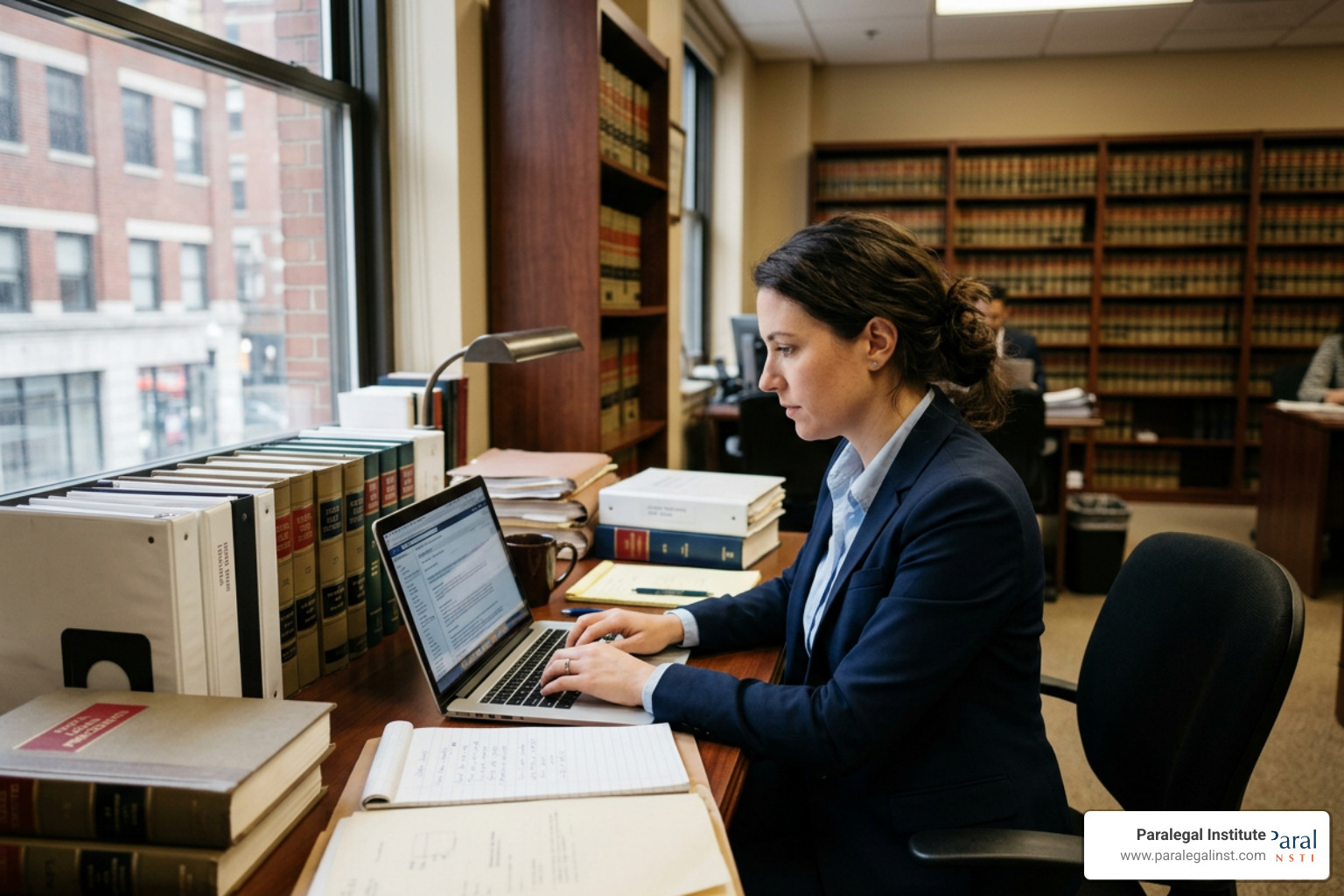
Here are the core responsibilities you will handle:
- Legal Research: You will research statutes, case law, and administrative regulations to help attorneys build legal arguments. You must know how to navigate legal databases to find relevant precedents.
- Document Preparation: You will draft a wide variety of legal documents, including complaints, answers, motions, subpoenas, wills, and corporate contracts. Precision and attention to detail are critical here.
- Discovery and Casework: In litigation, discovery is the process where both sides exchange evidence. You will organize, review, and index thousands of pages of documents, draft interrogatories, and prepare deposition summaries.
- Trial Preparation: As a trial approaches, you will compile trial notebooks, organize exhibits, coordinate witness schedules, and ensure all evidence is ready for the courtroom.
- Client Communication: You will often serve as the primary point of contact for clients. This involves gathering facts, explaining court procedures (without giving legal advice), and keeping clients updated on their case status.
Because these tasks require highly specialized knowledge, employers look for candidates who have developed strong technical and soft skills. Our program is specifically built to teach these practical abilities. You can learn more about how formal training prepares you for these daily duties by reading Paralegal Certificate Program Prepares You For Legal Work.
Navigating State-Specific Rules and Regional Job Markets
Because paralegal education is not regulated at the federal level, regional dynamics play a huge role in how you should prepare for your career. If you are looking to work in Las Vegas, Nevada, you need to understand the local market expectations.
In Nevada, there is no state-mandated educational requirement to call yourself a paralegal. This means the market is driven entirely by employer preference. Las Vegas is a unique and fast-growing legal hub, with a massive demand for legal professionals in areas like personal injury, family law, corporate compliance, and civil litigation.
Local law firms in Southern Nevada are highly competitive, and they want to see structured, formal training on your resume. When hiring managers look at candidates, they compare the practical readiness of applicants. While some traditional institutions offer multi-year degrees, many local professionals choose accelerated routes to get into the workforce faster.
If you want a program that is designed specifically for rapid workforce entry without the long-term commitment of a traditional multi-year college program, our accelerated 15-week curriculum is tailored precisely to meet the needs of Nevada law firms. We focus exclusively on practical skills, helping you stand out in the local market. To learn more about navigating the local landscape, check out our Paralegal Certificate Program Nevada Guide and our Paralegal Certificate Online Nv Guide.
Frequently Asked Questions About Paralegal Education
Do I need a degree to be a paralegal in my state?
In Nevada, the answer is no. There are no state-specific educational mandates requiring a degree to work as a paralegal. Individual law firms, corporate legal departments, and government offices set their own hiring requirements. While some employers may express a preference for a degree, the vast majority are looking for proof of practical competence, which can be demonstrated through a specialized paralegal certificate.
What is the difference between a paralegal certificate and a degree?
The primary differences are program length, cost, and curriculum focus. A traditional college degree takes multiple years and requires you to complete general education courses (like math, science, and humanities) alongside your legal studies.
A paralegal certificate program focuses 100% on legal training, allowing you to graduate in a matter of weeks or months. It is designed to teach you the exact practical skills you need for the job, without any of the academic filler. You can explore a detailed comparison of these paths in our guide to Paralegal Certificate And Degree Programs.
Can I complete a paralegal certificate program online?
Yes, you can. However, the format of online learning matters immensely. Many online programs are completely self-paced, meaning you are left to read textbooks and watch pre-recorded videos on your own with zero interaction.
At Paralegal Institute, we believe the best way to learn the law is through real-time engagement. That is why we offer online classes with live instruction. You get the flexibility of learning from home, but you still interact directly with practicing legal professionals, ask questions in real time, and collaborate with your peers. For more tips on choosing a fast, flexible program, read about how to get your Paralegal Certificate Online Fast.
Conclusion
If you are ready to launch a rewarding career in the legal field, you do not need to spend years of your life or massive amounts of money earning a traditional college degree. The legal market wants professionals who have practical, job-ready skills — and a focused certificate is the most efficient way to get them.
At Paralegal Institute, we offer an accelerated, 15-week paralegal certificate program designed specifically to prepare you for the workforce. Our curriculum is built and taught by practicing legal professionals who know exactly what it takes to succeed in a modern law office.
We offer two flexible formats to fit your busy life:
- Online with live instruction: Learn from anywhere while still experiencing real-time, interactive lectures with your instructors.
- In-person classes: Join us at our Las Vegas, NV campus for face-to-face training and local networking opportunities.
Don't let the lack of a four-year degree hold you back from achieving your career goals. Take the first step toward your new career today by exploring What Training is Required to Be a Paralegal and see how our 15-week program can help you step into the legal field with confidence.