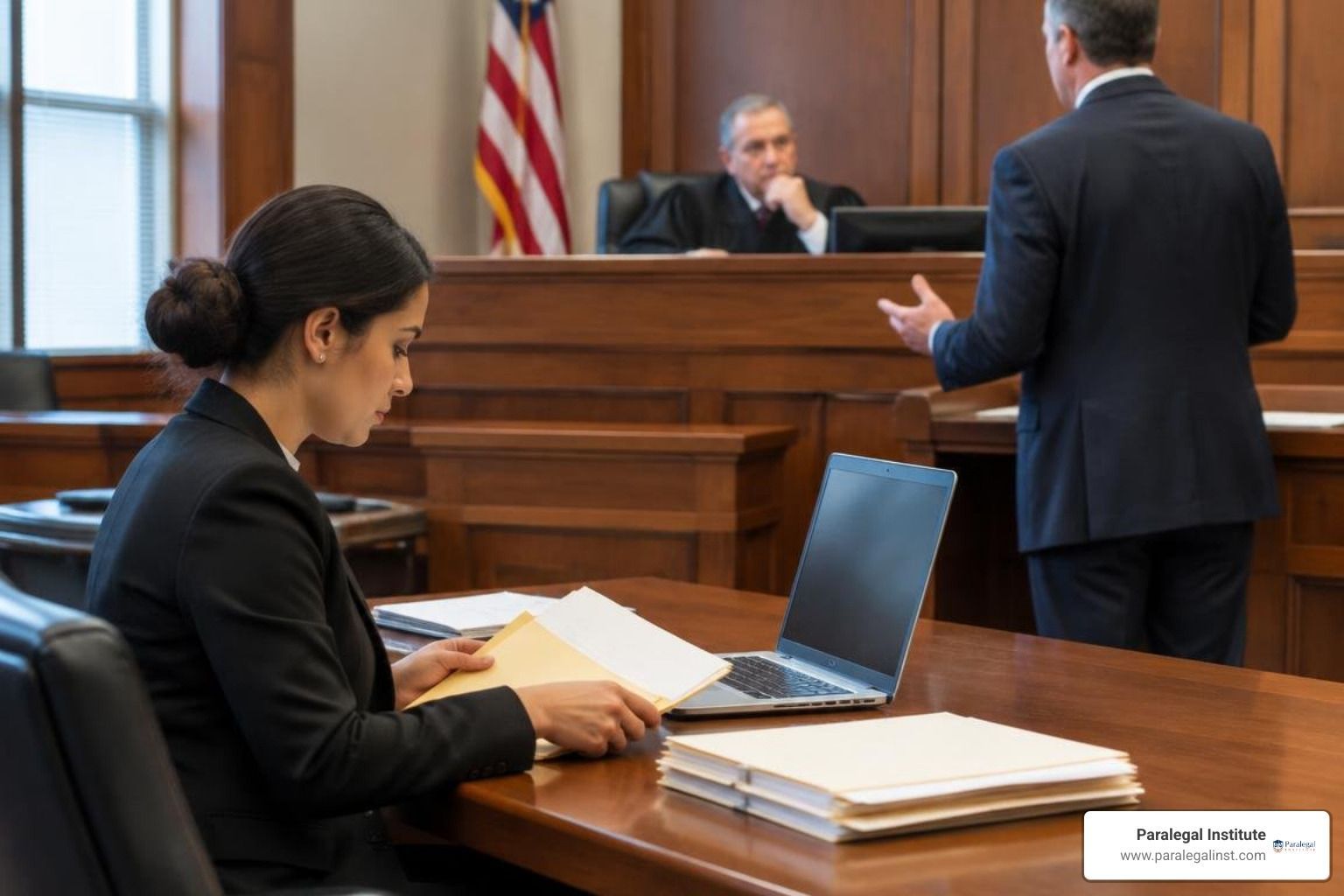
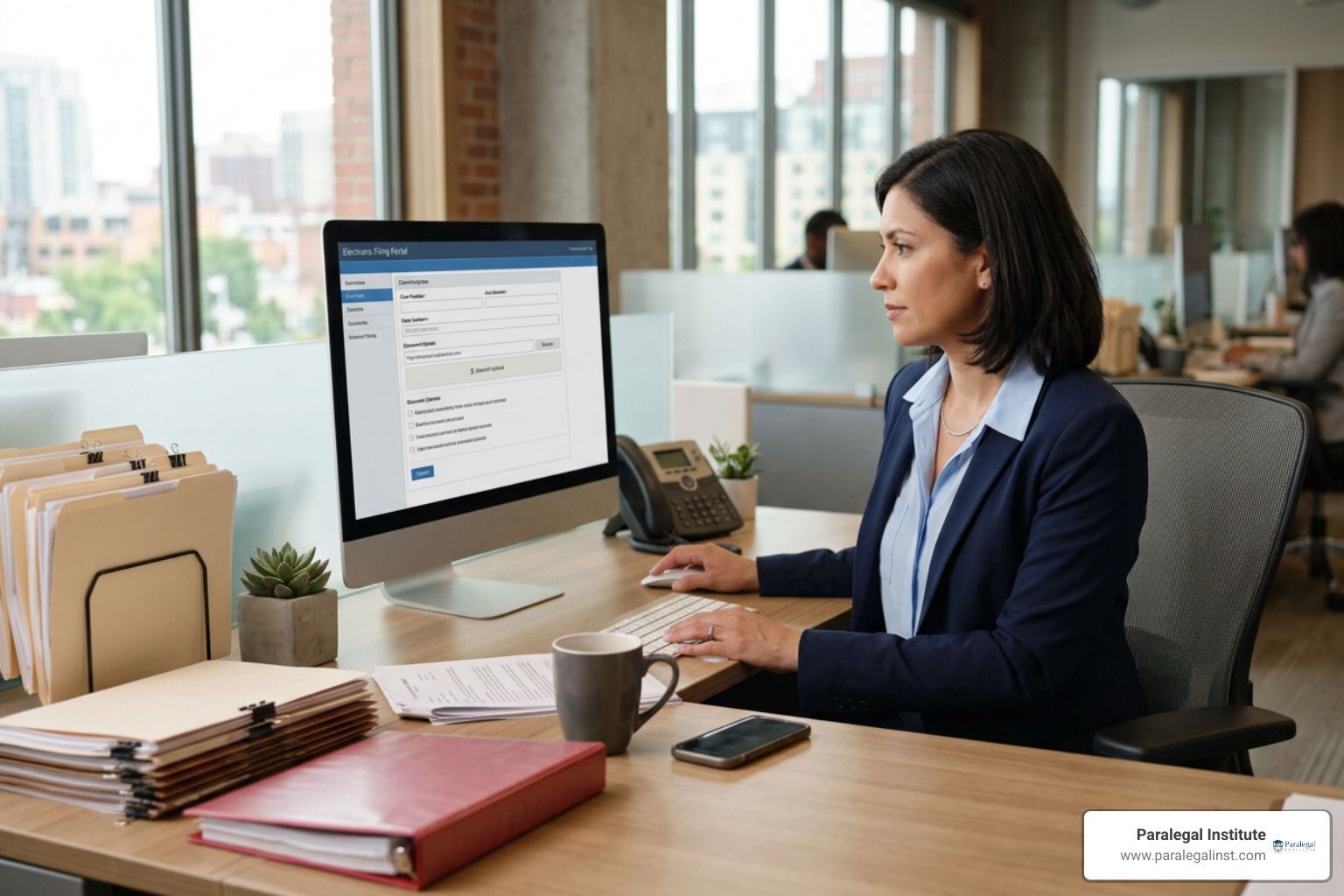
Strong paralegal skills are built long before you sit at a desk in a law office. They start when you first open a case file, learn how the documents fit together, and practice responding like a working legal professional. That is exactly what a practicum inside a paralegal training program is designed to give you: a safe place to learn real skills, make mistakes, and gain confidence.
At Paralegal Institute, we focus on helping Nevada residents step into entry-level paralegal roles feeling ready, not guessing. In this article, we will walk through how mock case files work in a practicum, how they connect to the legal concepts you learn in class, and how you can build systems and habits that follow you into any law firm or legal setting across the country.
Building Real-World Confidence Before Day One on the Job
A practicum is hands-on training that lets you apply what you are learning in your paralegal training program to simulated legal work. Instead of only reading about civil procedure or legal research, you actually handle documents, track deadlines, and prepare work product that looks like what attorneys expect from their teams.
Mock case files are at the heart of this experience. They mirror real law office workflows so you see how theory turns into tasks: intake, case development, discovery, and motion practice. By working through these files, you begin to think like a paralegal who needs to keep information organized, accurate, and ready for attorney review.
It is normal to worry about “messing up,” getting buried in legal terminology, or feeling lost when several documents land on your desk at once. In a practicum, those worries become learning opportunities instead of job risks. With a structured approach, you learn to break each mock file into steps, follow checklists, and ask clear questions. Suddenly the stack of documents feels manageable, not overwhelming.
Understanding the Anatomy of a Mock Case File
To feel confident, you need to know what you are looking at. A typical mock case file includes many of the same parts you will see in actual Nevada and federal matters, such as:
- Client intake forms and questionnaires
- Attorney and client correspondence
- Pleadings and motions filed with the court
- Discovery requests, responses, and exhibits
- Research memos and case law printouts
- Court notices, minute entries, and orders
Each document plays a role in the life cycle of a case. Intake forms and questionnaires capture key facts and deadlines from the first client contact. Pleadings and motions show how those facts become claims and defenses in court. Discovery materials help build or test those claims. Court notices and orders tell you what happens next, including hearings, conferences, and due dates.
Well-designed mock files reflect real practice standards so you gain familiarity with the kinds of materials you will encounter in law firms, corporate legal departments, and government offices. As you read, your main job is to read for purpose. In every document, you are looking for things like:
- Deadlines and calendaring instructions
- Key facts and potential witnesses
- Legal issues the attorney needs researched
- Specific tasks or follow-up steps assigned to you
When you know what you are trying to spot, the case file starts to feel like a puzzle you can solve instead of a pile of paper.
Creating an Organized System From the First Page You Read
Good paralegals are organized from the moment a file hits their desk. Practicum work is the perfect place to build those habits. Start simple: clear labels, consistent indexing, and careful version control.
For paper files, you might separate sections for pleadings, discovery, correspondence, and research, then index what is in each section. For digital files, you can mirror that structure with folders and subfolders. Naming conventions matter too. If attorneys can quickly understand what a document is and when it was created, you have made their job easier.
You also need a reliable way to pull tasks and deadlines from the file. Many students find it helpful to:
- Keep a master checklist tied to each case
- Create a calendar of deadlines and reminders
- Note which documents support which tasks
- Mark items that need attorney review or client follow-up
When you practice this system repeatedly, you reduce stress and missed details. You will also be ready when an attorney asks a fast question like, “Where is the most recent discovery response?” or “Did we calendar that hearing date?” Your organized file lets you answer with confidence.
Turning Legal Theory Into Practical Case File Work
A strong paralegal training program does not keep legal theory separate from practice. Instead, practicum work shows you exactly how subjects like civil procedure, legal research, and legal writing turn into everyday tasks.
Civil procedure helps you understand why certain pleadings exist, when they must be filed, and what the court expects next. Research skills guide you when the file reveals a legal issue that needs authority, such as a question about jurisdiction or a particular Nevada rule. Legal writing comes into play every time you draft or edit a document.
With a mock case file in front of you, you might:
- Spot missing information that requires a follow-up questionnaire or phone call
- Identify which issues need research and gather supporting case law
- Prepare a draft cover letter to opposing counsel or to a client
- Use templates to assemble basic discovery requests or a simple motion
Each time you move from rule or concept to a concrete document, you strengthen your professional muscle memory. By the time you are working with actual Nevada-specific rules and court forms, you have already practiced the process many times.
Communicating Like a Paralegal While You Practice
Paralegals are professional communicators. The practicum gives you a place to polish that skill set before real clients are involved. That starts with asking focused questions. Instead of saying, “I do not get this file,” you might ask, “Should I prioritize drafting responses to the interrogatories or updating the discovery index first?”
Your written communication matters just as much. Useful file notes, email updates, and status summaries are clear, concise, and tied directly to the case file. For example, a short status email might list which tasks are complete, which are in progress, and which need attorney input.
Even though mock case files are simulated, they are excellent practice for confidentiality and professionalism. You get used to treating all client names, case facts, and documents as sensitive information. Instructors' feedback on your tone, structure, and clarity helps you refine your communication style so you sound like a paralegal, not a student.
Learning From Mistakes and Tracking Your Progress
No one starts a practicum knowing everything. The purpose of mock files is to give you a safe environment, make mistakes, see how they are corrected, and build better habits. When you receive comments or redlines from an instructor, take time to review them systematically.
It can help to create an action list, such as:
- Common citation issues to fix next time
- Organization steps you forgot and want to add to your checklist
- Writing patterns to improve, like sentence clarity or document headings
- Substantive concepts you need to review in your notes or textbook
Keeping a personal skills log is another powerful tool. Each time you complete a new type of task with a mock file, such as organizing a discovery section, drafting a basic motion, or preparing court forms, add it to your list. Over time, that log shows you how far you have come, which supports your confidence when you talk about your practicum experience with potential employers.
Stepping Into Your First Legal Role with Confidence
By treating each mock case file as if it were a real client matter, you are building habits that carry directly into your first legal role. You arrive in a law firm, agency, or corporate legal department already familiar with file structure, deadlines, attorney expectations, and the rhythm of legal work.
At Paralegal Institute in Nevada, our focus is on helping students bridge the gap between classroom learning and real case work. When you approach your practicum with intention, ask thoughtful questions, and pay attention to feedback, you turn that experience into lasting confidence, so the move from classroom to case file feels like a natural next step instead of a leap into the unknown.
Take The Next Step Toward Your Legal Career
If you are ready to start building real skills for a future in the legal field, our
paralegal training program is designed to help you move forward with confidence. At Paralegal Institute, we focus on practical coursework that prepares you for the demands of today’s law offices. Explore the curriculum, consider your goals, and decide which course path fits you best. When you are ready, enroll to begin your training and take the first concrete step toward your new career.