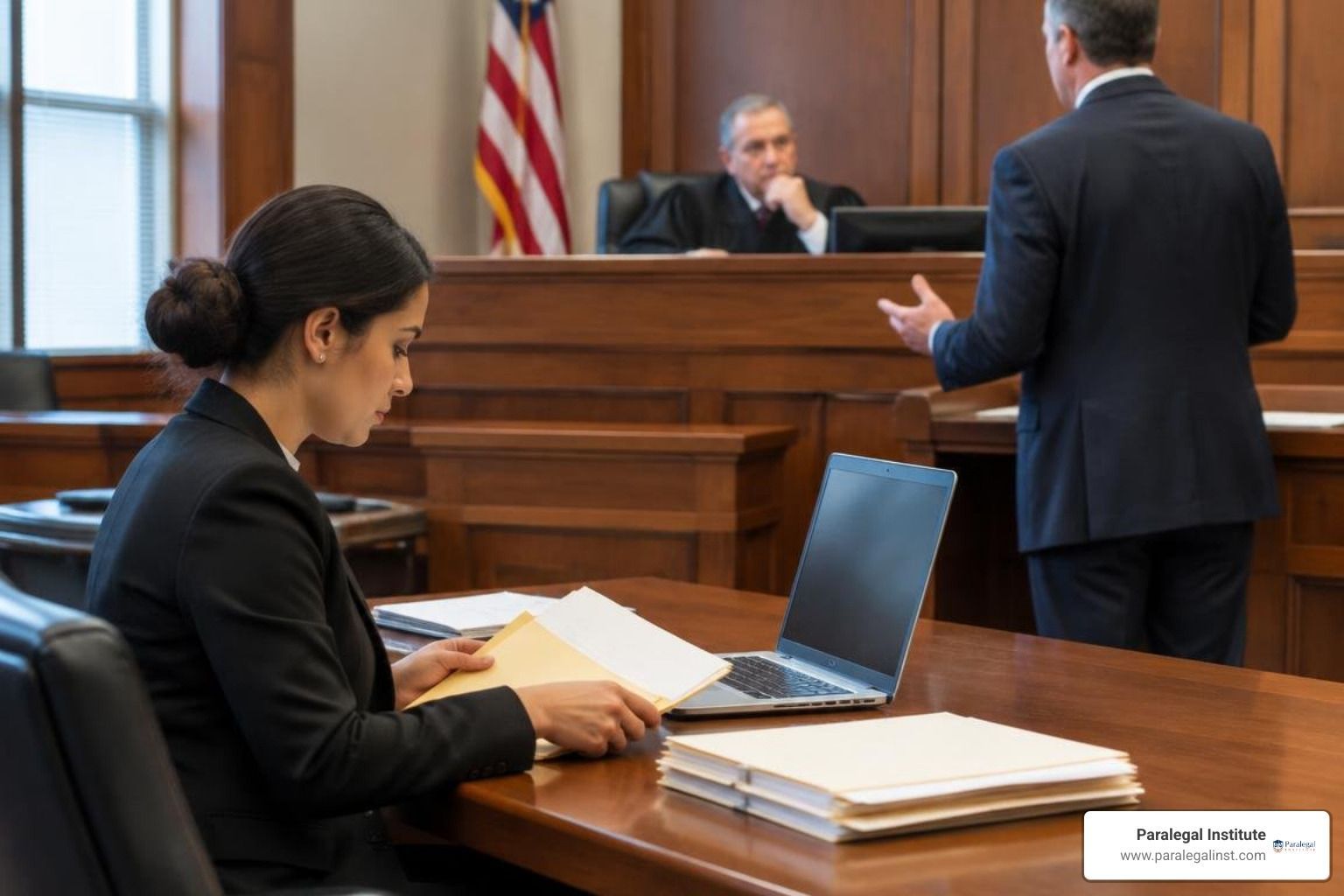
Why a Personal Injury Case Checklist is Your Essential Tool
A personal injury case checklist is a vital tool for legal professionals. It is a systematic guide outlining every step and document needed to manage a personal injury claim effectively.
Here's why it's indispensable:
- It acts as a roadmap, guiding legal teams through each stage of a case.
- It helps organize extensive paperwork and evidence carefully.
- It ensures all critical steps, documents, and deadlines are met.
- It minimizes human error and discrepancies across cases.
- It improves communication within the legal team and with clients.
Paralegals often handle a large number of personal injury files at once, sometimes upwards of 100 cases, all at different stages. This demands incredible organization. A well-structured checklist helps standardize processes, making sure nothing falls through the cracks and that every case progresses smoothly from initial client intake to final resolution.
My name is Matt Pfau. I am a practicing U.S. attorney who teaches paralegal courses at the Paralegal Institute. In both my law practice and my classes, I’ve seen how a comprehensive personal injury case checklist can transform case management, reduce stress, and improve outcomes for clients and legal teams.
For adults looking to enter the legal field quickly, mastering tools like this checklist is exactly the kind of real-world skill that makes you valuable on day one in a law office. At the Paralegal Institute, we focus on live, instructor-led training—both online with real-time classes and in person—so you can learn how to apply checklists like this in actual casework, not just read about them.
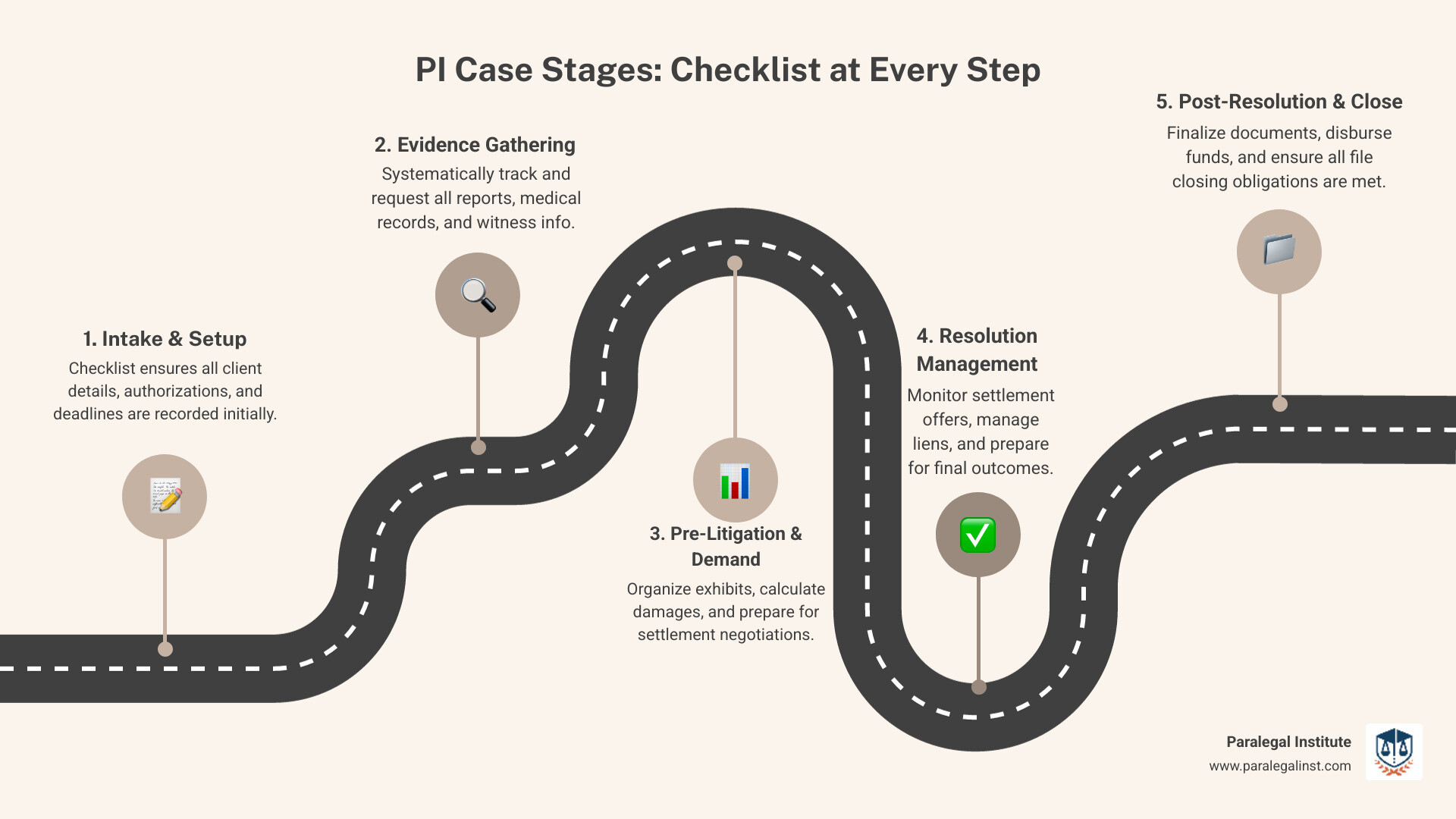
Stage 1: Initial Client Intake and Case Setup
A strong start is vital for every personal injury case. A checklist ensures no critical information is missed, setting the stage for a successful outcome. This initial phase is where we lay the groundwork, gathering essential facts and securing the necessary authorizations to proceed.
The Intake Process: Gathering the Essentials
The first interaction with a client is crucial. A personal injury case checklist guides us through this step, ensuring we capture every detail needed to assess the case's viability. We use a detailed client intake form to collect personal information and the specifics of the accident—date, time, location, and a preliminary account of events.
Following the intake, initial interviews allow us to understand the client's experience, identify witnesses, and evaluate liability and damages. This early assessment determines if there is a strong legal basis to proceed and is a key part of the Personal Injury Paralegal Duties Complete Guide.
Critical Paperwork and Authorizations
Once we determine a case is viable, we secure the necessary legal paperwork. These documents are the bedrock of the claim, allowing us to represent the client and gather sensitive information.
Key documents include:
- Contingency Fee Agreement: This outlines the financial terms of representation, ensuring transparency. In most personal injury cases, attorney fees are a percentage of the final settlement or award.
- HIPAA and Wage/Salary Authorizations: A HIPAA authorization is essential for obtaining protected medical records that prove the extent of injuries. Similarly, wage authorizations allow us to document lost income. Handling these forms with precision is a critical skill, highlighting the value of focused paralegal training for adults who want a fast, career-focused path into legal work.
- Representation Letters: These letters formally notify all relevant parties (e.g., insurance companies) that we are representing the client. This directs all future communication through our office, protecting the client from direct contact with opposing parties.
Calendaring Deadlines and Identifying Conflicts
Personal injury law operates on strict deadlines. Missing one, especially the statute of limitations, can be catastrophic. Our personal injury case checklist includes robust calendaring procedures to prevent such oversights.
The statute of limitations—the legal deadline to file a lawsuit—varies by state and injury type. For example, some states have a two-year deadline, as seen in Ohio's statute of limitations, while other jurisdictions like Nevada have their own timelines. We calendar this date with multiple advance reminders to ensure it is never missed. This proactive approach demonstrates the Importance of Attention to Detail in Paralegal Work.
We also calendar other crucial dates for discovery responses, depositions, and court appearances. Before committing to a case, we conduct a thorough conflict of interest check against our firm's client database to maintain ethical integrity.
In my paralegal courses at the Paralegal Institute, we walk through these intake and calendaring steps in real time—online with live instruction or in person—so you can practice the exact case setup tasks law firms expect from new paralegals.
Stage 2: The Investigation and Evidence Gathering Phase
Once the initial paperwork is complete, we move into the intensive investigation phase. This is where a paralegal's organizational prowess truly shines. A detailed personal injury case checklist ensures every piece of evidence is requested, tracked, and managed, forming the backbone of the client's claim.
Documenting the Incident
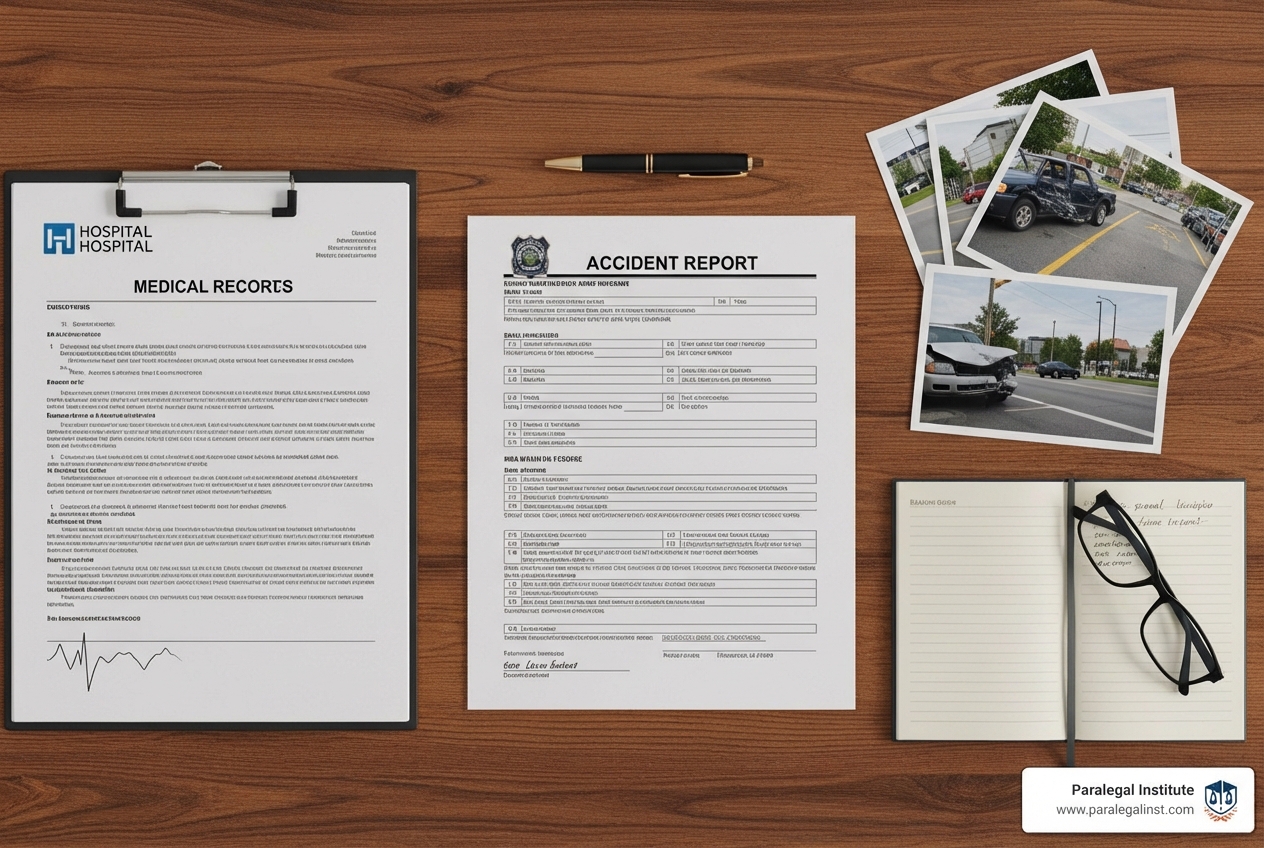
Comprehensive documentation is paramount. We collect evidence to paint a clear picture of what happened and who was at fault. This includes:
- Official Reports: We order police reports for vehicle accidents or request incident reports for accidents on private property.
- Witness Information: We gather contact details and statements from anyone who observed the incident. Prompt contact is essential, as memories can fade.
- Photos and Videos: We instruct clients to photograph the scene, property damage, and their injuries. We also seek surveillance footage from nearby sources.
- Property Damage Estimates: For vehicle accidents, we obtain repair estimates to help quantify economic damages.
- Spoliation Letters: We send these formal letters to at-fault parties, instructing them to preserve crucial evidence like damaged vehicles or surveillance footage. This is a key part of Evidence Management Paralegal Success.
Compiling Medical and Financial Records
A client's injuries and financial losses form the core of their claim. Our checklist guides us through compiling all relevant records.
We request and track all medical records, including ER visits, doctor's appointments, and therapy notes. We also organize all related bills and receipts for out-of-pocket expenses. To document lost wages, we gather pay stubs, employer letters, and tax returns. For easy review, we often create a medical records notebook with a chronological summary of treatment. Understanding the nuances of these claims involves skills from Reliable Sources for Paralegal Research.
Why a Personal Injury Case Checklist is Non-Negotiable
A personal injury case checklist is essential because the volume and complexity of tasks demand a systematic approach.
- Manages Extensive Paperwork: A checklist breaks down the overwhelming task of managing hundreds of pages of records and reports into manageable steps, ensuring nothing is overlooked.
- Streamlines Coordination: It ensures all necessary requests to medical offices, insurance companies, and other third parties are sent and followed up on in a timely manner.
- Guarantees Deadlines are Met: A checklist integrated with a calendaring system provides constant reminders for critical deadlines, such as the statute of limitations, discovery responses, and court filings. This helps us Prioritize Tasks Effectively as Paralegal and keeps every case on track.
For adults changing careers or entering the legal field for the first time, these investigation and evidence tasks are exactly what you will be expected to handle on your first day in a plaintiff's firm or insurance defense practice. At the Paralegal Institute, we emphasize this kind of hands-on casework in our live, instructor-led courses so you build practical confidence—not just theoretical knowledge.
Stage 3: Pre-Litigation, Demand, and Settlement
With all evidence gathered, our personal injury case checklist guides us through the pre-litigation phase. This stage involves synthesizing all collected information to prepare a compelling demand for settlement and negotiate for fair compensation.
Drafting the Demand Letter
The demand letter is a pivotal document sent to the at-fault party's insurance company. It outlines the facts, the client's injuries, and the compensation sought. A checklist ensures it is comprehensive.
Key components include:
- Organized Exhibits: All evidence, such as the police report, medical records, and wage loss documentation, is compiled as proof.
- Medical Treatment Summary: A narrative outlines the client's injuries, treatments, and the impact on their daily life, noting milestones like Maximum Medical Improvement (MMI).
- Damages Calculation: We calculate both economic damages (medical bills, lost wages) and non-economic damages (pain and suffering).
The drafted demand is then submitted for attorney review before being sent. This collaboration is a prime example of effective Paralegal Litigation Support.
Managing Negotiations and Liens
Once the demand is submitted, negotiations begin. A checklist helps manage communications with insurance adjusters and address any liens.
We maintain ongoing communication with adjusters, counter attempts to minimize the claim, and evaluate settlement offers. A critical task is identifying and resolving liens from third parties like Medicare, Medicaid, or private health insurers seeking reimbursement. We proactively communicate with lienholders and negotiate reductions to maximize our client's net recovery, a process that often requires skills from a Legal Research Guide for Paralegals.
The Role of Technology in Modern Case Management
In today's legal landscape, technology is a necessity. Our personal injury case checklist is often integrated into digital tools that streamline our workflow and boost efficiency.
Digital systems allow us to create customizable workflows for each case stage. They can help generate tasks, set reminders for deadlines, and centralize all case information, making it instantly accessible to the legal team. This reduces the risk of missing a critical filing date.
Leveraging technology for organization means less time on administrative tasks and more time focused on building a strong case. The evolution of legal tech continues to make the paralegal's role more strategic and impactful, ensuring our practice remains at the forefront of effective personal injury case management.
At the Paralegal Institute, I show students how these tools fit into real casework so they graduate ready to step into busy litigation practices. Whether you attend in person or join our live online classes, the focus is always the same: practical skills that help you contribute immediately in a personal injury law firm.
The Ultimate Personal Injury Case Checklist for Paralegals
Combining the steps from each stage, we can create a master personal injury case checklist that serves as a comprehensive procedural guide. This checklist acts as a living document, evolving with each case and firm-specific practices.
Creating Your Personal Injury Case Checklist
Developing an effective checklist is an ongoing process that benefits from collaboration and regular review.
- Identify Key Tasks per Stage: Break down the case lifecycle (intake, investigation, demand, etc.) and list every task that needs to be completed.
- Collaborate with Your Team: Involve attorneys and other legal staff to ensure the checklist is practical, comprehensive, and aligned with firm best practices.
- Establish Timelines: Assign clear timelines and deadlines to each task to manage workload and maintain momentum.
- Review and Update Regularly: The legal landscape is dynamic. Review checklists at least annually to keep them current and effective. Using resources like Templates and Tools in Paralegal can provide a strong starting point.
For adults seeking a faster, more affordable route into the legal field than traditional academic programs, learning to build and use these checklists is one of the most practical steps you can take. Law firms value paralegals who can step in, follow a proven system, and keep cases moving without constant supervision. That is exactly the type of job-ready training we emphasize at the Paralegal Institute.
Post-Resolution and File Closing
Even after a settlement, a paralegal's work isn't finished. The post-resolution phase requires careful attention to detail to meet all financial and legal obligations.
First, we finalize settlement documents, such as releases and agreements, to legally conclude the case. Next is the crucial process of disbursing funds. This involves receiving the settlement, depositing it into a trust account, paying attorney fees and case costs, and satisfying all outstanding liens (e.g., from Medicare or health insurers). Meticulous accounting is required before distributing the final amount to the client.
Finally, we close the file by organizing and archiving all documents and sending final correspondence. A well-organized closed file is essential for future reference and compliance, a hallmark of a proficient Litigation Support Professional.
| Feature | Paralegal-Focused Checklist | Client-Focused Checklist |
|---|---|---|
| Purpose | Comprehensive procedural tool for managing the entire legal process from intake to closing, ensuring firm efficiency and compliance. | Simple guide for the client to understand their responsibilities and assist in their own case, empowering them to gather personal information. |
| Scope | Internal firm operations, legal strategy, evidence management, calendaring, document drafting, negotiation, court procedures, financial disbursements. | Client's actions: gathering personal documents (e.g., bills, pay stubs), attending medical appointments, journaling symptoms, avoiding social media. |
| Detail Level | Highly detailed, includes legal jargon, specific document names, internal process steps, and statutory references. | Simplified, uses plain language, focuses on actionable items the client can perform, avoids complex legal terms. |
| Audience | Legal professionals (paralegals, attorneys, legal assistants). | The client (injured party). |
| Key Actions Covered | Sign contingency fee, send spoliation letters, order medical records, draft demand letter, negotiate liens. | Collect photos of injuries, keep medical appointments, track mileage, journal pain, provide attorney with documents. |
| Benefit to User | Standardizes workflow, minimizes errors, ensures deadlines are met, improves case outcomes, improves team communication. | Empowers client, clarifies expectations, streamlines client's evidence gathering, builds trust and cooperation. |
| Example Item | Calendar Statute of Limitations with 60-day reminder. | Keep all appointment cards and receipts for medical treatment. |
These closing tasks are exactly the kind of detailed, high-responsibility work you will learn to handle in our live, instructor-led courses—designed to get you into the legal workforce faster and with the confidence that comes from practicing real case procedures, not just reading about them.
Frequently Asked Questions about PI Case Checklists
How does a checklist help manage client communication?
A personal injury case checklist transforms client communication from reactive to proactive. It provides a structured framework for regular updates based on case milestones, which helps manage client expectations by outlining the typical stages of a case. By referring to the checklist, we can explain what comes next and what information we need from them. It also ensures we are fully prepared before speaking with a client, allowing us to communicate competently and reinforce trust.
What are the differences between a paralegal's checklist and a client's checklist?
While both are organizational tools, their audience and purpose differ significantly. A paralegal's checklist is a comprehensive, internal procedural guide for managing the entire legal process. It is detailed, uses legal terminology, and ensures firm efficiency and compliance.
In contrast, a client-focused checklist is a simplified guide for the injured party. It uses plain language to outline their responsibilities, such as gathering personal documents, attending appointments, and journaling symptoms. It empowers the client and streamlines their role in evidence gathering. The table in the previous section provides a detailed comparison.
How does a checklist help overcome common case management challenges?
A well-designed personal injury case checklist is a powerful solution to many common challenges:
- Prevents Missed Deadlines: Systematic calendaring built into the checklist significantly reduces the risk of missing critical deadlines like the statute of limitations or discovery responses.
- Ensures Consistency: When managing a high volume of files, a checklist standardizes processes, ensuring every case receives the same thorough attention and minimizing human error.
- Reduces Paperwork Stress: A checklist breaks down the monumental task of managing extensive documentation into manageable steps, making the process less daunting.
- Improves Team Coordination: By clearly defining tasks and roles, a checklist ensures everyone on the legal team is on the same page, preventing duplication of effort and streamlining workflow.
Conclusion: Your Path to Becoming an Indispensable PI Paralegal
A detailed personal injury case checklist is more than a to-do list; it's a fundamental tool for effective case management that demonstrates a paralegal's value. Mastering these organizational skills is a core component of practical legal training.
As a practicing attorney who teaches at the Paralegal Institute, I designed our curriculum for adults who want a faster, smarter route into the legal field. Instead of spending years in a traditional academic program, you can complete a focused paralegal program with:
- Live instruction(online in real time or in person), so you can ask questions, get feedback, and learn directly from experienced legal professionals.
- Practical training built around real casework—intake, investigation, discovery support, demand preparation, and file closing—so you are job-ready from day one.
- An accelerated path that helps you enter the legal workforce sooner than most traditional academic options.
- A cost-effective program that focuses your time and resources on the skills law firms actually use.
If you want to work on personal injury cases and become the kind of paralegal attorneys rely on, learning to build and use a personal injury case checklist is an excellent place to start.