Why Paralegal Positions Are More Dynamic Than Ever
Paralegal positions offer one of the most accessible and versatile entry points into the legal profession today. The demand for skilled paralegals continues to grow across both public and private sectors as law firms and corporations seek to operate more efficiently. This has created a wealth of opportunities, ranging from federal government litigation support to highly specialized corporate law roles.
Key Types of Paralegal Positions Available:
- Government Roles: Opportunities exist within federal agencies like the Department of Justice and the Securities and Exchange Commission (SEC), as well as state and local attorney general offices and public defender services. These roles often involve working on cases that have a broad public impact.
- Private Practice: This is the most common path, with positions in law firms of all sizes. You could be supporting a litigation team at a large national firm or handling diverse tasks at a small local practice specializing in areas like family law or estate planning.
- Corporate Legal Departments: Many large companies have in-house legal teams that hire paralegals to manage contracts, ensure regulatory compliance, handle corporate governance matters, and support the company's business operations directly.
- Specialized Areas: The need for paralegals with niche expertise is booming. Hot fields include immigration, patent and intellectual property law, personal injury, and real estate. Specialization often leads to greater responsibility and career advancement.
- Experience Levels: The career ladder is clear. Entry-level roles (often called Paralegal I) focus on foundational tasks, while senior positions (Paralegal II or Senior Paralegal) involve managing complex cases, overseeing findy, and sometimes mentoring junior paralegals.
- Work Arrangements: The modern workplace offers flexibility. While many positions are traditional on-site roles, hybrid and fully remote opportunities are becoming increasingly common, expanding the job market beyond geographic boundaries.
The paralegal profession spans virtually every area of law. In the United States, federal agencies work on legal challenges that affect the entire nation, offering paralegals exposure to incredibly diverse and high-stakes work. Meanwhile, major metropolitan areas and growing legal hubs like Las Vegas show a consistent demand for qualified paralegals. Compensation is competitive and grows significantly with specialization and experience, offering a path to a stable and rewarding financial future.
Whether you're drawn to supporting complex federal litigation or managing a portfolio of corporate contracts, the spectrum of paralegal positions provides multiple pathways to build a meaningful legal career. Each role offers unique responsibilities, from conducting extensive legal research and drafting court documents to managing client relationships and organizing critical case files.
I'm Matthew Pfau, and I've spent years hiring and training paralegals in my law firm while developing curriculum for aspiring legal professionals. My experience has shown me how paralegal positions serve as the engine of successful legal practices. A skilled paralegal improves a firm's efficiency, improves client outcomes, and allows attorneys to focus on strategy, making this one of the most vital and rewarding career paths in the legal field.
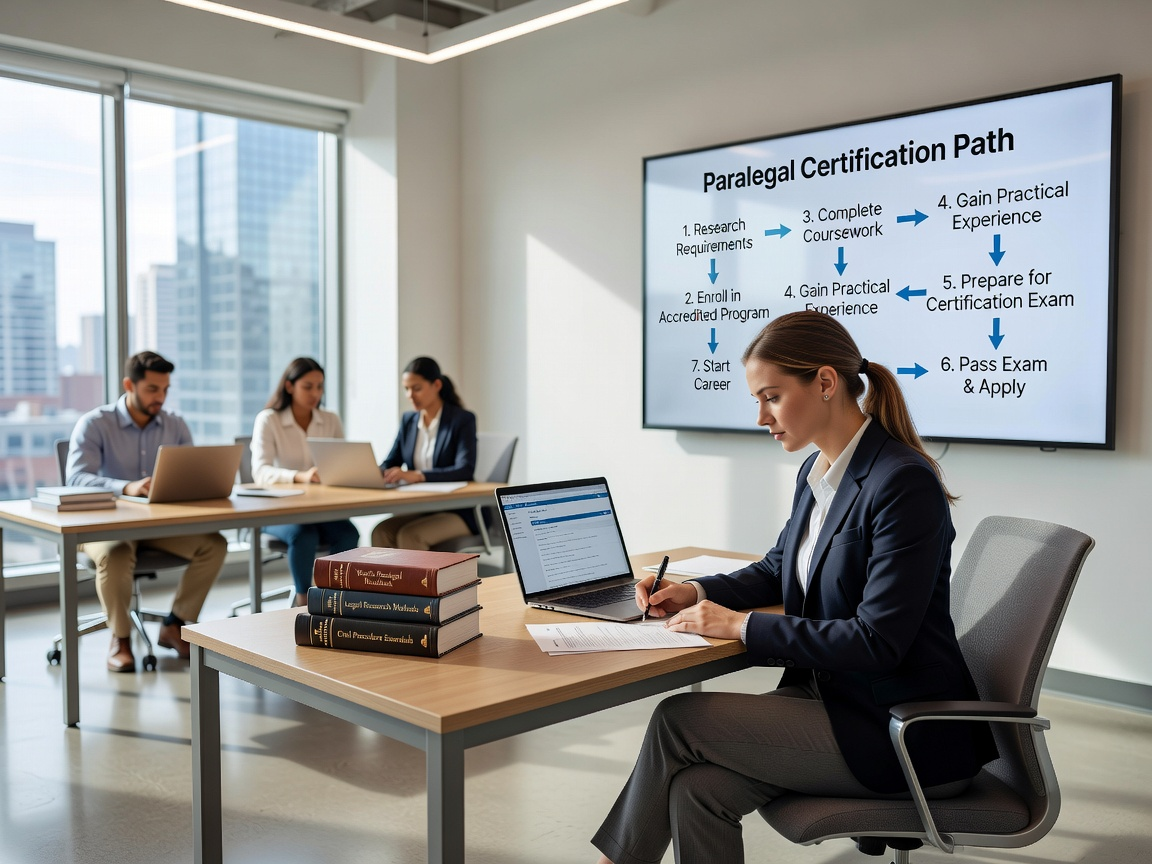
Looking ahead, paralegal responsibilities will continue to expand as law offices adopt new technology, refine client service, and steer evolving regulatory requirements. For aspiring professionals in Las Vegas and beyond, completing an accelerated, hands-on training program can shorten the time to your first role while building job-ready competencies in research, drafting, case management, and trial support. Because many employers now hire hybrid or fully remote teams, new graduates can compete for roles outside their immediate city and apply niche skills in areas like e-findy, immigration filings, contract administration, or personal injury claims management.
Understanding the Core Role: What Does a Paralegal Do?
Paralegal positions exist because lawyers need skilled support to handle the growing complexity and volume of legal work. Think of paralegals as the indispensable backbone of any legal team—they are the detail-oriented professionals who ensure everything runs smoothly behind the scenes while attorneys focus on legal strategy, court appearances, and client advocacy.
A paralegal performs substantive legal work under an attorney's supervision, handling tasks that require a solid foundation of legal knowledge and exceptional attention to detail. The key phrase here is "substantive legal work" —this is far more than administrative support. Paralegals are actively involved in the mechanics of a case. They dive deep into legal issues, conduct extensive legal research, and draft critical documents that directly impact legal outcomes.

On any given day, a paralegal might analyze legal precedents to find support for a motion, draft court documents like pleadings, findy requests, and affidavits, or compile and organize evidence for an upcoming proceeding. A huge part of their role is case management, which includes maintaining legal files and carefully tracking deadlines. In the legal world, a missed deadline can have catastrophic consequences, and paralegals are the guardians of the calendar.
Client interaction is another crucial aspect of modern paralegal positions. Paralegals often serve as a primary point of contact for clients, conducting intake interviews, gathering necessary information, explaining procedural steps, and providing regular updates on case progress. They must organize information from multiple sources—client interviews, opposing counsel, and expert witnesses—and prepare concise case summaries that help attorneys quickly grasp complex facts and issues.
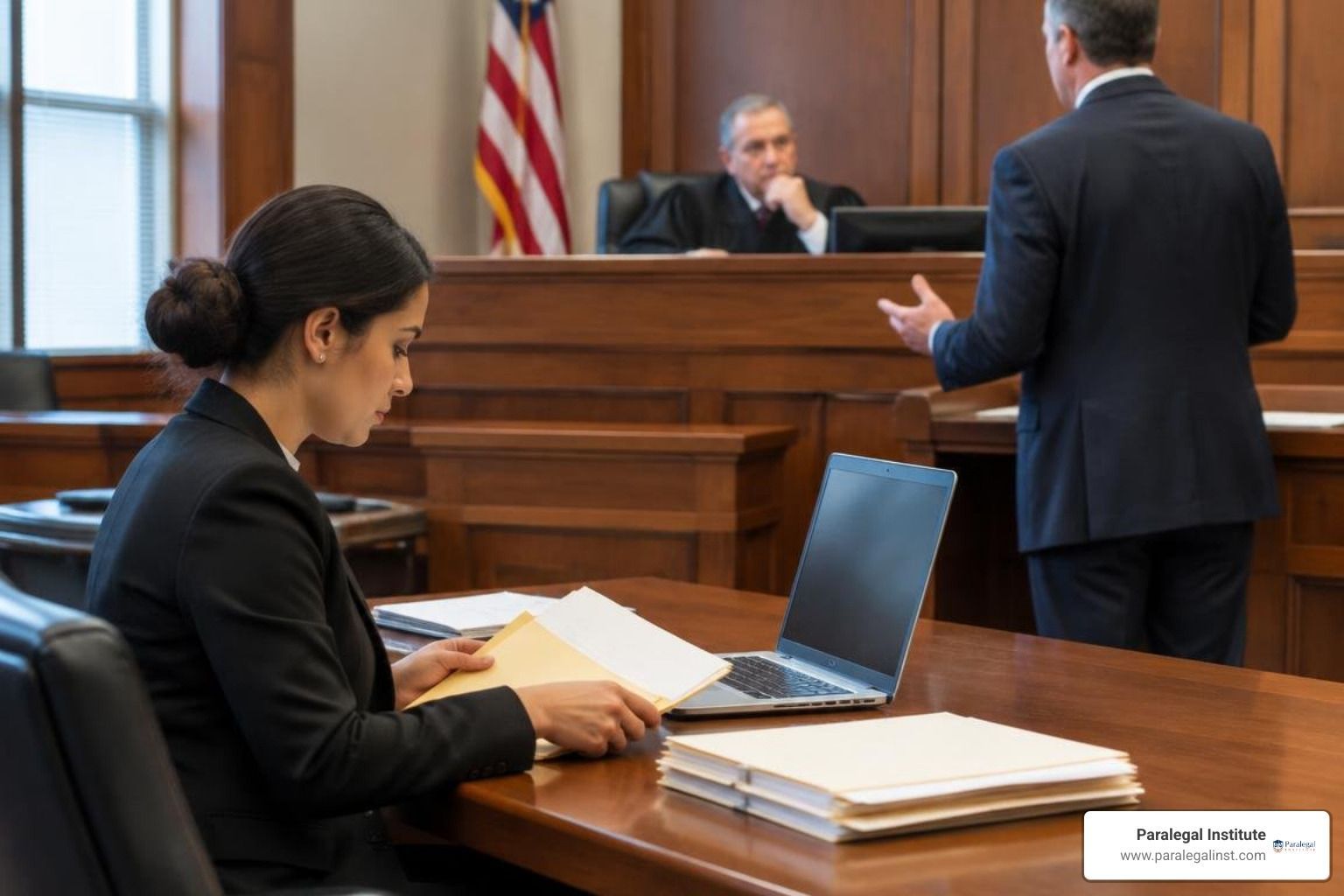
During trials, paralegals provide essential trial assistance. This high-pressure role can involve organizing and managing trial exhibits, coordinating witness schedules, preparing trial notebooks, and even running presentation software in the courtroom. Essentially, if it's a legal task that doesn't strictly require a license to practice law, a skilled paralegal is likely handling it with expertise and precision.
Key Differences: Paralegal vs. Legal Assistant
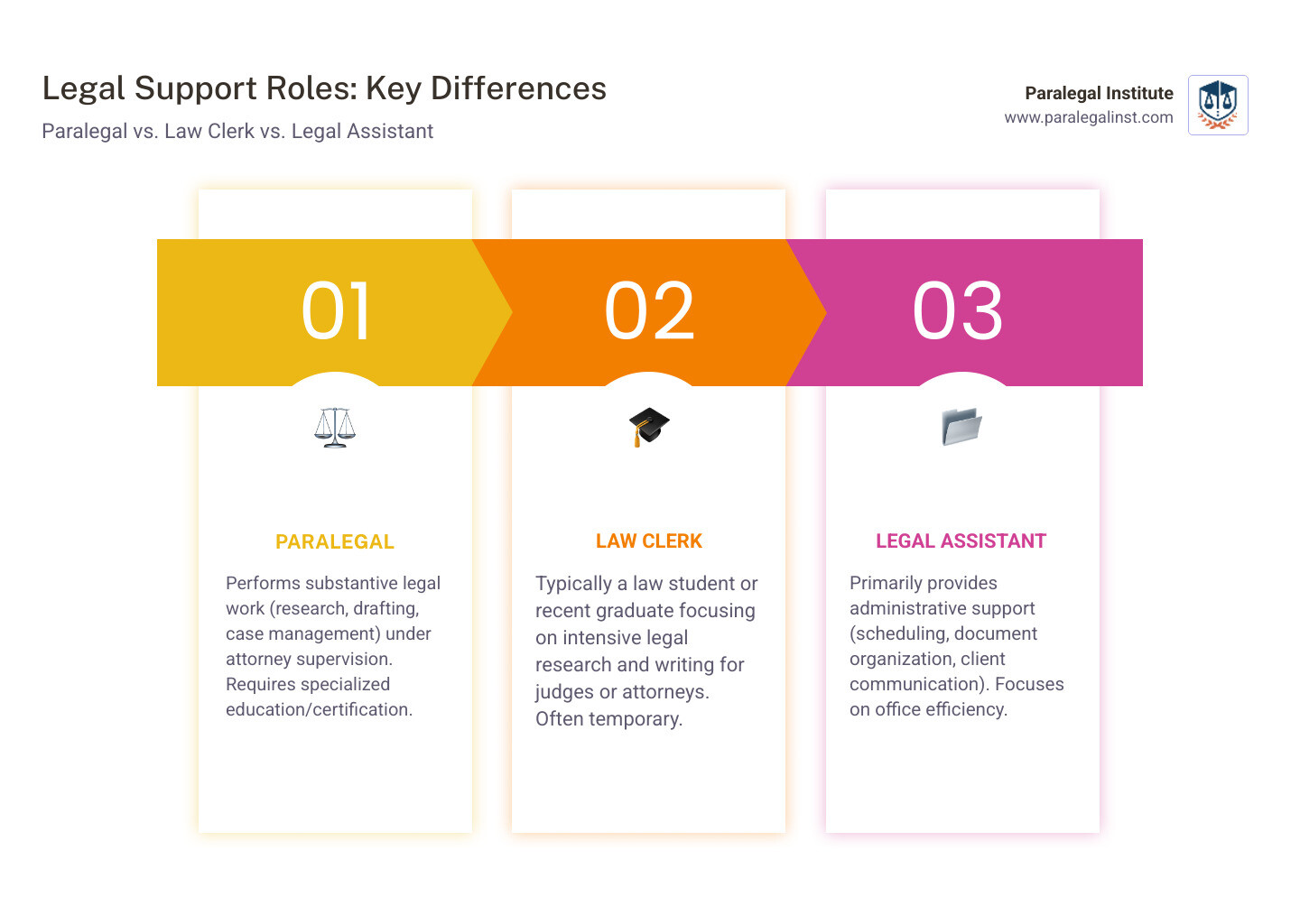
While the titles "paralegal" and "legal assistant" are sometimes used interchangeably in conversation, they represent distinct career paths within the legal support field. Understanding these differences is crucial when exploring paralegal positions and planning your legal career, as the required training and day-to-day responsibilities vary significantly.
| Feature | Paralegal | Legal Assistant |
|---|---|---|
| Primary Focus | Substantive legal work supporting attorneys | Administrative tasks and basic legal support |
| Typical Duties | Draft legal documents, conduct complex research, client interaction, case management | File management, scheduling, basic document preparation, data entry |
| Education Requirements | Formal legal training is standard | Often entry-level with on-the-job training |
| Career Trajectory | Advancement to senior/supervising paralegal roles, specialization | May transition to a paralegal role or other legal positions with further training |
| Work Environment | Law firms, corporate legal departments, government agencies | Primarily law firms and courts |
| Supervision Level | Works more independently on substantive tasks under attorney guidance | Typically requires more direct and constant supervision |
Paralegals are entrusted with more complex responsibilities and are expected to operate with a greater degree of autonomy. A formal training program equips them with the necessary understanding of legal procedures, research methodologies, and case management systems. Legal assistant, on the other hand, often handle more administrative duties and may use their role as a stepping stone to gain experience before pursuing further training to become a paralegal.
The earning potential and career advancement opportunities also differ. Paralegal positions generally offer more competitive compensation and provide clearer paths for professional growth and specialization in high-demand areas like corporate law, litigation support, or intellectual property.
Essential Skills for Today's Paralegal Positions
Success in modern paralegal positions requires a dynamic blend of traditional legal knowledge and cutting-edge technical abilities. The legal field is evolving rapidly, and paralegals who master both foundational and emerging skills become invaluable to their teams.
Strong communication skills are the bedrock of effective paralegal work. This includes clear and persuasive writing when drafting legal documents, as well as professional and empathetic verbal communication when speaking with clients, witnesses, and court personnel. Legal research skills are equally critical. Knowing how to steer legal databases like Westlaw or LexisNexis, analyze case law and statutes, and synthesize information efficiently is what sets exceptional paralegals apart. This skill is so fundamental that the demand for proficient legal support professionals continues to grow, as noted by the U.S. Bureau of Labor Statistics in its occupational outlook.
Organization and attention to detail cannot be overstated. Legal work involves managing multiple cases simultaneously, each with numerous deadlines and strict formatting requirements for documents. A single overlooked detail or missed deadline can jeopardize a client's case. Proficiency with case management software to track dates and manage documents is essential.
Technology proficiency has become non-negotiable. Modern paralegals work daily with a suite of software for case management, document review, e-findy, and trial presentation. Understanding AI adoption in legal practice provides a significant competitive edge, as firms increasingly use artificial intelligence for tasks like legal research and document analysis, freeing up paralegals for more strategic work.
The most successful paralegals also cultivate specialized knowledge in their chosen practice areas. Whether you are passionate about immigration law, fascinated by corporate transactions, or thrive in the high-stakes world of litigation support, developing deep expertise in your niche makes you an indispensable part of the legal team. This specialization opens doors to advanced paralegal positions with greater responsibility and improved compensation.
To showcase these capabilities to employers, build a concise portfolio with redacted writing samples, research memos with proper citations, and brief case management summaries that demonstrate how you track deadlines and maintain files. In interviews, be prepared to explain your workflow for managing statutes of limitation, version control on drafts, and how you communicate timely status updates to attorneys and clients.