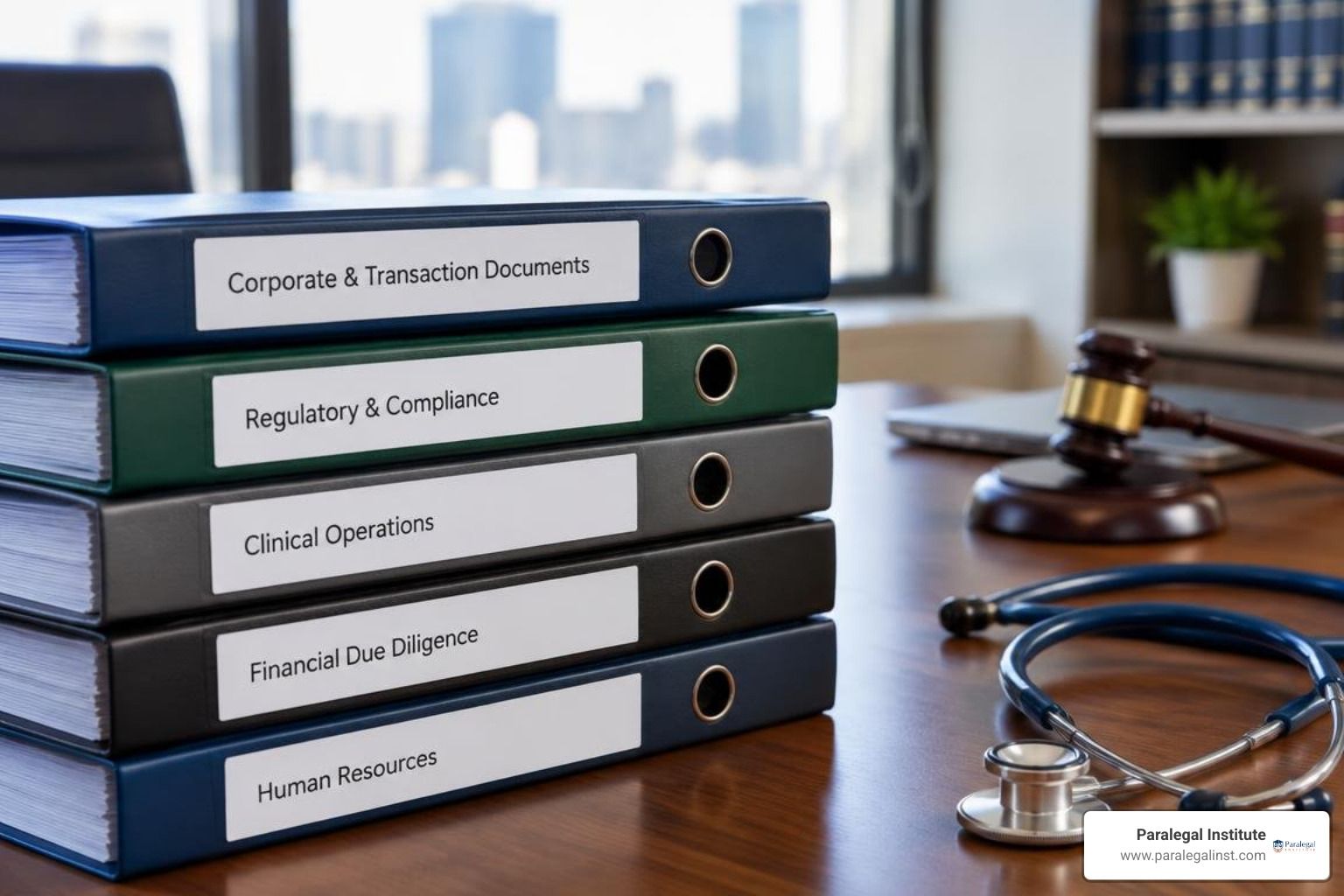
The Modern Legal Professional Behind Every Major Case
A litigation support professional is a specialized legal team member who manages the technical and data-intensive aspects of legal cases, bridging the gap between law and technology. These professionals handle electronic discovery (eDiscovery), maintain litigation databases, and organize massive volumes of documents to ensure attorneys can access the right information at the right time.
Key Facts About Litigation Support Professionals:
- Primary Role: Manage, organize, and analyze electronic data for legal cases
- Core Responsibilities: Database management, eDiscovery processing, trial technology setup, document review coordination
- Typical Employers: Law firms, corporate legal departments, government agencies, legal consulting firms
- Essential Skills: Technical proficiency with legal software, strong organizational abilities, understanding of legal procedures, attention to detail
- Education Path: Education in legal studies, paralegal studies, IT, or a related field; certificates improve career prospects
- Career Outlook: High demand due to increasing data complexity in litigation
Modern litigation is about managing immense amounts of data. When a single lawsuit involves hundreds of thousands of digital files, attorneys need specialists who can turn that data chaos into organized, accessible information that wins cases.
I'm Matt Pfau, a practicing attorney and founder of Paralegal Institute. In my law firm, I regularly hire and train litigation support professionals and paralegals. Through my experience, I've seen how critical these professionals are to modern legal practice.
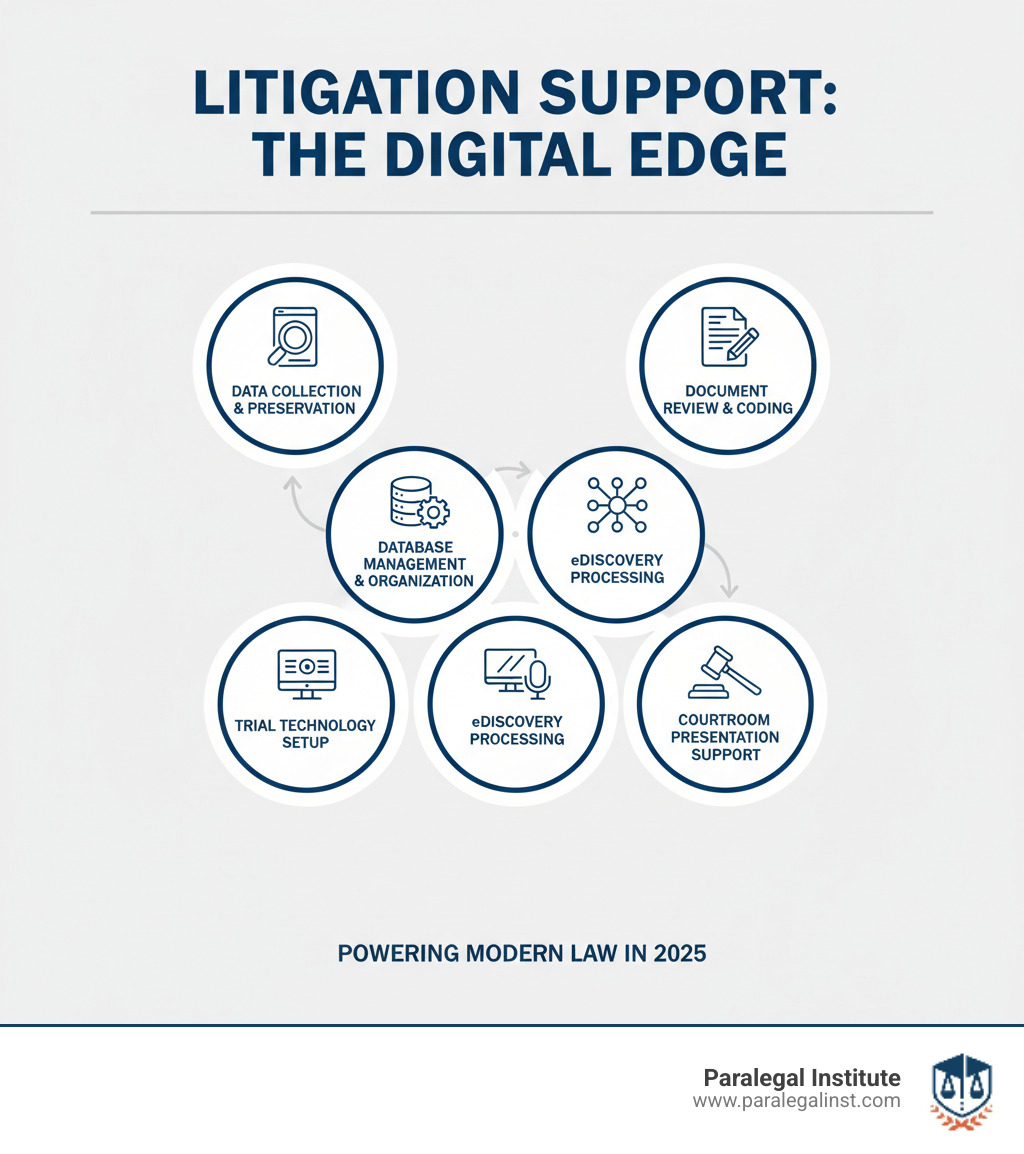
Introduction: The Backbone of Modern Litigation
Remember when legal cases meant filing cabinets stuffed with paper? Those days are gone. Today's lawsuits involve millions of digital files, and a single corporate case can generate more data than a small library. Someone needs to make sense of it all.
That's where the litigation support professional becomes essential.
Attorneys need to focus on legal strategy and client relationships, not wrangle databases or troubleshoot software. Yet without that technical work getting done right, even the strongest legal case can fall apart.
Litigation support professionals are the technical experts who bridge the gap between law and technology. They transform overwhelming amounts of electronic data into organized, searchable information. When a lawyer needs to find a specific email from five years ago, the litigation support team makes it happen in minutes, not weeks.
These professionals handle everything from setting up courtroom technology to managing complex document review projects. They coordinate with vendors, maintain litigation databases, and keep massive discovery projects running smoothly. In short, they make modern litigation work.
Without them, law firms would drown in data. With them, attorneys can focus on practicing law while the technical backbone of the case stays strong. As litigation becomes more data-driven, these professionals have become critical team members no modern law firm can do without.
The Core Role and Responsibilities of a Litigation Support Professional
Think of a litigation support professional as the person who ensures attorneys never have to say, "I know that document is here somewhere." In modern litigation, where a single case can generate hundreds of thousands of electronic files, they create order from digital chaos.
Their work touches every phase of a lawsuit. From the moment discovery begins through the final courtroom presentation, they manage data, organize evidence, and ensure the legal team has instant access to what they need. This isn't just filing documents; it's designing sophisticated systems to search massive databases in seconds and present evidence clearly to judges and juries.
The financial impact is significant. Well-organized data dramatically reduces the time attorneys spend hunting for information, which lowers costs for clients. For those looking to build foundational skills, our Legal Research Guide for Paralegals provides essential knowledge that complements this work.

The Primary Role of a Litigation Support Professional
A litigation support professional is a unique hybrid—not just a paralegal or an IT specialist, but someone who understands both legal procedures and complex technology. This dual expertise is invaluable because they can translate technical capabilities into legal solutions.
Their primary mission is managing Electronically Stored Information (ESI). ESI includes everything from emails and spreadsheets to text messages and social media posts. The litigation support professional ensures this information is collected, preserved, processed, and reviewed according to strict legal standards.
This work directly supports case strategy. When attorneys can quickly find key documents, they can build stronger arguments. Data integrity is critical; one corrupted file or broken chain of custody can undermine a case. These professionals implement rigorous quality control measures to prevent such errors. If you're interested in developing these organizational skills, our guide on Strategies for Paralegals to Stay Organized offers practical techniques.
Specific Tasks and Duties
The daily work of a litigation support professional is remarkably varied, demanding flexibility and strong problem-solving skills.
-
Database creation and maintenance: They design and manage sophisticated platforms for legal work, creating searchable repositories where every document can be categorized and retrieved in moments.
-
Document review and coding: Using specialized software, they coordinate the process where documents are marked as relevant, privileged, or non-privileged, and coded with specific tags for easy retrieval.
-
Discovery process management: They guide the entire workflow, from identifying and preserving data to processing it for review and producing it to opposing counsel. This requires deep knowledge of discovery rules.
-
Courtroom technology setup: As trial approaches, they prepare presentation software, test equipment, and ensure attorneys can seamlessly display evidence. They often provide on-call support during trial.
-
Coordinating with vendors: They act as the liaison with eDiscovery service providers, forensic experts, and technology consultants to ensure case requirements and deadlines are met.
Every task connects back to supporting attorneys in building the strongest possible case. For a broader perspective on legal support roles, our Personal Injury Paralegal Duties Complete Guide explores how different professionals contribute to case success.
Essential Skills and Career Pathways
Becoming a successful litigation support professional demands a unique blend of technical prowess, analytical thinking, and strong communication. It's a field where continuous learning is key, offering clear pathways for professional growth.

Essential Skills for Success
If you're considering this career, you'll need to be fluent in both law and technology.
-
Technical proficiency: A strong grasp of IT fundamentals, document management systems, eDiscovery platforms like Relativity or Nuix, and trial presentation software is essential. You will use, troubleshoot, and train others on these systems.
-
Analytical thinking: Great litigation support professionals don't just organize data; they analyze massive datasets to extract meaningful information that can make or break a case. Our guide on Developing Critical Thinking Skills in Paralegal work explores this skill.
-
Project management: You'll juggle multiple cases with tight deadlines, coordinating resources and managing timelines to maintain quality standards.
-
Communication skills: You must explain complex technical concepts to non-technical legal professionals and translate legal requirements into technical specifications.
-
Attention to detail: In legal work, small errors in data handling can have severe consequences. You can explore why this matters in our article on the Importance of Attention to Detail in Paralegal Work.
How to Become a Litigation Support Professional
The path to this career typically combines formal education with hands-on experience. Many professionals enter with a background in legal studies, IT, or a related field. Others begin as paralegals and develop advanced technical skills over time.
At Paralegal Institute, our 15-week paralegal program provides the foundational legal knowledge essential for litigation support. Our curriculum is taught by practicing legal professionals like myself, focusing on the real-world skills you'll need.
What sets our program apart is the hands-on, practical approach. This accelerated path allows you to enter the legal field faster than many traditional programs. Once you have this foundation, you can develop the specialized technical skills that will set you apart. Our focus on Building Practical Skills in Paralegal Training gives you a significant advantage, and our guidance on How to Get Paralegal Job helps you transition smoothly from education to employment.
Specializations and Career Progression
The field offers exciting specializations and robust career progression. As you gain experience, you'll find multiple paths forward.
-
eDiscovery Specialists focus exclusively on the discovery process—managing the collection, processing, review, and production of electronically stored information.
-
Trial Technology Consultants specialize in courtroom presentations, managing all technology used during trial.
-
Legal Project Managers oversee workflows, budgets, and timelines for complex cases, leveraging technical knowledge while developing leadership skills.
-
Digital Evidence Specialists focus on forensic analysis of digital devices to recover evidence, a critical skill with the rise of cybercrime.
The career progression is often clear. New professionals start in specialist roles, and with experience, can advance to management positions like Litigation Support Manager or Director, overseeing teams and strategic technology initiatives. For a comprehensive overview of career options, our Paralegal Career Information resource provides excellent guidance.
The Impact of Technology and High Demand in the Legal Field
The legal industry has undergone a profound technological change. What was once a profession of paper files has become a digital-first environment where litigation support professionals are not just helpful—they're essential.
How Technology Transformed the Role
Remember when discovery meant boxes of photocopied documents? The shift from paper to digital has fundamentally redefined litigation support. A single lawsuit today can involve millions of digital files—far more information than any human could manually organize.
This explosion of data gave birth to electronic discovery, or eDiscovery. The litigation support professional emerged as the specialist who could steer this new digital landscape. But the change didn't stop there. Artificial intelligence and automation have revolutionized how legal teams handle information. AI-powered tools can now review thousands of documents in hours, identifying patterns that might take humans weeks to find.
Litigation support professionals aren't being replaced by this technology—they're the ones implementing and managing it. They've become the bridge between cutting-edge legal tech and practical courtroom needs. Understanding these advances is crucial, which is why our curriculum emphasizes Legal Technology for Paralegals and explores how AI in Legal Field applications are reshaping legal practice.
Why These Professionals Are in High Demand
The demand for these specialists has grown consistently and shows no signs of slowing down.
-
Data complexity has exploded. Every business transaction leaves a digital trail. When litigation arises, all of this information becomes discoverable, creating a massive challenge for legal teams.
-
Efficiency impacts the bottom line. By bringing in litigation support professionals to handle technical aspects, firms operate more efficiently, allowing attorneys to focus on legal strategy.
-
They directly contribute to winning cases. When evidence is properly organized, easily accessible, and presented effectively, it makes a tangible difference. A well-prepared database can help attorneys find the one crucial email that breaks a case wide open.
The result is a robust job market with excellent long-term prospects. Law firms, corporate legal departments, and government agencies are all actively recruiting skilled litigation support professionals.
Frequently Asked Questions about Litigation Support Careers
If you're considering a career as a litigation support professional, you probably have questions. Based on my experience hiring and working with these specialists, here are answers to the most common ones:
What's the difference between a litigation support specialist and a paralegal?
This is the most common question. The roles are connected but distinct. Paralegals focus on the legal substance of a case—drafting pleadings, conducting legal research, and preparing documents for court. They are deeply involved in legal strategy.
A litigation support professional, on the other hand, focuses on the technology and data management that makes modern litigation possible. They design databases, manage eDiscovery, and set up courtroom technology. While a paralegal needs to find a specific document, the litigation support specialist builds the system that makes finding it possible.
There is skill overlap—both need exceptional organization and legal understanding. But the litigation support role is fundamentally about applying technology to solve legal challenges. In my firm, they work collaboratively: the litigation support professional organizes the data, and the paralegal uses that information to build legal arguments.
What does a typical day look like for a litigation support specialist?
There's no "typical" day, which makes the career engaging. The work varies depending on the case's status. You might start your morning maintaining databases, then meet with attorneys to understand their data needs for a deposition. A significant part of the day often involves troubleshooting software issues so legal work can continue without interruption.
You'll also prepare reports on document review progress or data volumes and manage deadlines across multiple projects. Depending on the litigation phase, you might oversee document production, coordinate with forensic data vendors, or prepare technology for trial. The variety keeps the work interesting and intellectually stimulating.
What types of organizations hire litigation support specialists?
The demand for litigation support professionals extends across the entire legal industry.
-
Law firms are the most common employers, from small boutiques to large national practices. Firms specializing in commercial litigation, intellectual property, or mass torts have the greatest need due to high data volumes.
-
Corporate legal departments in large companies need dedicated professionals to manage their in-house litigation data and technology.
-
Government agencies at all levels employ litigation support specialists to manage electronic evidence for regulatory enforcement and civil litigation.
-
Legal consulting firms that specialize in eDiscovery and trial consulting hire these professionals to serve their law firm and corporate clients.
The breadth of opportunities reflects how essential this role has become to modern legal practice.
Conclusion: Your Next Step into the Legal Support Field
The litigation support professional stands at the critical intersection of law and technology. They transform overwhelming data into strategic assets that help win cases. As litigation becomes more complex, this role will only grow more essential.
If you're looking for a practical entry point into the legal field that opens doors to in-demand careers like litigation support, a solid foundation in real-world skills is the place to start.
At Paralegal Institute, our 15-week paralegal program is designed for adults ready for a career change. Our curriculum is taught by practicing legal professionals who know what skills employers need. Whether you choose online classes with live instruction or in-person training, you'll gain hands-on experience with the workflows that power modern legal practice.
This accelerated path means you can enter the legal field faster than with many traditional programs. Many of our graduates use their paralegal training as a stepping stone into specialized positions like litigation support, where their legal knowledge and practical skills give them a distinct advantage.
The legal field needs professionals who can bridge the gap between attorneys and technology. With the right training, that professional could be you.
Ready to start your journey? Learn more about our practical legal support staff training and find how Paralegal Institute can help you build a rewarding career in just 15 weeks.