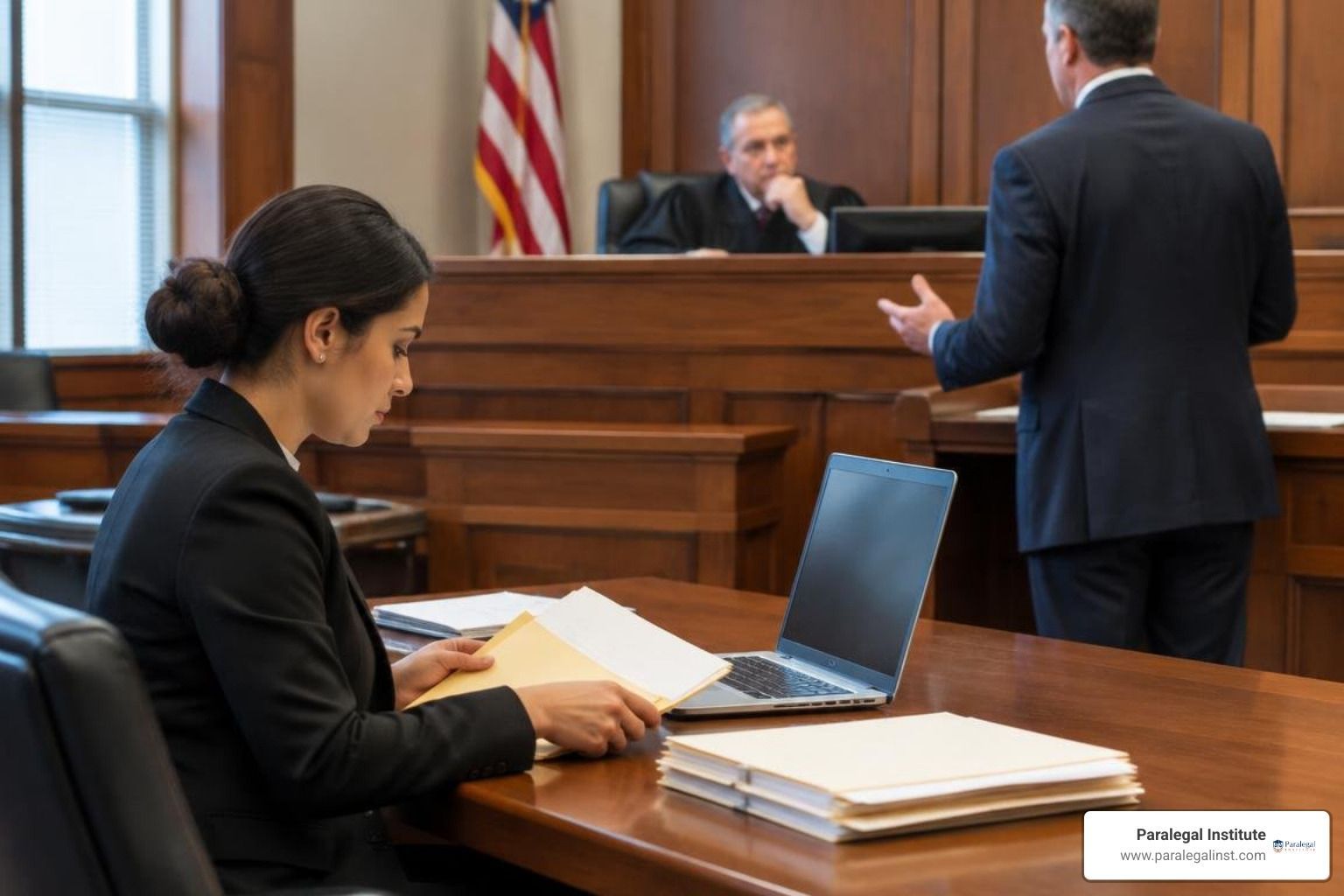
Why Understanding Paralegal Industry Trends Matters Now
Paralegal industry trends are reshaping the legal profession faster than ever before. If you're considering a paralegal career or already working in the field, understanding these shifts is critical to staying competitive and advancing your career.
Key Paralegal Industry Trends for 2026:
- Technology Integration- AI-powered tools and legal automation are becoming must-have skills, not optional extras
- Specialization Over Generalization- Niche expertise in areas like cybersecurity, intellectual property, and compliance can lead to more advanced roles
- Remote and Flexible Work- 85% of law firms now offer remote work policies, changing how and where paralegals work
- Improved Client Interaction- Paralegals are taking on more client-facing responsibilities and relationship management
- Ethical and Compliance Focus- New technologies require paralegals to understand data security, confidentiality, and technological competence
The legal industry is experiencing rapid change. Law firms are digitizing operations, with 83% now using legal technology tools. At the same time, the role of paralegals is expanding beyond traditional administrative support into strategic, specialized work that directly impacts case outcomes and firm profitability.
The reality? Paralegals who can integrate technology, specialize in high-growth practice areas, and manage both legal tasks and client relationships are in high demand. Those who don't adapt risk being left behind as the profession evolves.
While the Bureau of Labor Statistics projects modest overall job growth, about 40,800 openings are expected annually through 2035—driven largely by the need to replace workers and fill specialized roles.
I'm Matthew Pfau, a practicing attorney who trains paralegals at Paralegal Institute and operates a law firm that employs numerous paralegals. Through hiring, training, and teaching, I've witnessed how paralegal industry trends are changing what employers expect and what successful paralegals need to know. Throughout this guide, we'll explore the specific trends reshaping the profession and how you can position yourself for success in this evolving landscape.
The Tech Takeover: AI, Automation, and the Modern Paralegal
The legal world, once seen as slow to adopt new technologies, is now in the midst of a digital revolution. This is perhaps the most significant of all paralegal industry trends. Technological advancements, particularly in Artificial Intelligence (AI) and automation, are fundamentally changing the daily work of paralegals. We are moving beyond simple word processing to sophisticated tools that streamline complex tasks, improve legal research, and boost overall efficiency.
Think of it this way: 75% of law firms have reported improved productivity by incorporating automation into their processes. This isn't just about saving time; it's about freeing up paralegals to focus on more strategic and analytical aspects of their work. From managing vast amounts of data in discovery to performing intricate legal research with AI-powered platforms, technology is changing the paralegal role from a support function to a central, indispensable part of the legal team.
Adapting to new technology is no longer optional; it's a core competency. Law firms in places like Las Vegas, NV, and across the nation, are seeking paralegals who are not just tech-savvy but truly tech-competent, ready to hit the ground running with the latest legal software and research tools. At Paralegal Institute, we design our curriculum so students learn how to use the types of technology they will actually encounter in real law offices and legal departments, whether they choose our in-person classes or our online program with live instruction. You can learn more about how technology is impacting the legal field on our page dedicated to AI in the Legal Field.
How AI is Reshaping Paralegal Responsibilities
The rise of AI is perhaps the most talked-about development among paralegal industry trends. Generative AI, for example, is quickly becoming adept at drafting initial legal documents, summarizing depositions, and even performing preliminary contract review. This doesn't mean AI is replacing paralegals. Instead, it's shifting the focus of paralegal responsibilities.
Instead of spending hours on routine, repetitive tasks, paralegals can now leverage AI to handle much of the basic drafting and information sorting, allowing them to dedicate more time to higher-level strategy, critical thinking, and complex problem-solving. Imagine using AI to quickly analyze a mountain of case data, identifying patterns and insights that would take a human weeks to uncover. This empowers paralegals to contribute more meaningfully to case strategy and client outcomes.
This shift highlights the urgent need for practical, hands-on training for paralegals in this area. At Paralegal Institute, we focus on teaching students how to use AI and other tools responsibly, accurately, and ethically under attorney supervision, so they understand both the capabilities and limits of technology in U.S. legal practice.
Leveraging Legal Tech for Maximum Efficiency
Beyond AI, the broader landscape of legal technology offers immense opportunities for efficiency. Cloud-based document management systems, for instance, are widely adopted by 90% of law firms, while 87% use legal research platforms. These tools are crucial for modern practice.
Think about the sheer volume of information involved in legal cases. Paralegals are now expected to be proficient in utilizing case management and document systems to organize files, track deadlines, and manage client communications seamlessly. Cloud-based collaboration platforms allow legal teams to work together efficiently, regardless of their physical location. E-filing systems have transformed court submissions, making them faster and more accurate.
Crucially, with increased digitization comes an increased need for cybersecurity awareness. Protecting sensitive client data is paramount, and paralegals play a vital role in upholding data security protocols. Mastery of specialized litigation support applications for automating discovery responses or preparing exhibits is no longer a luxury but a necessity. These tools not only boost productivity but also improve the overall value a paralegal brings to a law firm.
Paralegal Institute emphasizes this real-world, technology-focused training so graduates can move quickly from the classroom into casework. Our live, attorney-led instruction helps students practice using these tools in realistic scenarios, which is a key advantage over more theoretical programs.
Specialization is Power: High-Growth Areas and In-Demand Expertise
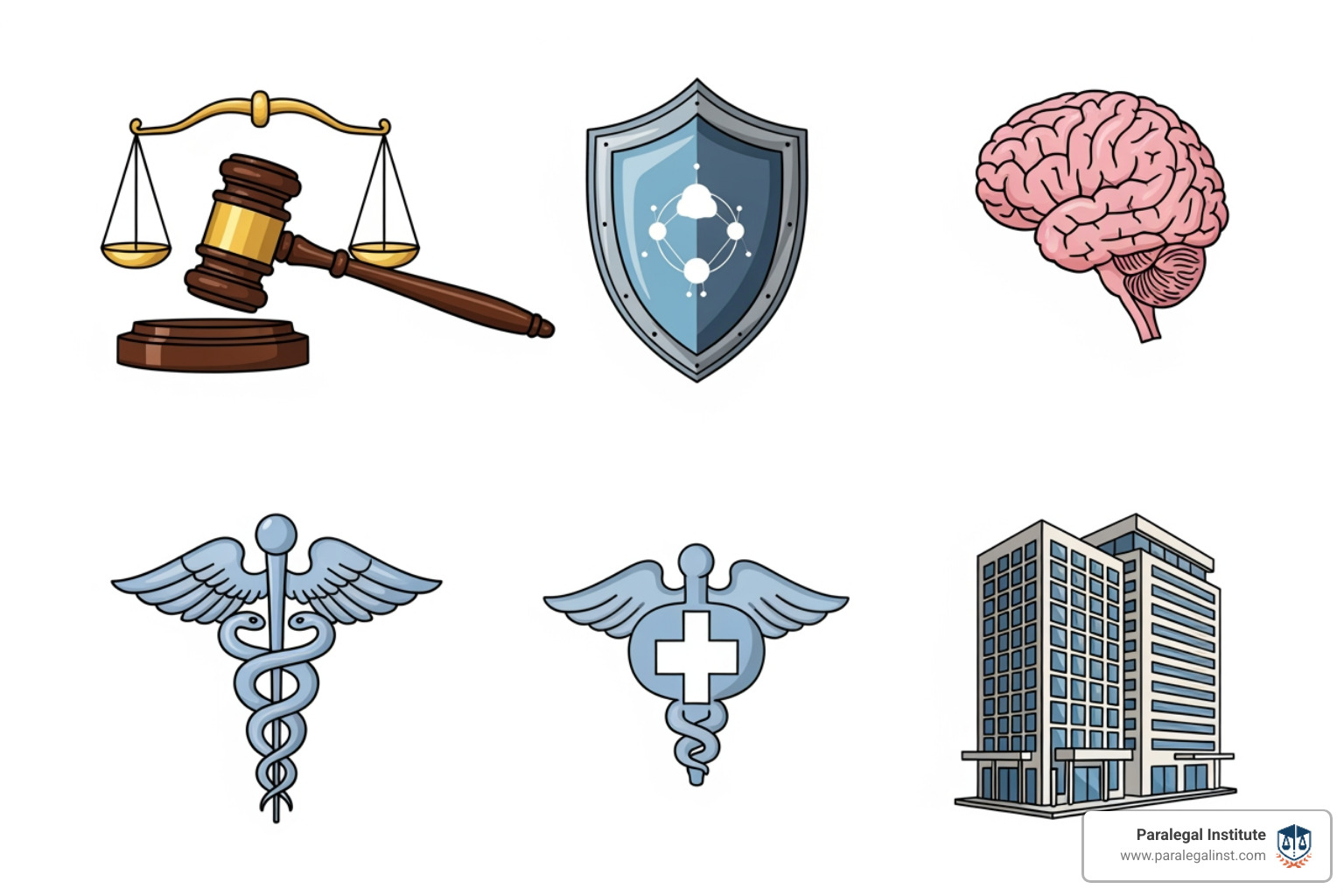
One of the most significant paralegal industry trends we're observing is the shift from the generalist paralegal to the specialist. In a legal landscape that is growing increasingly complex, developing niche expertise is a powerful way to advance your career and increase your value to law firms. Attorneys are increasingly seeking paralegals who possess deep knowledge in specific areas, allowing for more efficient case handling and less time spent on training.
For paralegals across the country this means moving beyond a broad understanding of the law to honing in on particular practice areas where demand is soaring. This specialization leads to career advancement. In fact, 60% of paralegals are pursuing specialized training, and 78% of law firms plan to hire specialized paralegals in the next three years. At Paralegal Institute, we equip students with a strong foundation in practical skills, as outlined in our Skills for Paralegal Guide, so they can step into a range of practice areas with confidence and continue to build specialized expertise once they are working.
Why Specialization is a Defining Paralegal Industry Trend
The legal industry's increasing complexity means that general knowledge, while valuable, often isn't enough to tackle intricate cases or steer highly specific regulations. Attorneys need paralegals who can hit the ground running with an understanding of a particular legal domain. This reduces the attorney's need to train staff on fundamental concepts, improving law firm efficiency and ultimately benefiting clients. Specialization allows paralegals to become indispensable experts in their chosen fields.
Here are five high-growth practice areas that are particularly strong among current paralegal industry trends:
- Intellectual Property (IP) Law: Paralegals in this field assist with patent filings, trademark applications, copyright registrations, and IP litigation, requiring a keen eye for detail and an understanding of complex legal frameworks.
- Cybersecurity & Data Privacy Law: As digital threats proliferate and data privacy regulations (like GDPR and CCPA) become more stringent, paralegals who understand data protection, incident response, and compliance are in high demand. They help firms and companies steer the changing landscape of digital security.
- Healthcare Law: The healthcare industry is a maze of regulations, compliance issues, and legal challenges. Paralegals specializing in healthcare law assist with medical malpractice cases, HIPAA compliance, regulatory filings, and corporate transactions within the healthcare sector.
- Corporate Law: With the growth of businesses and intricate corporate transactions, paralegals specializing in corporate law are essential. They assist with mergers and acquisitions, contract review, corporate governance, and compliance with securities regulations.
- Compliance & Risk Management: In an era of heightened regulatory scrutiny, businesses and law firms need experts to ensure adherence to a myriad of laws and to mitigate legal risks. Paralegals in this area help conduct internal audits, develop compliance policies, and assist with regulatory filings. Paralegals with a working knowledge of compliance and risk management are in high demand.
Honing Critical Research and Writing Skills
Regardless of the specialization, advanced legal research and writing skills remain paramount. These are foundational skills that allow paralegals to excel in any area of law. Attorneys increasingly rely on paralegals to independently manage substantive legal research, synthesize complex information, and draft clear, accurate, and persuasive legal documents. Error-free work isn't just good practice; it's billable work, and legal departments are increasingly cost-conscious, preferring internal expertise.
Developing expertise in advanced legal research means knowing how to navigate vast databases, identify relevant case law and statutes, and understand the nuances of legal precedent. Persuasive legal writing involves crafting documents that are not only grammatically perfect but also logically sound and compelling. This includes drafting everything from initial pleadings and motions to complex contracts and discovery responses. Effective evidence management and strong analytical thinking are also crucial, allowing paralegals to build strong cases and anticipate legal challenges.
Paralegal Institute places heavy emphasis on these core skills. Through live, attorney-led instruction—both in-person and online with real-time classes—students practice the kind of research, writing, and analysis they will perform in actual casework. This practical focus gives them a faster, more career-ready path than longer programs that focus heavily on theory.
The Human Element: Essential Soft Skills for Career Advancement

While technological proficiency and specialized knowledge are crucial paralegal industry trends, we must never forget the human element of the legal profession. Soft skills are not merely "nice-to-haves"; they are essential for career advancement. These include building strong client relationships, effective communication, meticulous project management, high emotional intelligence, seamless team collaboration, and sharp problem-solving abilities.
When technology handles more routine tasks, the uniquely human skills that foster trust and facilitate understanding become even more valuable. For paralegals in Las Vegas, NV, and beyond, these skills differentiate a good paralegal from an exceptional one, contributing significantly to a firm's success and client satisfaction.
Mastering Client Communication and Service
Paralegals are often the first point of contact for clients, and their interactions set the tone for the entire legal experience. This makes mastering client communication and service a critical skill. Clients today expect more than just legal expertise; they demand empathy, clarity, and regular updates. In fact, 85% of clients believe communication is the most important skill for a paralegal, and 80% value regular updates on their cases.
Paralegals serve as a vital bridge between attorneys and clients. This includes managing expectations, explaining complex legal concepts in understandable terms, and providing professional, empathetic support during what can be stressful times for clients. Building trust through transparent and consistent communication improves client satisfaction and strengthens the firm's reputation.
At Paralegal Institute, we recognize that strong communication is as important as strong research. Through live, interactive classes—online and in person—students practice how to speak with clients, attorneys, and court staff in ways that are professional, clear, and confident. Our focus on Developing Critical Thinking Skills in Paralegal also extends to how students understand and respond to client needs.
The Paralegal as a Project Manager
As legal cases become more complex, the paralegal's role has expanded to include significant project management responsibilities. Paralegals with strong project management skills are becoming critical assets, optimizing workflows, tracking deadlines, and coordinating various moving parts across multiple cases.
This involves effectively managing the flow of information, coordinating with attorneys, external vendors, and court personnel, and ensuring that all tasks are completed on time and within scope. A paralegal who can efficiently organize evidence, track discovery, and manage a litigation timeline directly increases a law firm's efficiency and profitability. They free up attorneys to focus on legal strategy, enhancing overall client satisfaction.
This blend of organizational skills and legal knowledge is something we intentionally build into Paralegal Institute’s 15-week program. Students practice managing documents, deadlines, and case tasks the way real law offices operate, which helps them become job-ready more quickly than they would in longer, theory-heavy programs. Strong Evidence Management Paralegal Success is a cornerstone of effective legal project management, and it is a central part of our training.
The Evolving Workplace: Key Paralegal Industry Trends
The legal workplace is undergoing significant changes, driven by technology, evolving expectations, and a desire for greater flexibility. These shifts are among the most impactful paralegal industry trends affecting job outlook, work environments, and recruitment strategies across the nation, including dynamic legal markets like Las Vegas, NV. We're seeing new approaches to where and how legal work gets done, alongside an increased focus on ethical considerations in our increasingly digital world.
The Bureau of Labor Statistics (BLS) projects little or no change in employment for paralegals and legal assistants from 2025 to 2035. However, this doesn't tell the whole story. The BLS also projects about 40,800 openings for paralegals and legal assistants each year, on average, over the decade. These openings are largely due to the need to replace workers who are leaving the labor force or transferring to other occupations, emphasizing the ongoing demand for skilled professionals. For more detailed information, you can always refer to the Paralegals and Legal Assistants job outlook from the BLS.
The New Work Environment: Remote Work and Recruitment
The COVID-19 pandemic accelerated a shift towards more flexible work arrangements, and this trend has largely stuck. Remote work is no longer a temporary measure but a lasting feature of the legal landscape. A significant 85% of law firms have implemented remote work policies, with many paralegals now working from home. Furthermore, 71% of lawyers believe that flexible work arrangements are important for law firm success. This impacts not only job satisfaction but also recruitment strategies, as firms compete for talent by offering greater flexibility. Our research shows that 71% of paralegals now have some form of flexible work arrangement, a 13% rise since 2022.
For paralegals, this means a greater emphasis on self-discipline, effective virtual communication, and the ability to manage tasks independently. While some firms are returning to in-office work, the demand for adaptable arrangements remains strong, with a notable portion of freelance paralegals working remotely full-time. These new work models also highlight the importance of benefits packages and work-life balance, as professionals seek roles that offer more than just a salary.
At Paralegal Institute, we mirror this modern flexibility in how we teach. Students can choose either in-person classes or online courses with live instruction, allowing them to learn from anywhere while still interacting with practicing attorneys in real time. This structure prepares future paralegals for both traditional office environments and remote roles. For those interested in exploring remote career paths, our guide on Remote Entry Level Paralegal Jobs offers valuable insights.
Emerging Ethical Considerations in a Digital Age
As technology reshapes the paralegal role, it also introduces new and complex ethical considerations. Upholding client confidentiality and ensuring data security are more critical than ever, especially with the increased use of cloud-based platforms and remote work. Paralegals handle vast amounts of sensitive information, making them frontline defenders against data breaches and cyber threats.
Another significant ethical challenge is navigating the Unauthorized Practice of Law (UPL) in the context of advanced technology. While AI can assist with drafting and research, paralegals must understand the boundaries of their roles and ensure they are not performing tasks that legally require an attorney. Staying current with technological competence is also an ethical duty, ensuring legal professionals can effectively and responsibly use the tools available. Finally, recognizing and addressing algorithmic bias in AI tools is crucial to ensuring fairness and equity in legal processes.
These are complex issues that require careful consideration and continuous learning to maintain the integrity of the legal profession. Paralegal Institute integrates these ethical topics into live instruction so students can ask questions, work through real-world scenarios, and understand how to apply professional rules in everyday casework.
Conclusion: Preparing for the Future of the Paralegal Profession
The paralegal profession is dynamic, challenging, and filled with opportunity. The paralegal industry trends we've discussed—the tech takeover, the power of specialization, the importance of human-centric soft skills, and the evolving workplace—all point to one overarching truth: adaptability is key. Paralegals who accept change, commit to continuous learning, and strategically develop their skill sets will not only thrive but lead in this evolving landscape.
At Paralegal Institute, we are committed to preparing you for this future. Our 15-week program is designed with these modern paralegal industry trends in mind. We offer a hands-on curriculum, taught by practicing attorneys, that focuses on practical skills for immediate workforce entry. You can choose in-person classes or an online program with live instruction, so you still learn in real time from experienced lawyers.
We understand that you're looking for a direct path to a rewarding legal career, not years of purely theoretical study. That's why our program provides a faster, more direct route to becoming a job-ready paralegal than traditional, longer programs. Our graduates benefit from live interaction, real-world legal training, and an accelerated timeline that helps them enter the legal field sooner while making a smart investment in their education.
Whether you're looking to start a new career or advance your current one, understanding these trends and acquiring the right skills is paramount. We invite you to learn more about how our program can help you navigate these changes and launch a successful career. Find if a paralegal program is the right path for you.