
Why Legal Intern Experience Matters for Your Career
A legal intern is someone who works in a legal setting—such as a law office, government agency, or legal aid organization—to gain hands-on experience while completing their legal education. Legal internships bridge the gap between classroom learning and real-world practice, giving you the chance to apply your knowledge, develop professional skills, and build connections in the legal field.
Quick answers for finding legal internships:
- Government legal departments- U.S. Attorneys' offices, court systems, and regulatory agencies offer volunteer and paid internships
- Legal aid organizations- Non-profit groups provide mission-driven internships, some of which may offer a stipend or academic credit
- Private law offices- Law firms offer internships in litigation, corporate law, and other practice areas (compensation varies)
- Application timeline- Most summer internships have deadlines between September and February; fall and spring positions have rolling deadlines
- Requirements- Must be enrolled in a legal studies or paralegal program, maintain good academic standing, and submit a resume, transcript, and writing sample
Whether you're pursuing a career as a paralegal or exploring the legal field, internships provide invaluable exposure to legal research, document preparation, client interaction, and courtroom procedures. Many organizations hire across different settings—from district attorneys' offices to civil rights organizations to private firms—each offering unique learning opportunities.
This guide walks you through the types of legal intern positions available, how to find and apply for them, what to expect on the job, and how to leverage your internship into a successful legal career. You'll learn practical strategies for standing out as a candidate and making the most of your experience.
As Matthew Pfau, I've hired and trained numerous paralegals throughout my legal career, and I've seen how strong legal intern experience sets candidates apart when entering the job market. At Paralegal Institute, I've designed our curriculum to prepare students for exactly these opportunities, combining live instruction with the practical skills that make internships—and careers—successful.
Where to Intern: Exploring Legal Work Environments
Understanding the landscape of legal internships is your first step. I see three primary types of organizations that offer these valuable opportunities: government legal departments, legal aid organizations, and private law offices. Each offers a distinct culture, work environment, and set of experiences that can shape your understanding of the legal system and your future career.
Here's a quick comparison to help you understand the differences:
| Internship Type | Primary Focus | Work Environment | Career Impact |
|---|---|---|---|
| Government Legal Departments | Public service, legal compliance, regulatory work | Structured, formal, mission-driven | Strong foundation in public law, potential for government career path |
| Legal Aid Organizations | Access to justice, community advocacy, civil rights | Fast-paced, client-focused, resource-conscious | Direct client experience, social justice perspective, strong advocacy skills |
| Private Law Offices | Business law, litigation, client services | Professional, deadline-driven, varied practice areas | Business acumen, networking opportunities, diverse legal exposure |
The legal intern experience is a critical stepping stone for anyone pursuing a career in the legal field. It's an opportunity to apply the theories and concepts learned in a paralegal program, like ours at Paralegal Institute, to real-world scenarios. I believe that practical experience is paramount, and a robust internship can transform academic knowledge into job-ready skills. This guide will help you understand the diverse landscape of legal intern positions, from the busy halls of government agencies to the client-focused environments of private law offices. I'll walk you through how to secure these roles, what your daily responsibilities might entail, and how to leverage this invaluable experience for your long-term career success.
Where to Intern: Exploring Legal Work Environments
The legal field offers a spectrum of internship opportunities, each providing a unique perspective on the practice of law. Whether you envision yourself contributing to public service, advocating for justice, or supporting the intricate operations of a private firm, there's a legal intern role that aligns with your aspirations. At Paralegal Institute, we prepare our students with the foundational skills necessary to excel in any of these environments.
Government Legal Internships: Serving the Community
Interning with government legal departments offers an unparalleled opportunity to engage with public service and the machinery of justice. These roles often involve supporting attorneys in various capacities, from local municipal legal offices to state attorney general's departments. For instance, opportunities might arise within a county district attorney's office or a state attorney general's office, providing exposure to criminal prosecution, civil litigation, or policy development.
Interns in these settings often focus on legal compliance, supporting community initiatives, and ensuring the smooth operation of government functions. The work can be incredibly diverse, touching upon areas like appellate law, child abuse cases, economic crimes, family violence, and juvenile law. Many government internships, especially at the federal level, will require satisfactory completion of a security clearance or background check, a standard procedure for roles involving sensitive information.
Our accelerated program at Paralegal Institute equips you with the robust legal research, writing, and analytical skills critical for success in government legal work. We focus on practical training, ensuring you are prepared to contribute from day one.
Legal Aid and Advocacy Internships: Making a Difference
For those passionate about social justice and directly assisting underserved communities, legal aid and advocacy organizations offer deeply rewarding legal intern experiences. These non-profit entities focus on providing legal services to individuals who might otherwise lack access to justice, covering a broad range of civil and criminal matters.
Internships in these organizations emphasize direct client service, often involving intake interviews, case management support, and extensive legal research to support advocacy efforts. You'll gain real-world experience contributing to meaningful work, developing substantive skills, and learning from experienced professionals through mentorship and on-the-job learning. While many positions are unpaid, some organizations may offer stipends or support academic credit.
Our comprehensive training at Paralegal Institute, delivered through live instruction by practicing legal professionals, provides the practical foundation needed for these roles. We teach you the casework and documentation skills essential for supporting attorneys and clients in high-impact legal aid settings.
Private Law Offices: The Business of Law
Interning in a private law office provides a direct look into the business side of the legal profession. These internships can range from small local firms to larger corporate law practices, offering exposure to various legal fields such as litigation, corporate law, real estate, family law, and more. In any major city, you'll find a wide array of private firms where a legal intern can gain valuable experience.
In a private firm, your work might involve supporting attorneys with casework, preparing documents for court filings, managing client communications, and performing detailed legal research. You'll observe how client relationships are built and maintained, how cases are strategically managed, and how legal services are delivered in a competitive environment. This setting is also excellent for networking, as you'll interact daily with attorneys, paralegals, and other legal professionals who can become valuable contacts for your future career.
Paralegal Institute’s focus on practical, career-ready skills gives you a distinct advantage in securing and excelling in private law office internships. Our curriculum, designed and taught by practicing legal professionals, ensures you are familiar with the procedures and terminology used in today's law firms, giving you an edge over graduates from less practical programs.
The Application Playbook: How to Secure a Legal Intern Position
Securing a legal intern position requires a strategic approach, careful preparation, and professional presentation. We believe that with the right guidance, any motivated student from Paralegal Institute can steer the application process successfully.

Finding and Applying for Opportunities
Finding the right internship opportunity is a blend of proactive searching and leveraging available resources. We encourage our students to use Paralegal Institute’s career services and job search support, which are designed to connect you with relevant opportunities.
Beyond our internal resources, you can explore opportunities through:
- Online Job Boards: Government job portals are excellent for federal positions. Other platforms aggregate listings for private firms and non-profits.
- Direct Outreach: Many organizations, especially smaller firms, may not publicly advertise every internship. Researching firms or organizations that align with your interests and directly inquiring about opportunities can be fruitful.
- Academic Timelines: Application deadlines for legal internships often follow seasonal cycles. Summer internships, which are very popular, typically have application windows from September to February of the preceding year. Fall and spring internships may have rolling deadlines or open a few months before the semester begins. It's crucial to plan ahead and apply early, especially for competitive positions.
Starting your paralegal job search early is key to finding the best fit. Start your paralegal job search.
Crafting Your Application Materials
Your application materials are your first impression, so they must be polished, professional, and custom to each opportunity. Typically, you'll need to submit:
- Resume: Highlight your relevant coursework from Paralegal Institute, any legal-related projects, and transferable skills like research, writing, and organization. Even if you don't have prior legal work experience, emphasize how our practical training has prepared you.
- Cover Letter: This is your chance to explain why you are interested in this specific organization and internship. Connect your skills and career aspirations to their mission and the responsibilities of the role.
- Transcript: Demonstrate your academic standing and the rigor of your legal studies at Paralegal Institute.
- Writing Sample: This is often the most critical component. It showcases your ability to think critically, research effectively, and communicate clearly—skills we carefully hone in our live instruction. Choose a sample that demonstrates your best legal writing, perhaps a memo or a research paper from your Paralegal Institute coursework. Ensure it is error-free and adheres to legal citation standards.
Getting advice for your paralegal career can help you refine these materials and present yourself as a top candidate. Get advice for your paralegal career.
Qualifications for a Legal Intern
While specific requirements can vary, most organizations look for several key qualifications in a legal intern:
- Enrollment in a Legal Program: You must typically be enrolled in a paralegal program or an equivalent legal studies program. Our 15-week paralegal program at Paralegal Institute is designed precisely for this purpose, providing you with the essential knowledge and practical skills.
- Strong Academic Record: While not always a strict GPA cutoff, maintaining good academic standing demonstrates your commitment and ability to grasp complex legal concepts. Some agencies, for example, may have minimum GPA requirements.
- Demonstrated Interest: Employers want to see genuine enthusiasm for the legal field and for their specific area of practice. This can be shown through your coursework, extracurricular activities, or volunteer work.
- Excellent Research and Writing Skills: These are paramount in any legal role. Our program at Paralegal Institute heavily emphasizes these skills, ensuring our graduates are proficient in legal research using professional online databases and can draft clear, concise legal documents.
- Communication and Professionalism: The ability to communicate effectively, both orally and in writing, and to conduct yourself professionally, is crucial.
Preparing for your first job as a paralegal includes understanding these qualifications and how to highlight them. Prep for your first job as a paralegal.
A Day in the Life: What to Expect on the Job
Stepping into a legal intern role is an exciting transition from theory to practice. While no two days are exactly alike, especially across different legal environments, there are common threads that define the experience. We want to set realistic expectations for you, knowing that the learning curve is steep but incredibly rewarding.

Typical Responsibilities and Tasks
As a legal intern, your daily tasks will revolve around supporting attorneys and paralegals in their casework. Our Paralegal Institute training focuses on preparing you for these core responsibilities:
- Legal Research: A significant portion of your time will likely be spent conducting legal research. This involves using professional online legal databases to find relevant statutes, case law, and regulations. You'll learn to identify key issues and synthesize information effectively.
- Drafting Documents: You'll gain experience drafting various legal documents, such as internal memoranda, summaries of depositions, discovery requests, and even portions of motions or briefs. This is where your writing skills, honed at Paralegal Institute, become invaluable.
- Document Review and Case Preparation: Interns often assist with organizing and reviewing documents for discovery, trial preparation, or client meetings. This can include categorizing evidence, creating chronologies, and ensuring all necessary paperwork is in order.
- Client Interaction: Depending on the setting, you might have opportunities to observe client meetings, assist with client intake, or help prepare clients for interviews or court appearances. In legal aid settings, direct client interaction can be a more prominent part of your role.
- Courtroom Observation: In roles with government agencies or private litigation firms, you may have the chance to observe court proceedings, hearings, and trials. This provides invaluable insight into the practical application of legal theory.
To see what an entry-level paralegal job entails, which closely mirrors many intern responsibilities, refer to our guide. See an entry-level paralegal job description.
Mentorship, Training, and Schedule
A legal intern position is fundamentally a learning experience, and mentorship is a cornerstone of that. You can expect:
- Supervision: You will typically be supervised by an experienced attorney or a senior paralegal who will guide your work, provide feedback, and help you understand the nuances of legal practice.
- Training: This can range from formal training sessions on specific legal procedures to informal, on-the-job guidance as you tackle new tasks. Many organizations are invested in developing their interns' skills.
- Compensation: The compensation structure for legal internships varies. Some private law offices offer paid positions, while many government and legal aid roles are unpaid but may offer academic credit or a stipend. It’s important to clarify the compensation structure before accepting an offer.
- Schedule: Internship schedules can be flexible, with full-time and part-time options often available to accommodate academic calendars. While many tasks can be performed remotely, some experiences, like court observation, may require in-person attendance. Paralegal Institute's live online instruction prepares you for the communication and technical skills needed in both in-person and remote legal work environments.
Learning about entry-level paralegal training can help you understand the skills you'll develop and how they apply in an internship. Learn about entry-level paralegal training.
From Intern to Professional: Leveraging Your Experience
A legal intern position is more than just a temporary job; it's a strategic investment in your future career. The experience you gain, the connections you make, and the skills you refine will be instrumental in launching your legal career, whether you aim to be a paralegal, legal assistant, or pursue further legal education.
The Role of Internships in Career Development
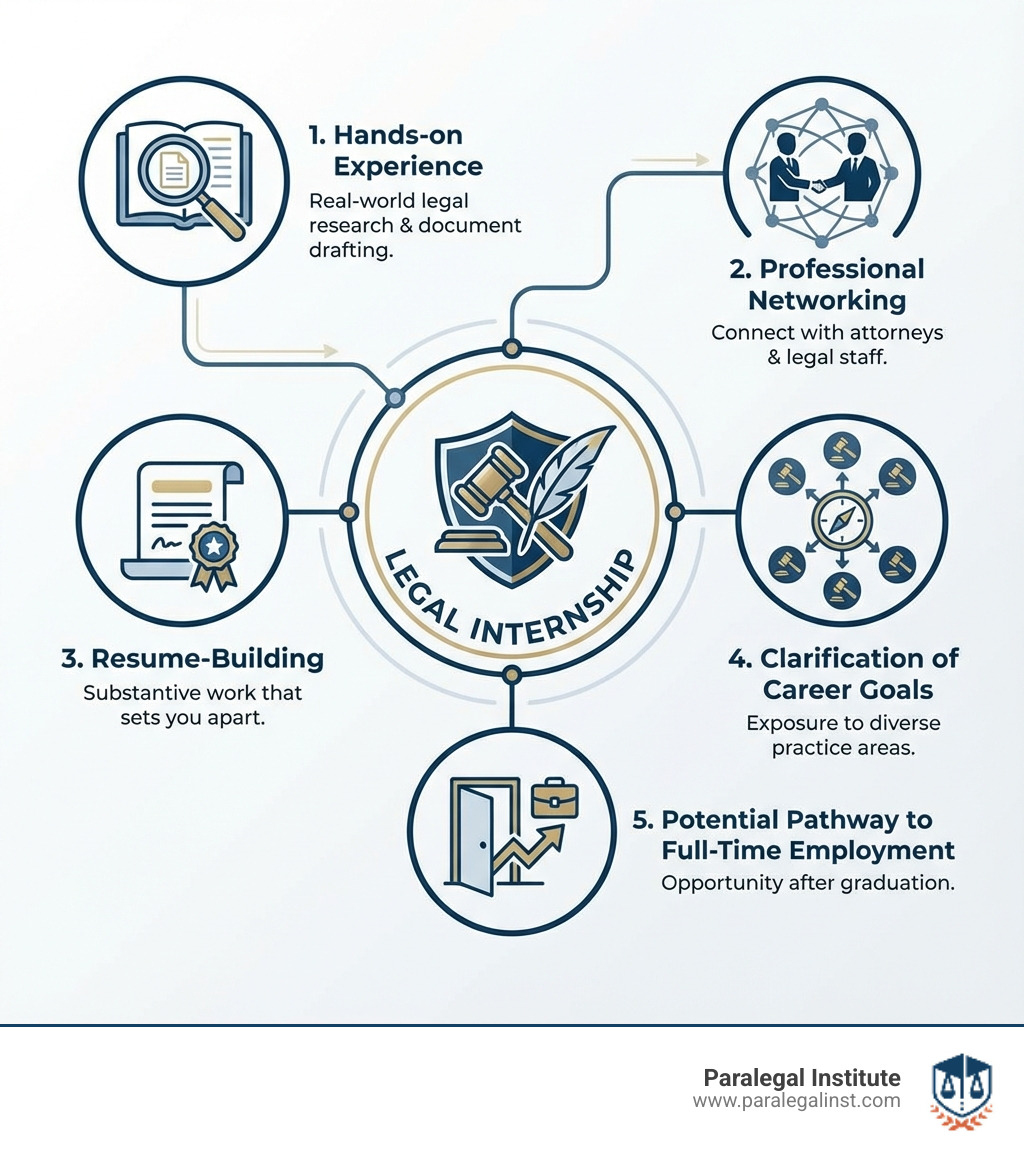
We often tell our students at Paralegal Institute that an internship is where your education truly comes alive. Here's how it contributes to your career development:
- Practical Skills: You'll apply the theoretical knowledge from your paralegal program to real cases, developing practical skills like advanced legal research, document drafting, and case management that are difficult to fully grasp in a classroom setting.
- Clarifying Career Goals: Exposure to different practice areas and legal environments can help you confirm your interests or find new ones, guiding your career path more effectively. Do you prefer the fast pace of litigation or the meticulous nature of transactional law? An internship can help you decide.
- Resume Building: A substantive legal intern experience on your resume signals to future employers that you have hands-on experience and are serious about a career in law. It sets you apart from candidates with only academic qualifications.
- Professional Networking: You'll build relationships with attorneys, paralegals, and other legal professionals. These connections can lead to mentorship, future job opportunities, and valuable professional references.
- Potential for Employment: Many internships serve as extended job interviews. Performing well can directly lead to a full-time job offer upon completion of your paralegal program, giving you a significant head start in the job market.
Exploring paralegal career information can further illustrate how an internship fits into your long-term plans. Explore paralegal career information.
Potential Career Paths After Your Internship
The experience gained as a legal intern opens doors to a variety of career paths:
- Paralegal: This is a direct and common progression. With practical experience, you'll be well-prepared for a paralegal role in a private law office, government agency, or legal aid organization.
- Legal Assistant: Similar to a paralegal, a legal assistant provides crucial support to attorneys, often focusing on administrative tasks, client communication, and document organization.
- Legal Specialist Roles: Depending on the area of law you interned in, you might qualify for specialized roles in compliance, contracts, or specific legal departments within corporations.
- Further Education: For those considering law school, an internship provides invaluable insight into the legal profession, helping you make an informed decision and giving you a competitive edge in applications.
Knowing how to get a paralegal job is the ultimate goal, and an internship is a powerful tool in achieving that. How to get a paralegal job.
Frequently Asked Questions about Legal Internships
Are legal internships only for law students?
Absolutely not! While many internships are designed for law students, a significant number are open to paralegal students and those pursuing legal studies. These roles offer valuable experience in legal research, document drafting, casework, and client communication—all skills that our Paralegal Institute students master. Organizations recognize the practical training and immediate job readiness that paralegal programs provide, making our graduates excellent candidates for these positions.
Can a legal internship be done online?
Yes, the legal field has increasingly adapted to remote work, and many organizations now offer online internships. These opportunities allow you to gain experience in research, legal writing, and virtual meetings from anywhere. At Paralegal Institute, our live instruction model prepares you for both in-person and remote legal environments, ensuring you’re proficient with the technology and communication skills needed for online collaboration. However, certain experiences, such as observing courtroom proceedings or direct client interviews, may still require an in-person component.
Are most legal internships paid?
Compensation for legal internships varies significantly. Some private law offices, especially larger firms, offer paid positions, recognizing the value interns bring. Many government agencies and legal aid organizations, however, offer unpaid internships, sometimes with the possibility of academic credit or a stipend. When considering an internship, it's important to clarify the compensation structure. At Paralegal Institute, we help our students identify opportunities that align with their needs and career goals, whether paid, unpaid with credit, or stipend-supported.
Conclusion: Building Your Foundation for a Legal Career
Starting on a legal intern position is one of the most impactful steps you can take toward a successful career in the legal field. It's where the theoretical knowledge from your paralegal program truly transforms into practical, job-ready skills. We've seen countless students leverage their internship experiences to clarify their career aspirations, build invaluable professional networks, and ultimately secure fulfilling roles as paralegals or legal assistants.
The legal landscape is dynamic, and employers increasingly seek candidates with hands-on experience. An internship demonstrates your commitment, initiative, and ability to contribute effectively from day one. It’s an unparalleled opportunity to immerse yourself in the day-to-day realities of legal practice, whether in a busy government office, a mission-driven legal aid organization, or a private law firm.
For those seeking a fast, affordable, and career-ready path into this exciting profession, Paralegal Institute’s 15-week program with live instruction provides the essential training to not only secure but excel in your internship and beyond. We equip you with the practical skills that make a difference, ensuring you stand out in the competitive legal job market.
Ready to take the next step? Explore paralegal internship opportunities and lay the groundwork for your thriving legal career. Explore paralegal internship opportunities.