What Does a Commercial Litigation Paralegal Actually Do?
A commercial litigation paralegal job description encompasses managing business disputes from inception through trial and appeal. These professionals serve as the backbone of the trial team, handling everything from document control and discovery to trial preparation and client communication.
Core Responsibilities:
- Case Management: Opening files, maintaining client records, docketing deadlines, and coordinating court communications
- Discovery Support: Drafting and responding to discovery requests, reviewing documents, managing e-discovery, and summarizing depositions
- Document Preparation: Creating pleadings, motions, subpoenas, correspondence, trial notebooks, and exhibit lists
- Trial Support: Organizing evidence, preparing exhibits, coordinating witnesses, and assisting attorneys during trials
- Research: Conducting legal and factual research to support case strategy
- Communication: Interfacing with clients, opposing counsel, court personnel, and expert witnesses
The job market is steady. Paralegal jobs aren't projected to grow much, but turnover keeps them opening up: BLS expects about 40,800 openings a year through 2035. Pay for litigation paralegals varies with experience and the local market, and law firms continue to look for paralegals who help control costs while maintaining quality legal services.
I'm Matthew Pfau, and I've spent years hiring and training paralegals for my law firm before founding Paralegal Institute. My experience creating commercial litigation paralegal job descriptions and observing which skills lead to success inspired our practical curriculum focused on what you'll actually do on day one.
The Core of the Role: A Commercial Litigation Paralegal Job Description
If you've ever wondered what makes a commercial litigation paralegal job description so unique, it's this: you become the person who holds everything together. While attorneys focus on legal strategy and courtroom arguments, you're the one making sure nothing falls through the cracks.
Think of yourself as the central hub of information, organization, and action. You'll work directly under an attorney's supervision, but you're far from just taking orders. You're anticipating needs, managing workflows, and keeping complex commercial disputes moving forward from that very first conflict check all the way through to final resolution.
This role demands someone who's comfortable juggling multiple priorities at once. You'll need sharp IT skills, exceptional organizational abilities, strong communication talents, and a proactive mindset that says "I've got this handled." You're not waiting for someone to tell you what needs doing—you're already three steps ahead. For practical tips on mastering this juggling act, check out our guide on Strategies for Paralegals to Stay Organized.
The best part? You're not stuck in the background. You're an essential member of the legal team, actively managing the flow of information and strategy that makes or breaks a case.

Case Management from Inception to Resolution
Your involvement in a commercial litigation case often starts before any lawsuit is even filed. One of your first tasks is running conflict checks to make sure there are no ethical issues preventing the firm from taking on a new client. Once that's cleared, you'll help open the new matter in the practice management system and set up the electronic file structure that will house everything related to the case.
Maintaining these electronic client files becomes an ongoing responsibility. Every document, email, piece of evidence, and communication needs to be properly categorized and easily retrievable. You'll become intimately familiar with your firm's document management system because you'll live in it daily.
Here's where the pressure really kicks in: docketing and calendaring deadlines. Missing a court deadline can have devastating consequences for a case, so your attention to detail here is absolutely critical. You'll track every filing deadline, response date, and court appearance, making sure nothing slips by. Learning to Prioritize Tasks Effectively as Paralegal becomes essential when you're managing multiple cases with overlapping deadlines.
You'll also spend significant time scheduling meetings, depositions, and court appearances. This means coordinating busy attorneys, clients, opposing counsel, expert witnesses, and court personnel—often all at once. You might find yourself on the phone with judicial assistants and court administrators, working out scheduling conflicts and confirming hearing dates.
And yes, you'll handle the less glamorous but equally important tasks like entering billing entries and generating invoices. Every hour of work needs to be accurately recorded and billed to the right client and matter.
The Discovery Phase: Gathering the Evidence
Now we get to one of the meatiest parts of your job: managing the discovery phase. This is where both sides exchange information to build their cases, and it's often where commercial litigation paralegals spend the bulk of their time.
You'll draft discovery requests like interrogatories(written questions the other side must answer) and requests for production of documents(formal demands for specific records). These need to be carefully crafted to get the information your attorney needs without being overly broad or objectionable.
Then comes the flip side: responding to discovery requests from opposing counsel. This means working with clients to identify and collect relevant documents, reviewing them for relevance and privilege, and organizing everything for attorney review. Much of this work involves e-discovery(electronic discovery), which means handling emails, databases, spreadsheets, and other electronically stored information. You'll use specialized e-discovery platforms to manage these massive document collections.
Once documents are collected, you'll often Bates stamp them—assigning a unique identifying number to each page so everyone can reference specific documents precisely throughout the litigation. As one legal professional noted, "Complex cases can generate tens of thousands of documents but only a few will be crucial in successfully litigating a case." Your job is helping identify those crucial few among the many.
You'll also summarize deposition transcripts, turning hours of testimony into concise summaries that attorneys can quickly reference. Some paralegals conduct witness interviews to gather information and help prepare people for testimony. For more on developing these research and analytical skills, explore our Legal Research Guide for Paralegals.
Drafting and Document Preparation
A huge chunk of your daily work involves drafting legal documents. While attorneys provide the legal strategy and final review, you'll often prepare the initial drafts that get the ball rolling.
You'll draft pleadings like complaints, answers, and counterclaims—the formal documents that initiate and respond to lawsuits. You'll prepare motions, which are formal requests asking the court to take a specific action. These might include motions to compel discovery, motions for summary judgment, or motions in limine (which ask the court to exclude certain evidence at trial).
Issuing subpoenas to compel testimony or documents from third parties becomes routine. You'll also handle the daily correspondence with clients, opposing counsel, and the court—keeping everyone informed and moving the case forward.
As trial approaches, your document preparation skills become even more critical. You'll create comprehensive trial notebooks —carefully organized binders containing everything an attorney needs in court. These include exhibit lists, witness information, key pleadings, discovery responses, and legal research. You'll also prepare detailed exhibit lists and manage the physical or electronic exhibits themselves.
Every document you create must be accurate, properly formatted, and filed by the deadline. This is where the Importance of Attention to Detail in Paralegal Work truly becomes apparent. One misplaced comma or missed deadline can have serious consequences.
The Litigation Lifecycle: A Paralegal's Role Before, During, and After Trial
Think of a commercial litigation case as a marathon, not a sprint. And as commercial litigation paralegals, we're running alongside our attorneys every step of the way. Our commercial litigation paralegal job description isn't limited to just one phase of a case. Instead, we're there from the very first conflict check all the way through to filing away the final documents after trial or settlement.
This continuous involvement is what makes us so valuable to the legal team. We're not just task-doers—we're the thread that holds the entire case together. When attorneys need to pivot strategy, we've already organized the materials they need. When a deadline looms, we've had it calendared for weeks. When trial day arrives, we've already prepared everything down to the last exhibit tab.

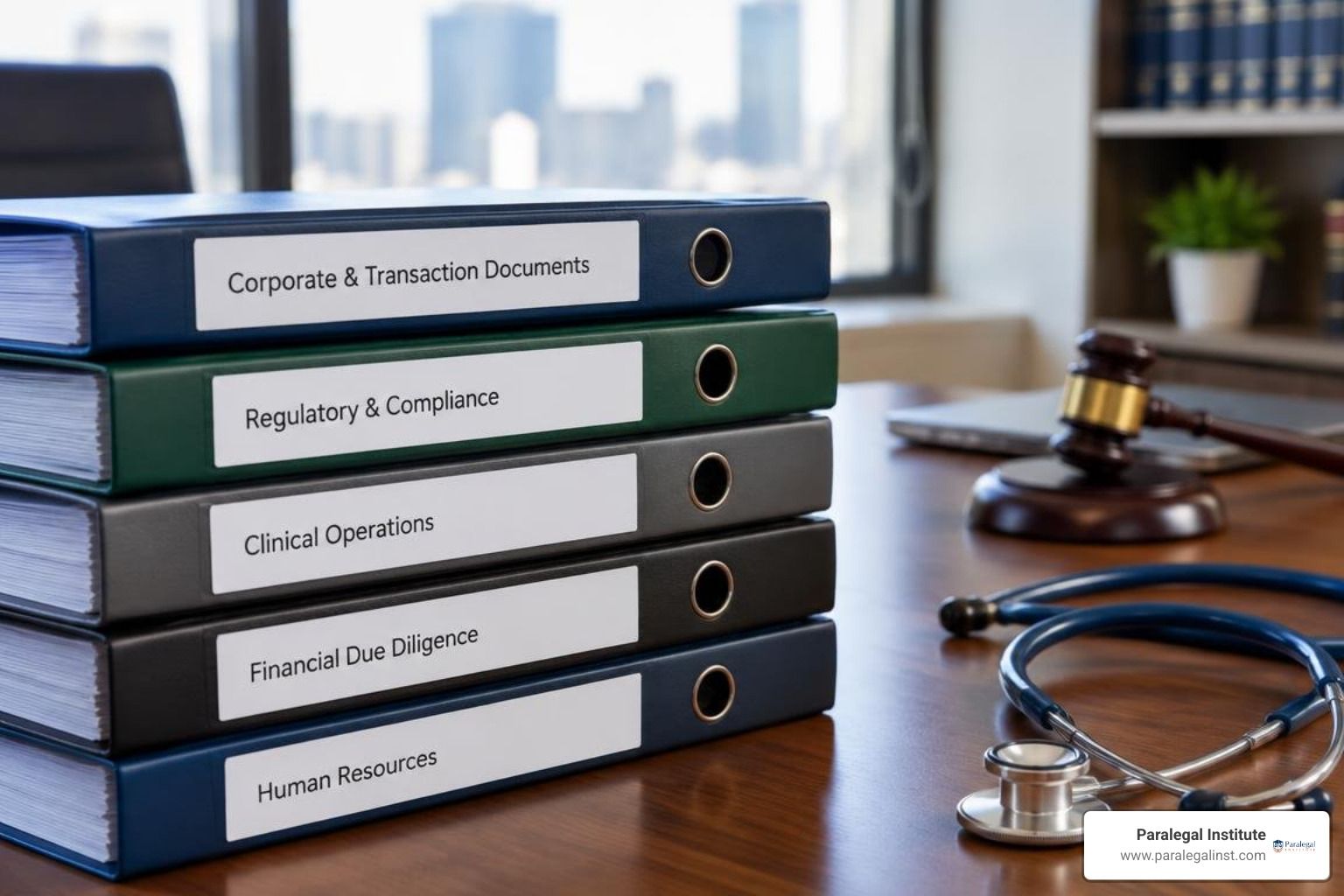
The image above shows what we affectionately call the "war room"—where cases come together in the final push before trial. But getting to this point requires months of meticulous work across three distinct phases. Our role evolves as the case progresses, demanding flexibility and a deep understanding of how each piece fits into the bigger picture. For a comprehensive look at this journey, check out The Role of a Litigation Paralegal Before, During, and After Trial.
Pre-Trial Preparation: Setting the Stage for Success
Long before anyone steps into a courtroom, we're already hard at work building the foundation for victory. This pre-trial phase is where cases are truly won or lost, and we're right in the thick of it.
Our work often starts with factual investigation —gathering information that will support our client's position. This might mean tracking down witnesses, conducting interviews, and collecting documents from various sources. We're part detective, part organizer, piecing together the story of what actually happened.
We also dive into legal research, exploring case law and statutes that support our arguments. While attorneys develop the legal strategy, we're the ones pulling relevant cases, checking citations, and making sure every legal argument has solid backing. Our Legal Research Skills Training can help sharpen these crucial abilities.
Then comes the massive task of organizing evidence. In commercial litigation, this can mean sorting through thousands of emails, contracts, financial records, and other documents. We create systems that make sense of this chaos, so when an attorney needs a specific document, they can find it in seconds, not hours.
Preparing trial exhibits is an art form in itself. We transform raw documents into polished, persuasive exhibits that judges and juries can easily understand. This includes creating demonstrative aids, charts, timelines, and other visual tools that tell our client's story clearly.
We're also the main point of contact for coordinating with witnesses. This means scheduling their availability, helping them understand what to expect during testimony, and sometimes arranging travel and accommodations. A well-prepared witness can make or break a case, and our preparation work makes all the difference.
Finally, we assist in drafting pre-trial orders and other court-required documents that set the parameters for trial. These documents outline everything from exhibit lists to witness orders, creating the roadmap the trial will follow.
All of this pre-trial work is invisible to the jury, but it's absolutely essential. When attorneys walk into court confident and prepared, it's because we've done our job well.
In the Courtroom: Trial Support in Action
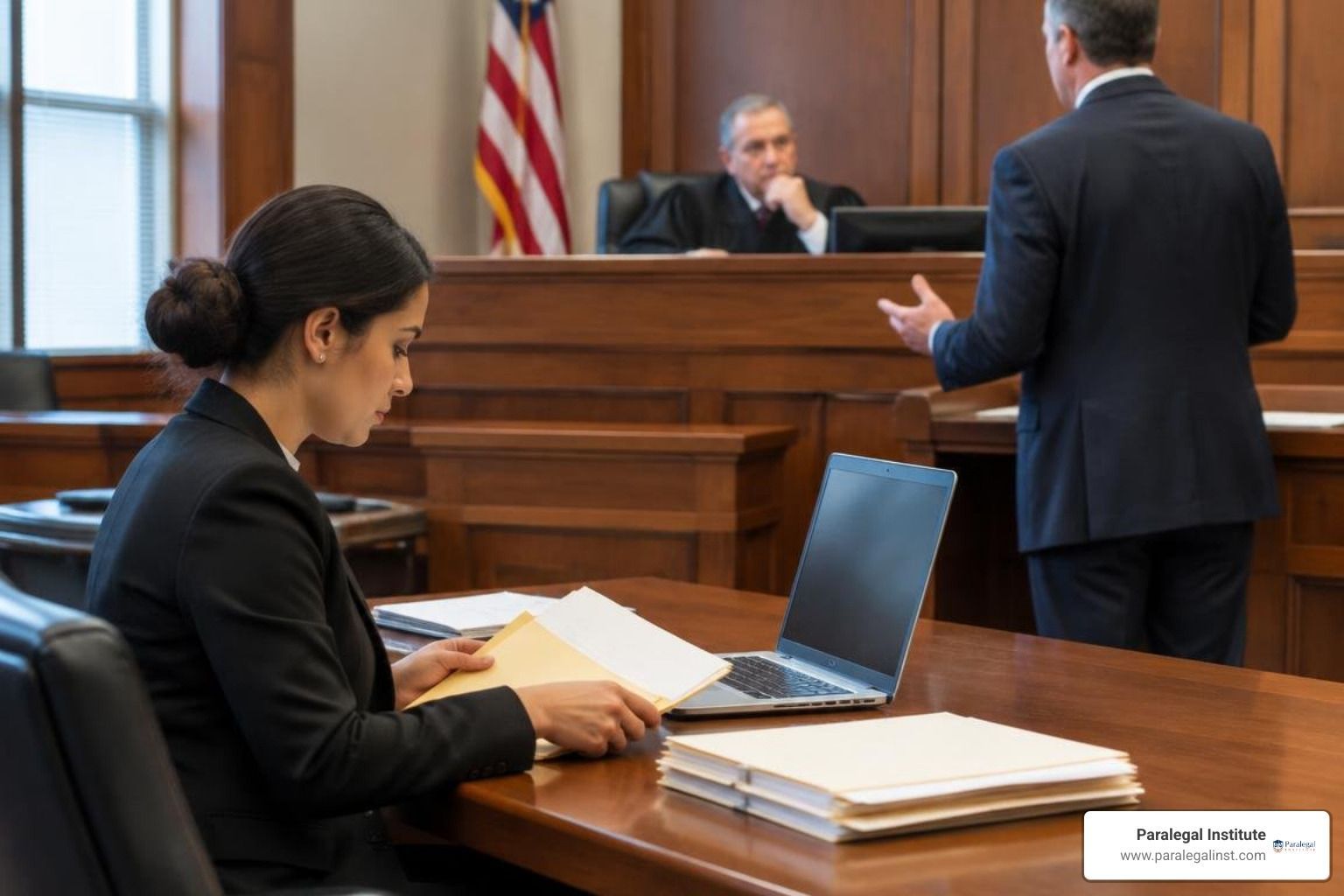
Trial days are intense. The courtroom atmosphere is charged, stakes are high, and everything moves fast. This is where our preparation pays off and our real-time support becomes crucial.
One of our primary responsibilities is managing exhibits. We track which exhibits have been marked, which have been admitted into evidence, and which are still pending. We ensure that when an attorney asks for Exhibit 47, it's in their hands within seconds. We keep backup copies ready and maintain an organized system even as the trial unfolds unpredictably.
We're constantly assisting attorneys in whatever they need. This might mean locating a specific page in a deposition transcript, pulling up a case citation they suddenly remember, or quietly pointing out a discrepancy in witness testimony. We're their extra set of eyes, ears, and hands.
Operating courtroom technology has become a major part of our role. Modern trials often involve digital presentation systems, and we're the ones making sure documents appear on screens at the right moment, videos play without technical glitches, and demonstrative exhibits display clearly for the jury.
We also spend considerable time taking detailed notes and tracking testimony. We capture key statements, note inconsistencies, and flag moments that might be important for closing arguments or cross-examination. Our notes often become the attorney's reference guide as the trial progresses.
In some cases, we even conduct jury investigation, helping attorneys understand the backgrounds and perspectives of potential jurors. This information can be invaluable during jury selection.
The courtroom is no place for panic. Our ability to stay calm, think clearly, and respond quickly under pressure is what makes us indispensable during trial.
Post-Trial Procedures: Wrapping Up the Case
When the judge's gavel falls or the jury delivers its verdict, many people think the case is over. But for us, there's still significant work ahead.
If the outcome wasn't favorable, we assist with filing post-trial motions —formal requests asking the court to reconsider aspects of the verdict or grant a new trial. These motions have strict deadlines and technical requirements that we help steer.
If the case moves to appeal, our role in assisting with appeals becomes critical. We help compile the appellate record, which includes all relevant trial transcripts, exhibits, and pleadings. Appellate courts have exacting standards, and organizing these materials correctly is essential.
Whether the case ended in verdict or settlement, we're responsible for closing case files properly. This means ensuring every document is accounted for, properly labeled, and stored according to firm policies and legal retention requirements. We're creating a complete record that might be needed years down the road.
Archiving records is more than just filing documents away. We're preserving the institutional knowledge of the case, making sure that if questions arise later, all the answers are readily accessible.
When cases conclude through settlement, we help with finalizing settlements —making sure all agreed-upon terms are documented, deadlines are met, and releases are properly executed.
This final phase might not be glamorous, but it's essential. A case isn't truly complete until every loose end is tied up, every document is properly stored, and every obligation is fulfilled. That's when we can finally close the file and move on to the next challenge.
Essential Skills and Tools for Success
Thriving as a commercial litigation paralegal requires more than just showing up and following instructions. You need a unique blend of tech-savvy abilities and people skills that work together seamlessly. We're problem-solvers at heart, always thinking two steps ahead and finding creative solutions before issues become crises. The ability to stay calm when everything feels urgent and deadlines are stacking up isn't just helpful—surviving and succeeding in this role.
The good news? These skills can be learned and developed. Our paralegal program is specifically designed to build these capabilities through hands-on practice, preparing you for the real-world demands of commercial litigation from day one.
The Modern Commercial Litigation Paralegal Job Description: Required Tech Skills
Technology has fundamentally changed how litigation works, and a commercial litigation paralegal job description today looks dramatically different than it did even ten years ago. You'll need to become comfortable with an entire ecosystem of legal technology tools that keep cases moving forward.
eDiscovery platforms like Relativity and Disco have become essential for managing the mountains of electronic documents that modern cases generate. One seasoned litigation professional put it perfectly: "You're not doing litigation if you're not doing ediscovery." These sophisticated systems help us organize, search, and analyze thousands—sometimes millions—of emails, contracts, and other digital files efficiently.
Legal research databases such as Westlaw and LexisNexis are your digital research libraries, giving you instant access to case law, statutes, and legal articles that support your attorneys' arguments. Document management systems like Filesite keep everything organized and accessible, ensuring that no critical document gets lost in the shuffle.
When it's time for trial, trial presentation software like Trial Director or Sanction allows us to display exhibits and testimony in compelling, professional ways. You'll also need to master PACER for federal court electronic filing, along with various state-specific systems like Odyssey. And of course, solid proficiency in Microsoft Office Suite —Word for drafting, Excel for data analysis, Outlook for communication, and PowerPoint for presentations—forms the foundation of daily work.
Looking forward, artificial intelligence tools are rapidly becoming part of the standard toolkit, so staying curious about emerging technology will serve you well throughout your career.
Key Qualifications and Soft Skills
Technical skills get you in the door, but soft skills determine how far you'll go in this profession. The most critical? Attention to detail. This isn't about being picky—it's about recognizing that a missed deadline or a typo in a court filing can have serious consequences for your client and your firm. Every document you proofread, every deadline you calendar, every exhibit you number needs to be absolutely accurate.
Analytical thinking helps you make sense of complex information. When you're reviewing a deposition transcript or organizing thousands of documents, you need to spot patterns, identify what's important, and distill it into something your attorney can use strategically.
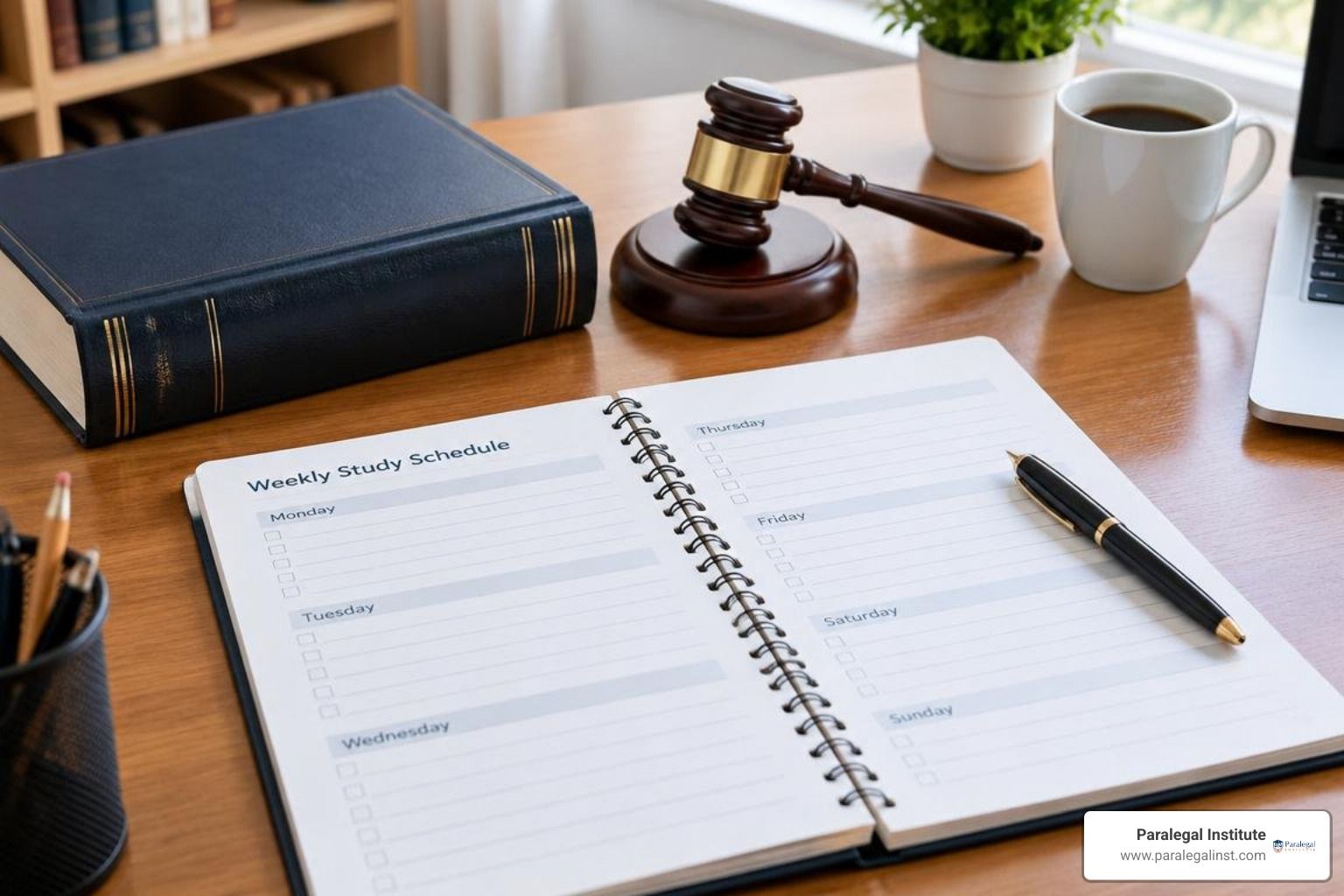
Time management becomes your survival skill when you're juggling five cases with competing deadlines, knowing that trial preparation might mean working evenings or weekends. It's not always glamorous, but being able to prioritize effectively keeps you from drowning in the workload.
Your written communication needs to be clear and professional—whether you're drafting a motion, responding to opposing counsel, or updating a client. Similarly, your verbal communication matters because you're often the first point of contact for clients, court personnel, and expert witnesses. How you represent yourself reflects on your entire firm.
Teamwork is woven into every aspect of the role. You'll collaborate closely with attorneys, other paralegals, legal assistants, and support staff. Success comes from working together, not trying to be a lone wolf. And perhaps most valuable of all is a proactive mindset —anticipating what's needed next, solving problems before they escalate, and taking initiative rather than waiting for instructions.
As one hiring partner told us, "It's about more than just paralegal skills." Your attitude, work ethic, and approach to challenges matter just as much as your technical abilities.
Navigating Complex Cases
Commercial litigation covers a fascinating range of business disputes, each bringing its own unique challenges and learning opportunities. As a commercial litigation paralegal, you might find yourself working on breach of contract cases where one party failed to honor their agreement, or business torts involving fraud, unfair competition, or interference with business relationships that caused economic harm.
Shareholder disputes can get particularly intense, with conflicts over company management, ownership, or profit distribution. Intellectual property litigation involves protecting or challenging patents, trademarks, copyrights, and trade secrets—cases that often involve cutting-edge technology or creative works. Construction law disputes arise from project delays, defects, or contract disagreements on building projects. And real estate disputes touch on property rights, lease agreements, sales transactions, and land use issues.
What makes these cases compelling is their complexity and real-world impact. They often involve substantial financial stakes, mountains of documentation, and intricate legal arguments that require our specialized organizational skills and meticulous attention. No two cases are exactly alike, which keeps the work intellectually stimulating and challenging in the best possible way.
Career Path and Outlook for Commercial Litigation Paralegals
If you're considering a career as a commercial litigation paralegal, you're looking at a field with real staying power and growth potential. The demand for skilled paralegals isn't just holding steady—it's expanding. Law firms have figured out that delegating sophisticated legal work to well-trained paralegals makes excellent business sense, allowing them to deliver quality legal services while managing costs more effectively.
The numbers point to steady opportunity rather than rapid growth. Employment is projected to change little, but retirements and career changes keep positions opening for people entering the field and those looking to advance. Paralegals bring specialized skills that remain essential to modern legal practice. For more details on the profession's outlook, consult the Bureau of Labor Statistics: Paralegals and Legal Assistants.

Salary Expectations and Job Market Trends
Let's talk about what you can actually earn in this profession. The compensation for commercial litigation paralegals is genuinely competitive, and a commercial litigation paralegal job description often reflects this with attractive salary ranges.
Your earning potential depends on several factors. Experience matters most —paralegals with several years under their belt earn considerably more than those just starting out. Geography plays a role too. Major metropolitan areas like Seattle, Los Angeles, and Chicago typically offer higher compensation packages, though they also come with higher costs of living. The size and type of law firm also influences your paycheck, with larger firms often paying more but also expecting more billable hours.
According to the Bureau of Labor Statistics, the profession offers solid earning potential that grows substantially with experience. Entry-level positions provide a good starting point, but with five to ten years of experience, your compensation can increase significantly. Paralegals with two decades of experience can command top-tier salaries.
Beyond base salary, many positions include overtime pay for hours beyond the standard workweek, performance bonuses, and generous paid time off. Some firms sweeten the deal with professional development stipends or flexible work arrangements. The strong compensation reflects both the demand for skilled paralegals and the specialized expertise required for commercial litigation work.
Challenges and Rewards of the Profession
I'd be painting an incomplete picture if I only talked about the positives. This career comes with real challenges that you should consider before diving in.
The pressure can be intense. Deadlines in litigation aren't negotiable—courts don't care if you're tired or overwhelmed. When a trial is approaching, long hours become the norm, not the exception. Many larger firms track billable hours, which means you need to document time spent on client work, typically with weekly or monthly targets. This can feel demanding, especially when you're also managing administrative tasks that don't count toward billable time.
The work can spill into evenings and weekends, particularly during critical phases like trial preparation or major discovery productions. If you value strict work-life boundaries, this might be challenging.
But here's what makes it worthwhile: the work itself is fascinating. You're constantly learning about different industries, complex legal theories, and cutting-edge technologies. One month you might be immersed in a construction defect case, the next you're helping with intellectual property litigation. Your brain stays engaged.
You're not just a support player—you're integral to the team. Attorneys depend on your expertise, organization, and judgment. When your team wins a motion you helped prepare, or when a trial goes smoothly because of your meticulous preparation, that satisfaction is real and lasting.
The relationships you build matter too. Working alongside attorneys and fellow paralegals through high-stakes cases creates genuine camaraderie. You're solving problems together, sometimes under significant pressure, and that builds strong professional bonds.
Career Advancement Opportunities
Starting as a commercial litigation paralegal doesn't mean you'll stay in the same role forever. The profession offers multiple paths forward, depending on your interests and strengths.
Many paralegals progress to Senior Paralegal positions, where you take on the most complex cases, serve as a resource for junior team members, and might even supervise other paralegals. Senior paralegals often specialize in particular types of commercial litigation, becoming go-to experts in areas like intellectual property disputes or construction litigation.
Some paralegals move into Paralegal Manager roles, overseeing entire paralegal departments, handling hiring and training, and working with firm leadership on operational improvements. If you enjoy mentoring others and have strong leadership skills, management can be a rewarding path.
The growing importance of technology in litigation has created specialized Litigation Support roles that focus on the technical side of case management. These positions involve managing document repositories, troubleshooting technology issues, and ensuring smooth operation of trial presentation systems.
E-discovery roles represent another exciting avenue. As electronically stored information continues to dominate litigation, specialists who understand both the legal and technical aspects of e-discovery are in high demand. These roles often involve working with sophisticated platforms, managing data preservation, and overseeing massive document review projects.
The key to advancement is continuous learning. Developing specialized knowledge in specific areas of commercial law, staying current with legal technology, and building a reputation for excellence opens doors. For practical guidance on securing your next role and advancing your career, explore our tips on How to Get Paralegal Job.
How Commercial Litigation Differs from Other Paralegal Roles
While all paralegals share a foundational set of skills—organization, attention to detail, and strong communication—the daily reality of our work looks quite different depending on which practice area we call home. Understanding these distinctions is essential, especially if you're considering where to focus your career.

As commercial litigation paralegals, we immerse ourselves in business-to-business disputes. Our clients are typically corporations, partnerships, or other business entities, and the disputes we handle revolve around contracts, business torts, shareholder disagreements, or intellectual property conflicts. The financial stakes are often substantial, and corporate reputations hang in the balance.
Our days are document-driven. We're talking about managing thousands—sometimes tens of thousands—of pages of emails, contracts, financial records, and communications. E-discovery platforms become our second home, and we develop a keen ability to spot the crucial needle in that documentary haystack. We draft complex pleadings, manage intricate discovery schedules, and prepare comprehensive trial materials. The litigation lifecycle is our roadmap, and we know every twist and turn from case inception through post-trial procedures.
Corporate paralegals, by contrast, work in a transactional world. Their focus is on deals, not disputes. They draft and review contracts, manage corporate governance documents, prepare minutes for board meetings, and ensure regulatory compliance. Instead of preparing for depositions and trials, they're coordinating closings, filing corporate documents with the Secretary of State, and maintaining corporate record books. The work is meticulous and detail-oriented, but it's fundamentally collaborative rather than adversarial. There's no opposing counsel to contend with, no court deadlines looming, and no trial preparation keeping them at the office late into the night.
Personal injury paralegals also work within the litigation framework, but the nature of their cases creates a distinctly different experience. Their clients are individuals—people who've been hurt in car accidents, slip-and-falls, or through medical malpractice. Much of their work centers on gathering and organizing medical records, calculating damages related to pain and suffering, and communicating empathetically with clients who are often dealing with physical and emotional trauma.
While personal injury paralegals do handle discovery and trial preparation, they're often negotiating with insurance adjusters rather than opposing corporate counsel. The cases typically move faster than complex commercial disputes, and settlements are more common than trials. The human element is front and center in every conversation.
These distinctions matter when you're thinking about your career path. If you thrive in high-stakes, intellectually complex environments where you're piecing together business narratives from mountains of documents, a commercial litigation paralegal job description might be calling your name. If you prefer the structured world of transactions and corporate governance, corporate law could be your fit. And if you're drawn to helping individuals through difficult times with more direct client contact, personal injury work offers that opportunity.
The beauty of paralegal work is that these core skills we develop—research, writing, organization, technology proficiency—are transferable across practice areas. But the day-to-day experience, the types of challenges we face, and the skills we sharpen most frequently will vary significantly based on the specialty we choose.
Conclusion: Launching Your Career in Commercial Litigation
So here we are at the end of our journey through commercial litigation paralegals. If you've made it this far, you now have a comprehensive understanding of what a commercial litigation paralegal job description truly encompasses. It's not just a job – it's a dynamic, challenging, and deeply rewarding career that puts you right at the heart of high-stakes business disputes.
We've walked through the diverse responsibilities that define this role. You've seen how we manage cases from the very first conflict check through to the final archiving of records. We've explored the intricate world of discovery, where organizational skills and attention to detail become superpowers. We've stepped into the courtroom to see trial support in action, and we've examined the essential blend of technical proficiency and soft skills that make a paralegal truly exceptional.
This career path is perfect for someone who genuinely enjoys solving complex puzzles, who can stay calm when the pressure is on, and who takes pride in being an indispensable member of a legal team. The compensation is competitive, the job outlook is strong, and the opportunities to grow your career are substantial. Whether you're aiming to become a Senior Paralegal, move into litigation support management, or specialize in cutting-edge e-discovery roles, the possibilities are real and achievable.
But here's the thing: reading about it is one thing. Actually doing it is another. That's where practical, hands-on training makes all the difference. At Paralegal Institute, we don't just teach theory. Our 15-week paralegal program is built around real-world application because we know what law firms actually need. Our curriculum is designed and taught by practicing legal professionals who understand the day-to-day realities of litigation work. We focus on getting you ready to contribute from day one, not on filling your head with concepts you'll never use.
We created this program specifically for people in Las Vegas, NV, and beyond who want to launch a meaningful career without spending years in school. Fifteen weeks. That's all it takes to gain the foundational knowledge and practical skills that employers are actively seeking. We're not about fluff or unnecessary theory. We're about preparing you to walk into a law firm and know exactly what to do.
If you're excited about the prospect of becoming a commercial litigation paralegal, if the challenge appeals to you, and if you're ready to invest in your future, we're here to help you make it happen. To understand even more about how paralegals contribute to the legal profession and why this career is so vital, we invite you to Learn more about the Role of Paralegals in Law Firms.
Your career in commercial litigation starts with a single decision. We'd be honored to be part of your journey.